
Indoor plants are houseplants grown inside homes and buildings for decorative, air-purifying, and psychological benefits. The single biggest killer of new house plants is overwatering — it causes root hypoxia, where waterlogged soil deprives roots of oxygen and leads to rot. growing grow lights for related context.
Beginners consistently overestimate how much water their plants need, which is why the plants in this guide are chosen specifically for their ability to survive irregular watering schedules.
If you’ve killed every plant you’ve ever brought home, you’re not alone — even experienced gardeners lose plants. The good news is that choosing the right plant for your lifestyle and space dramatically increases your chances of success.
These eight indoor plants for begginers below are the most forgiving easiest houseplants available, and each one survives the common beginner mistakes that doom most first attempts at indoor gardening.
Why Indoor Plants Die (And How to Avoid It)
Overwatering kills more house plants than under-watering, pests, and disease combined. When soil stays constantly wet, roots cannot access oxygen — the condition called root hypoxia slowly suffocates the plant from the roots up. By the time leaves show wilting or yellowing, the root damage is already severe. The fix is simple: allow the top inch or two of soil to dry before watering again. For a full walkthrough of diagnosing and fixing this problem, see our guide to root rot in house plants.
Under-watering is less immediately lethal. Most house plants recover within hours of a thorough watering after the soil has been dry for days. They show clear signals — leaves drooping, edges browning, soil pulling away from the pot edge — that give you days of warning before permanent damage occurs.
Light mismatch is the second most common cause of plant failure. A plant labeled “low light” will not thrive in a room with no windows. A plant needing “bright indirect light” will burn or pale if placed in a dark corner. Matching your space’s actual light to the plant’s requirements — covered in our guide to indoor plant light requirements — matters more than any other care factor besides watering frequency.
If your plant is already showing serious decline — yellowing leaves, soft stems, soil that smells off, or roots that look dark and mushy — work through our step-by-step rescue guide for dying houseplants before reaching for fertilizer or repotting. Most houseplant deaths are reversible within the first 7 to 21 days if you diagnose the actual problem (root rot, dehydration, or pest damage) before treating the symptom.
The four variables behind every one of these plants are explained in our complete indoor plant care guide. Indoor Plant Care: The Complete Guide
How We Evaluated These Plants : 5 Criteria
These eight plants were selected based on five criteria specifically relevant to beginners:
Forgiveness factor — how well does this plant recover from common mistakes like missed waterings, wrong soil, or accidental over-fertilizing? Plants that bounce back quickly from setbacks score highest.
Light requirements — measured in foot-candles (fc), which describes the light intensity a plant needs rather than vague terms like “low light.” A north-facing window provides roughly 25–100 fc; a south-facing window delivers 800+ fc at noon.
Water frequency — how often does this plant actually need water, and how forgiving is it of schedule gaps? We used specific ranges (cups or frequency per week) rather than vague instructions.
Growth rate and mature size — a fast grower can overwhelm a beginner who doesn’t know when to repot. Realistic expectations prevent surprise.
Pet toxicity — whether a plant is safe or toxic to cats and dogs is a binary fact that must be stated plainly, since many beginners don’t know which common houseplants are dangerous to pets.
Snake Plant : The Indestructible Classic
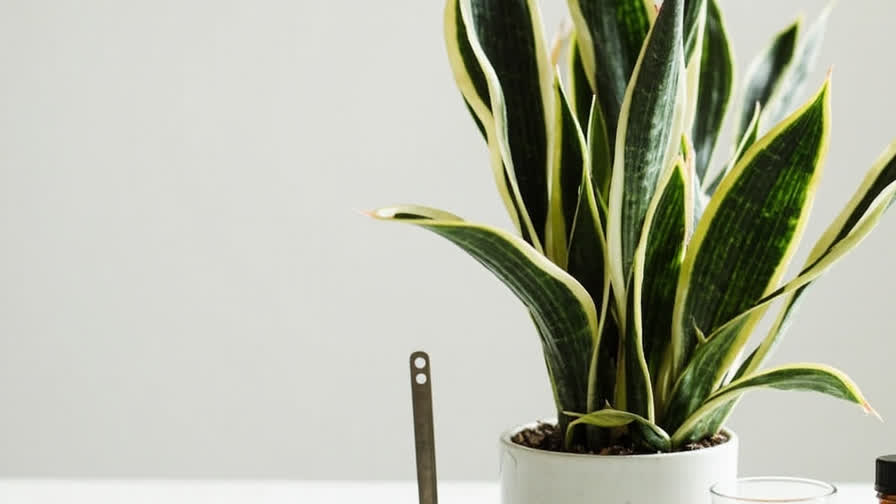
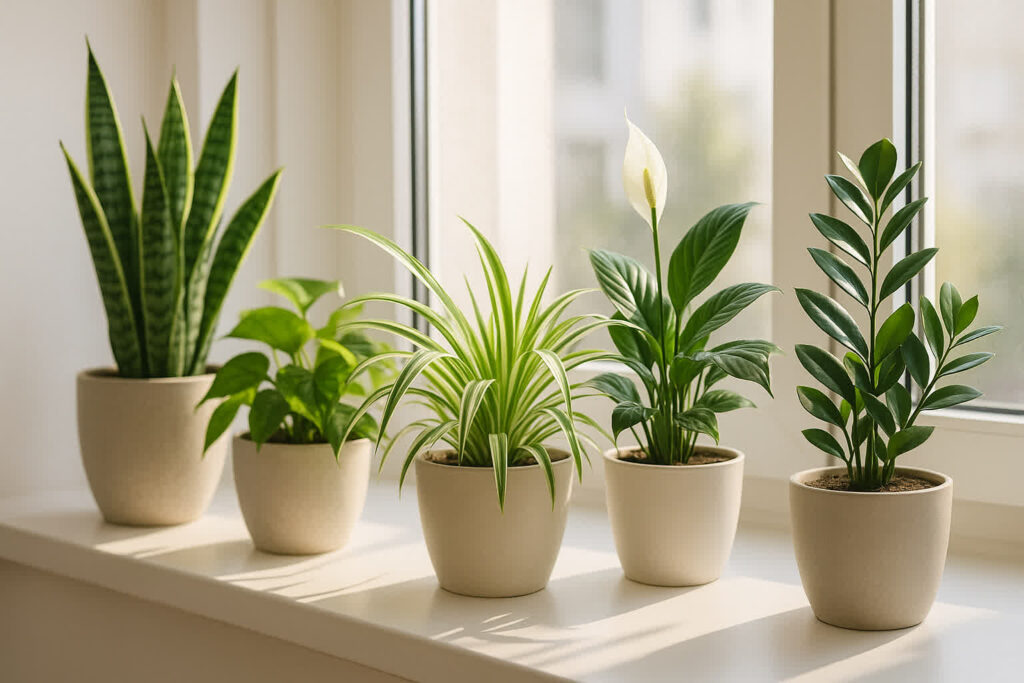
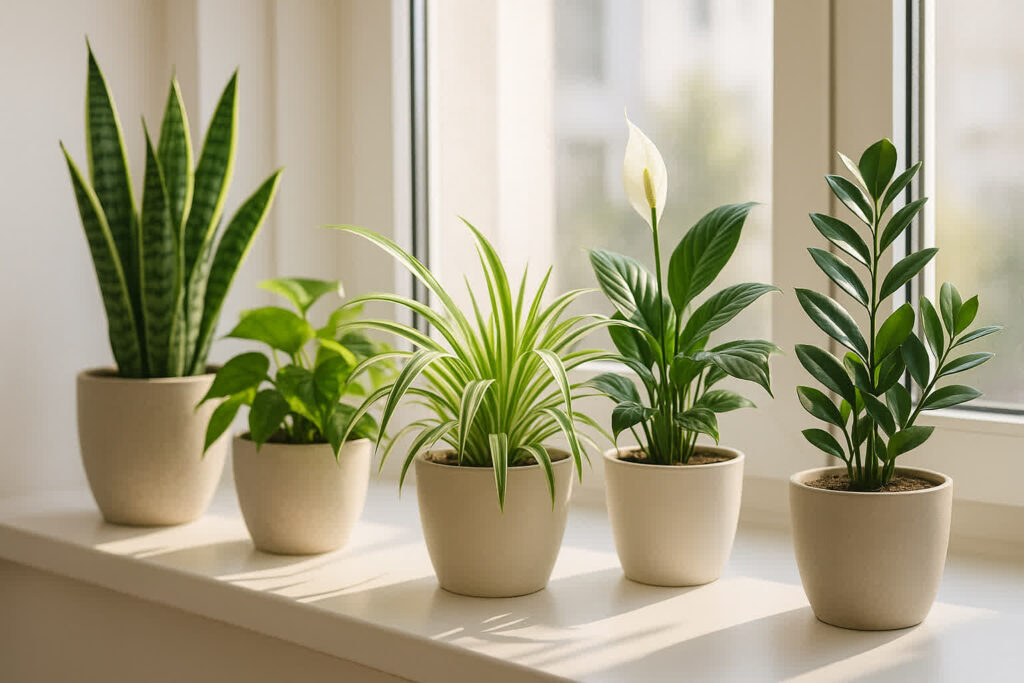
The snake plant, Sansevieria trifasciata, is the plant most often recommended first to beginners — and with good reason. It tolerates weeks of neglect, survives in very low light, and rarely complains even when watering is inconsistent. The thick, upright leaves store water efficiently, making it essentially a succulent adapted to indoor life.
This plant handles 25–200 foot-candles, tolerating both dim corners and brighter rooms. Water it every 2–3 weeks, allowing the soil to dry completely between waterings. Use a well-draining potting mix — sitting in soggy soil is the one condition that reliably kills snake plants. For low light conditions, few houseplants match its resilience.
The catch: snake plants are toxic to cats and dogs if ingested, causing nausea and mouth irritation. Keep them out of reach of pets that chew plants. Prices range from $10–$30 for a 6-inch pot, making it one of the most affordable beginner options available.
Best for: dark apartments, frequent travelers, forgetful owners, anyone who wants a striking vertical plant with almost zero maintenance.
Pothos : The Fast-Growing Favorite
Pothos, Epipremnum aureum, is the plant that gives beginners the fastest reward. Within weeks of bringing cuttings home, you can root them in water, watch new leaves unfurl, and trail vines across shelves or let them cascade from hanging baskets. It’s the ideal first plant for anyone who wants to see noticeable growth quickly.
Pothos tolerates low to medium indirect light — 25–500 foot-candles — making it versatile for most rooms. Water when the top inch of soil feels dry; do not water on a fixed schedule. It propagates in water with near-perfect success rate, and established cuttings transfer easily to soil.
The catch: every part of the pothos plant is toxic if ingested, causing irritation in both pets and humans. It also grows aggressively — vines can reach 6–10 feet indoors, requiring occasional trimming. Prices range from $8–$25 for a 4-inch pot or individual cuttings.
Best for: hanging baskets, water propagation beginners, anyone who wants visible results fast and doesn’t mind an vigorous grower.
Spider Plant : The Air-Purifying Survivor
The spider plant, Chlorophytum comosum, earns its place on every beginner list from the NASA Clean Air Study, which identified it as effective at removing formaldehyde and benzene from indoor air. Beyond its air-purifying credentials, it produces plantlets — small baby plants on long stems — that can be propagated to grow your collection for free.
Spider plants thrive in indirect light of roughly 100–300 foot-candles, making them ideal for bright rooms without direct sun. Water weekly or when the top inch of soil is dry. The plant’s arching white-variegated leaves look attractive in hanging baskets, growing to 1–2 feet wide.
The catch: spider plant leaves develop brown tips in fluoride-rich tap water — a cosmetic issue that doesn’t kill the plant but can be unsightly. Cats are attracted to spider plants and may chew on them, though the plant is only mildly toxic. Prices range from $10–$20 for an established plant with plantlets already attached.
Best for: hanging baskets, beginners learning to propagate, anyone wanting a pet-friendly air-purifying plant that doubles as a give-away factory.
Peace Lily : The Low-Light Bloomer
The peace lily, Spathiphyllum wallisii, is the beginner plant that blooms — producing elegant white spathes in spring and fall even in low-light conditions. Few houseplants flower indoors at all, making the peace lily a standout for anyone who wants visual interest beyond green foliage. If you need pet-safe house plants, note that the peace lily is toxic to pets and requires careful placement.
This plant tolerates low to medium indirect light (25–300 foot-candles) and prefers its soil kept lightly moist, not soggy. The key feature most beginners love: it droops dramatically when thirsty, giving an unmistakable “water me now” signal that even the most forgetful owner can read clearly.
The catch: peace lilies are toxic to cats and dogs if ingested, causing oral irritation and difficulty swallowing. They also droop slightly even from brief underwatering — though they recover within hours of watering. Prices range from $15–$35 for a blooming-size plant.
Best for: low-light bedrooms and offices, beginners who want a plant that clearly communicates its needs, anyone who wants occasional white flowers indoors.
ZZ Plant : The Drought Survivor
The ZZ plant, Zamioculcas zamiifolia, is the plant for people who water their plants once a month — or less. It stores water in thick rhizomes beneath the soil, functioning as a living reservoir that sustains it through drought. Neglect does not stress this plant; it actively prefers it.
ZZ plants tolerate very low light — as little as 25–100 foot-candles — making them one of the most shade-tolerant houseplants available. Water every 2–4 weeks, and err on the side of underwatering. The glossy, dark green leaflets grow on arching stems to 2–3 feet tall.
The catch: this plant is toxic if ingested, causing stomach irritation in pets and humans. It also grows extremely slowly, producing only 3–5 new stems per year — so don’t expect rapid transformation. Prices range from $20–$45 for a 10-inch pot, making it a mid-range investment.
Best for: offices, frequent travelers, neglectful owners, anyone with consistently low light in spaces where other plants struggle.
Philodendron : The Heart-Leaf Classic
The heartleaf philodendron, Philodendron hederaceum, is one of the most enduring and beloved houseplants in cultivation. Its heart-shaped leaves trail beautifully from shelves or climb moss poles, and it grows reliably in conditions that would challenge other plants. Countless varieties exist, but the basic heartleaf philodendron remains the best beginner choice.
This plant prefers medium indirect light — 200–500 foot-candles — and grows fastest in brighter conditions. Water when the top inch of soil is dry. It climbs if given support or trails gracefully from elevated positions, making it versatile for any room layout.
The catch: the philodendron is toxic if ingested, similar to pothos in both chemistry and symptoms. Some varieties available at nurseries are rare or borderline toxic versus safe — the common heartleaf philodendron falls in the toxic category, so treat accordingly. Prices range from $10–$25 for a 4–6 inch pot.
Best for: shelves and moss poles, beginners wanting a climbing plant, anyone who loves the aesthetic of trailing green vines.
Dracaena : The Tree-Like Statement Plant
Dracaena species — particularly Dracaena marginata (Madagascar dragon tree) and Dracaena fragrans (corn plant) — bring architectural, tree-like presence to indoor spaces. Their tall, cane-like stems and grass-like leaf canopies add vertical interest that small tabletop plants cannot match.
Dracaenas grow best in medium indirect light — 200–400 foot-candles — and can tolerate lower light at the cost of slower growth. Water when the top half of the soil feels dry, and avoid overwatering. Mature specimens grow to 3–6 feet indoors, making them effective floor plants for corners and empty spaces. growing grow lights for related context.
The catch: dracaenas are sensitive to fluoride, developing brown leaf tips when watered with fluoridated tap water — a cosmetic issue that doesn’t kill the plant. They are also toxic to pets, particularly cats. Prices range from $20–$50 for a 3-foot specimen, placing it as a higher initial investment but a long-term statement piece.
Best for: corners and empty floor spaces, modern decor, anyone wanting a sculptural plant that grows tall and commanding over years.
How to Pick the Right Plant for You
Choosing among these eight plants depends on three practical factors: your light, your schedule, and whether pets share your home.
If you have dark rooms with minimal natural light, start with snake plant, ZZ plant, or peace lily — all tolerate low foot-candle conditions that defeat most other houseplants. If you travel frequently or regularly forget watering for weeks, snake plant and ZZ plant are nearly impossible to kill through neglect alone.
If you have cats or dogs, your options narrow significantly. Spider plant is the safest choice — non-toxic and resilient. Peace lily, pothos, and philodendron are all toxic to pets and require careful placement out of reach. Snake plant and ZZ plant are also toxic and warrant the same caution.
If you want fast results and visible growth, pothos and spider plant respond quickly to good care and show new growth within weeks. If you prefer a plant that stays the same size with minimal intervention, choose ZZ plant or snake plant.
Any of these eight plants will thrive with basic care. The most common beginner mistake — overwatering — is addressed simply by checking soil moisture before each watering, regardless of which plant you choose.
Quick Comparison Table
| Plant | Light Needs (fc) | Water Frequency | Growth Rate | Pet Safe? | Price Range | Best For |
|---|---|---|---|---|---|---|
| Snake Plant | 25–200 | Every 2–3 weeks | Slow | No | $10–$30 | Dark apartments, neglect |
| Pothos | 25–500 | Every 1–2 weeks | Fast | No | $8–$25 | Fast results, propagation |
| Spider Plant | 100–300 | Weekly | Moderate | Yes (mild) | $10–$20 | Air purification, propagation |
| Peace Lily | 25–300 | Weekly–biweekly | Moderate | No | $15–$35 | Low-light bloom |
| ZZ Plant | 25–100 | Every 2–4 weeks | Very slow | No | $20–$45 | Offices, minimal care |
| Philodendron | 200–500 | Every 1–2 weeks | Moderate–fast | No | $10–$25 | Climbing, trailing |
| Dracaena | 200–400 | Every 1–2 weeks | Slow | No | $20–$50 | Floor plant, statement |
Snake plants (Sansevieria trifasciata), pothos (Epipremnum aureum), and spider plants (Chlorophytum comosum) rank as the best indoor plants for beginners because they tolerate inconsistent watering, survive in low light, and recover quickly from common beginner mistakes like overwatering or under-watering. The single biggest killer of new house plants is overwatering — allow soil to dry between waterings, and choose a plant that matches your apartment’s actual light level.
Turn any PDF statement into a clean sheet
Skip the typos and the hours of copying. Our converter handles any bank statement format and outputs Excel, CSV, or QBO for QuickBooks. No file retention, free to try.