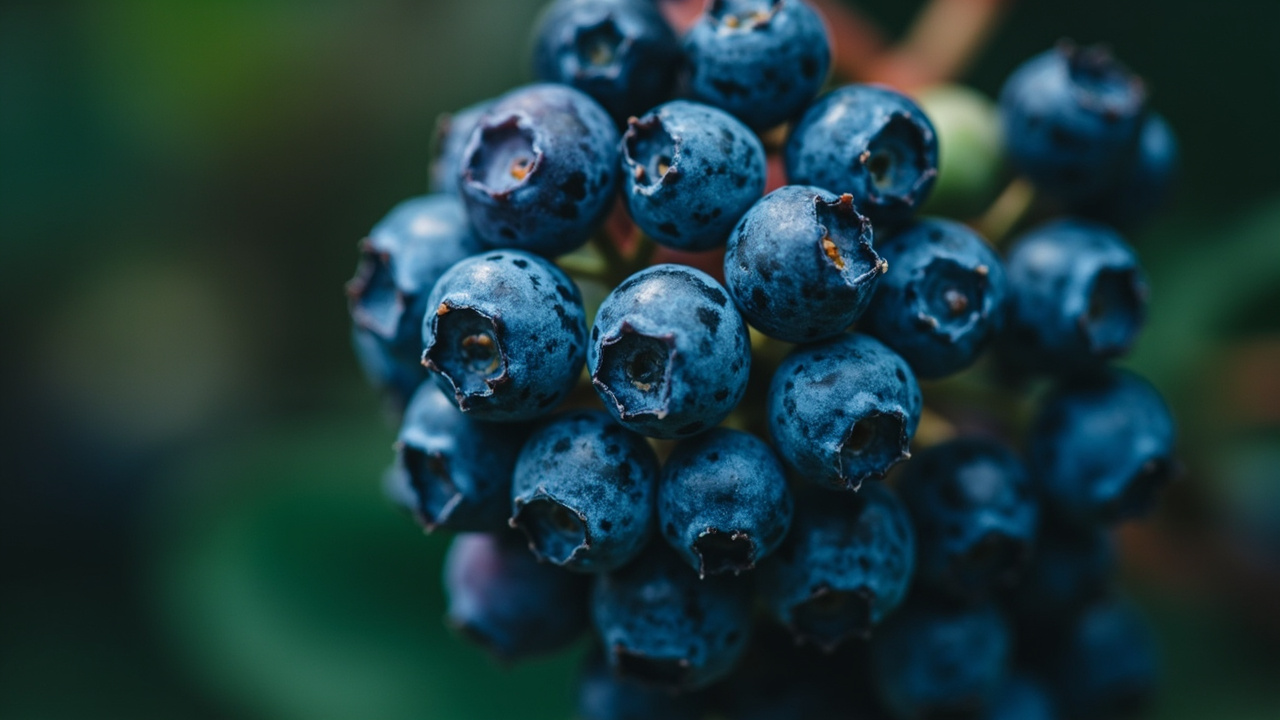
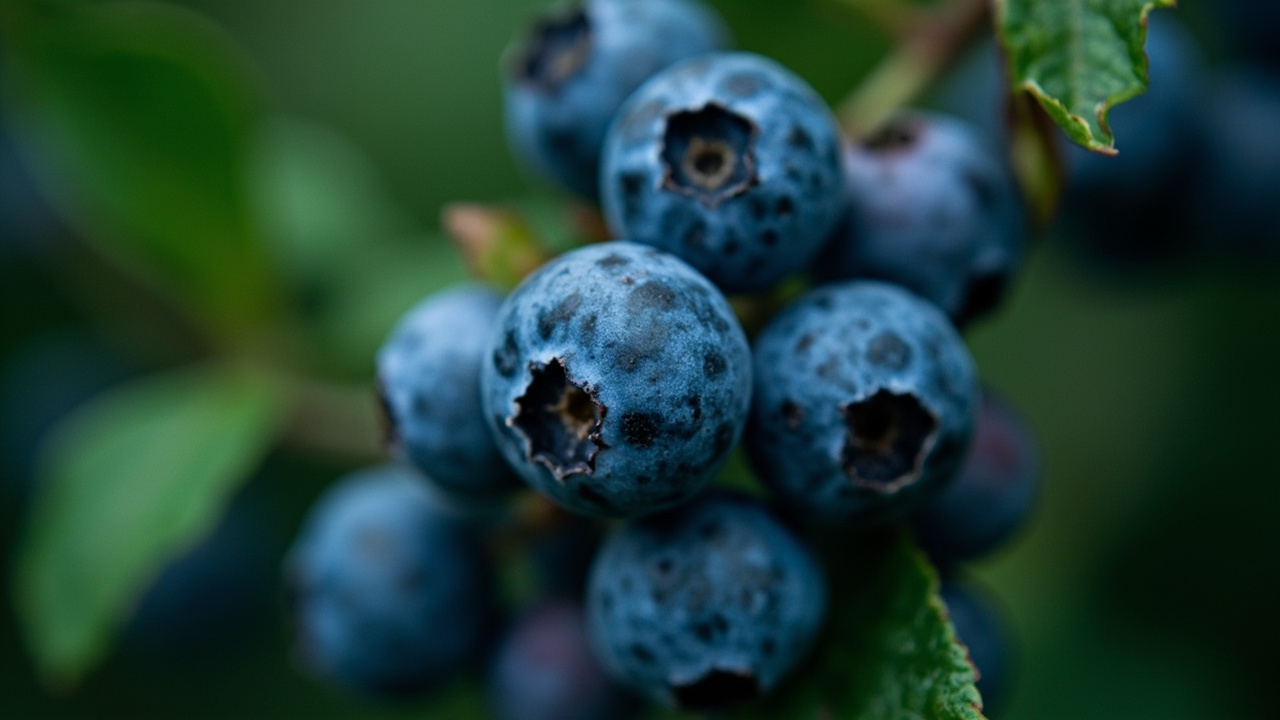
If your blueberry bush looked full of flowers in spring, bloomed beautifully, and produced almost nothing — the plant wasn’t broken. Something prevented pollination. Blueberry flowers are designed for bees, and in a sealed balcony, rooftop garden, or cool spring where pollinator activity is low, the flowers get visited once or twice instead of the 6–8 visits they need to set a full crop. For the full blueberry growing overview, see our growing blueberries at home guide.
Gardeners assume that a flowering plant will fruit on its own. Blueberries don’t follow that rule. Without adequate bee visits during the 2–3 week flowering window, most flowers abort or produce small, seedy berries that drop before they mature. The plant has enough energy and nutrients to set fruit — the transfer of pollen never happened.
How Blueberry Pollination Actually Works
Blueberry flowers require cross-pollination — pollen must come from a different blueberry variety, not just from another flower on the same bush. A single bush planted in isolation will flower but set little to no fruit. Even two bushes of the same variety will fruit poorly because they’re too genetically similar to produce viable seeds.
What you need: at least two different blueberry varieties that bloom at the same time. Southern highbush and rabbiteye blueberries have overlapping bloom windows in mild-winter climates (USDA zones 7–9), while northern highbush varieties overlap in colder climates (zones 4–6). If you have one bush and nothing else, you need to add a second compatible variety within 25–50 feet (7–15 m) for effective bee-mediated pollen transfer.
Why Hand Pollination Works When Bees Don’t
If you have the right varieties but fruit set is still poor — or if you garden in an area where pollinator populations are low — hand pollination is reliable and fast. It takes 5 minutes per bush, works on the first try if you use the right technique, and can improve fruit set from near-zero to 60–80% of flowers in a single season.
The trade-off: hand pollination is time-intensive for more than 2–3 bushes. For a small planting, it’s entirely practical. For a u-pick operation or larger planting, you want to attract more bees rather than hand-pollinate dozens of plants.
Hand Pollination : Step by Step
Step 1: Identify flowers that are at the right stage. Blueberry flowers are ready for pollination when the petals are fully open and the anthers (the structures around the center stigma) are visibly shedding pollen. Flowers that are still closed buds won’t have viable pollen yet. Flowers that have been open for more than 5–7 days have usually already been either pollinated or abandoned by bees.
What happens next: you’ll transfer pollen using a small, soft artist’s brush, electric pollination tool, or even a folded piece of paper shaped into a soft tip.
Step 2: Collect pollen from your second blueberry variety (the pollinizer). Gently brush the anthers of flowers on Variety A, collecting the fine yellow pollen onto your tool. The pollen transfers visibly as a light yellow dust. A single flower contains enough pollen for 5–10 hand pollinations if you’re careful.
What happens next: carry the collected pollen to the flowers of Variety B, which should be open and ready. Pollen viability stays high for 2–3 hours in cool, dry conditions — work in the morning when pollen shed is highest.
Step 3: Gently touch the brush or tool to the stigma (the center tip of the flower, slightly sticky) on Variety B. You’re depositing pollen directly where it needs to go. The stigma is receptive when it looks slightly moist and glistening. If it looks dry, the flower may be past peak receptivity.
What happens next: a pollinated flower will form a tiny green fruit visible within 2 weeks. An unpollinated flower drops within 3 weeks of opening without forming anything visible.
Step 4: Work systematically across the bush, variety by variety. You don’t need to pollinate every single flower — blueberry plants naturally thin many of their own fruit in the weeks after set. Even 50% of flowers setting fruit is a full crop for most home growers. A mature highbush blueberry producing 8–15 pounds (3.5–7 kg) of fruit per year only needs roughly 30–40% of its flowers to successfully set and mature fruit.
Encouraging Natural Bee Activity
If you want to avoid hand pollination long-term, attract more bees to your blueberry planting. Honeybees and native solitary bees (particularly bumblebees) are the most effective blueberry pollinators. Bumblebees work in cooler temperatures and earlier in the day than honeybees, which makes them more reliable in northern climates and cool coastal springs.
To attract bumblebees: avoid all pesticides in your garden during bloom. Even broad-spectrum organic pesticides like pyrethrin kill bees within hours of application. Plant clover, wildflowers, or herbs that bloom around the same time as your blueberries to give bees a reason to be in your garden before and after blueberry flowering.
Companion Plants for Blueberry Pollination
Lavender, wild rosemary, and phacelia (used as cover crop) bloom around late spring and provide bee forage that draws pollinators into the garden. If your blueberry bushes are near a lawn that gets treated with chemicals or a vegetable garden where pyrethrin is used for pest control, bees will avoid the area even if flowers are present.
For best results, plant companion flowers in a strip 3–4 feet (1 m) wide along the sunny side of the blueberry row. This gives bees a landing zone before they move to the blueberry flowers. White clover (Trifolium repens) works well as a living mulch between bushes — it fixes nitrogen at low levels that won’t push the soil pH up, and its flowers attract bumblebees from early spring onward.
Buzz Pollination: Why Blueberries Need Bumblebees Specifically
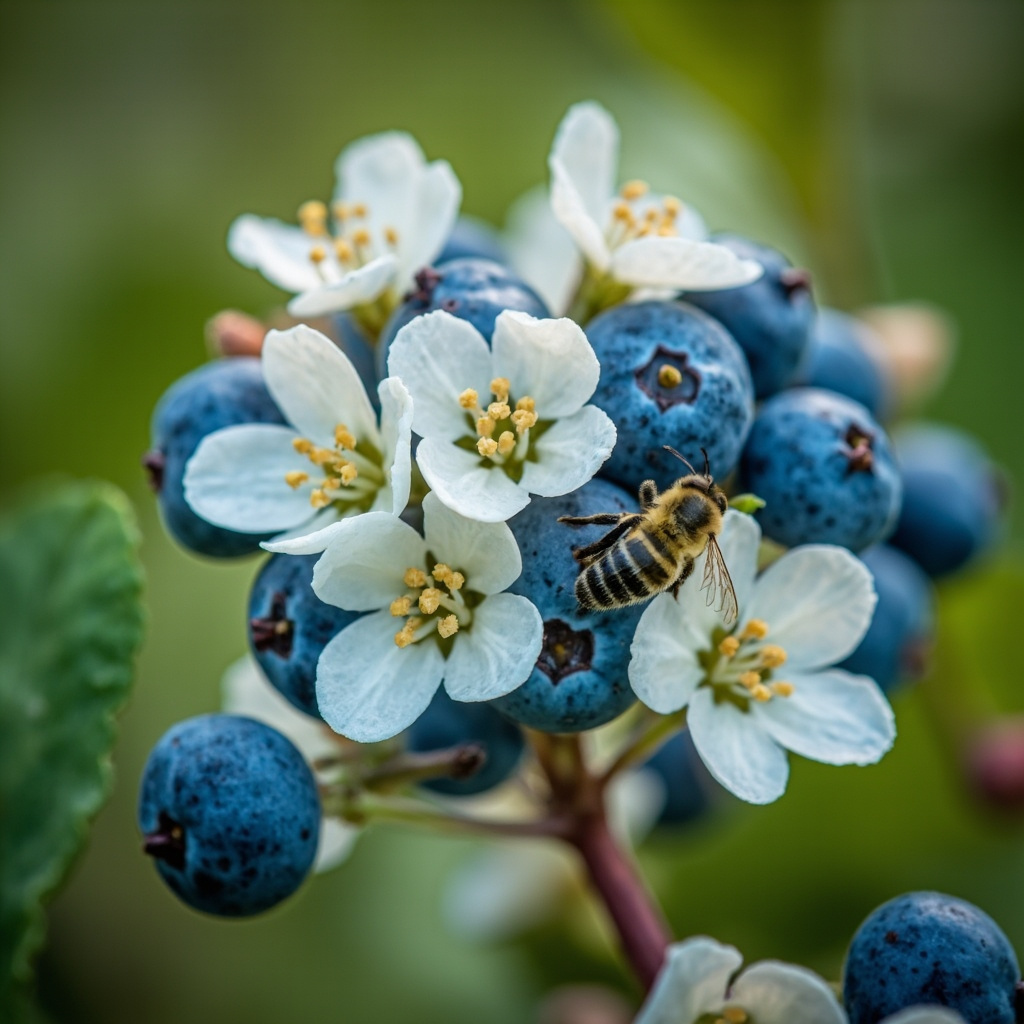
Blueberry flowers have a specialized pollination mechanism called buzz pollination (sonication). The pollen is locked inside tubular anthers with small pores at the tip — it doesn’t shake loose the way pollen does on apple or cherry flowers. A bee must grab the flower and vibrate its flight muscles at a specific frequency (around 400 Hz) to dislodge the pollen. Honeybees cannot perform buzz pollination. Only bumblebees and certain native solitary bees (carpenter bees, mason bees) have this ability.
This is why a garden full of honeybees can still have poor blueberry fruit set: honeybees visit the flowers, drink the nectar, but leave without transferring pollen effectively. Bumblebees sonicate each flower for 1–4 seconds and deposit far more pollen per visit than any other pollinator. Research from the University of Maine found that a single bumblebee visit sets as many seeds as 5–7 honeybee visits on highbush blueberry.
Practical implication: if your blueberries flower but fruit set stays low despite visible bee activity, the visitors are likely honeybees, not bumblebees. Bumblebees are larger, louder, and more robust — they fly in cooler weather (below 55°F / 13°C) and in light rain when honeybees stay in the hive. To specifically attract bumblebees, provide nesting habitat: an undisturbed corner with dry grass, a wooden box filled with cotton batting, or an overturned clay pot partially buried in the ground. Bumblebees nest in small colonies (50–400 individuals) and forage within a few hundred meters of their nest, so having them resident in your garden is far more effective than hoping wild visitors show up.
Why Poor Fruit Set Happens Even With Bees
Late spring frost after the flowers open is the most common natural cause of poor fruit set in blueberries. Blueberry flowers tolerate temperatures down to 28°F (-2°C) when closed, but open flowers are damaged at 30°F (-1°C). A single frost event during peak bloom can destroy 50–90% of pollinated flowers even if bee activity was good beforehand. If your area gets late frosts, covering bushes with frost cloth before cold nights during bloom is the only reliable protection.
The second most common cause: using a pollinizer variety with a mismatched bloom window. If your second blueberry variety blooms 2 weeks earlier or later than your main variety, their bloom windows don’t overlap enough for cross-pollination. Before buying a second variety, check the specific bloom dates for your climate zone, not just the hardiness rating.
Frost Damage vs. Pollination Failure
You can tell the difference by looking at the flowers after a frost. Frost-damaged flowers have brown, mushy petals that collapse inward. Flowers that simply weren’t pollinated look normal but drop cleanly from the bush without forming any fruit. If your flowers look healthy but you’re getting no fruit, the problem is pollination — not frost.
The Variety Selection Rule
For persistent poor fruit set despite having bees, the most likely cause is a variety mismatch. Southern highbush varieties like ‘Misty’ and ‘Sharpblue’ cross-pollinate well with each other. Rabbiteye varieties like ‘Premier’ and ‘Tifblue’ also cross-pollinate within their group. But mixing a northern highbush with a rabbiteye variety typically results in poor fruit set because their bloom windows don’t overlap enough in most climates.
blueberry bush not producing fruit covers the common reasons blueberries fail to fruit after the pollination question — including soil pH, drainage, and chill hour requirements. Pollination is the first thing to check before looking at nutrition, because no amount of fertilizer fixes a pollination problem.
For choosing which varieties to plant together, best blueberry varieties for home gardens lists specific varieties with their bloom timing, chill hour needs, and cross-pollination compatibility for USDA zones 4–10.
Turn any PDF statement into a clean sheet
Skip the typos and the hours of copying. Our converter handles any bank statement format and outputs Excel, CSV, or QBO for QuickBooks. No file retention, free to try.
Convert your statement