The soil your Philodendron grows in is more than a medium to hold the plant upright. It is the entire environment for the root system — where the plant feeds, breathes, and regulates its water intake. Getting the soil right is the single biggest difference between a Philodendron that just survives and one that grows vigorously with large, healthy leaves.
What Philodendron Roots Actually Need
Philodendrons are aroids — related to Pothos and Monsteras — and their roots are adapted to the same conditions: moisture available but not stagnant, and oxygen present at all levels of the root zone. Dense, compacted soil that stays wet for days suffocates roots and creates the conditions for root rot. Soil that drains too fast leaves the roots perpetually dry and the plant perpetually thirsty.
The ideal Philodendron soil has three qualities:
- Moisture retention: holds enough water to sustain the plant between waterings
- Fast drainage: water flows through in seconds, not minutes — no waterlogging
- Aeration: air pockets exist even in moist soil so roots can breathe
The Best Philodendron Soil Mix
The formula used by most serious aroid growers:
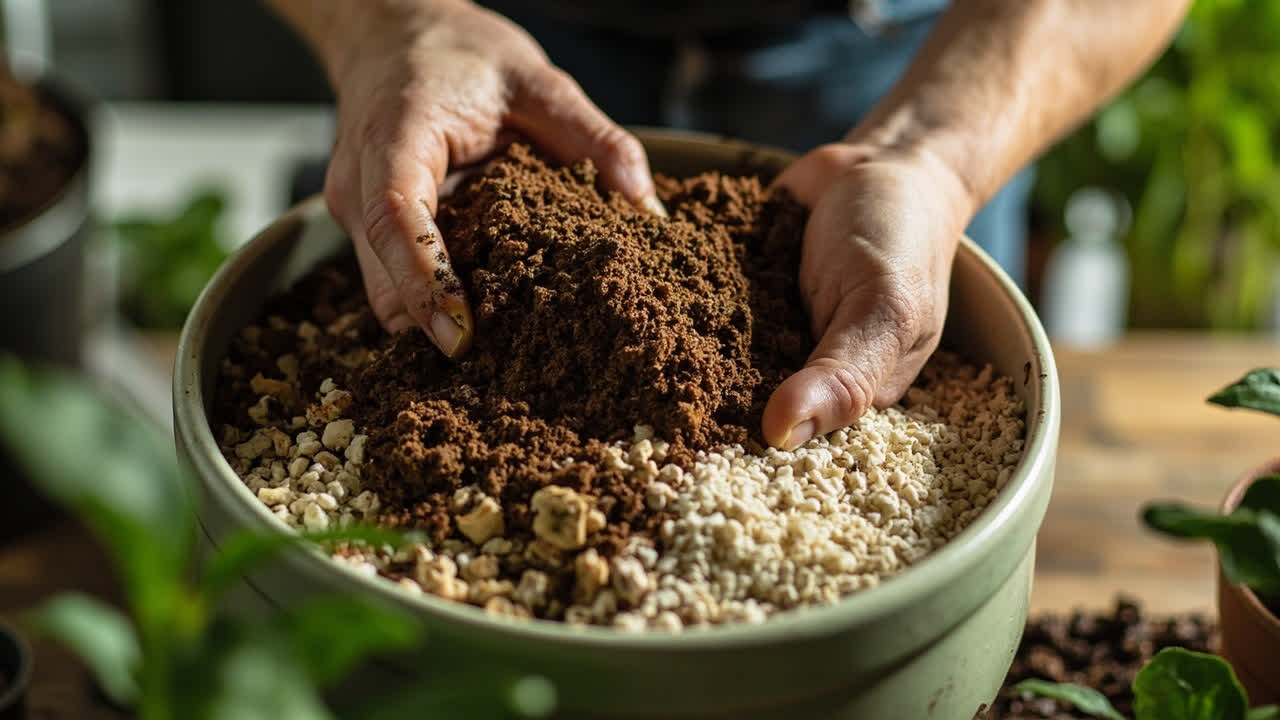
- Two parts quality general potting mix
- One part perlite (coarse grade)
- One part orchid bark or coarse bark chips
The perlite is the critical component. It creates permanent air pockets in the soil structure that do not collapse over time, unlike organic matter which breaks down and compresses. Perlite is also inert — it does not decompose, so the soil structure remains viable for years.
The bark adds chunky, open material that further prevents compaction and contributes to the slight acidity that Philodendron roots prefer.
A simplified alternative that still works well: a 50/50 mix of quality potting mix and perlite. This is less ideal than the three-component mix but is a significant improvement over straight potting mix and is sufficient for most home growing situations.
What Happens With Standard Potting Mix Alone
Standard potting mix is designed for general container plants and tends to be too dense and moisture-retentive for Philodendrons. On its own, it stays wet for three to five days after watering in typical indoor conditions, which is the threshold beyond which Philodendron roots begin to suffer.
Plants in standard potting mix survive — they do not immediately die. But they are more prone to root rot, slower growing, and more likely to develop yellow leaves and other stress symptoms that have no obvious cause. Adding perlite alone addresses the most critical issue even without the bark component.
Commercial Aroid Mixes
Pre-mixed aroid or tropical plant mixes are available from specialist nurseries and online shops in Singapore. These are formulated for the exact drainage and moisture balance that Philodendrons need and eliminate the need to mix your own. They cost more than general potting mix but are worth it for serious Philodendron growers, particularly those with multiple plants.
Soil pH for Philodendrons
Philodendrons grow best in slightly acidic soil, in the range of 5.5 to 6.5 pH. Most quality potting mixes in Singapore fall within this range naturally. If you use tap water that is alkaline (high in calcium), the soil can gradually shift toward higher pH over many months. Using filtered water or rainwater for Philodendrons helps maintain the right pH range, particularly for sensitive variegated varieties.
When to Refresh the Soil
Soil is not permanent. Organic components break down, perlite gets buried or displaced, and the drainage quality of even a good mix degrades over time. For a Philodendron in a 15 to 20 cm pot, refreshing the top 2 to 3 cm of soil every six months — removing the old and replacing with fresh mix — maintains the right conditions without full repotting.
Full soil refresh with repotting every two to three years keeps the root environment optimal. The best time is spring or early summer when the plant is entering its active growth phase.
For general Philodendron care, see the Philodendron Care guide.
Turn That PDF Into a Spreadsheet in Minutes
You've seen how to do it manually — now let the tool handle the heavy lifting. Upload your bank statement and get Excel, CSV, or QBO in a few clicks.