If you want oregano that actually tastes like oregano, the variety on the label matters more than how you grow it — Greek oregano (Origanum vulgare hirtum) carries three times the carvacrol of generic oregano cultivars. Walk into any nursery and you’ll find packets labeled simply “oregano” with no subspecies listed — those are almost always Origanum vulgare without a named cultivar, and they’ll give you the same weak flavor that made you look up varieties in the first place. Here’s how to pick the right one before you plant.
The single metric that decides everything is carvacrol content. Greek oregano (O. vulgare hirtum) tests at 3–5% carvacrol by dry weight. Common unnamed oregano tests at 1–2%. Sweet marjoram (which isn’t oregano at all) tests below 0.5%. The RHS notes that “the best-flavored oreganos are Origanum vulgare subsp. hirtum and Greek strains of O. vulgare” — everything else is a compromise.
Use this framework: if you cook Mediterranean food, buy Greek oregano. If you want a sweeter, more versatile herb for sauces and pesto, buy Italian oregano. If you’re landscaping a sunny slope, buy golden oregano. If you cook French or need a mild herb, buy sweet marjoram — but know it’s a different species entirely. The wrong choice isn’t a failure; it’s just the wrong tool for the job.
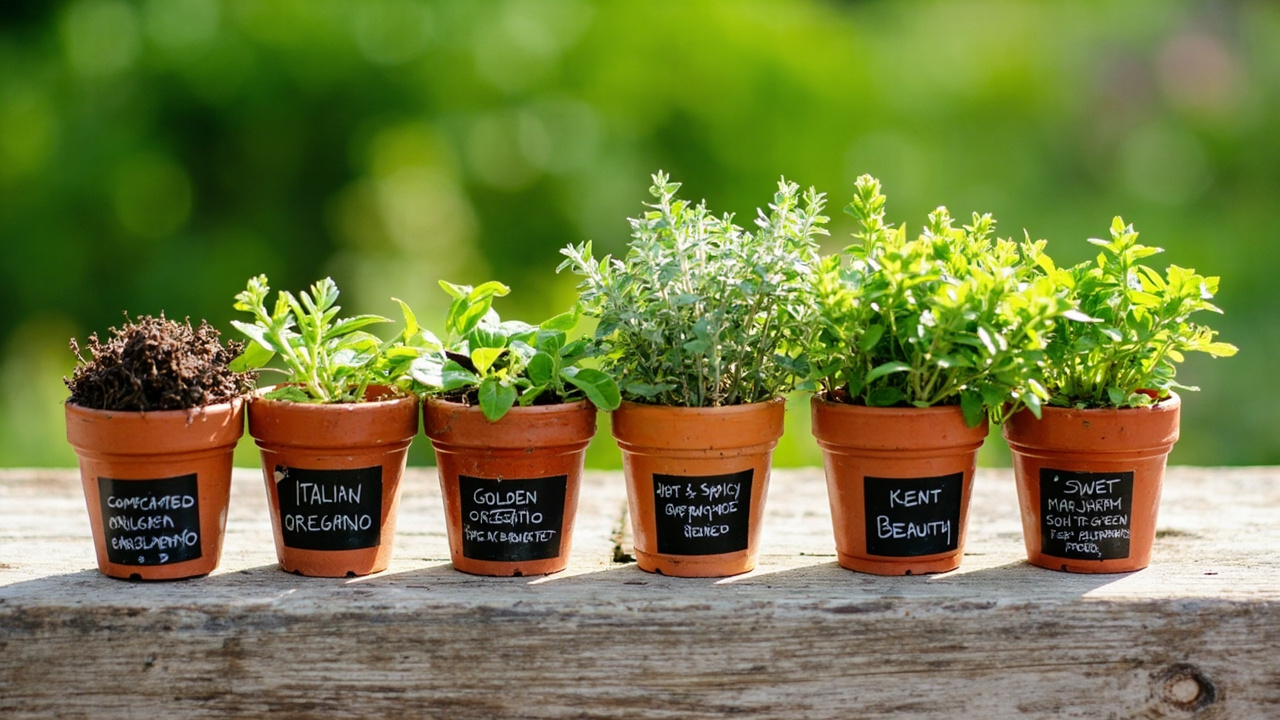
The 6 Oregano Varieties Worth Knowing
Greek oregano (O. vulgare hirtum) — the culinary gold standard. Intense, peppery, slightly bitter. Cold-hardy to zone 5. Compact growth to 18 inches. Carvacrol: 3–5%. Best for: tomato sauces, grilled meat, anything that needs assertive oregano flavor.
Italian oregano (O. vulgare × O. majorama hybrid) — the versatile middle ground. Sweeter and less bitter than Greek, with a more complex aroma. Hardy to zone 6. Grows slightly larger and more vigorously. Best for: pesto, herb blends, white sauces, pizza.
Golden oregano (O. vulgare ‘Aureum’) — the ornamental culinary dual-purpose. Bright chartreuse leaves, mild flavor (carvacrol ~1.5%). Hardy to zone 4 — the cold-hardiest oregano. Spreads aggressively as ground cover. Best for: edging pathways, container color, light seasoning.
Hot & Spicy oregano (O. vulgare ‘Hot and Spicy’) — the container specialist. Compact habit, very high carvacrol (4–5%+), small leaves. Hardy to zone 5. Best for: small pots, chili dishes, dried herb blends.
Sweet marjoram (Origanum majorana) — not oregano at all. Delicate, sweet, floral flavor. Half-hardy annual in zones 7 and below. Best for: French cuisine, herbal tea, mild herb blends.
Kent Beauty (O. rotundifolium) — purely ornamental. Trailing habit, hops-like pink bracts, negligible flavor. Hardy to zone 7. Best for: hanging baskets, cascading container displays.
The carvacrol spectrum explains why flavor varies so dramatically. Greek and Hot & Spicy oreganos sit at the top (3–5%), Italian in the middle (2–3%), golden and common oregano at the bottom (1–2%), and sweet marjoram barely registers. NC State Extension confirms that subspecies identification is the strongest predictor of essential oil content — more reliable than growing conditions, harvest time, or drying method.
Hardiness ranges from zone 4 (golden oregano) to zone 7+ (Kent Beauty, sweet marjoram). If you’re in zone 5 or colder, stick with Greek, Hot & Spicy, or golden — the others need winter protection or must be treated as annuals. All oreganos tolerate heat well; cold tolerance is the limiting factor.
Three varieties earn dual-purpose status: golden oregano (mild culinary + ground cover), Italian oregano (culinary + moderate ornamental), and Hot & Spicy (culinary + compact container beauty). The rest are specialists — Greek for pure flavor, sweet marjoram for mild French cooking, Kent Beauty for hanging baskets.
Greek Oregano — The Culinary Standard
Origanum vulgare hirtum — also called Greek oregano or Turkish oregano — is the subspecies that defines what oregano should taste like. Native to the mountainous Mediterranean, it evolved in rocky, alkaline soils at elevation, which is exactly why it produces such concentrated essential oils. The small, grey-green leaves are fuzzy (hirtum means “hairy” in Latin) and pack more flavor per leaf than any other oregano.
Carvacrol content in Greek oregano ranges from 3% to 5% of dry weight, compared to 1–2% for common Origanum vulgare without subspecies designation. A University of Maryland Extension analysis found that Greek oregano’s thymol-to-carvacrol ratio (roughly 1:4) produces the warm, peppery flavor profile that Italian and Mexican cuisines depend on. This isn’t a subtle difference — it’s the gap between “I can taste the oregano” and “this just tastes herby.”
The flavor is assertive: warm, slightly bitter, with a peppery finish that lingers. It stands up to long cooking (tomato sauces, braises, grilled lamb) where milder herbs disappear. For raw applications like salads, use about half what the recipe calls for — Greek oregano is that much stronger. It’s the default choice for anyone who cooks Mediterranean, Mexican, or Middle Eastern food.
Growing Greek oregano is straightforward: it’s cold-hardy to zone 5 (with mulch), compact at 12–18 inches, and slow to bolt in summer heat. It’s less vigorous than Italian oregano, which means it stays neater in containers but spreads more slowly in garden beds. For the full growing protocol including light, water, and soil requirements, see the oregano care complete guide.
Italian Oregano — The Balanced Hybrid
Italian oregano is a natural cross between Greek oregano (O. vulgare) and sweet marjoram (O. majorana), and it inherits the best traits of both parents. The flavor is sweeter and more aromatic than Greek oregano, with less bitterness and a more complex profile that includes notes of clove and sage alongside the familiar warmth. It’s the oregano that disappears beautifully into pesto, white sauces, and herb blends where Greek would bully the other ingredients.
Carvacrol content sits at 2–3% of dry weight — noticeably milder than Greek but still clearly oregano. The Missouri Botanical Garden notes that Italian oregano is “preferred by cooks who find Greek oregano too aggressive for delicate dishes.” The trade-off is versatility: Italian oregano works in everything from pizza to fish to salad dressings, while Greek oregano dominates anything it touches.
Best use cases: pesto (where it complements rather than overwhelms basil), herb blends (herbes de Provence, Italian seasoning), white sauces and cream-based dishes, pizza (sprinkled fresh), and any recipe where you want oregano present but not leading. If Greek oregano is a soloist, Italian oregano is a section player — it makes everything around it better.
Italian oregano is slightly less cold-hardy than Greek (zone 6 vs. zone 5) and grows more vigorously — up to 24 inches tall and wide if given space. In containers, it needs a 10-inch pot minimum and benefits from the same gritty, lean soil mix as all oreganos. For the exact soil recipe and container specifications, see the oregano soil and container guide.
Golden, Hot & Spicy, Sweet Marjoram, and Ornamental Types
Golden oregano (O. vulgare ‘Aureum’) is the cold-hardiest variety, surviving to zone 4 with mulch protection. The chartreuse leaves brighten container arrangements and garden edges, and the flavor is mild but pleasant — roughly 1.5% carvacrol. It spreads aggressively (18+ inches per season) and makes an excellent ground cover in sunny, dry locations where nothing else will grow. Downside: it can become invasive in garden beds; containers keep it contained.
Hot & Spicy oregano (O. vulgare ‘Hot and Spicy’) is the container gardener’s oregano. It stays compact (8–12 inches), produces very small leaves with outsized carvacrol content (4–5%+), and thrives in small pots where other oreganos would outgrow the space. The flavor is genuinely hot — closer to a mild chili than traditional oregano. Hardy to zone 5. If you have a sunny windowsill and want maximum flavor from minimum space, this is your plant.
Sweet marjoram (Origanum majorana) is not oregano — it’s a closely related species with a completely different flavor profile. Where oregano is warm and peppery, sweet marjoram is delicate, sweet, and slightly floral. It’s essential in French cuisine (herbes de Provence, bouquet garni) and herbal tea blends. The catch: it’s a half-hardy annual in zones 7 and below, dying at the first frost. Grow it as a summer annual or bring it indoors for winter. If you bought “oregano” and it tastes sweet and mild, this is probably what you actually have.
Kent Beauty (O. rotundifolium) and similar ornamentals exist purely for visual appeal. They produce trailing stems with papery, hop-like pink bracts that look stunning in hanging baskets. Flavor is negligible — don’t cook with them. Hardy to zone 7 only, and they need the same full sun and sharp drainage as culinary oreganos. They’re conversation pieces, not ingredients.
Which Oregano to Buy — The Decision Framework
You cook Mediterranean or Mexican food: Buy Greek oregano (O. vulgare hirtum). Nothing else delivers the flavor intensity these cuisines require. Available as seeds or starter plants from most nurseries.
You want one herb for everything: Buy Italian oregano. It’s versatile enough for pizza, pesto, salads, and sauces without overwhelming any of them. The best all-rounder for gardeners who only have room for one oregano.
You’re landscaping a sunny slope or pathway edge: Buy golden oregano. It spreads fast, stays low, tolerates foot traffic, and the chartreuse color looks intentional. Just keep it away from slower-growing plants it will smother.
You cook French or need a mild herb: Buy sweet marjoram (O. majorana). Know it’s a different species, treat it as an annual in cold climates, and use it wherever you’d use a gentle, sweet herb.
What to look for on labels: the subspecies or cultivar name matters more than the common name. “Greek oregano,” “Italian oregano,” or “Origanum vulgare hirtum” on the label means you’re getting the right plant. A packet that says only “oregano” or “Origanum vulgare” without a subspecies is almost always the mild, generic form. Seed packets from reputable suppliers (Baker Creek, Renee’s Garden, Botanical Interests) list the subspecies; big-box store packets often don’t.
The one mistake that trips up most buyers: purchasing Origanum vulgare without a subspecies or cultivar designation and expecting strong flavor. That unnamed subspecies is the botanical equivalent of “blend coffee” — it’ll work, but it won’t impress. Always look for “hirtum,” “Hot and Spicy,” “Aureum,” or “Italian” on the label.
Seeds vs. starter plants: Greek and Italian oregano grow easily from seed (germination in 7–14 days) and are cheaper per plant. Sweet marjoram and ornamentals are easier to buy as starter plants since they’re slower to establish. For container growing, starter plants save 4–6 weeks and give you immediate variety confirmation. For garden beds, seeds are economical and oregano self-seeds reliably in subsequent years.
From PDF to Excel in one click
Forget retyping line by line. Upload any bank statement, get a spreadsheet you can actually use. Your files are never stored, and you can test the converter with 3 free conversions.
Try it free