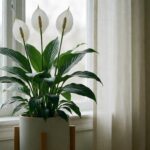
Snake plants are succulents — they store water in their thick leaves and are adapted to survive in arid conditions with low humidity. This means they are far less demanding about humidity than most tropical houseplants, and they actually perform better in lower humidity than in constantly moist air.
If you have been struggling to keep a snake plant healthy in a humid Singapore home, the answer is usually less water and better drainage, not more humidity management.
What Snake Plants Need From Humidity
The simple answer: almost nothing. Snake plants evolved in West African arid environments where humidity is often very low — sometimes below 30 percent. They are not native to tropical rainforests. High humidity does not damage them, but it is not something they need, and actively managing humidity for snake plants is generally unnecessary.
This is one of the key differences between snake plants and tropical climbers like Pothos, Philodendrons, or Monsteras. Those plants come from environments where humidity is consistently high, and they develop brown tips and other stress symptoms in dry air. Snake plants do not have this problem. The dry air in air-conditioned rooms — which typically ranges from 40 to 60 percent — is perfectly acceptable for snake plants.
When Humidity Causes Problems
Very high humidity — above 80 percent, combined with poor air circulation — can create conditions where fungal issues develop on snake plant leaves. This is more common in terrariums or very poorly ventilated spaces than in normal homes. In standard Singapore home conditions with normal ventilation, humidity is not a concern for snake plants.
If a snake plant is kept in a bathroom with no ventilation and consistently very high humidity, it may develop fungal leaf spots or other humidity-related issues. The fix is simple: move the plant to a space with better air circulation.
Common Misconceptions
Many people assume that because Singapore is humid, their tropical houseplants need supplemental humidity — humidifiers, pebble trays, regular misting. This is true for tropical forest plants but not for snake plants. Misting a snake plant does nothing beneficial — the moisture evaporates quickly and provides no lasting humidity benefit. Pebble trays under a snake plant offer no meaningful advantage for the plant itself, though they can help prevent the pot from leaving water marks on furniture.
The energy spent managing humidity for snake plants is better directed toward two things: correct watering frequency and fast-draining soil. Those two factors are responsible for the vast majority of snake plant health problems. Humidity is rarely relevant.
What This Means for Placement
Snake plants can go anywhere in a typical Singapore home — air-conditioned living rooms, bedrooms, offices, hallways with some light. They do not need a bathroom’s humidity or a kitchen’s warmth. They are among the most flexible houseplants for placement, and they perform well in climate-controlled conditions that would challenge more humidity-dependent plants.
For general snake plant care, see Snake Plant Care.
Turn any PDF statement into a clean sheet
Skip the typos and the hours of copying. Our converter handles any bank statement format and outputs Excel, CSV, or QBO for QuickBooks. No file retention, free to try.
Convert your statement