Snake plant root rot is likely when the soil stays wet for days, the lower leaf bases feel soft, and the plant starts to lean or yellow from the base instead of drying from the tips. The urgent signal is not just a yellow leaf. It is yellowing paired with softness, stagnant soil, or a sour smell from the pot.
The reason root rot can look sudden is that most of the damage starts below the surface. A snake plant stores water in thick leaves and rhizomes, so the top can look stable while the roots are already losing oxygen. By the time several leaves collapse at once, the below-soil problem has usually been building for weeks.
What Root Rot Looks Like In A Snake Plant
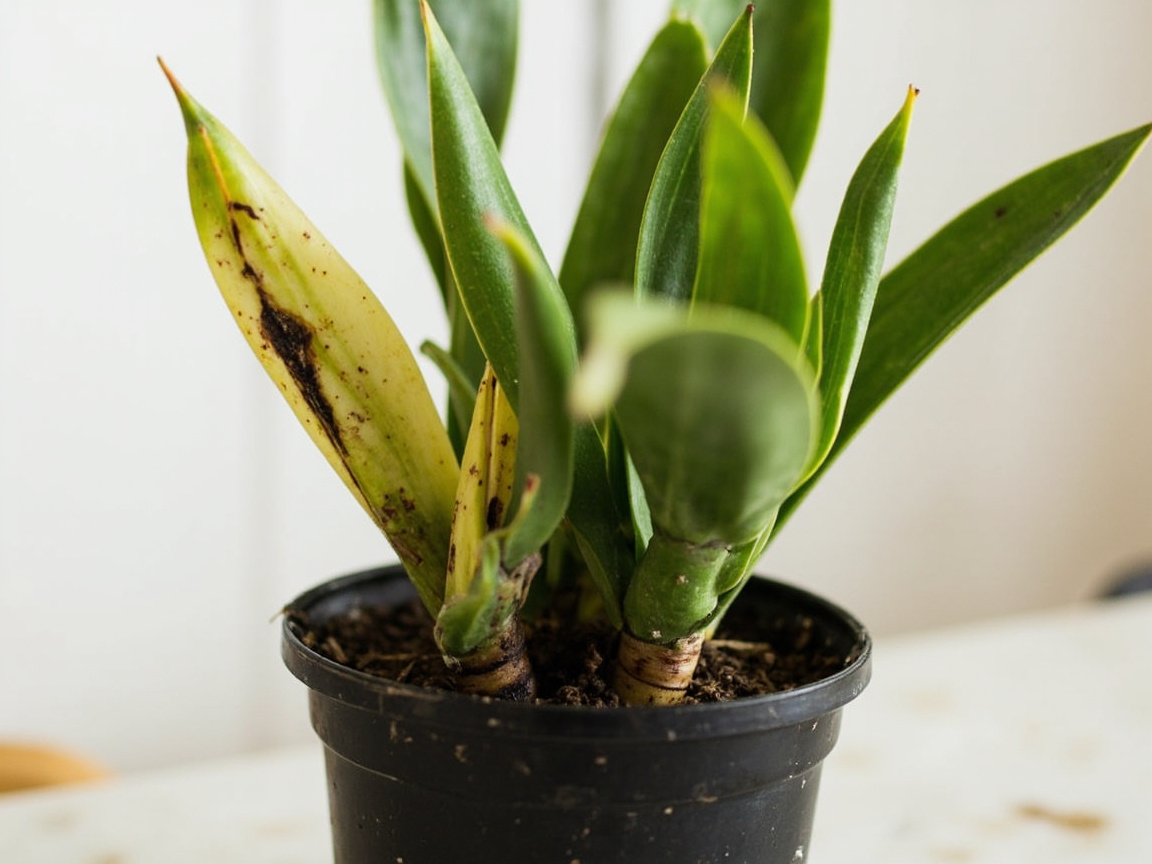
Early snake plant root rot often starts as a softening at the leaf base, right where the leaf meets the soil line. The leaf may turn dull green, then yellow, then feel loose when you press gently near the crown. A healthy snake plant leaf feels firm and anchored. A rotting leaf base feels slightly inflated, watery, or weak.
The pattern matters more than one symptom. A single old outer leaf can yellow naturally, but root rot usually brings a cluster of signals: soil that still feels damp several days after watering, more than one leaf yellowing at once, a base that gives under light pressure, and leaves that lean even though they have not been bumped. In advanced cases, the plant may smell sour or swampy when you move the pot.
Below the soil, healthy roots are pale to tan and firm. Rotted roots are brown or black, limp, and easy to strip away. The rhizome, the thick underground storage stem that sends up new leaves, should feel solid. If it feels mushy, the problem has moved from mild root stress into a serious rot case.
Why Wet Soil Causes The Damage
Snake plants are drought-adapted plants. Their thick leaves and rhizomes store water so the plant can survive dry periods, but that same adaptation makes constant moisture risky indoors. Roots need oxygen as much as they need water. When the potting mix stays wet, the air spaces between particles fill with water, oxygen drops, and the roots begin to suffocate.
Once oxygen drops, damaged roots can no longer move water cleanly into the plant. That is why a rotting snake plant can look both overwatered and thirsty at the same time: the pot is wet, but the leaves wrinkle, soften, or collapse because the roots are failing. Adding more water at this stage makes the oxygen problem worse.
Root rot usually begins when the pot never reaches the dry phase described in snake plant watering. A snake plant should dry deeply between soaks, especially in low light, cool rooms, or winter. If the soil is still damp at knuckle depth a week after watering, the plant is sitting in a risk zone even if the leaves still look upright.
Soil And Pot Conditions That Raise Risk
Root rot is rarely caused by one watering mistake. It usually appears when watering, soil, pot size, and light all slow the dry-down at the same time. A dense mix keeps the rhizome wet too long, which is why snake plant soil is part of the diagnosis.
- Dense potting mix: peat-heavy indoor mix can hold water around the rhizome long after the top looks dry.
- No drainage hole: water collects at the bottom of the pot, so the lower roots sit in a saturated layer.
- Oversized pot: extra soil holds extra water that the root system cannot use quickly.
- Low light: the plant uses less water, so the same watering routine becomes too frequent.
- Cool room: evaporation slows, roots work more slowly, and wet soil stays wet longer.
The honest trade-off is that a moisture-retentive mix is not automatically bad in a hot, bright room. It becomes a problem when the indoor conditions are slow and the pot stays damp. Diagnose the whole system, not just the last time you watered.
Root Rot Pattern Table
Use the pattern below to judge urgency before disturbing the plant. The more columns that match the advanced row, the less this is a wait-and-see situation.
| Stage | Leaf signal | Soil signal | Urgency |
|---|---|---|---|
| Early risk | One lower leaf softening near the base | Soil still damp several days after watering | High watchfulness; hold water and monitor firmness |
| Active rot | Several leaves yellowing, leaning, or soft at the crown | Wet soil, slow dry-down, possible sour smell | Needs root inspection soon |
| Advanced collapse | Mushy rhizome, leaves pulling free, sections collapsing | Stagnant soil that stays wet and smells bad | Recovery becomes urgent and may not save every section |
A useful test is pressure, not color alone. Dry brown tips can be cosmetic. A soft base that moves under light pressure means the tissue itself is breaking down. If you can gently wiggle a leaf and it feels detached from the crown, assume the rot is more advanced than the leaf color suggests.
When Repotting Or Rescue Becomes Necessary
If the plant is stable but the mix is failing, snake plant repotting is the next structural check. Repotting becomes necessary when the pot has no drainage hole, the mix stays wet for more than a week in normal room conditions, or the plant keeps developing new soft bases after you have stopped watering.
Do not repot automatically for one yellow old leaf on a firm plant. Disturbing a healthy rhizome can slow growth for no benefit. But do not wait indefinitely if the base is mushy, the soil smells sour, or multiple leaves are collapsing together. Root rot moves through weak tissue, and delay is what turns a small diagnosis into a plant-wide rescue.
After any structural change, the recovery signal is new firm growth from the center or a stable crown that does not continue softening. That can take several weeks. Lack of visible new growth in the first few days is not failure; continued softness is the warning sign.
When This Is No Longer Just Diagnosis
A snake plant with collapsing leaves and a mushy rhizome belongs in the dying snake plant recovery path. At that point, the question is no longer “Is this root rot?” but “Which firm sections, if any, are still worth saving?”
If the crown is still firm, the plant has a realistic chance. If the rhizome is soft through the center and every leaf base pulls away easily, recovery becomes uncertain. That is the moment to stop watering, stop fertilizing, and move from diagnosis into rescue.