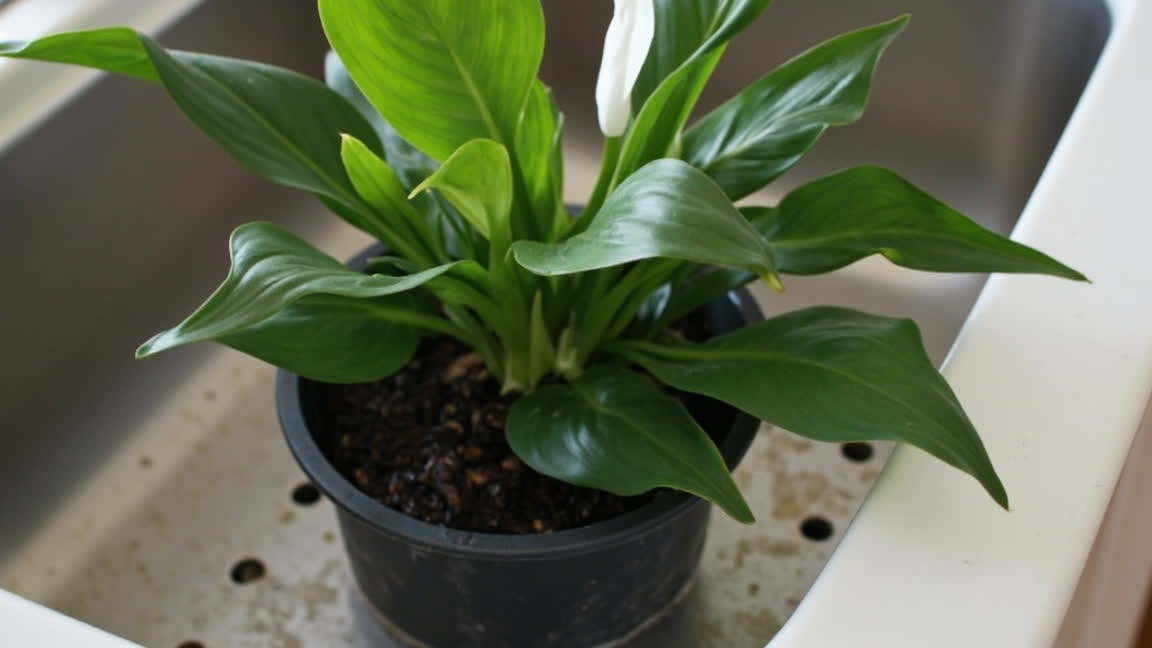

Peace lily soil should hold light, even moisture while still letting air reach the roots. A good mix feels soft and springy after watering, drains through the pot, and does not stay heavy for days.
Standard indoor potting mix can work for a peace lily if it is fresh and loosened with drainage materials. The trouble starts when the mix compacts, turns muddy, or dries into a hard block that water runs around instead of through.
The Soil Texture A Peace Lily Needs
A peace lily grows from a crown with fine roots that need both water and oxygen. The ideal potting mix is moisture-retentive enough to keep those roots from drying hard, but open enough that excess water can leave the pot.
That balance is why pure garden soil is wrong indoors. It is too dense in a container, especially after repeated watering. A light houseplant mix is closer, but many bagged mixes are still heavy on peat or coco coir, so they hold moisture well and need extra aeration. Soil supports the same steady moisture rhythm used in basic peace lily care.
The right texture is not gritty like cactus mix and not soggy like compost. When you squeeze a damp handful, it should hold loosely for a moment, then break apart when touched. If it forms a sticky lump, it is too dense for long-term peace lily roots.
A Simple Peace Lily Potting Mix
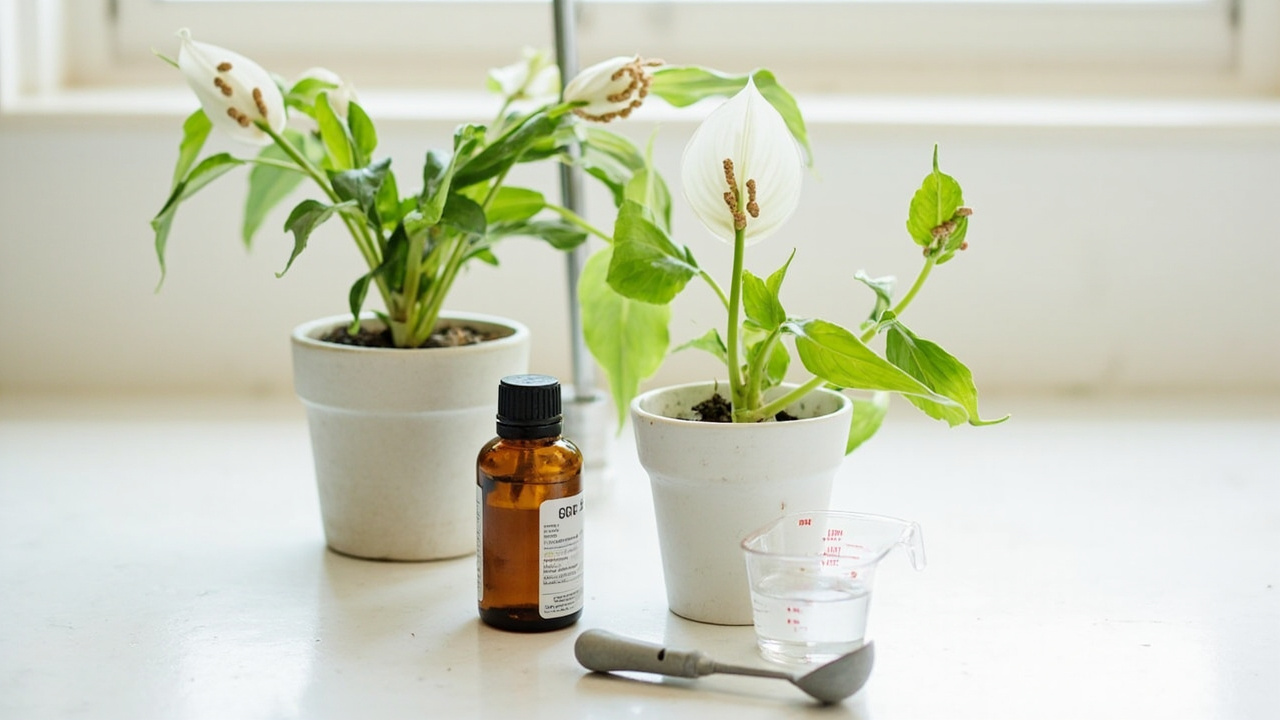
You do not need a complicated recipe. Start with a quality indoor potting mix, then add structure so the root zone can breathe after watering.
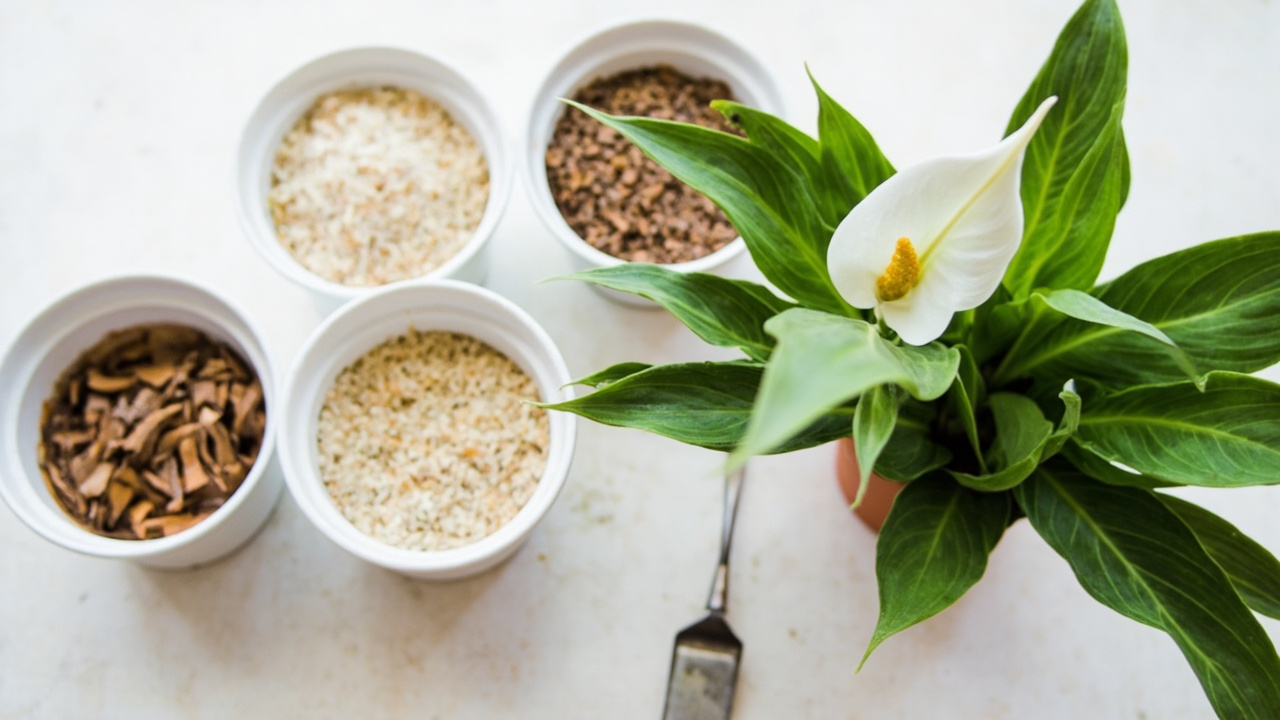
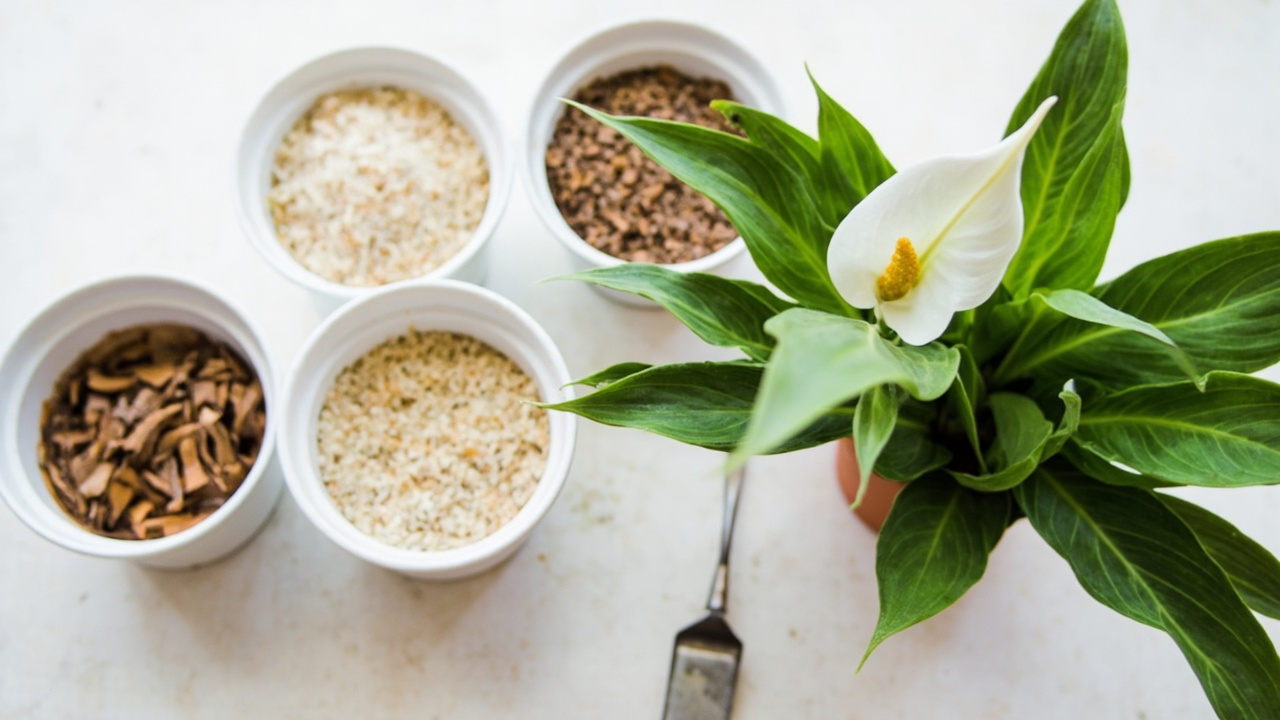
- 2 parts indoor potting mix: Holds the baseline moisture and nutrients around the roots.
- 1 part perlite: Creates air pockets and helps water move through the pot.
- 1 part fine orchid bark or coco chips: Adds chunkier structure so the mix does not collapse quickly.
For a small peace lily in a 4- to 6-inch pot, this blend is usually enough. If your home is very dry and warm, use slightly less bark. If your room is cool or low light, lean a little more airy, because the pot will dry more slowly.
Why Dense Soil Causes Root Stress
Dense soil causes problems because it traps water where air should be. After watering, roots use oxygen as they absorb moisture and minerals. When the mix stays saturated, the tiny air spaces collapse, and the roots begin to function poorly even though the pot looks wet.
That is why a peace lily can droop in wet soil. The plant is not thirsty in the simple sense; the roots are stressed and cannot move water well. Even careful watering fails when the mix will not drain, so pair soil choice with a consistent watering guide.
Old compacted mix also makes watering uneven. The top may look dry while the lower half stays wet, or the edges may shrink away from the pot so water runs down the sides without soaking the root ball. Both patterns make the plant harder to read.
Signs The Current Mix Is Wrong
The plant usually shows soil trouble through watering behavior before it shows a dramatic leaf problem. Watch how the pot dries, how water moves through it, and how the leaves respond after a soak.
| Soil Pattern | What It Means | What To Do Next |
|---|---|---|
| Water sits on top before sinking | The mix may be compacted or hydrophobic | Loosen the surface and consider refreshing the mix |
| Pot stays heavy for more than a week | The lower root zone may be too wet | Move to brighter light and plan a more airy blend |
| Water runs straight down the sides | The root ball may have shrunk away from the pot | Bottom-soak once, then refresh if it repeats |
| White crust appears on the surface | Minerals or fertilizer salts are building up | Flush the pot and replace old surface mix |
Mineral buildup in old mix can also show as peace lily brown tips.
Pot And Drainage Details That Change Soil Behavior
The same mix behaves differently in different pots. A large pot holds more wet soil around the roots, so it dries slowly and raises the risk of low oxygen. A tight pot dries faster, but it can become hard to water evenly once roots fill the container.
Choose a pot only 1 to 2 inches wider than the current root ball when you repot. Drainage holes are non-negotiable. A decorative outer pot is fine if the inner nursery pot can be lifted out for watering and allowed to drain before it goes back.
Pot material matters less than drainage, but it still changes the rhythm. Terracotta dries faster. Plastic and glazed ceramic hold moisture longer. If your peace lily lives in low light, plastic plus dense soil can keep the root zone wet for too long.
When To Refresh The Soil
Refresh peace lily soil when the mix no longer behaves like a breathable root medium. That is usually every 18 to 24 months indoors, or sooner if watering becomes unpredictable.
- Refresh if the mix smells sour, stays soggy, or collapses into a dense layer.
- Refresh if water runs around the root ball instead of through it.
- Refresh if salt crust keeps returning after flushing.
- Wait if the plant is stable, drying evenly, and making clean new leaves.
The best peace lily soil is not the richest mix on the shelf. It is the mix that keeps moisture and air together, so the roots can work between waterings without being forced through drought or stale wet soil.
Turn any PDF statement into a clean sheet
Skip the typos and the hours of copying. Our converter handles any bank statement format and outputs Excel, CSV, or QBO for QuickBooks. No file retention, free to try.
Convert your statement