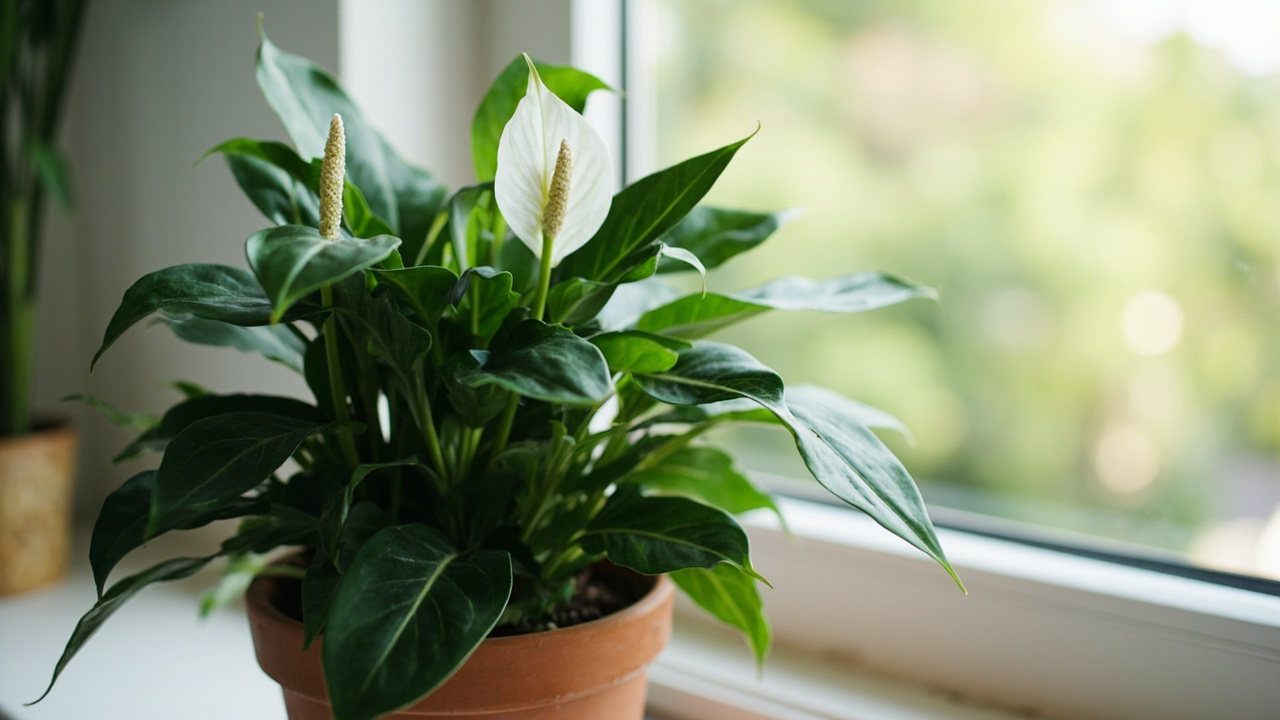
Peace lilies need bright indirect light for their best indoor growth, but they can survive in lower light than many flowering houseplants. The practical target is a bright room where the leaves see daylight but do not sit in hot direct sun.
If your peace lily looks green but never blooms, light is often the missing piece. If the leaves are pale, scorched, or leaning hard toward the window, the plant is telling you the placement needs adjusting before watering or fertilizer can do much.
What Light A Peace Lily Actually Wants
A peace lily is an understory tropical plant, which means it is built for bright indirect light rather than full sun. Indoors, that means enough light to cast a soft shadow, but not a sharp beam that heats the leaf surface.
It will tolerate low light, especially in offices, bedrooms, and north-facing rooms. Tolerate is the important word. In low light, a peace lily may stay alive and hold its leaves, but it usually grows slowly, flowers less often, and uses water more slowly. Light is only one part of steady peace lily care, but it decides how much growth the plant can support.
The sweet spot is a position where the plant receives several hours of bright room light every day without direct midday sun on the foliage. A peace lily that receives enough light usually holds upright leaves, makes new growth from the crown, and has enough energy to produce white spathes during active growth.
How To Judge Your Room By Window Direction
Window direction gives you a useful first read, but curtains, trees, buildings, and distance from the glass all change the real light level. Use these placements as a starting point, then watch the plant for two to four weeks.
- North-facing window: Usually safe, gentle light. Place the peace lily close to the window if the room is dim.
- East-facing window: Often ideal. Morning sun is mild enough that the plant can sit near the window, especially behind a sheer curtain.
- West-facing window: Useful but warmer. Keep the plant several feet back or filter the late afternoon sun.
- South-facing window: Brightest and riskiest. Use a sheer curtain or place the plant well away from direct rays.
A simple shadow test helps when you are unsure. Hold your hand above the peace lily at leaf height. A soft, blurred shadow usually means bright indirect light. A hard-edged shadow means direct or very strong light. No shadow at all means the room may be too dim for steady growth or flowering.
What Too Much Light Looks Like
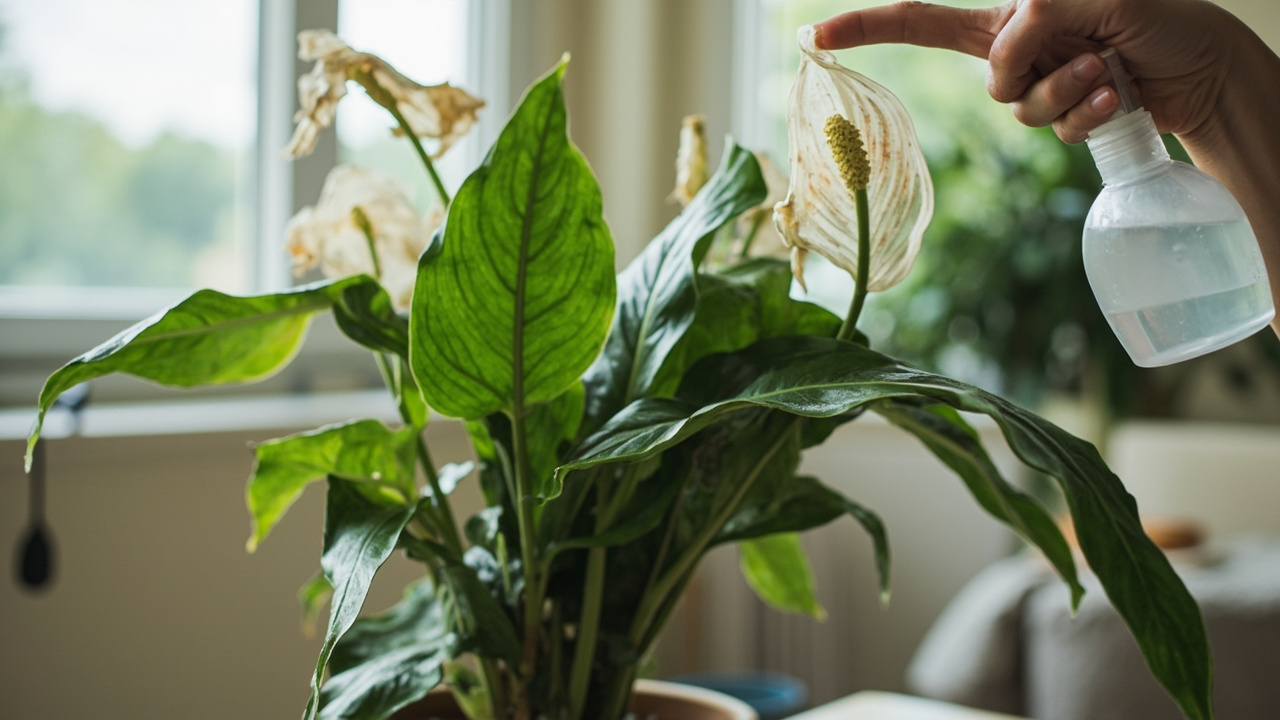
Too much light usually shows on the leaves that face the window first. Look for pale, bleached patches, tan scorch marks, curled leaf edges, or a tired look even when the soil is not dry. Direct sun heats the leaf faster than the plant can move water through it, so the damaged tissue dries and does not turn green again.
Scorch is different from normal aging. An old lower leaf may yellow evenly before it dies. Sun damage is more likely to appear as a patch on exposed tissue, especially after a plant is moved closer to glass or after seasonal sun angles change. If the damage starts at the edges instead of sun-facing patches, compare it with peace lily brown tips before blaming the window.
The fix is not to move the plant into darkness. Move it out of the beam, add a sheer curtain, or shift it to the side of the window where it still receives bright ambient light. Damaged leaves can remain until they age out, but new leaves should emerge cleaner if the placement is right.

What Too Little Light Looks Like
A peace lily in too little light usually declines quietly. It may stay green for a while, but new leaves come in smaller, flowering stops, stems lean toward the nearest window, and the pot stays wet for longer after each watering. That slow drying is the hidden problem: low light reduces growth, and slower growth reduces water use.
When the roots sit in wet soil for too long, they get less oxygen. The plant may then look thirsty even though the mix is still damp, because stressed roots cannot move water properly. When low light keeps the soil wet for too long, the first visible warning may be peace lily yellow leaves.
Low light also changes expectations. A peace lily on a shelf across a dim room may remain decorative, but it is unlikely to bloom regularly. If blooms matter, move it closer to a window, add a small grow light, or accept that the plant is being kept for foliage rather than flowers.
Best Indoor Placements For A Peace Lily
The best placement gives the plant light without heat stress. A spot 2 to 5 feet from an east window is often excellent. Near a north window can also work if the glass is not shaded by an awning, porch, or dense outdoor tree.
- Set it beside a bright window rather than pressed against hot glass.
- Use a sheer curtain if sunlight lands directly on the leaves for more than a short morning period.
- Avoid deep corners where you need a lamp during the day to read comfortably.
- Rotate the pot a quarter turn every week or two if the leaves lean strongly toward one side.
- Keep it away from heating vents, cold drafts, and air conditioners, because those stresses can mimic light problems.
Bathrooms can work when they have real daylight, because the humidity helps the foliage. A windowless bathroom is different. Normal ceiling lights are usually not strong or consistent enough to replace daylight unless a grow light is added.
How To Adjust Light Without Shocking The Plant
Move a peace lily gradually when possible. A plant that has lived in low light can scorch if it is suddenly placed in a bright south window, even though the new location is technically brighter.
- Move the pot one step brighter, not straight into sun.
- Watch the newest leaves for two to three weeks.
- Keep watering based on soil dryness, because brighter light may make the pot dry faster.
- Trim only fully damaged leaves; lightly marked leaves still feed the plant.
The right light level is the one where new growth looks clean, the pot dries at a steady pace, and the plant can hold its shape without leaning. For most homes, that means bright indirect light near a window, filtered from harsh sun, with small seasonal adjustments as the sun moves.
Turn any PDF statement into a clean sheet
Skip the typos and the hours of copying. Our converter handles any bank statement format and outputs Excel, CSV, or QBO for QuickBooks. No file retention, free to try.
Convert your statement