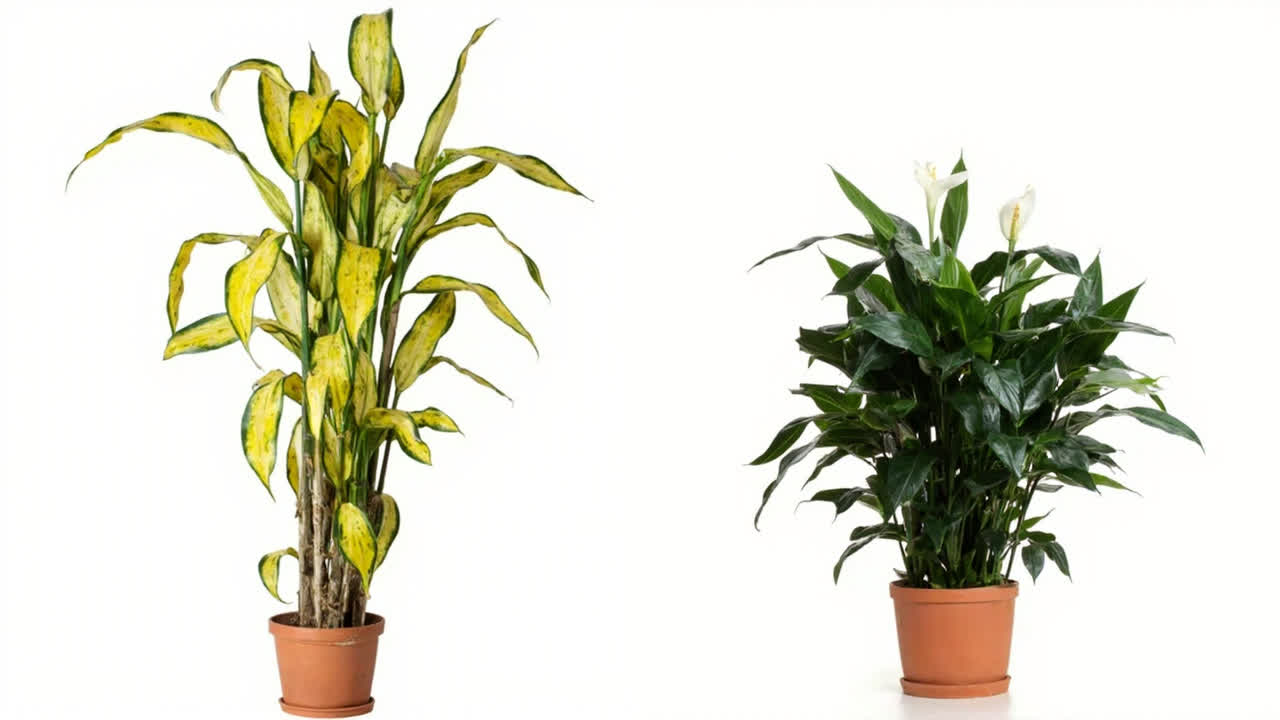
You are choosing between a Dracaena Massangeana and a Spathiphyllum for your home — two of the most commonly found houseplants in Singapore nurseries and online stores. Both are promoted as low-light tolerant, both are popular, and both have passionate advocates. But they are radically different plants in almost every way that matters. Here is how to decide which one belongs in your space.
This comparison is designed for someone who has done a quick search, found both plants recommended for similar conditions, and now needs a clearer breakdown before spending money. We will go through light, water, humidity, size, toxicity, maintenance difficulty, and lifespan — side by side.
Light Requirements : Which Survives Lower Light Better?
Both plants are commonly described as “low light” plants, but the reality is more nuanced.
The Dracaena Massangeana — commonly called Mass Cane Plant or Corn Plant — tolerates low light well, but it will grow very slowly in shade. In an office with no windows or a room with only north-facing light, it will survive indefinitely but may not produce new leaves for months at a time. It does not do well in direct sunlight — the leaves scorch easily — but bright indirect light keeps it actively growing. A few metres from a window with decent daylight is its sweet spot.
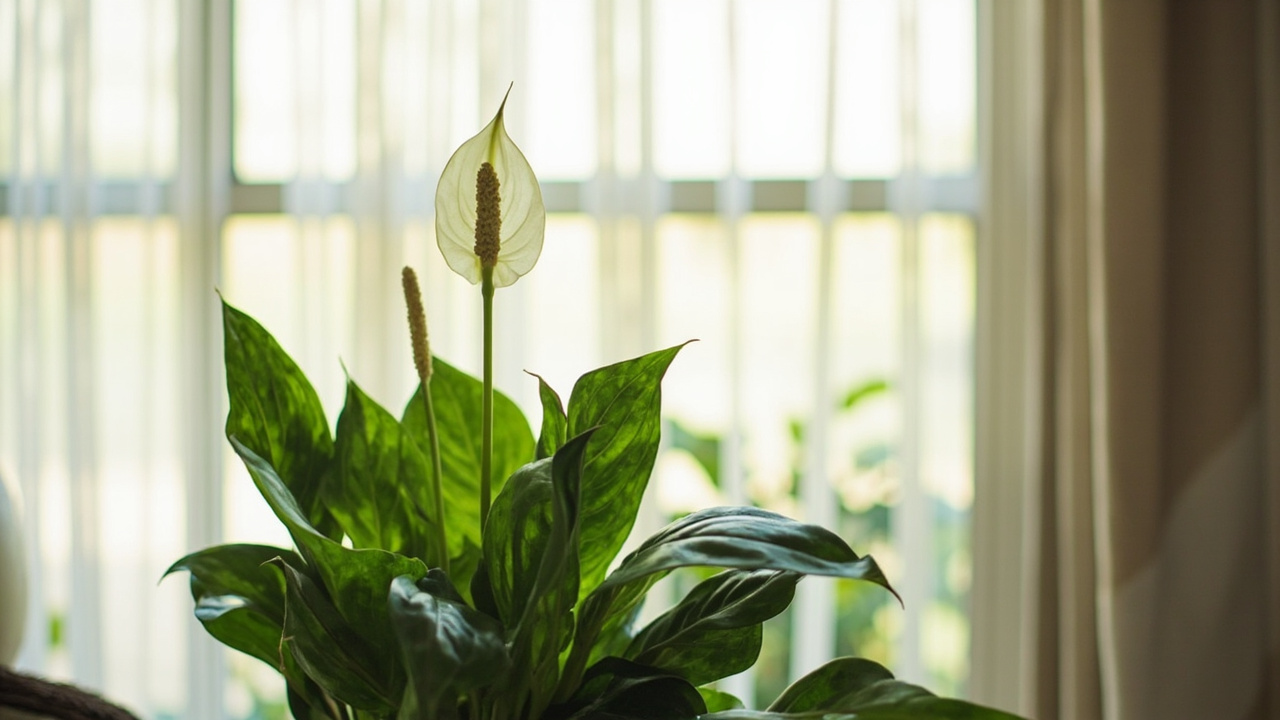
The Spathiphyllum — Peace Lily — is genuinely one of the most shade-tolerant flowering houseplants available. It survives and maintains itself in genuinely dark corners where most houseplants give up. It will even bloom in low-light conditions that would keep a Dracaena Massangeana permanently dormant. If your space has no natural light at all, the Peace Lily wins this category without contest.
If you have some natural light — even indirect from a few metres away — the Mass Cane Plant will grow more actively and maintain better structural form over time. But for absolute minimum light, Peace Lily is the stronger survivor.
Watering Needs : Which Is More Forgiving?
This is where the two plants diverge most sharply.
The Dracaena Massangeana is drought-tolerant. It stores water in its thick cane stems and can survive two to three weeks without watering in low-light conditions. Overwatering is the real risk — the roots rot quickly in saturated soil. If you are concerned about root rot and how to identify it early, see the Mass Cane Plant root rot guide. If you travel frequently or tend to forget watering schedules, the Mass Cane Plant tolerates lapses gracefully.
The Peace Lily is the opposite. It prefers consistent moisture and will show distress within a week of being completely dry — the leaves droop dramatically, hence the common name “drooping lily.” It bounces back after watering, but repeated cycles of drought-and-drown accelerate root stress. If you tend to water little and often, or if your home has air conditioning that dries the air significantly, the Peace Lily may need more consistent attention.
For someone with an irregular watering schedule, the Mass Cane Plant is the more forgiving choice. The Peace Lily rewards a consistent routine.
Humidity and Temperature Tolerance
Both plants are tropical in origin and handle Singapore’s ambient humidity well — neither requires a humidifier. However, they respond differently to specific stress conditions.
The Dracaena Massangeana handles air conditioning draughts surprisingly well. Its thick, waxy leaves resist moisture loss better than the thinner leaves of the Peace Lily. It tolerates temperatures as low as 15°C without visible damage, though growth slows noticeably below 18°C.
The Peace Lily is more sensitive to temperature extremes. Air conditioning directed at the leaves causes brown tips and marginal burn. It prefers stable temperatures between 18°C and 30°C and shows stress quickly if placed near a cold vent or a frequently opened door in an air-conditioned office.
For air-conditioned office spaces — very common in Singapore — the Mass Cane Plant is the more resilient candidate. For a naturally humid living room with good temperature stability, both plants thrive.
Growth Rate, Size, and Space Requirements
This is one of the most practically important comparisons and often the most overlooked.
A Dracaena Massangeana grows upright on thick cane stems, reaching 90 cm to 180 cm at maturity depending on pot size and light. It is a vertical plant — it takes up floor space or a wide shelf, but its footprint is compact. It does not trail, sprawl, or outgrow its position quickly. In a hallway, corner, beside a sofa, or as a statement floor plant, it is structurally elegant and predictable.
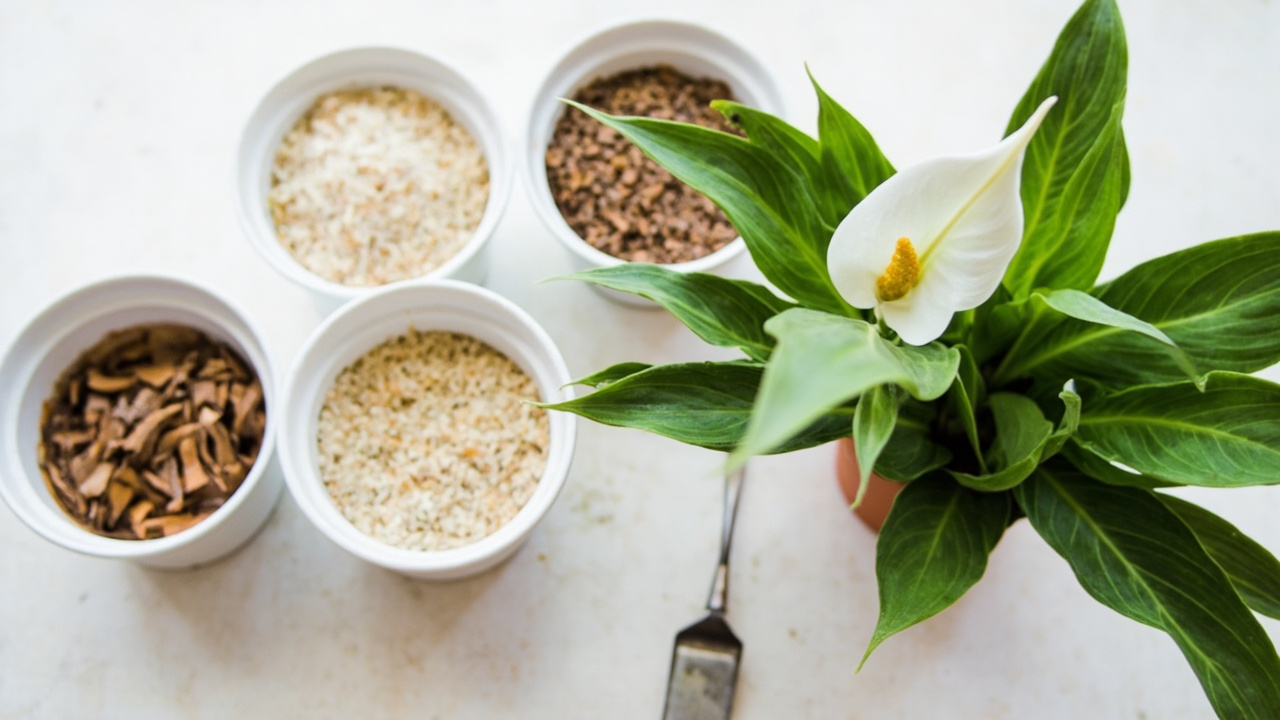
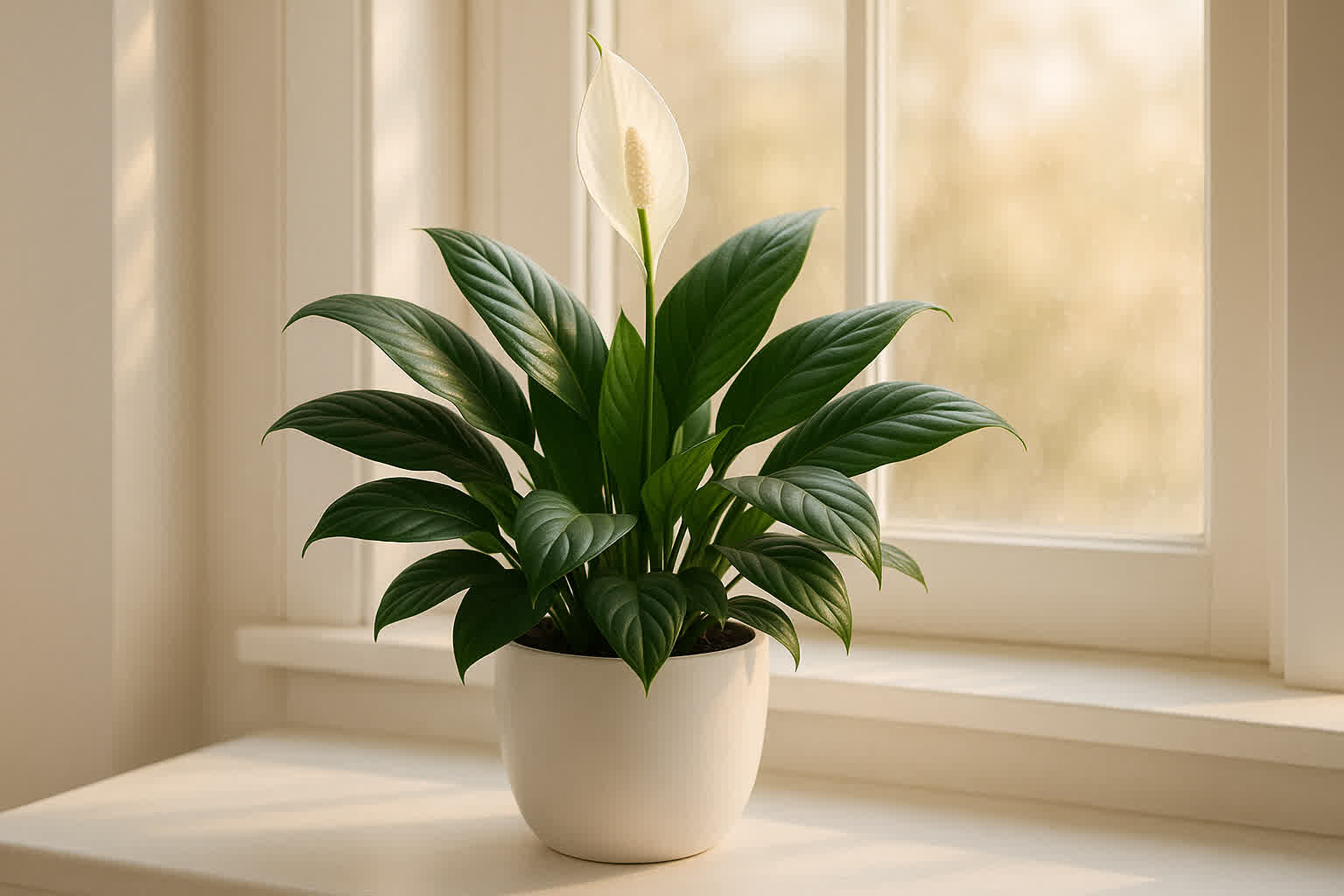
A Peace Lily grows as a dense clump of leafy shoots from the base. Mature plants spread to about 60 cm wide and 60 cm tall — more of a tabletop or floor cluster than a vertical specimen. It fits better on a shelf, a side table, or a bathroom corner. If you want something that fills a wide horizontal space, the Peace Lily wins. If you need a tall vertical statement plant for a narrow corner, the Mass Cane Plant wins.
Toxicity : Both Are Toxic to Pets and Humans
Neither plant is safe for homes with cats, dogs, or young children who might chew on leaves.
The Dracaena Massangeana contains saponins, which cause vomiting, drooling, and loss of appetite in cats and dogs if ingested. The Peace Lily contains calcium oxalate crystals, which cause oral irritation, pain, and difficulty swallowing in both pets and humans. Neither is lethal in typical ingestion amounts, but both cause enough discomfort to be a serious concern in a pet-accessible home.
If you have pets that chew plants, neither plant is truly safe. The mitigation is placement — both are fine if kept well out of reach on high shelves or in rooms that are off-limits to animals. For homes with free-roaming pets and unrestricted access to all rooms, consider a pet-safe alternative like an Areca Palm or Spider Plant instead.
Maintenance Difficulty : Which Is Easier to Keep Alive Long-Term?
For the typical homeowner or office manager:
The Mass Cane Plant is lower maintenance in the sense that it tolerates neglect, irregular watering, and variable light without immediately declining. Its slow growth also means it does not need frequent repotting or fertilising. It is a “set and mostly forget” plant for the right position. It does require occasional leaf cleaning — the broad leaves gather dust — and monitoring for root rot if overwatering occurs.
The Peace Lily requires more consistent attention to watering to look its best, but it gives clear feedback — the dramatic droop when thirsty is hard to miss and the plant recovers quickly after watering. It also benefits from more frequent fertilising during active growth to sustain blooming. It is not a demanding plant, but it rewards active care more visibly than the Mass Cane Plant does.
If you want something that looks after itself: Mass Cane Plant. If you enjoy engaging with your plant’s needs and want visible feedback: Peace Lily.
Air Purification Claims
Both plants are frequently cited in NASA Clean Air Study lists and various indoor air purification claims. The Dracaena Massangeana has been shown to remove formaldehyde and xylene from sealed chamber air. The Peace Lily has demonstrated removal of benzene, formaldehyde, and trichloroethylene.
It is worth being direct: neither plant will meaningfully purify the air in a room that is regularly ventilated. The NASA studies were conducted in sealed chambers with specific plant-to-air-volume ratios that do not reflect real-room conditions. Treat air purification as a secondary benefit, not a primary reason to choose either plant.
Verdict : Which Plant Suits Your Space?
Choose the Dracaena Massangeana — Mass Cane Plant — if:
- You have moderate to low indirect light and want active growth
- You water infrequently or have an irregular schedule
- You need a tall vertical plant for a narrow floor space or corner
- Your space is air-conditioned and may have temperature fluctuations
- You prefer a structural, architectural plant that stays contained
Choose the Spathiphyllum — Peace Lily — if:
- Your space has genuinely minimal light or fluorescent-only lighting
- You enjoy regular plant care and want a plant that responds visibly to attention
- You want a flowering plant that blooms even in darker rooms
- You need a medium-sized plant for a shelf, tabletop, or wide surface
- Your home has stable, warm temperatures without AC draughts
Both plants are excellent choices for Singapore homes and offices. The Mass Cane Plant is the more forgiving and architecturally versatile of the two. The Peace Lily is the stronger survivor in genuinely dark spaces and offers a different aesthetic entirely. Know your light conditions and your maintenance style, and the choice becomes obvious.
For more on the Mass Cane Plant’s specific light and watering requirements, see the Mass Cane Plant light requirements and Mass Cane Plant watering needs guides.
Turn any PDF statement into a clean sheet
Skip the typos and the hours of copying. Our converter handles any bank statement format and outputs Excel, CSV, or QBO for QuickBooks. No file retention, free to try.
Convert your statement