Feed a peace lily lightly during active growth, usually once a month in spring and summer at half strength. Skip routine fertilizer in winter unless the plant is still growing strongly under bright light.
A peace lily is more likely to be damaged by too much fertilizer than transformed by extra feeding. Light, watering, and healthy roots do the heavy lifting; fertilizer only supports the growth the plant is already able to make.
How Often To Fertilize A Peace Lily
The simplest schedule is monthly feeding from spring through late summer, using a balanced liquid fertilizer diluted to half the label strength. For many indoor peace lilies, that is enough to support new leaves and occasional blooms without pushing salt buildup in the pot.
Do not feed every time you water. Peace lilies are moderate feeders, not heavy feeders, and their roots sit in the same container mix for months at a time. Fertilizer should support the plant’s existing peace lily care routine, not replace light and watering.
If your plant is in low light, feeding less is usually better. A peace lily that is barely growing cannot use much fertilizer, so the unused salts remain in the soil and raise the risk of brown tips or root stress.
The Best Fertilizer Type And Strength
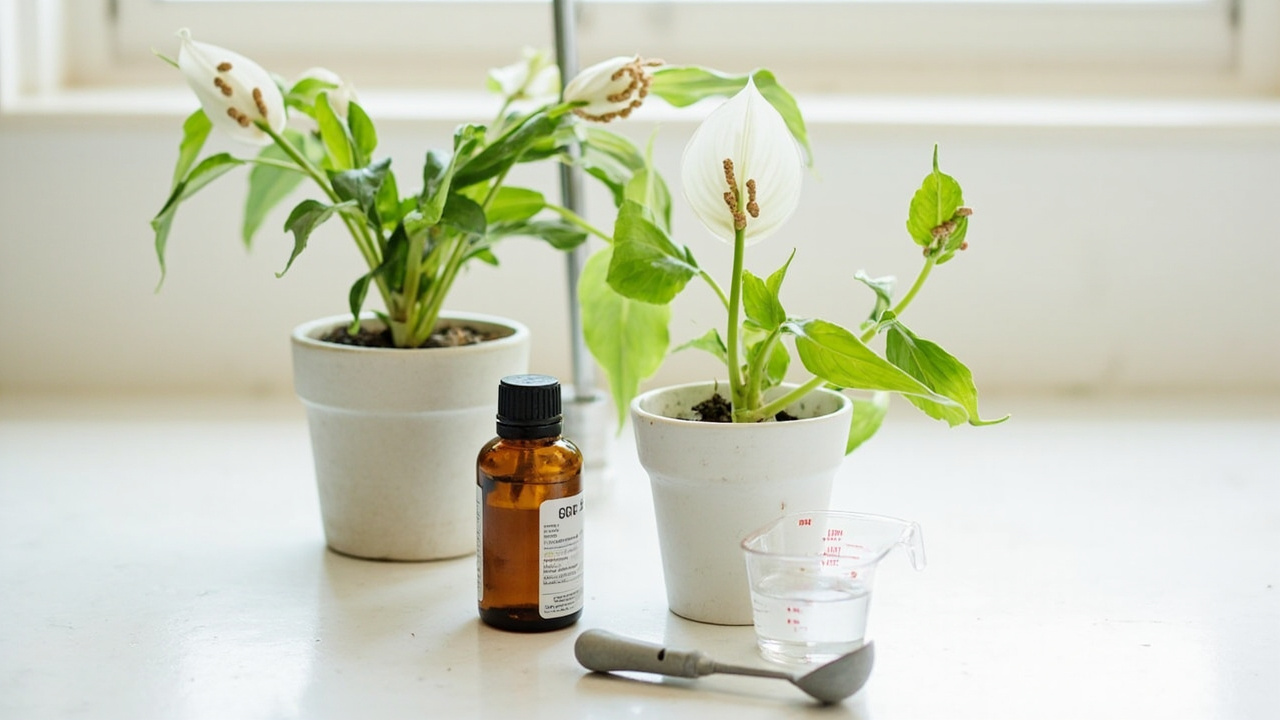
A balanced liquid houseplant fertilizer is the easiest choice because it can be diluted accurately and spread evenly through the root zone. Look for a balanced formula such as 10-10-10, 20-20-20, or a similar general indoor plant feed.
- Use half strength: If the label calls for 1 teaspoon per quart, use 1/2 teaspoon per quart.
- Apply to damp soil: Water lightly first if the mix is dry, then feed so the roots are not hit with concentrated salts.
- Avoid frequent slow-release pellets: They can keep releasing nutrients when the plant is not growing fast enough to use them.
- Skip bloom boosters: Extra phosphorus will not fix low light, poor roots, or a stressed plant.
Organic liquid fertilizers can work too, but they may smell stronger indoors and vary more in concentration. Use them lightly, and do not mix several products in the same month.
A Month-By-Month Feeding Schedule
Use the plant’s growth as the final signal, but this seasonal rhythm works for most indoor peace lilies in ordinary home conditions.
| Season | Feeding Rhythm | Why |
|---|---|---|
| Spring | Once a month at half strength | New leaves and roots begin using nutrients again |
| Summer | Once a month, or every 6 weeks in low light | Growth is strongest when light and warmth are steady |
| Fall | Feed once early, then taper off | Shorter days slow growth and water use |
| Winter | Usually skip | The plant is often resting and salts build faster than growth |
If the peace lily grows under a strong plant light and keeps producing new leaves through winter, a very light feeding every 8 to 10 weeks is enough. If growth pauses, pause fertilizer too.
How Soil And Watering Affect Fertilizer Safety
Fertilizer becomes risky when the root zone is already stressed. Salts concentrate in dry soil, but they also build up in old dense mix that does not flush well. If the pot stays wet for too long, weak roots cannot handle even a normal feeding.
That is why fertilizer should be applied after the plant has a stable watering rhythm. The mix should drain, the pot should not smell sour, and the plant should be making at least some new growth. Fertilizer is safer when the root zone has the aeration described in peace lily soil.
Every few months during the growing season, water thoroughly with plain water until it drains freely from the bottom. This light flushing helps move unused minerals out of the pot before they collect near the roots.
Signs You Are Feeding Too Much
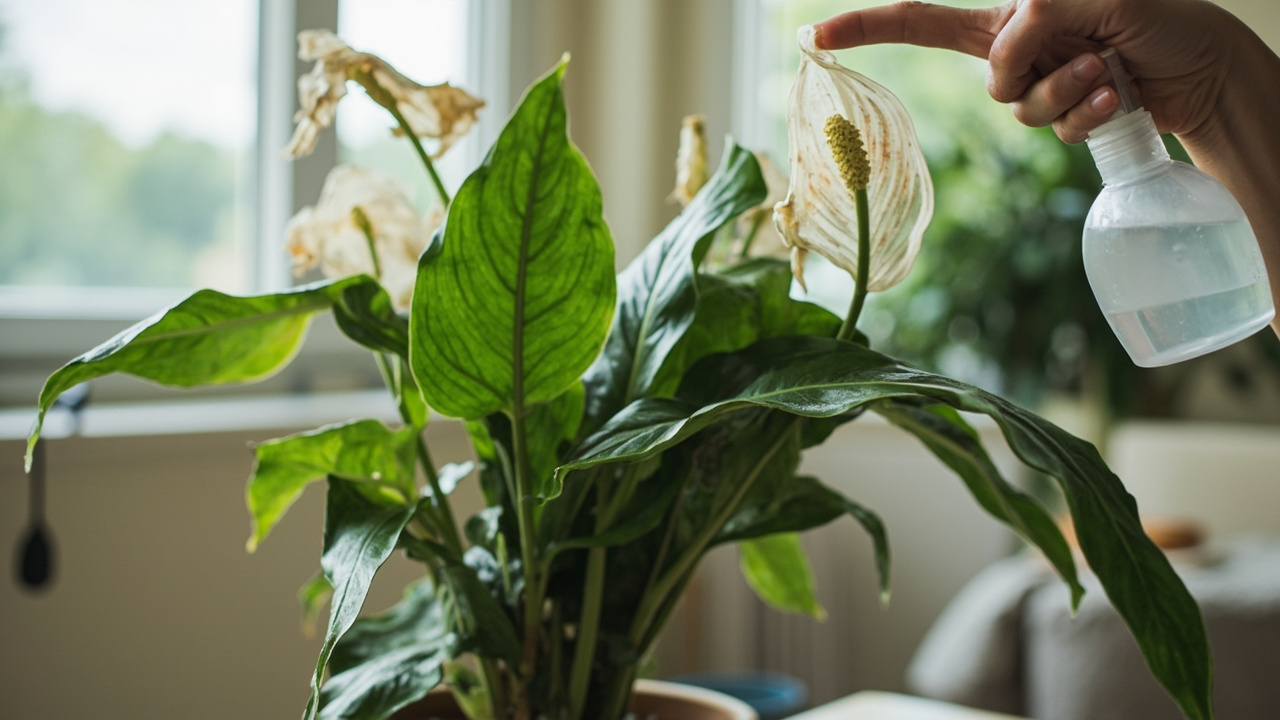
Overfeeding often looks like a leaf problem before it looks like a fertilizer problem. The plant may still be green overall, but the newest growth is weak or the older leaves show dry edges.
- Brown or crispy leaf tips after recent feeding.
- White crust on the soil surface or pot rim.
- Leaf edges yellowing or browning while the soil is not dry.
- Slow growth despite repeated fertilizer applications.
- A plant that wilts soon after feeding, especially in old or dense soil.
If the symptom is mostly crisp leaf edges, compare it with peace lily brown tips before adding more nutrients.
The immediate fix is plain water, not another product. Flush the pot, let it drain fully, and skip the next feeding cycle. Badly burned leaves will not turn green again, but new growth should look cleaner if the roots recover.
When Not To Fertilize
Do not fertilize a peace lily that is wilted, newly repotted, sitting in wet soil, or losing leaves quickly. Those are stress signals, and feeding a stressed plant usually makes the root zone harder to recover.
- Skip fertilizer for 4 to 6 weeks after repotting.
- Skip it when the plant is in very low light.
- Skip it during winter dormancy unless growth is clearly active.
- Skip it when you suspect root rot, salt buildup, or severe underwatering.
A good peace lily fertilizer schedule is intentionally modest. Feed lightly when the plant is growing, pause when it is not, and let clean light, breathable soil, and correct watering carry the rest.
Turn That PDF Into a Spreadsheet in Minutes
You've seen how to do it manually — now let the tool handle the heavy lifting. Upload your bank statement and get Excel, CSV, or QBO in a few clicks.
Try It Free