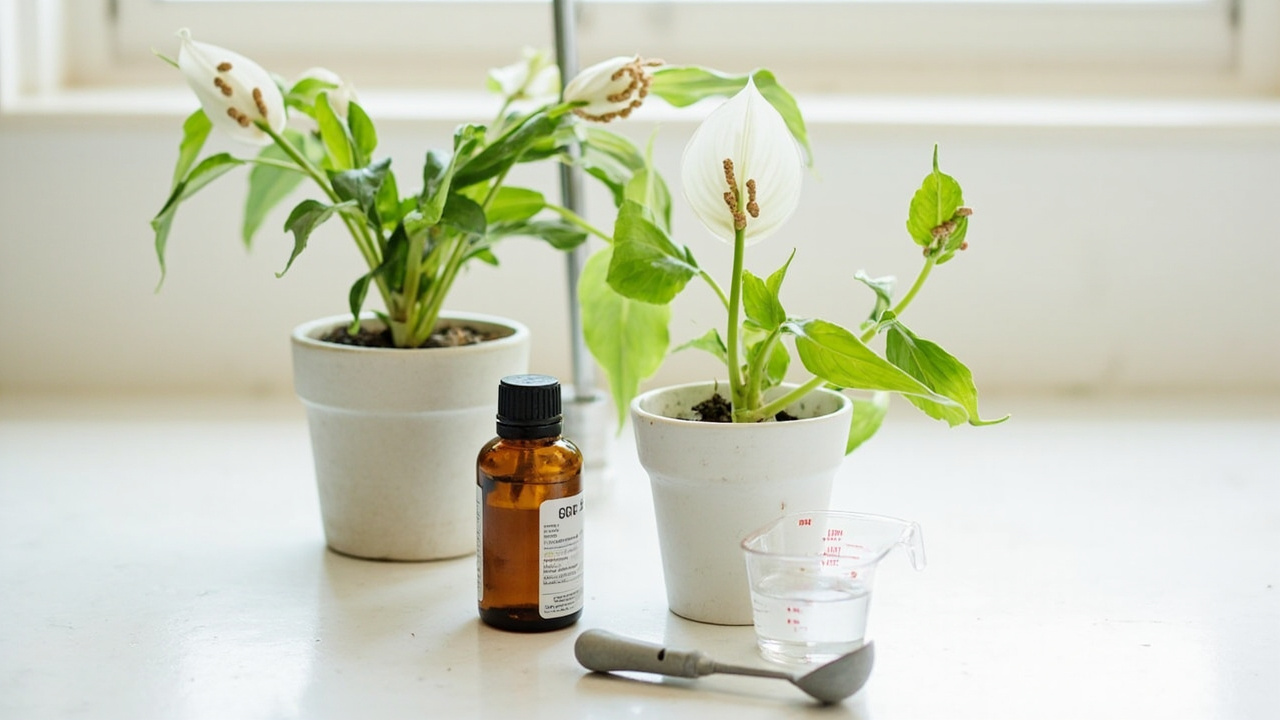
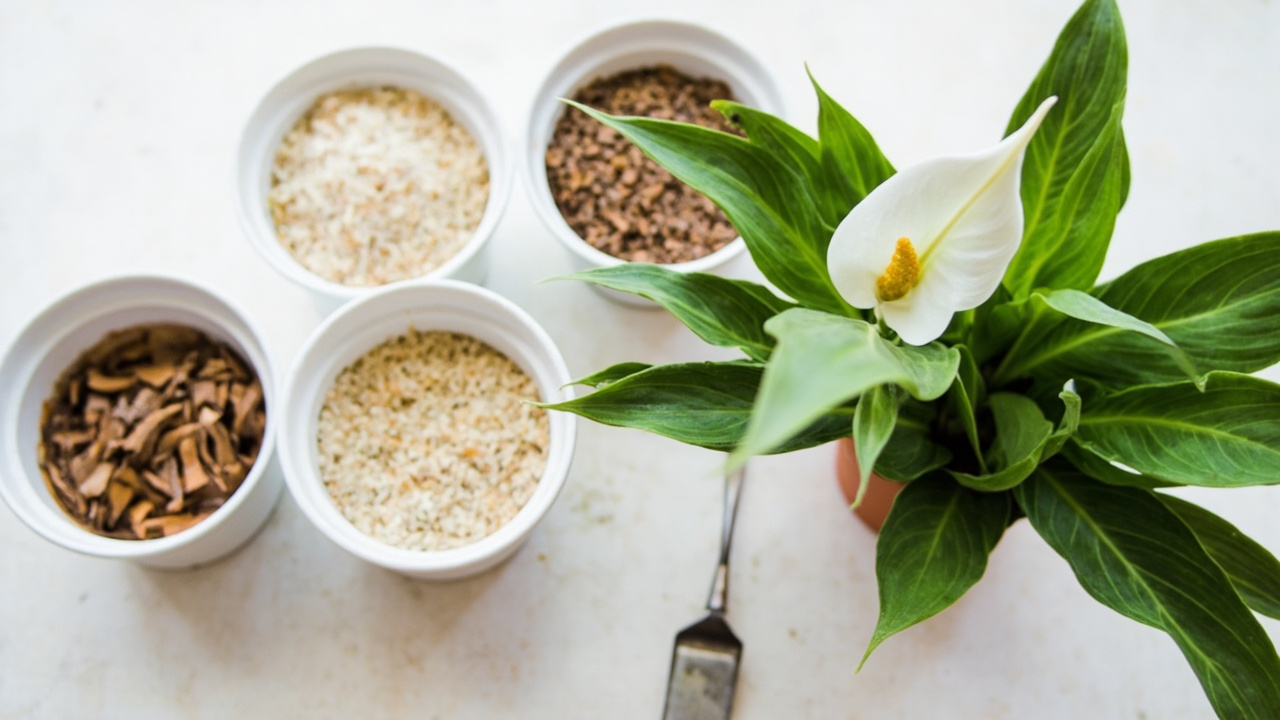
Water a peace lily when the top inch of soil starts to dry, then water thoroughly until excess moisture drains from the bottom of the pot. Do not water by the calendar alone, because light, pot size, soil texture, and room temperature all change how quickly the root zone dries.
Peace lilies are dramatic plants. They can droop hard when thirsty and recover within hours after a proper soak, but that does not mean they want to stay wet all the time. The goal is evenly moist soil with enough air around the roots.
The Right Moisture Level For Peace Lily Roots
A peace lily likes consistent moisture, not swampy soil. The best root zone feels lightly damp below the surface and slightly dry at the top before the next watering. That balance lets the roots take up water while still getting oxygen.
The common mistake is treating a peace lily like a plant that should never dry at all. Constantly wet mix pushes air out of the soil, and roots need air as much as water. On the other side, a pot that dries hard from top to bottom can make the plant collapse and stress the fine roots. This moisture target sits inside the broader routine for peace lily care.
Think of watering as a cycle: damp, then slightly dry at the surface, then thoroughly watered again. A healthy peace lily can handle that rhythm much better than frequent small splashes that only wet the top layer.
When To Water: The Finger Test And Pot Weight
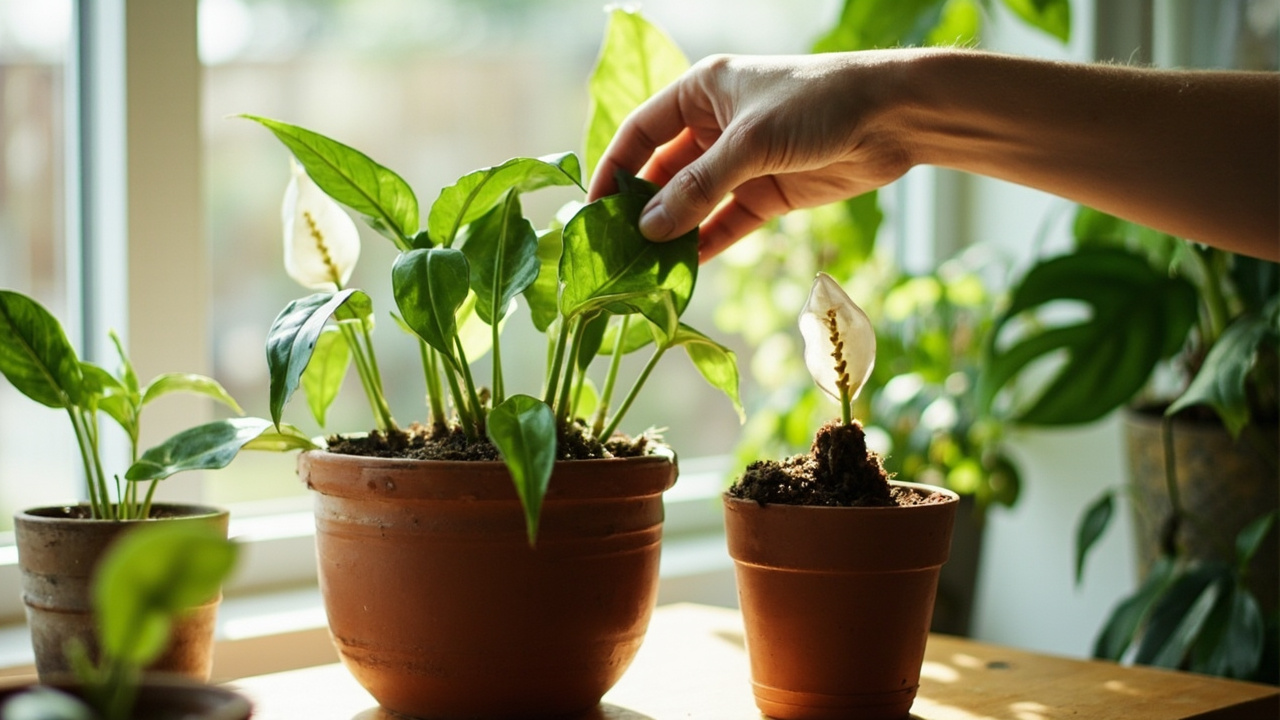
The simplest check is still the best one: feel the soil. A peace lily usually needs water when the top inch of soil is dry or just barely cool and damp, while the lower root zone still has some moisture.
- Press one finger into the mix about 1 inch deep.
- If the top inch feels dry and the pot feels lighter than usual, water.
- If the surface is dry but the pot still feels heavy, wait another day or two.
- If the leaves droop and the soil is dry, water thoroughly instead of misting the leaves.
Pot weight becomes useful after a few waterings. Lift the pot after a full watering and again when the top inch dries. That difference trains your hand faster than a moisture meter. In a bright room, the cycle may be several days. In a dim corner, the same pot may stay damp for more than a week.
How To Water Thoroughly Without Leaving The Pot Soggy
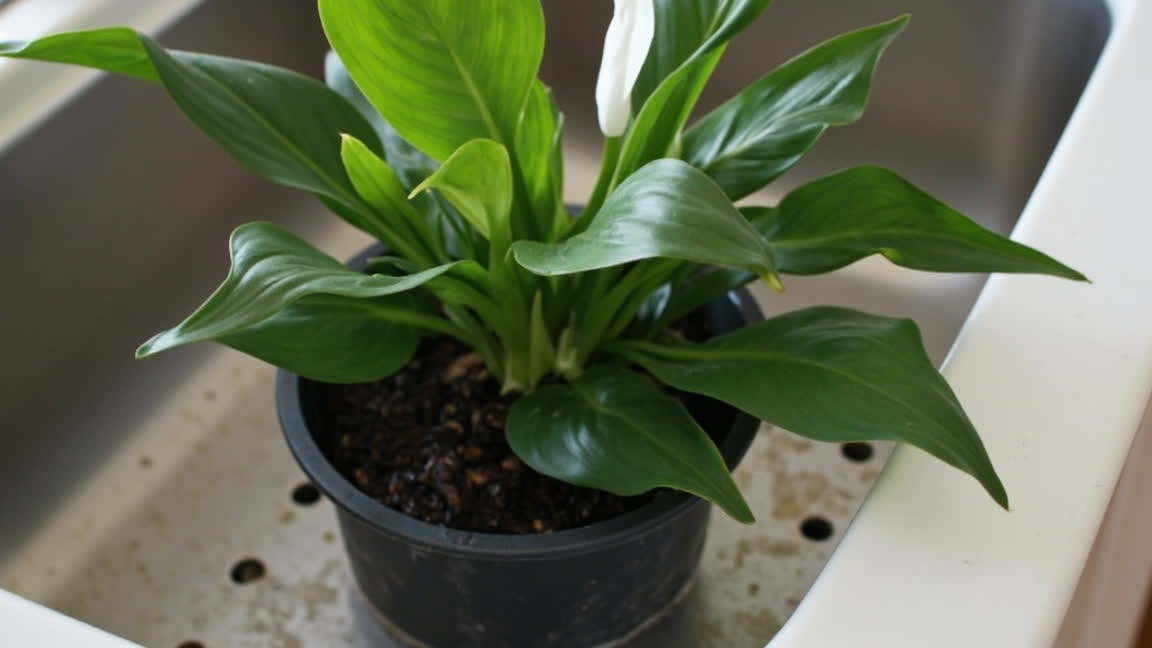
A proper watering should reach the whole root ball. Pour slowly over the soil surface until water runs from the drainage holes, then let the pot drain completely. If the plant sits inside a decorative cachepot, remove the nursery pot first or empty the outer pot after watering.
- Set the pot in a sink, tub, or saucer where it can drain freely.
- Water the soil surface evenly, not just one side of the pot.
- Pause for 30 to 60 seconds if dry mix sheds water at first.
- Keep watering until a small stream exits the bottom.
- Wait 10 to 15 minutes, then discard any collected water.
Small, frequent sips are less reliable. They can leave dry pockets inside the root ball while keeping the surface damp enough to fool you. A full soak followed by full drainage gives the peace lily a cleaner wet-dry rhythm.
Why Light Changes The Watering Rhythm
Light controls how fast a peace lily uses water. In brighter indirect light, the plant photosynthesizes more, grows more, and pulls moisture through the roots more quickly. In low light, growth slows and the pot stays damp longer.
That is why a fixed weekly schedule causes trouble. A peace lily near an east window may need water twice as often as one across a dim room, even if both plants are the same size. A pot in low light dries more slowly, so match watering to the plant’s light requirements before assuming it is thirsty.
Season matters too. Warm spring and summer rooms usually shorten the watering interval. Cooler winter rooms often lengthen it, especially when daylight is weaker. Keep the test the same, but expect the timing to shift.
Overwatering And Underwatering Signs To Watch
Watering problems overlap, so read the soil before reacting to the leaves. A droopy peace lily can be dry, but it can also droop when wet roots are no longer working well.
| Pattern | What The Soil Usually Feels Like | Likely Meaning |
|---|---|---|
| Leaves droop, then recover within hours after watering | Dry top inch, light pot | The plant was thirsty but still responsive |
| Leaves droop while soil is wet | Damp or heavy pot | Roots may be stressed by low oxygen |
| Lower leaves yellow one after another | Often wet for too long | Watering, light, or root stress may be involved |
| Brown dry edges after repeated dry-downs | Frequently bone-dry | The plant is losing moisture faster than the roots can replace it |
If the pattern has already moved into broad yellowing, use the dedicated guide to peace lily yellow leaves.
What To Do When A Peace Lily Droops
If the soil is dry, water thoroughly and give the plant a few hours. A normal thirsty droop should improve the same day, often within one to four hours, as the leaves refill with water.
If the soil is wet and the plant is still collapsed, do not add more water. Move it into bright indirect light, let the pot drain, and check whether the mix smells sour or stays heavy. A plant that stays collapsed after watering belongs in a droopy peace lily recovery check.
The best watering routine is not fussy. Check the top inch, water deeply, drain fully, and adjust the interval when the room changes. That gives a peace lily the moisture it wants without trapping the roots in stale wet soil.
Turn That PDF Into a Spreadsheet in Minutes
You've seen how to do it manually — now let the tool handle the heavy lifting. Upload your bank statement and get Excel, CSV, or QBO in a few clicks.
Try It Free