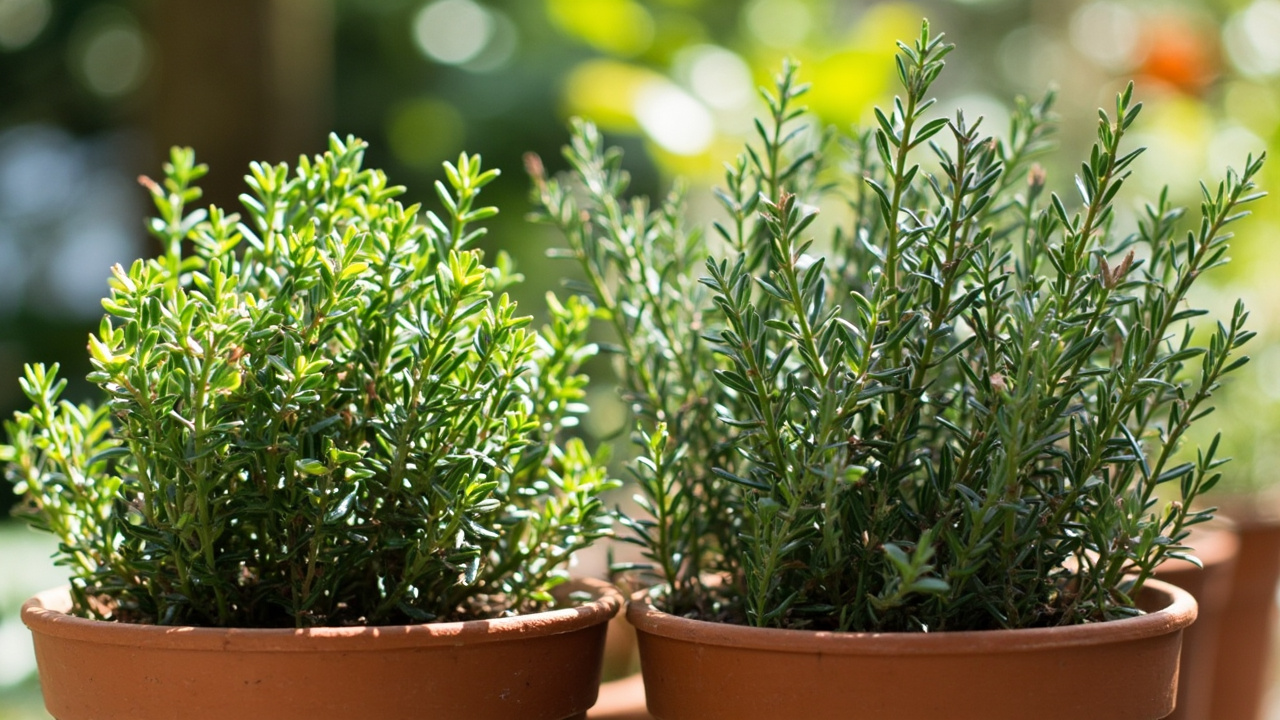
Indoor herb garden pots need to do more than look good on a kitchen counter. They have to drain cleanly, hold enough root space, and make watering predictable for herbs that grow at different speeds.
The best pot is usually simple: drainage hole, saucer, stable shape, and enough depth for the herb you are growing. Decorative planters can work, but only when they do not trap water around the nursery pot.
Start With Drainage, Not Decoration
Every indoor herb pot should have a drainage path. Basil, mint, parsley, and cilantro all decline when the lower mix stays wet for too long. A pot with a hole and removable saucer lets you water thoroughly, then empty the extra water.
If you love a decorative cachepot, use it as an outer sleeve. Keep the herb in a plastic nursery pot inside it, lift the plant out to water, and return it only after dripping stops.
Match Pot Depth to the Herb
Shallow pots dry quickly and restrict stronger roots. Indoor parsley benefits from a deeper pot because it replaces harvested stems more steadily when roots have room. Indoor mint also fills containers quickly, so cramped pots become thirsty fast.
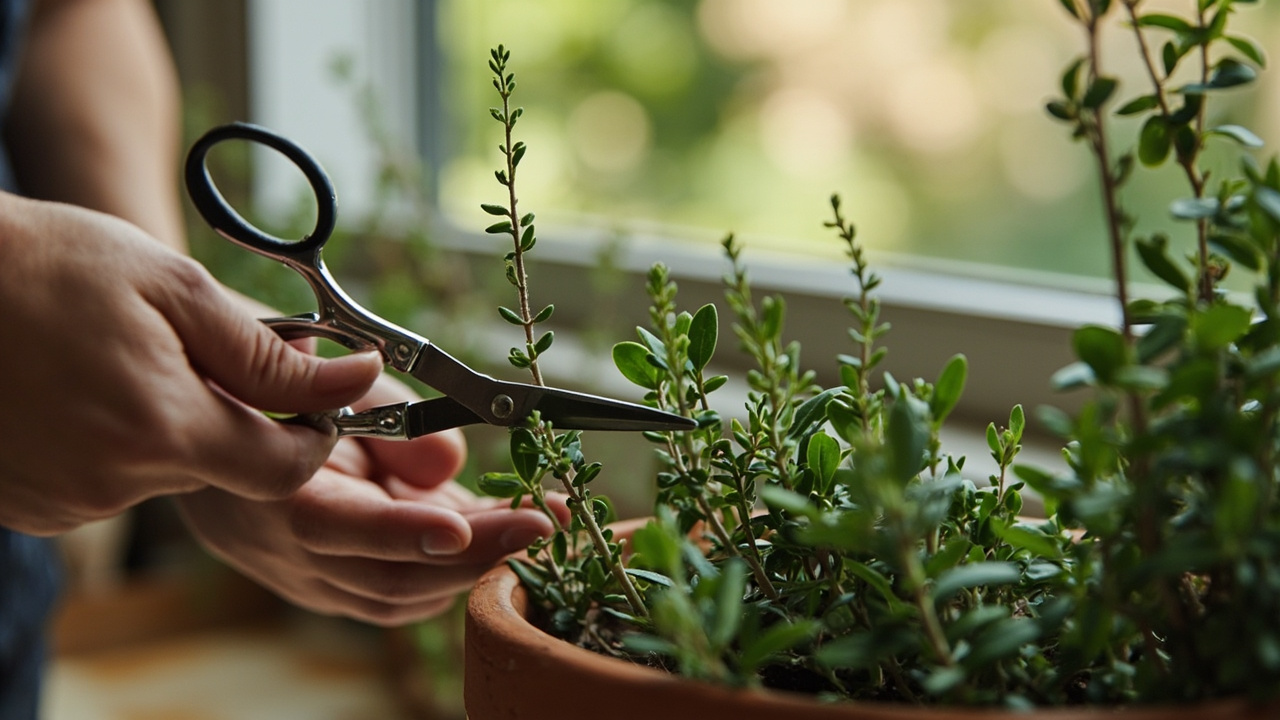
Indoor cilantro does best in a slightly wider pot for repeat sowing, while indoor basil needs enough root volume to support frequent top-cut harvesting.
Choose Materials by Watering Behavior
Plastic pots hold moisture longer and are forgiving in sunny kitchens. Terracotta dries faster and can help herbs that resent wet soil, but it also makes small pots dry out quickly. Glazed ceramic works well when it has a real drainage hole.
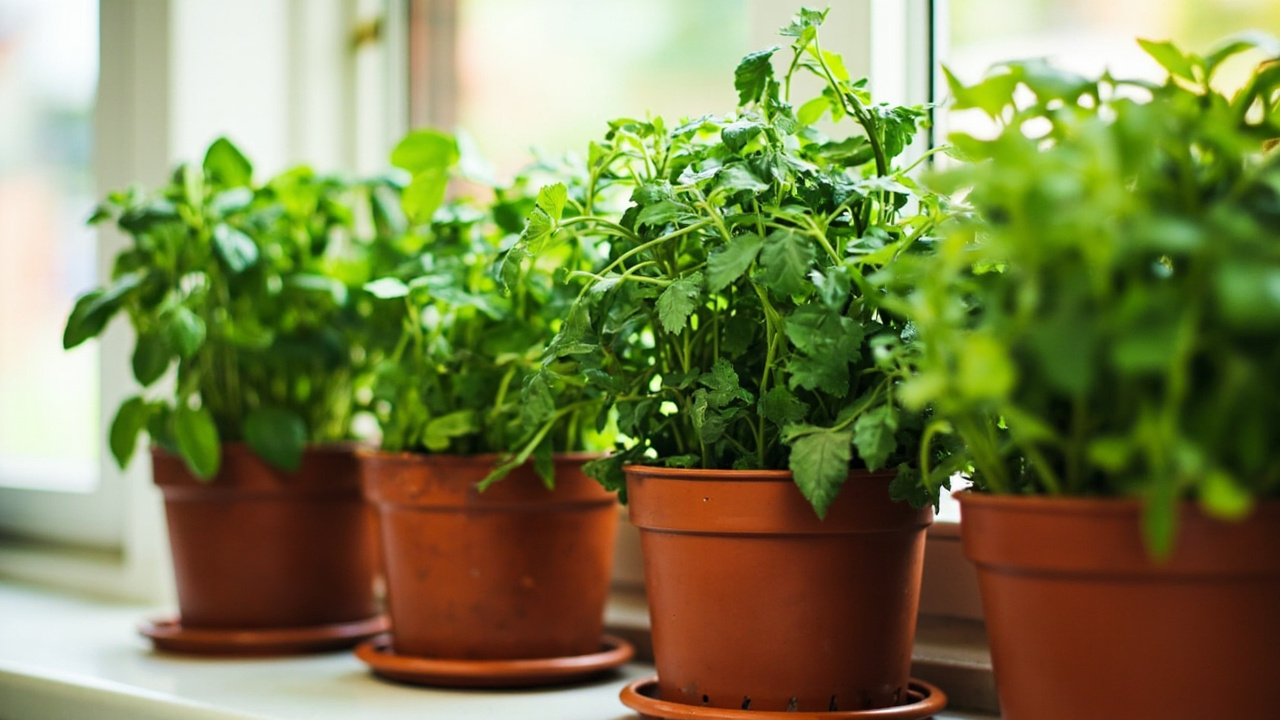
Use Separate Pots for Different Herbs
Mixed herb planters look tidy at first, but they force herbs with different growth habits into one watering rhythm. Mint grows aggressively, cilantro is short-cycle, parsley is slower, and basil wants strong light and steady harvests.
Separate pots let you move each herb closer to an indoor herb garden grow light, water it on its own schedule, and replace one plant without disturbing the whole setup.
Size Up Only When the Plant Needs It
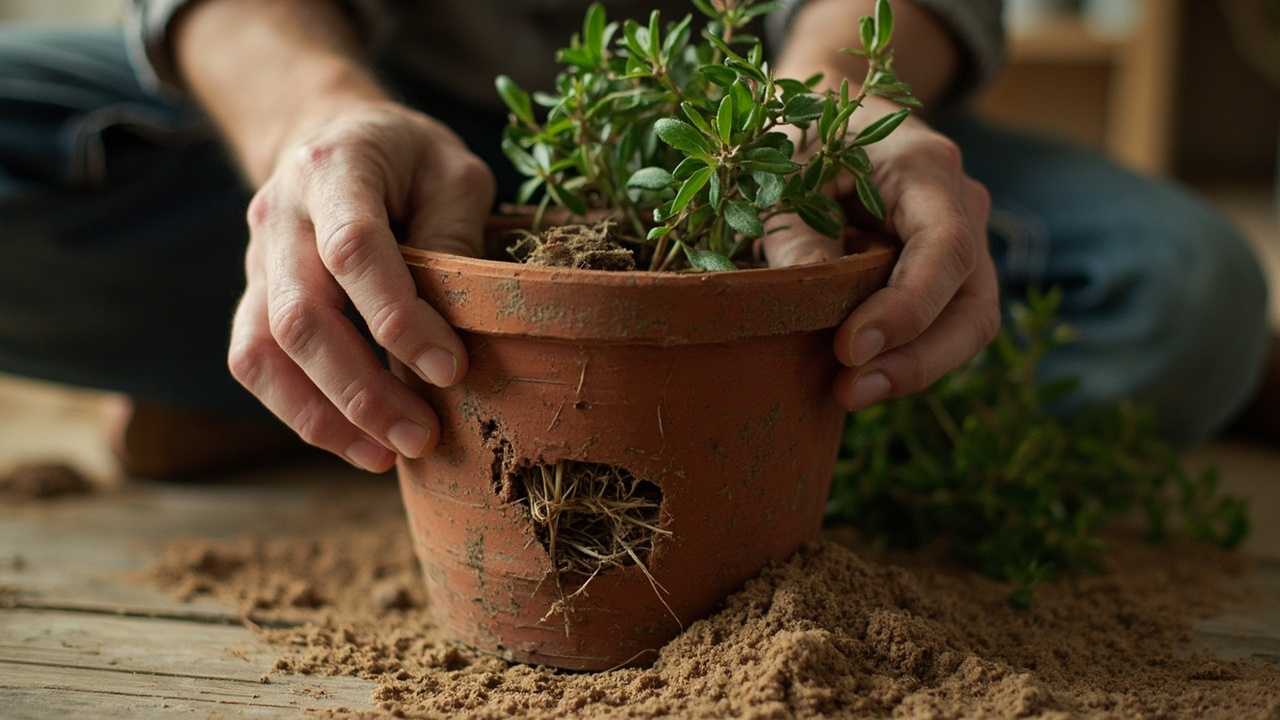
A huge pot around a small herb can stay wet too long. A tiny pot around a vigorous herb dries too fast. Move one size up when roots fill the pot, water runs straight through, or the plant wilts soon after watering.
For most kitchen herbs, gradual pot sizing is cleaner than jumping into a large decorative planter. The plant gets root room without being buried in excess wet mix.
Build a Practical Herb Station
Group pots on a tray, keep the tallest herbs from shading smaller ones, and rotate the containers when one side leans toward the light. Use the broader setup in Aqualogi’s indoor herb garden for beginners as the base, then choose pots that make daily care easier.
The right pot should disappear into the routine. If it drains, fits the roots, and lets you water without guessing, it is doing the job.
Turn PDF Bank Statements Into Workable Spreadsheets
Your bank statement is a mess of numbers, but your books shouldn't be. Use our converter to get Excel, CSV, or QBO files — ready for QuickBooks.
Try It Free Now