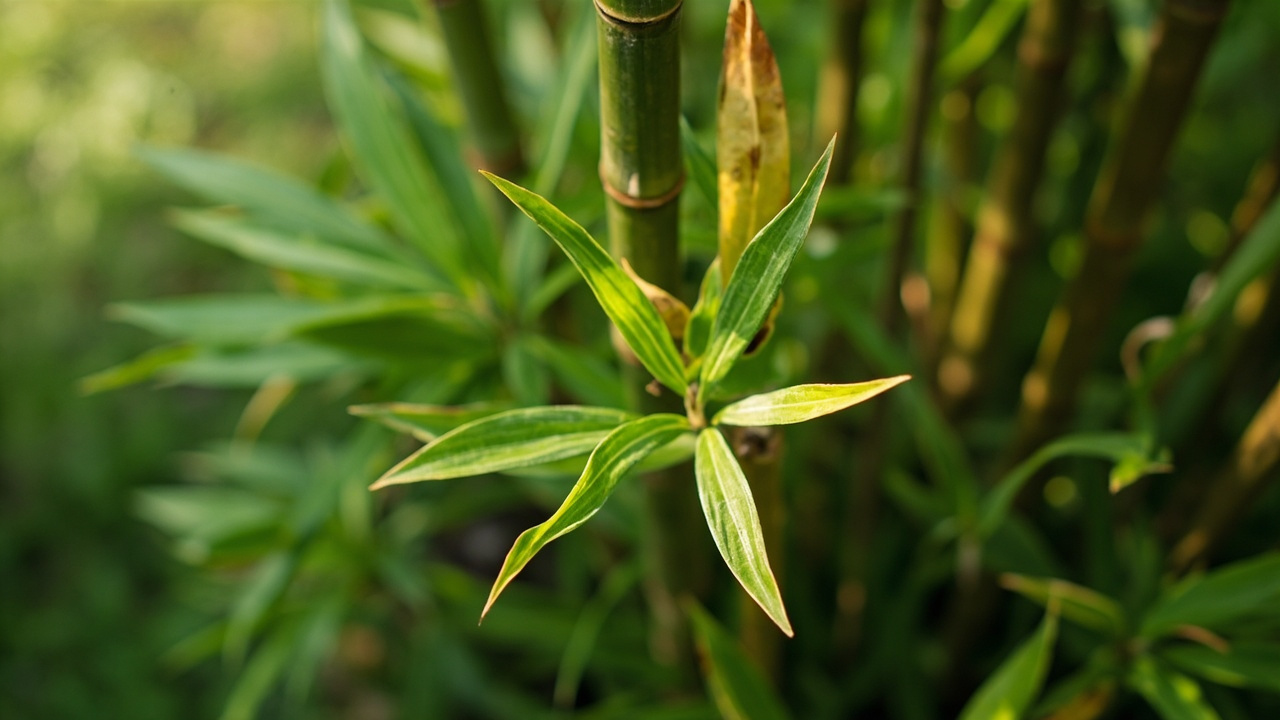
Bamboo yellow leaves can be normal, especially when older leaves shed while new growth stays green. They become a problem when yellowing spreads quickly, affects new leaves, or appears with wilting, soggy soil, dry roots, or stalled growth.
Do not diagnose bamboo by one yellow leaf. Read the pattern: which leaves are yellow, how fast it happened, what the soil feels like, and whether the plant recently moved into stronger sun, a new pot, or a different watering routine.
First Decide Whether the Yellowing Is Normal
Normal bamboo leaf shedding is gradual. A few older leaves turn yellow, dry, and drop while the canes remain firm and new foliage stays green. This is part of renewal, not a crisis.
Stress yellowing looks different. Many leaves change at once, new leaves are pale, the plant wilts, or the soil smells sour. If yellowing moves through the plant quickly, something in the root zone or placement has shifted.
If the whole plant is declining, move from diagnosis to the guide to save dying bamboo.
Water Stress Is the Most Common Cause
Water problems sit behind many bamboo yellow-leaf cases because bamboo needs steady moisture but still needs oxygen around the roots.
- Underwatering: leaves curl first, then tips brown, then older leaves yellow as the plant sheds what it cannot support.
- Overwatering: leaves yellow while the pot stays heavy, the soil smells stale, or new shoots look weak.
- Inconsistent watering: repeated dry-wet swings cause scattered yellowing and crispy edges.
- Root-bound drought: water runs through the pot, but the root ball stays dry inside.
The bamboo watering guide gives the moisture routine after you identify water stress.
Light Can Yellow Bamboo in Opposite Ways
Too little light weakens bamboo slowly. Growth becomes thin, leaves look dull, and older foliage may yellow because the plant is not producing enough energy to support dense growth.
Too much harsh sun creates a different pattern. Leaves may bleach, scorch, curl, or yellow on the exposed side, especially after a plant moves from shade into direct afternoon sun. Container bamboo is more vulnerable because the pot heats at the same time.
Use bamboo light requirements to decide whether the plant needs brighter light or afternoon protection.
Soil and Containers Create Hidden Root Stress
Bamboo roots react before the leaves explain the problem. Dense soil, poor drainage, and compacted old potting mix all reduce oxygen around roots. The top may still look acceptable while the lower root zone is struggling.
Check the pot weight, drainage holes, and soil smell. A sour smell means the mix is staying wet too long. A pot that dries within hours may be too small, too root-bound, or too exposed to heat.
Poor drainage should be checked against the bamboo soil requirements before adding fertilizer. Fertilizer will not fix roots that cannot breathe.
Container Bamboo Has Faster Yellowing Triggers
In containers, yellow leaves can appear quickly after heat, missed watering, or root congestion. A pot has less buffer than ground soil, so small changes show up faster in the foliage.
These swings are why bamboo in containers needs closer checks than in-ground bamboo. If yellowing appears after a heat wave or a missed watering, inspect the root ball before changing every part of care at once.
From Bank Statement to QuickBooks-Ready File
That manual cleanup you just read about? This tool skips it. Turn your PDF into QBO for QuickBooks without storing your data anywhere.
Start Converting