Most people underestimate what a container herb garden can produce. A single well-managed basil plant in a five-gallon pot produces enough fresh leaves for weekly pesto through the entire summer. Pair basil with the other high-yield herbs below and you have a productive kitchen garden with minimal pest pressure.. A established rosemary plant in a terra cotta pot on a sunny balcony grows enough to season a year’s worth of roasts. The problem most people have with container herbs is not the concept — it is the execution.
Growing herbs in containers is different from growing them in the ground. The soil volume is smaller, which means watering is more frequent, nutrients exhaust faster, and the roots have no access to outside soil moisture. But containers also give you control — you can move them to follow the sun, you can bring tender herbs inside for winter, and you can create the exact soil conditions each herb needs.
This guide covers the setup that makes container herb gardens work: the right containers, the right soil, the right herbs for the conditions you have, and the maintenance routine that keeps them productive.
Why Containers Work Better Than Garden Beds for Most People
If you have a sunny balcony, a south-facing windowsill, or a patio that gets six or more hours of direct sun, you can grow more herbs in containers than you could in a neglected corner of a back garden. Containers let you put the exact herb in the exact spot where it will thrive.
Parsley and cilantro tolerate less light than basil or rosemary and do well on an east-facing windowsill. Basil needs full sun and good airflow — a sunny balcony is better than a shaded garden bed. Mint spreads aggressively in garden soil and is best confined to a container — the same containment principle that companion planting guides use to manage plant boundaries..
Containers also let you control soil quality precisely. Rosemary and thyme prefer lean, fast-draining soil that mimics their Mediterranean origins. Mint and basil prefer richer, moister soil. In a garden bed, managing different soil conditions across a single bed is difficult. In containers, you mix exactly what each plant needs.
—
The Containers : What Works and What Does Not
Size matters for container herbs more than it does for most container vegetables. A six-inch pot is too small for anything except chives or a single parsley plant. A twelve-inch pot is the minimum for most culinary herbs.
The container size guide by herb:
Basil — Minimum 8 inches deep, 10 inches wide. A five-gallon container (14 inches diameter) is ideal for a single basil plant. One plant, well-managed, is enough for most households.
Rosemary — A mature rosemary plant needs a five-gallon pot at minimum. A fifteen-gallon container is better if you want a productive, long-lived plant. Rosemary is a Mediterranean shrub that grows into a substantial plant — it does not stay small in a small pot.
Thyme and oregano — 8 to 10 inches deep is sufficient. These are low-growing herbs that spread horizontally rather than deep. A wide, shallow pot works better than a deep narrow one.
Parsley and cilantro — 8 inches deep minimum. These are shallow-rooted herbs that do well in window boxes and wide, shallow containers.
Mint — Any size container works for mint, but a minimum of twelve inches wide and eight inches deep is better. The reason to use a large container for mint: you want enough soil volume to keep the moisture consistent, because mint is a water-needy herb that wilts rapidly in dry soil.
Container material matters. Terracotta and unglazed clay pots lose moisture faster than plastic or glazed ceramic — they are better in hot climates where overwatering is more of a risk. In air-conditioned spaces or cooler climates, they dry out too fast. Plastic pots are practical for most situations — they retain moisture longer and are lighter to move.
Whatever material you choose, the one non-negotiable: drainage holes. Herbs cannot tolerate sitting in water. If the pot does not have drainage holes, drill them before planting.
—
Soil and Drainage : The Two Things That Kill Container Herbs
Never use garden soil in a container herb garden. Garden soil compacts in containers and drains poorly, which creates the waterlogged conditions that kill herbs through root rot.
Use a high-quality potting mix — not seed-starting mix, not garden soil. A general-purpose potting mix with perlite or coarse sand added (roughly one part perlite to three parts mix) gives the drainage and root aeration that container herbs need.
For Mediterranean herbs — rosemary, thyme, sage, oregano — add extra grit: up to one part coarse sand or perlite to one part potting mix. These herbs evolved in rocky, free-draining soil and develop root problems in heavy mix.
For basil, mint, parsley, and cilantro — use standard potting mix without extra grit, and keep it consistently moist. These herbs are not Mediterranean and they need more water than the others.
The drainage layer myth: do not add gravel or stones to the bottom of containers “for drainage.” This actually reduces drainage by creating a perched water table in the container. Use a coffee filter or window screen over the drainage hole to prevent soil loss, then fill with potting mix to the top.
—
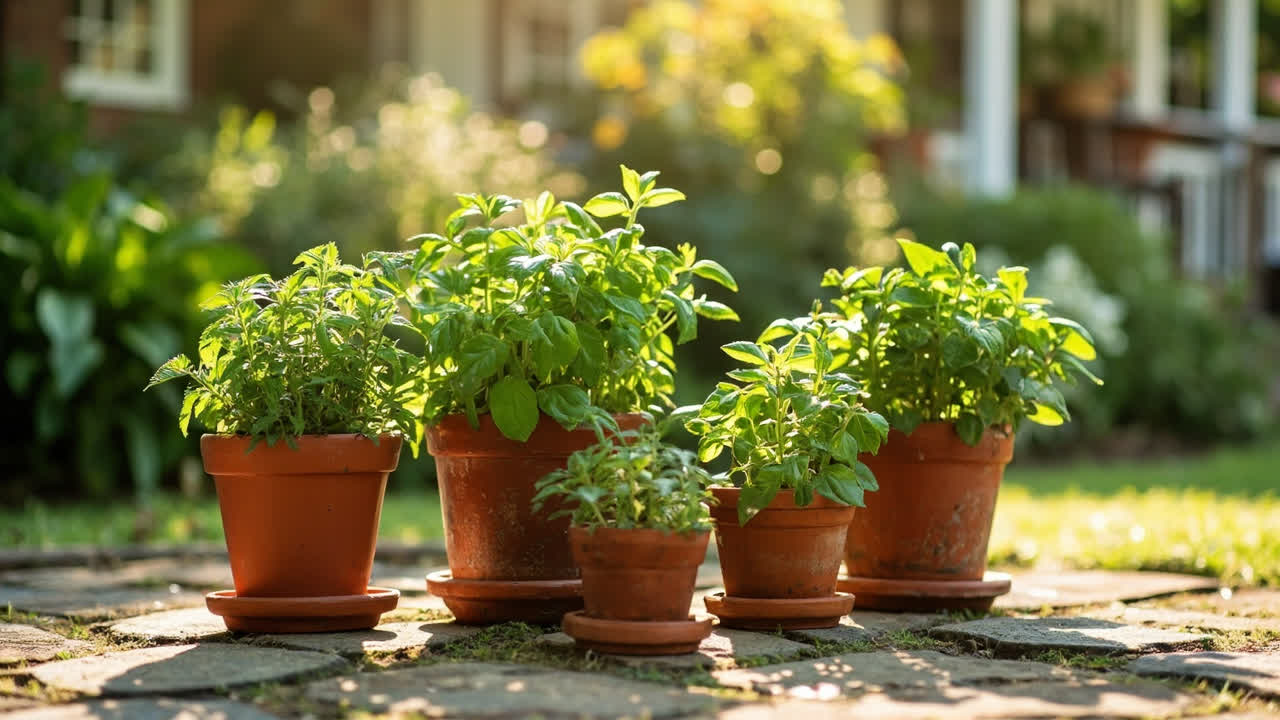
Matching Herbs to Your Conditions
Before choosing herbs, assess what you actually have:
Full sun (6+ hours): Basil, rosemary, thyme, sage, oregano, lavender
Partial sun (3–6 hours): Parsley, cilantro, mint, chives, tarragon
Indoor or very low light: Mint, parsley, chives (these tolerate less but grow better with more)
Heat tolerance:
Basil — The least cold-tolerant herb. It hates temperatures below 50°F and turns black at the first frost. In fall, bring basil indoors to a sunny window or accept that its season ends with the first cold night.
Rosemary — Tolerates light frost but struggles below 20°F. In zones 7 and above, it can stay outside year-round. For the rest of us, bringing herbs inside is the same seasonal transition logic that applies to preparing the garden for colder months.. In colder zones, bring it inside to a bright window or treat it as an annual.
Mint — The hardiest herb in the group. It tolerates frost and cold and grows through most temperate winters with protection. It also tolerates lower light better than most herbs.
The practical herb selection for most people: Basil, parsley, rosemary, and mint. These four cover the widest range of cooking uses and are all relatively easy to grow. Everything else is an addition after those are working.
—
Watering : The Most Critical Skill
Container herb watering is not a schedule — it is a daily observation. Container soil dries from the top down, and different herbs have different moisture preferences.
Basil: Water when the top inch of soil feels dry. In hot weather, this may be daily. Inconsistent moisture causes blossom end rot and leaf tip burn. Basil wilts dramatically when it needs water and recovers quickly when watered — use this as your signal.
Rosemary: Water when the top two inches of soil are dry. Rosemary is more tolerant of dry conditions than overwatering. In a humid bathroom or a poorly draining pot, rosemary develops root rot within days. Let it dry more than you think it needs.
Mint: Water when the top inch feels dry. Mint is forgiving of inconsistent watering and recovers from wilting fast, but it grows better with steady moisture. If the pot feels significantly lighter than usual when you pick it up, water it.
Parsley and cilantro: Water when the top inch is dry. Both bolt (go to seed) faster in hot conditions — keeping them cooler and more consistently moist extends their productive season.
The bottom-watering method works well for all container herbs: pour water into the drainage tray and let the soil absorb it from below. This encourages roots to grow downward rather than circling near the surface.
—
Feeding : Less Than You Think
Container herbs need less fertilizer than container vegetables. Too much fertilizer produces large, lush plants with diluted flavor — rosemary with weak, watery flavor is not useful in the kitchen.
Basil: Feed with a diluted balanced liquid fertilizer (half strength) every four to six weeks during active growth. Do not feed in fall and winter when growth slows.
Rosemary: Feed once in early spring with a slow-release granular fertilizer at half strength. Rosemary grows slowly and doesn’t need regular feeding. Overfeeding causes leggy, weak growth.
Mint: Feed every four to six weeks with a diluted liquid fertilizer during the growing season. Mint is a heavy feeder and responds well to regular feeding.
Parsley and cilantro: Feed every four weeks with a diluted liquid fertilizer. As with basil, half-strength is sufficient.
—
Harvesting to Keep Plants Productive
The way you harvest determines how long a container herb garden stays productive. Cutting herbs back hard — removing a third or more of the plant at once — stimulates new growth and keeps the plant from becoming woody and unproductive.
Basil: Harvest by cutting just above a leaf node (the point where two leaves meet on the stem). This forces the plant to branch from that point and produces a bushier, more productive plant. Never harvest more than half the plant at once — leave enough foliage for the plant to photosynthesize and recover.
Rosemary: Cut stems as needed with scissors or pruners. Rosemary grows back slowly, so take only what you need for each cooking session. A mature plant in a five-gallon container produces enough for regular kitchen use.
Mint: Cut stems back regularly, even if you don’t need the mint — this keeps the plant from flowering and going to seed, which reduces leaf production. Cut the whole plant back by a third every four to six weeks during the growing season to keep it productive.
Parsley: Cut outer stems at the base, leaving the inner growth to continue producing. Parsley regrows from the center, so harvesting only the outer stems keeps it productive all season.
—
Extending the Season : Bringing Herbs Inside
One of the biggest advantages of container herbs is that tender herbs can be brought inside for winter. Basil is the most common candidate — it survives indoors in a sunny window. Rosemary also overwinters well inside with enough light.
For indoor winter herbs: Place basil and rosemary in your brightest south or west-facing window. Water less frequently in winter — plants grow slower and use less water. Expect some leaf drop as plants adjust to lower light levels. A grow light supplement helps keep herbs productive through winter.
A container herb garden rewards consistency more than it rewards effort. Check the soil moisture daily, water when needed, feed monthly, and harvest regularly. In return, you get fresh herbs for cooking that are far better than anything from a store — and you get them steps from your kitchen rather than a car ride away.
Turn PDF Bank Statements Into Workable Spreadsheets
Your bank statement is a mess of numbers, but your books shouldn't be. Use our converter to get Excel, CSV, or QBO files — ready for QuickBooks.
Try It Free Now