
TITLE: Peace Lily Yellow Leaves: Why and What to Do About It
TARGET: peace lily yellow leaves
CAT: 144
—
Peace lilies are dramatic. They droop when they need water, perk up when they get it, and turn yellow leaves into a public announcement that something in their world has shifted. If your Peace Lily is showing yellow leaves, the plant is telling you something — and the cause is usually fixable. For a complete care overview, see our Peace Lily brown tips guide, which covers the sister symptom on the same plant.
The most common mistake is assuming yellow = overwatering. That’s sometimes true, but not most of the time. Here’s the accurate diagnostic sequence.
Why Yellow Leaves Appear: The Real Order of Likelihood
Most sources list overwatering first. In practice, the most common cause of Peace Lily yellow leaves in typical indoor conditions is a combination of aging lower leaves (completely normal) and suboptimal light exposure (especially too little light). Overwatering is third on the list for most plant owners.
For the full breakdown, see our houseplant yellow leaves diagnosis.
That said, the cause matters enormously for what you do next — so it’s worth checking each in order.
Cause 1: Natural Leaf Aging (The Most Common)
Peace lilies shed their oldest leaves regularly. A mature leaf — typically the lowest ones on the stem — will turn yellow, then brown, then die. This is the plant moving nutrients out of the leaf before discarding it. It’s not a problem. It’s a normal lifecycle process.
How to tell it’s aging and not a disease: the yellowing is confined to one or two lower leaves at a time, and the rest of the plant looks healthy — good green color, no wilting, new growth still emerging. The yellowing leaf will feel normal (not mushy) and will gradually progress to brown over 2-4 weeks.
What to do: remove the yellowing leaf by pulling it gently at the base. Don’t leave it on the plant — once a leaf has started dying, it consumes energy that the plant could redirect to new growth. Clean removal also prevents fungal buildup on decaying matter at the soil surface.
Cause 2: Light Exposure Problems
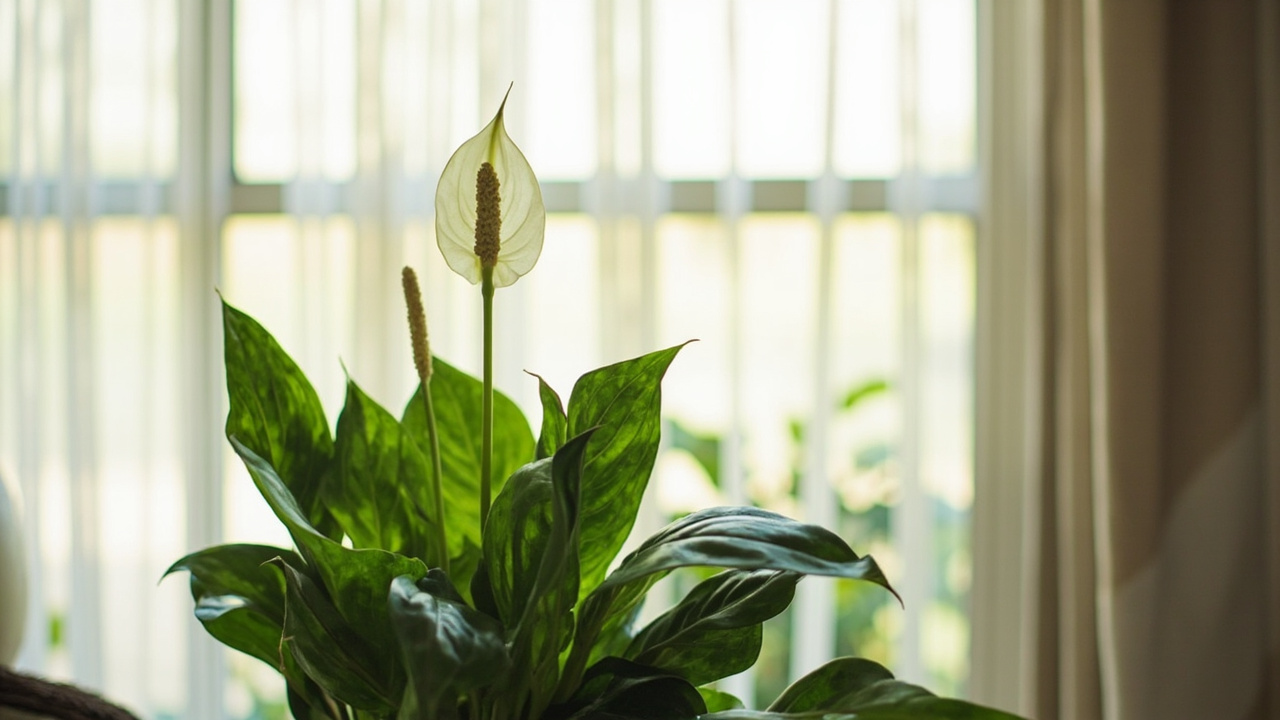
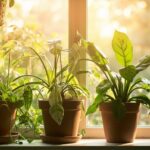
Peace lilies thrive in low to medium indirect light — but “low light” doesn’t mean “no light” or “dark corner.” In rooms with north-facing windows or significant distance from any natural light source, Peace lilies slowly lose vigor. The first symptom is often gradual yellowing of older leaves, followed by fewer flowers and slower new growth.
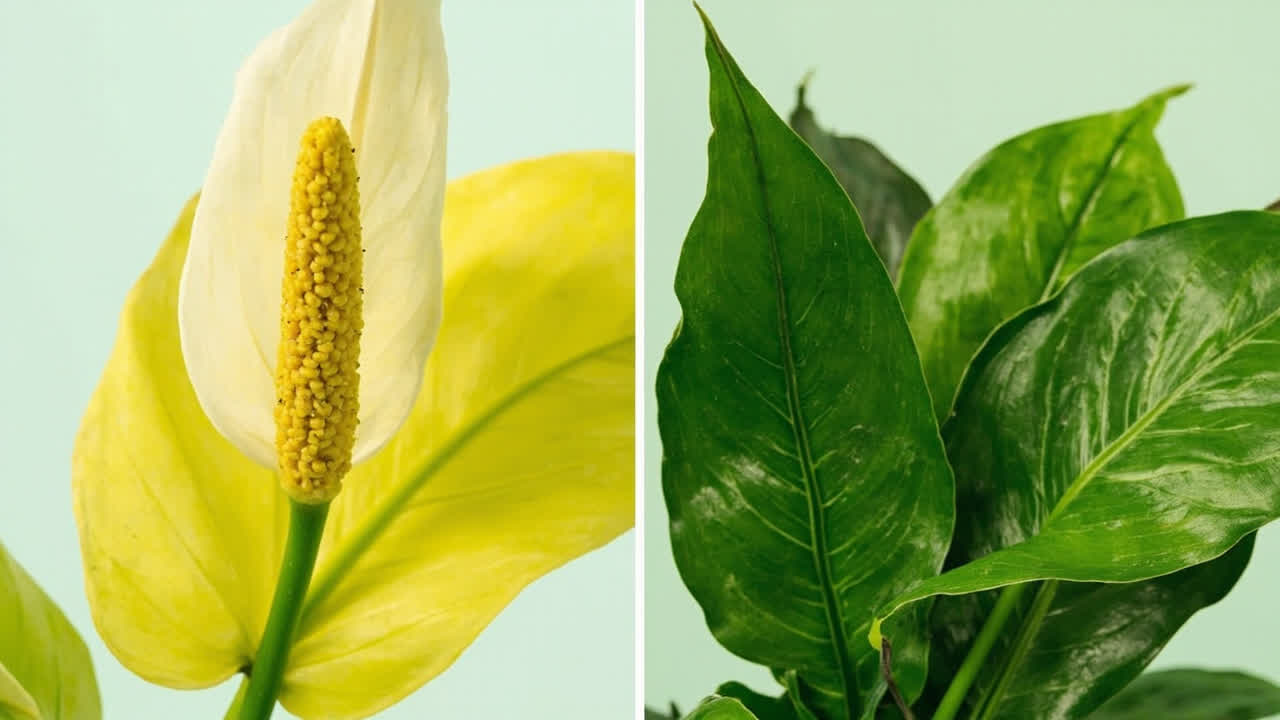
Too much direct light is equally problematic — Peace lilies in direct sun develop pale, washed-out leaves that may yellow and develop burn spots. The leaf will look bleached rather than simply yellow.
The optimal position
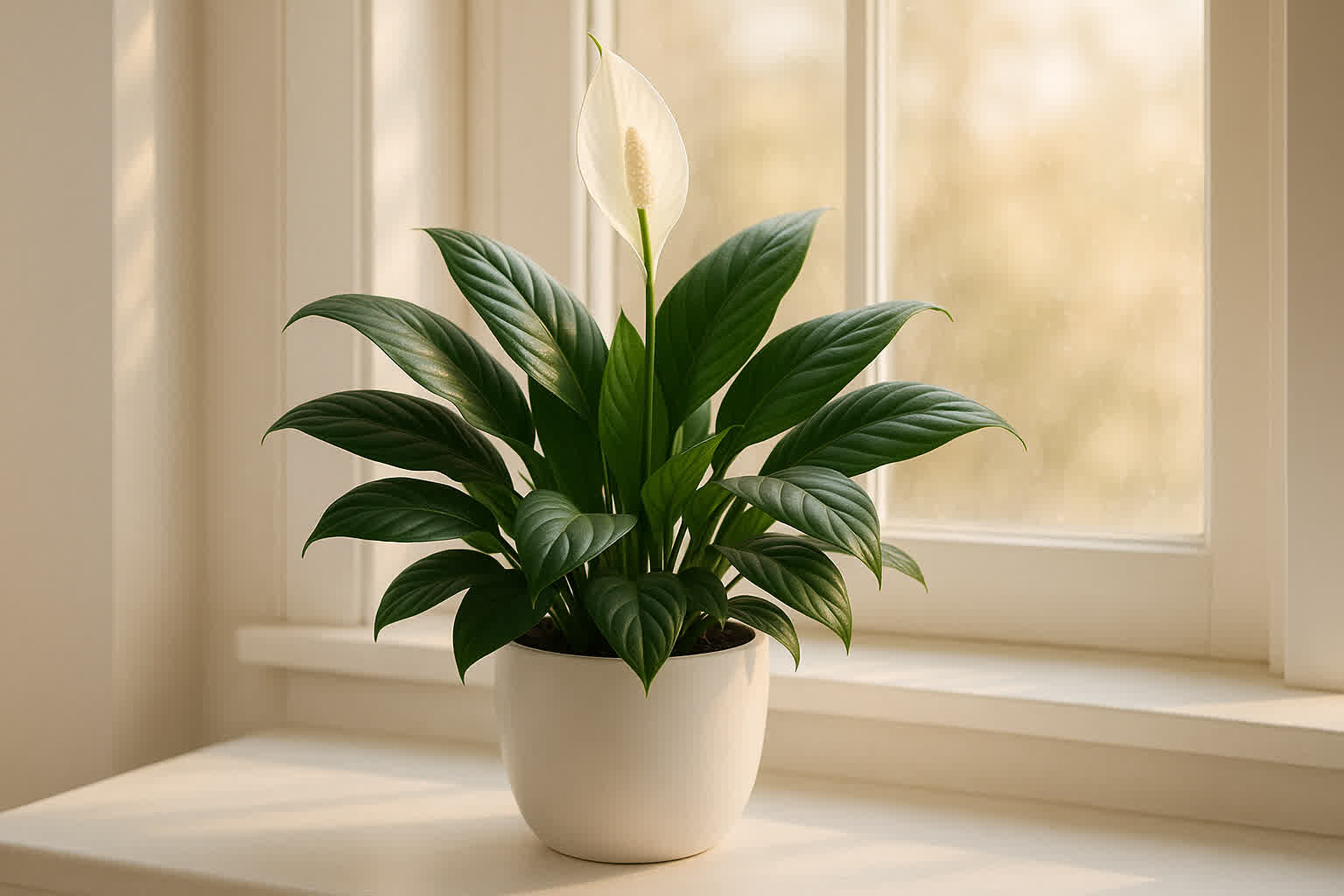
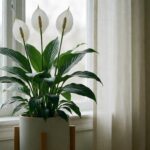
Peace lilies do best within 3-5 feet of a window with curtains, or in a room that gets consistent ambient light throughout the day without direct sun on the leaves. An east-facing window is ideal. If you’re not sure whether your light level is right, observe the plant: if it’s growing but slowly, and the leaves are a healthy deep green (not yellowing), the light is probably adequate. If it’s growing very slowly or not flowering at all, the light is likely the constraint.
The seasonal factor
In winter, even well-lit rooms have lower light intensity. Peace lilies often yellow slightly in winter as a response — the plant is slowing down and shedding older leaves more aggressively. This is normal and usually corrects in spring when light increases. If your Peace Lily yellows every winter and recovers in summer, no intervention is needed beyond removing the old leaves.
Cause 3: Overwatering and Root Rot
Overwatering is the second most common cause of Peace Lily yellowing in most indoor environments (after natural aging). The symptoms are specific: the yellowing affects multiple leaves, the lower leaves more severely, and the soil stays wet for more than a week after watering. You may also see the plant wilting despite wet soil — root rot prevents water uptake even when plenty is available.
The fix requires addressing both the immediate overwatering and the underlying soil conditions. If the pot has no drainage holes, that’s the first problem. If the soil mix is dense (regular potting soil holds too much moisture for Peace lilies), repotting is the second problem to solve. For a full breakdown of root rot signs and progression, see our root rot explained guide — the same diagnostic logic applies to Peace lilies.
The soil mix for Peace lilies
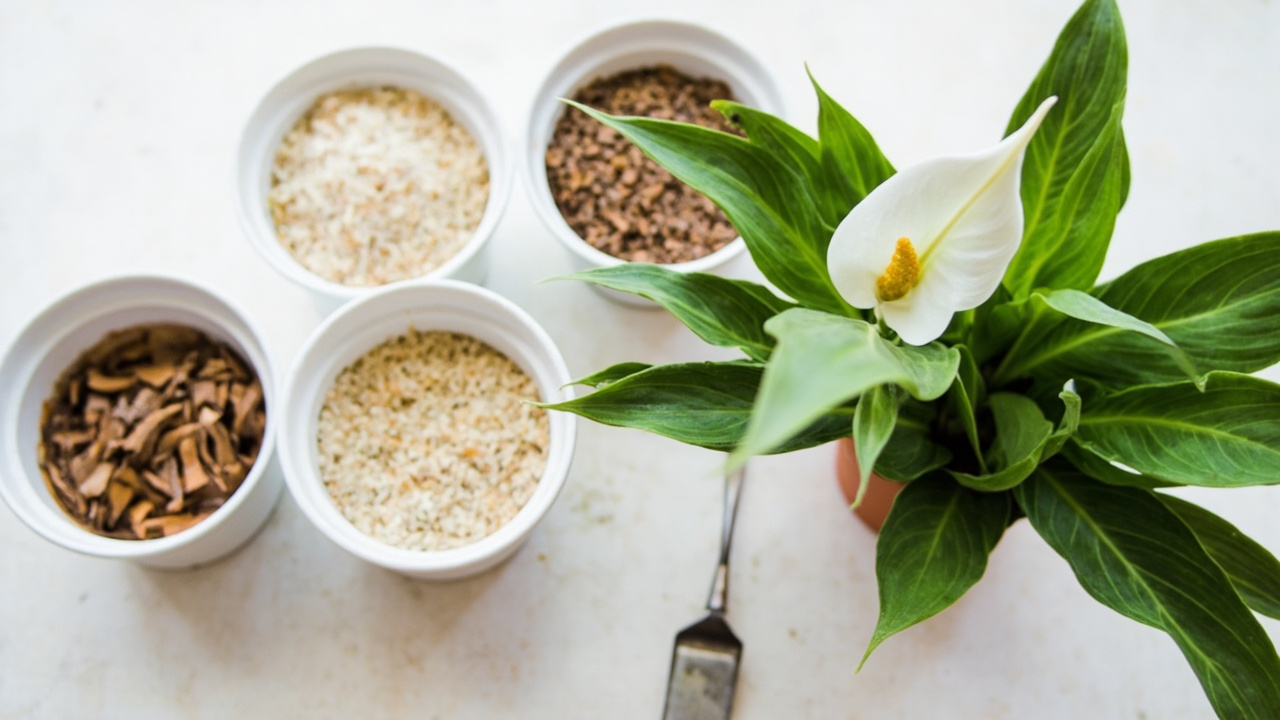
Peace lilies want a mix that’s moisture-retentive but well-aerated. A blend of roughly 60% potting soil, 20% perlite, and 20% coco coir or bark works well — it holds enough moisture to keep the plant happy between waterings but drains fast enough to prevent the roots sitting in water. For more detail on this principle, see our snake plant soil guide, which covers the same drainage-first approach.
How to rescue an overwatered Peace Lily
If the root rot has set in (mushy roots, foul smell from the soil), you’ll need to trim the rotted roots, treat the remaining roots with a mild hydrogen peroxide solution (1 tablespoon 3% peroxide per cup of water), and repot in fresh fast-draining mix. The plant may lose several leaves in the process — that’s normal. It will regrow from the surviving roots if the rot wasn’t total.
If the roots look healthy (firm and white or cream-colored) but the soil is just wet, stop watering and let it dry out completely. Place the plant in better indirect light to help it process the excess moisture. Resume watering only when the top inch of soil is dry. For related watering mistakes, see our spider plant tap water guide — the underlying chemistry of mineral buildup applies equally to Peace lilies.
Cause 4: Nutrient Deficiency
Peace lilies are not heavy feeders, but after months of being in the same soil without any fertilizer, they can show signs of nitrogen deficiency — which manifests as general yellowing of the whole plant, including newer leaves, not just the oldest ones. The leaves also tend to be smaller than normal.
A balanced liquid fertilizer (10-10-10 or similar) diluted to half-strength and applied monthly during the growing season (spring through early fall) solves this. Don’t fertilize in winter unless the plant is still actively growing — the reduced light and growth in winter means it won’t use the nutrients, and they can accumulate as salt damage at the roots.
Fertilizer burn vs. deficiency
The line between under-fertilizing and over-fertilizing is thin with Peace lilies. If you’ve been fertilizing regularly and the plant still shows yellowing, the problem is likely not nutrient deficiency — it’s probably root suffocation from overwatering or accumulated fertilizer salts. Flush the soil thoroughly with distilled water if you suspect salt buildup.
Cause 5: Temperature Stress and Cold Drafts
Peace lilies are tropical plants — they don’t tolerate cold. A plant positioned near an AC vent, a drafty window in winter, or any space below 55°F / 13°C will show stress through yellowing leaves, often starting at the edges. The damage is usually accompanied by the leaves looking slightly rolled or curled inward.
If you move a Peace Lily from a warm room to a cold one (or vice versa) quickly, the temperature shock alone can cause leaf yellowing. The plant usually recovers on its own once it acclimates to the new temperature — which is why stable placement is important for this species.
The Diagnostic Checklist in Order
When you see yellow leaves on a Peace Lily, check these in order:
- How many leaves are yellow? One or two old lower leaves = natural aging. Multiple leaves across the plant = something else.
- Is the soil wet or dry? Wet + multiple yellow = overwatering. Dry + wilt = underwatering.
- Where is the plant positioned relative to light? Deep shade or direct sun = light stress.
- When did you last fertilize? Never or months ago = possible deficiency. Recently and heavily = possible salt buildup.
- Is the plant near a vent or draft? Cold air = temperature stress.
Most yellow leaf issues trace to one or two of these factors working together. Solving them in order usually reveals the primary cause within a week.
What Won’t Fix Yellow Leaves
Once a Peace Lily leaf has turned yellow, it will not turn green again. The chlorophyll is gone and the leaf is on its way out. Removing it allows the plant to redirect those resources to new growth. Keeping yellow leaves on the plant doesn’t help it — it costs the plant energy it could be using elsewhere.
The good news: Peace lilies grow relatively quickly and replace leaves steadily. A plant that had 3-4 yellow leaves at the start of the month should have fresh green growth emerging within 2-4 weeks if the underlying cause is corrected. If no new growth appears after a month of correcting conditions, the root system may have been damaged more severely than the leaves indicated — check the roots.
The Takeaway
Peace Lily yellow leaves are rarely a crisis. In most cases, it’s the plant shedding an old leaf normally — remove it and move on. When multiple leaves are yellowing, work through the list: light exposure, watering schedule, soil drainage, nutrient status, and temperature. The combination of overwatering and insufficient light is the most common double-cause in typical indoor environments.
Fix the environment and the yellowing stops. The plant’s growth rate and overall health are the real indicators — not any single yellow leaf.
From Bank Statement to QuickBooks-Ready File
That manual cleanup you just read about? This tool skips it. Turn your PDF into QBO for QuickBooks without storing your data anywhere.
Start Converting