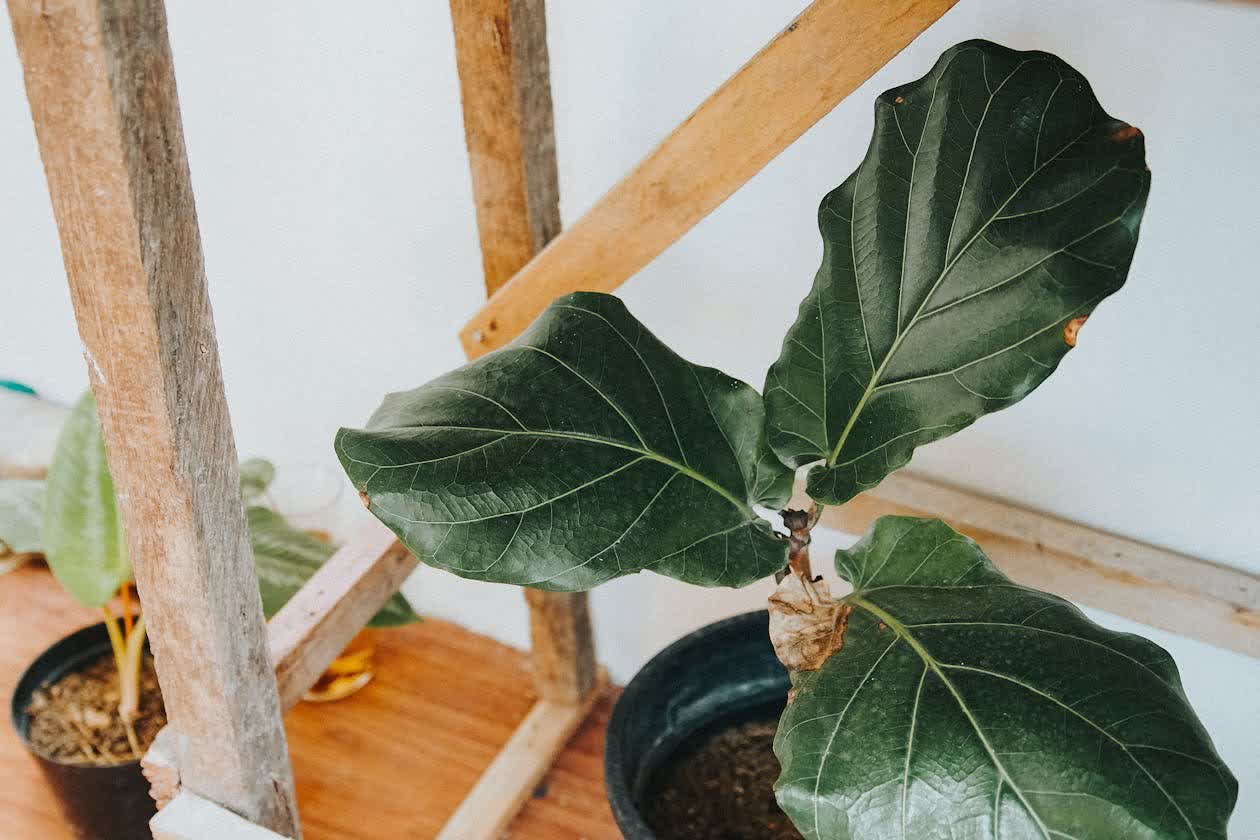
Fiddle leaf figs are not easy to propagate — they root slowly, fail frequently, and demand more attention during propagation than most houseplants. But propagating your own fiddle leaf fig is possible with the right technique, timing, and patience. The process takes three to four months minimum to produce a rooted cutting ready for a pot, and up to six months in cooler or lower-light conditions. This guide covers the method with the highest success rate: stem cuttings in sphagnum moss, with water propagation as a secondary option.
Before You Start: Timing and the Parent Plant
Take cuttings in spring or early summer when the parent plant is actively growing. Fiddle leaf figs are dormant in winter and rooting success rates drop significantly when cuttings are taken in autumn or winter months. The parent plant should be healthy — actively producing new leaves, no signs of root rot or pest infestation, and at least a few mature leaves available to take as cuttings without leaving the parent plant bare.
Assess the plant’s shape before cutting. A fiddle leaf fig that has become leggy or top-heavy is a good candidate for propagation — you will be removing growth that might have been pruned anyway, and the resulting cuttings become new plants rather than waste.
Selecting and Cutting Stems
A suitable fiddle leaf fig cutting has three to four elements: a section of stem 6–8 inches long, at least two to three mature leaves (the large fiddle-shaped leaves), one to two nodes on the bare stem section, and a cleanly cut top and bottom.
Identify a stem section with two to three nodes — the slightly swollen points on the stem where leaves attach and where roots can emerge. Using a clean, sharp knife or pair of secateurs, make a horizontal cut ½ inch below the lowest node on your selected section. Make a second cut above the top node of your section, leaving ½ inch of stem above it.
The cutting should have a bare section of stem at the bottom (where roots will grow) and two to three leaves at the top. Remove the lowest leaf if it will sit below the moss or waterline.
Do not use a sawing motion — a clean cut avoids crushing the stem’s vascular tissue, which is essential for water uptake during rooting.
Sphagnum Moss Propagation
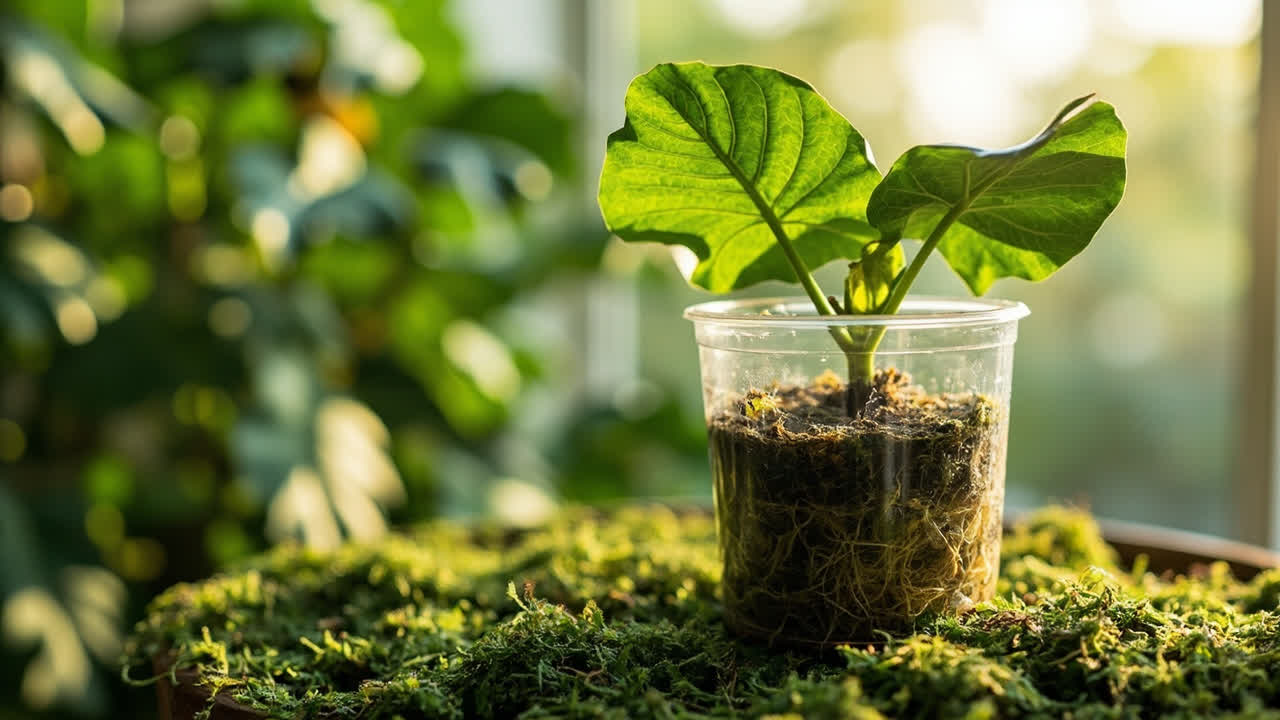
Sphagnum moss propagation has a higher success rate for fiddle leaf figs than water propagation because the roots grow in a medium rather than in water and experience less transplant shock when moved to soil.
Prepare the moss: take long-fiber sphagnum moss and soak it in water, then squeeze out the excess until it is damp but not dripping — like a wrung-out sponge. Pack the moss loosely around the bottom node of the cutting, covering the bare stem section. Leave the leaves above the moss uncovered.
Place the cutting in a small container — a clear plastic cup with drainage holes works well because you can monitor root growth through the sides. Alternatively, wrap the moss-covered node loosely in plastic film and hang it in a bright position. Position in bright, indirect light. Direct sun overheats the moss and kills the cutting.
Maintain consistent warmth — 70°F–80°F (21°C–27°C). Cooler temperatures significantly slow rooting. A heat mat underneath the propagation container raises the success rate meaningfully.
Check every few days that the moss remains damp — mist with water if it begins to dry. Roots typically appear within six to eight weeks in good conditions. The new roots are fragile and light-coloured; handle gently when transferring to soil.
Once roots are 2–3 inches long — visible through the side of a clear cup — transfer to a small pot (4–5 inches) with fast-draining potting mix. Keep the soil consistently moist for the first three to four weeks as the plant adjusts. After that, transition to normal fiddle leaf fig watering routines.
Water Propagation
Water propagation is simpler but produces roots that are less prepared for soil, leading to higher transplant failure rates. If using water: place the cutting in a clean glass jar filled with room-temperature water, submerging the bottom node and bare stem but keeping the leaves above the waterline. Position in bright, indirect light and change the water every three to four days.
Roots appear in six to ten weeks in good conditions. Transfer to soil when roots are at least 3 inches long. Use a small pot with fast-draining mix and keep the soil moist for the first month. The transition from water to soil is the highest-risk phase — expect some leaf drop or wilting as the plant adjusts to a different moisture environment.
Air Layering
Air layering is the most reliable but slowest propagation method for fiddle leaf figs, used by commercial growers. To air layer: make a diagonal upward cut about one-third into the stem at a node, insert a small matchstick or wood sliver to keep the cut open, wrap the wounded section loosely with damp sphagnum moss, then wrap in plastic film to retain moisture. Keep the moss damp and wait.
Roots appear at the wound site within two to three months. Once a good root system has developed within the moss, cut the stem below the new roots and pot as normal. This method keeps the parent plant intact throughout, eliminating the risk of losing both the parent and the new plant if rooting fails.
Caring for New Fiddle Leaf Fig Cuttings
A newly potted fiddle leaf fig cutting needs the same conditions as the parent plant: bright indirect light, consistent warmth, and careful watering that lets the soil dry slightly between waterings. The critical difference is that the root system is small and the plant cannot yet support the large leaf area of a mature specimen. Do not be tempted to use a large pot initially — a 4 to 5 inch pot is correct for a newly rooted cutting. The soil in a large pot stays wet too long for a small root system.
Expect the first few leaves on a new cutting to be smaller than the mature leaves on the parent plant. As the root system expands with repotting into progressively larger containers, the leaf size will increase. A fiddle leaf fig that started as a 4-inch pot cutting can reach a 10-inch pot and produce full-sized leaves within two to three years under good conditions.
Common Failure Modes
The cutting that does nothing — no roots, no growth, no decline — is usually too cold or too dark. Move to a warmer, brighter position. A heat mat and a grow light make a significant difference.
The cutting that rots: the stem turns black and soft from the bottom up. This is caused by overwet conditions in sphagnum moss or by using a container without drainage. Start again with fresh sphagnum moss and ensure the container drains freely.
The cutting that roots but fails to grow in soil: roots that are too short when transferred cannot supply enough water to the leaves, and the cutting collapses. Wait until roots are 3 inches or longer before transferring.
The cutting that grows roots but drops all its leaves: some leaf drop during propagation is normal, but total leaf loss usually indicates the cutting was overwatered in moss or the humidity is too low. Maintain humidity above 50% around the cutting during establishment.
From Bank Statement to QuickBooks-Ready File
That manual cleanup you just read about? This tool skips it. Turn your PDF into QBO for QuickBooks without storing your data anywhere.
Start Converting