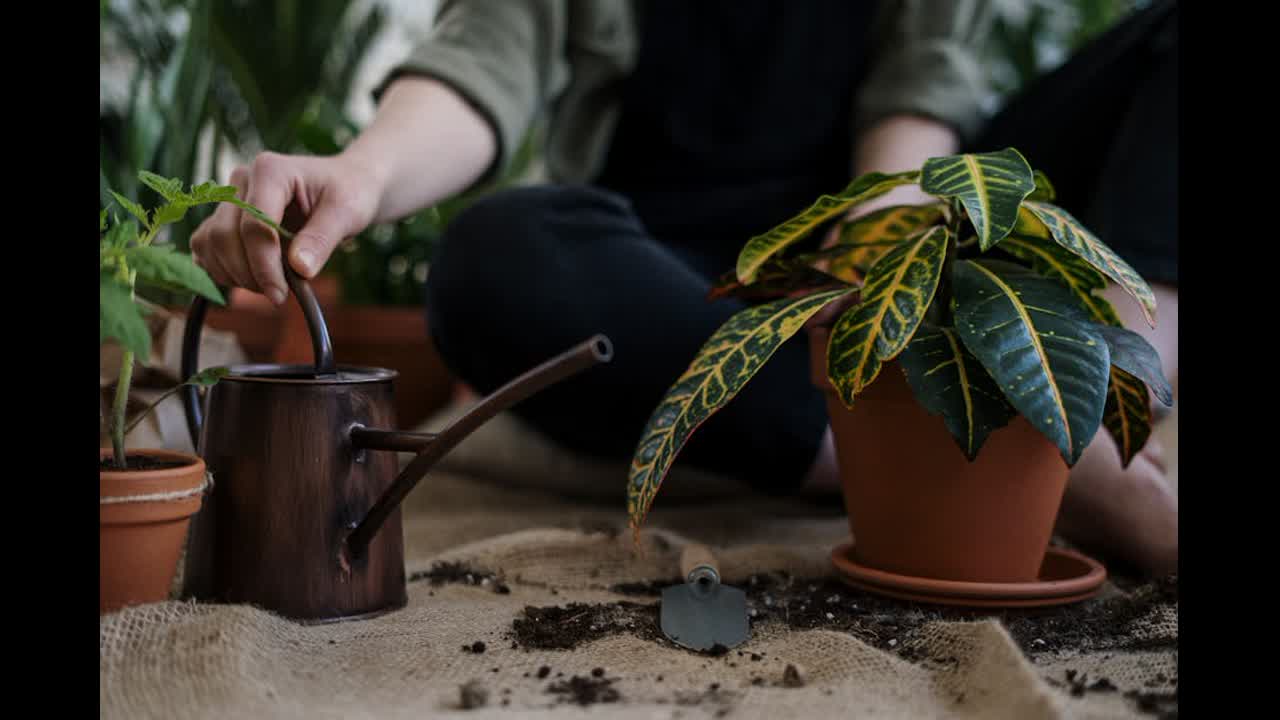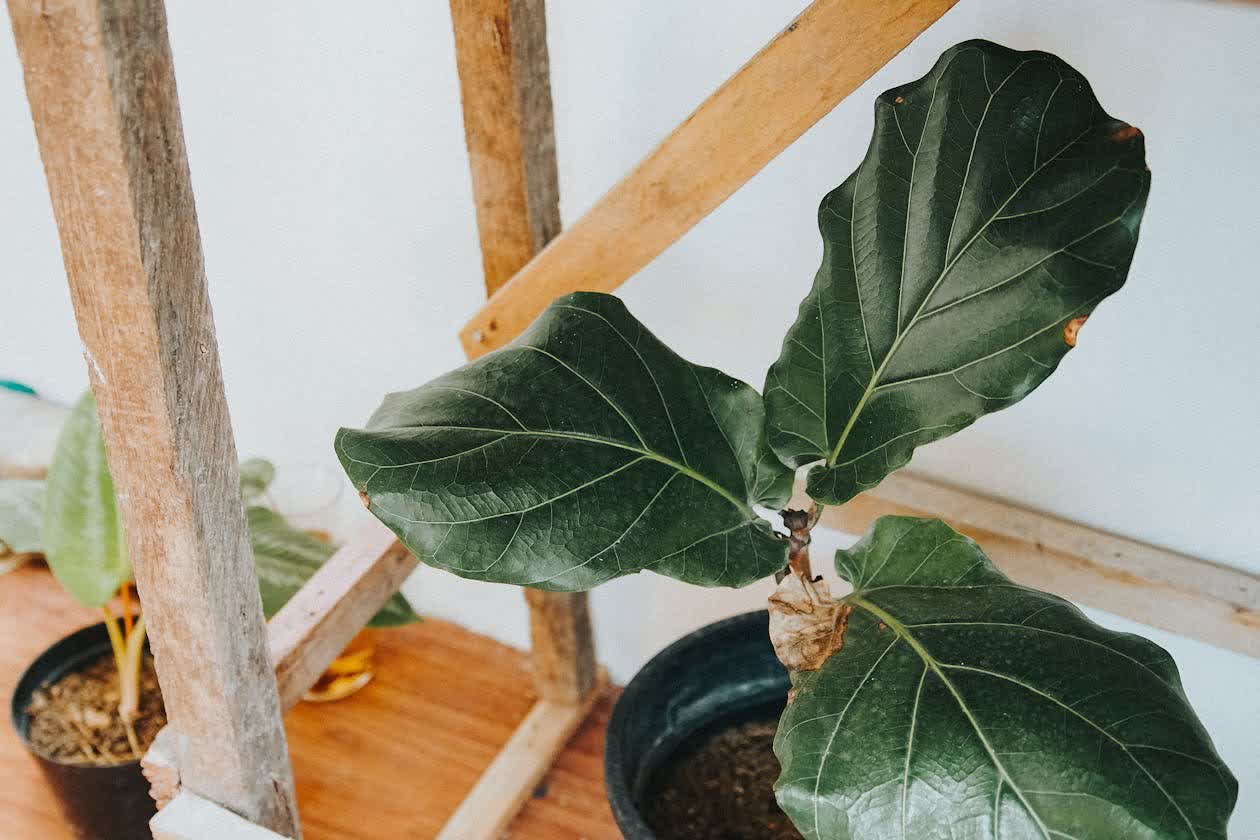

You brought your fiddle leaf fig home, repotted it into a beautiful ceramic pot with what you thought was good potting soil, and watched it slowly decline over the next two months. It wasn’t underwatering. It wasn’t low light. It was the soil.
Fiddle leaf figs have specific soil requirements that standard potting mixes don’t meet — and the symptoms of a wrong soil mix are exactly the same as the symptoms of incorrect watering, which is why most people miss the real cause of the problem.
What Fiddle Leaf Fig Soil Needs to Do
The soil around a fiddle leaf fig’s roots has four jobs: support the plant physically, hold moisture in a form the roots can absorb, provide oxygen to the root zone, and drain away excess water before it causes problems. Standard potting soil does the first job well and the second adequately. It does the third and fourth jobs poorly for a plant that needs excellent drainage.
The critical requirement is oxygen. Roots need oxygen to metabolize and function. When soil is saturated, the air pockets fill with water and the roots begin to suffocate — which is the start of root rot. Fiddle leaf fig soil needs to be fast-draining enough that the root zone returns to being mostly air between waterings, not continuously damp.
The Problem With Standard Potting Soil
Standard potting mixes are formulated to retain moisture — that’s the point. They’re designed for tropical plants that want consistently damp soil. A fiddle leaf fig is not a tropical plant in that sense; it’s an understory tree that evolved in fast-draining forest floor conditions. Standard potting soil stays wet too long after watering for a fiddle leaf fig’s root system to stay healthy.
The visual symptoms of soil that’s too moisture-retentive: the surface stays dark and damp for more than a week after watering, the pot feels heavy unusually long, and the plant shows signs of stress (yellowing lower leaves, brown edges) despite being watered on a sensible schedule. The soil is holding water the plant can’t access fast enough. For the full care baseline, the fiddle leaf fig care guide covers everything in detail.
The Right Soil Mix for Fiddle Leaf Figs
The Base Formula
A suitable fiddle leaf fig mix for most conditions is approximately: 60% premium potting soil + 30% perlite + 10% coco coir or peat moss. The perlite ensures fast drainage and root zone oxygen. The coco coir or peat moss provides some moisture retention without the compaction problems of pure peat in older mixes.
This is not a rigid formula — adjustments are fine based on your environment. In a very dry, hot climate, increase the moisture-retentive component slightly. In a cool, dim environment, increase the perlite to improve drainage further.
Perlite: Why It Matters
Perlite is expanded volcanic glass — the white specks in most quality potting mixes. It creates air pockets in the soil and prevents the compaction that kills root zone oxygen. Without perlite or a similar coarse additive, even a “fast-draining” commercial mix will eventually compact and lose its drainage properties.
The trade-off: perlite-heavy mixes dry out faster. This means you may need to water slightly more frequently, particularly in summer or in dry climates. The trade-off is worth it. The cost of adding perlite is negligible compared to the cost of fixing root rot.
Coco Coir vs. Peat Moss
Both work as the moisture-retentive component. Coco coir is the more sustainable choice and has better long-term structure. Peat moss is more widely available and slightly more moisture-retentive, which can be useful in very dry climates but is unnecessary in most indoor situations.
If using peat moss, avoid pure peat-based mixes without perlite — pure peat becomes hydrophobic when it dries out completely, and re-wetting it evenly is difficult. Coco coir rewets more easily after drying, which reduces the risk of dry patches in the root zone.
What Commercial “Fast-Draining” Mixes Actually Contain
Many commercial potting mixes are labeled “fast-draining” or “succulent and cactus” mix — but they vary widely in actual drainage performance. A mix labeled for succulents is generally better for fiddle leaf figs than a standard tropical mix, but the perlite content still matters.
The simple test: take the commercial mix you’ve chosen, fill a small pot with it, water thoroughly, and time how long it takes to drain fully from the bottom. If water drains from the bottom in under 60 seconds, the drainage is adequate. If it takes more than 2-3 minutes, add perlite to improve it before using it for your fiddle leaf fig.
How Soil Affects Your Watering Schedule
The relationship between soil and watering is direct: the faster your soil mix drains, the more frequently you’ll need to water. In summer, a fiddle leaf fig in a perlite-heavy mix in a terra cotta pot may need water every 4-5 days. In winter, in the same conditions, it may go 10-14 days between waterings. Use the soil as your guide, not the calendar. Push your finger into the soil — if the top 2 inches are dry, the plant is ready to water.
Use the soil as your guide, not the calendar. Push your finger into the soil — if the top 2 inches are dry, the plant is ready to water. If the second inch still feels damp, wait a few more days. The watering guide has the full breakdown of timing and technique for fiddle leaf fig watering.
Repotting Soil: What to Do When You’re Changing the Mix
If your fiddle leaf fig is already in the wrong soil mix and you’re correcting it, remove as much of the old mix as possible without damaging the roots — shake it off, rinse the roots briefly, and replace with the correct mix. Old soil that has compacted and lost drainage should not be reused.
When repotting, don’t go more than one pot size larger. A pot 2 inches larger in diameter is the maximum recommended increase. Excess soil volume holds moisture beyond the root system’s ability to draw it up, recreating the problem you’re trying to fix.
For the step-by-step repotting process, the fiddle leaf fig care guide has the full instructions for timing, pot selection, and post-repotting care.
From PDF to Excel in one click
Forget retyping line by line. Upload any bank statement, get a spreadsheet you can actually use. Your files are never stored, and you can test the converter with 3 free conversions.
Try it free