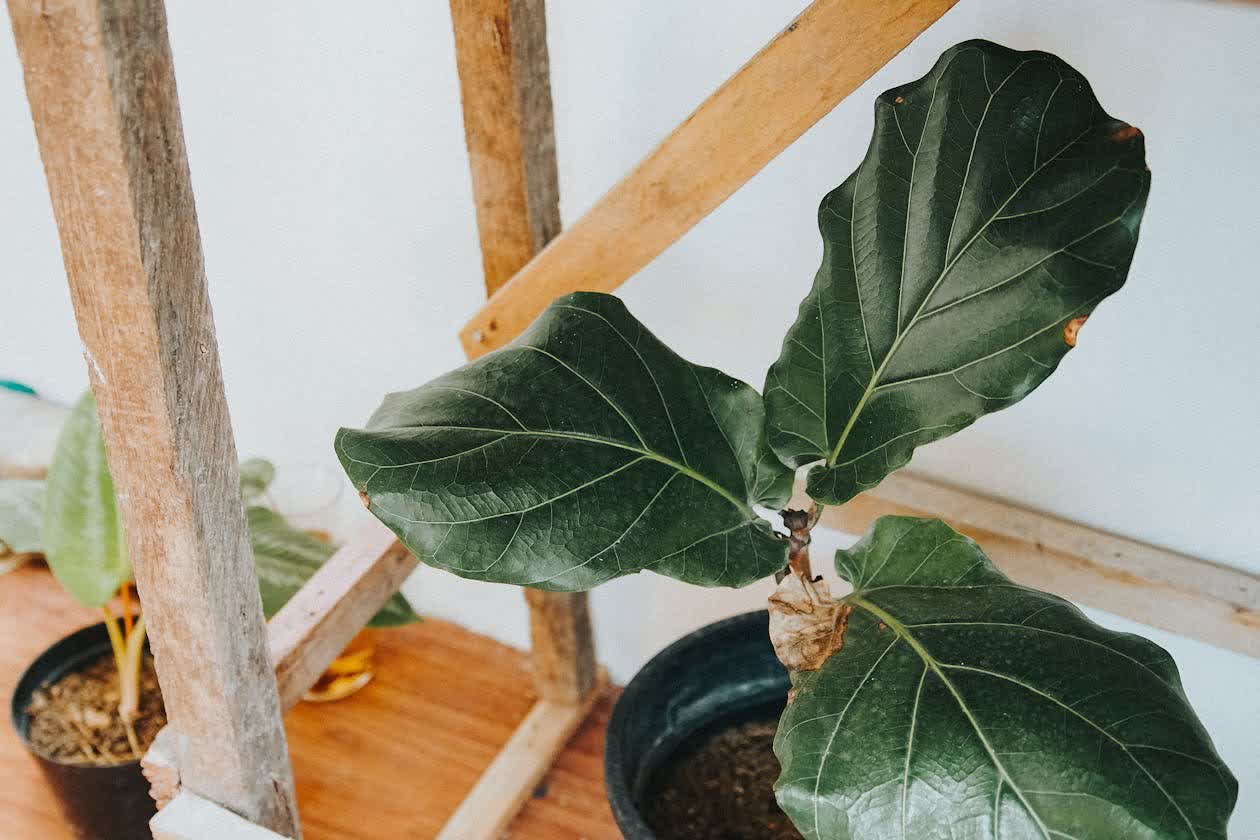
Watering is where most fiddle leaf fig problems begin. Not because the process is complicated — it is straightforward — but because the consequences of getting it wrong are immediate and sometimes irreversible. Overwatering causes root rot, which is the leading cause of fiddle leaf fig death. Underwatering causes stress that makes the plant vulnerable to every other problem. Getting the watering right is the single most important thing you can do for a fiddle leaf fig.
The Basic Rule
Water when the top 2 inches of soil are dry. This is not a schedule — it is a response to actual conditions. In summer, in a warm room, in a terracotta pot, the soil may dry in five to seven days. In winter, in a cool room, in a plastic pot, it may take two weeks or more. Always check the soil with your finger before watering. If the top 2 inches feel dry, water. If damp, wait.
This rule works because it matches the plant’s natural rhythm. Fiddle leaf figs come from rainforest floors where the soil dries out between rains before receiving another thorough soaking. The roots expect periods of dryness followed by saturation. Keeping the soil constantly moist — watering before the top 2 inches are dry — replicates the worst conditions in their native habitat.
How to Water
When you water, water thoroughly. Add water until it flows freely from the drainage hole at the bottom of the pot. This ensures the entire root ball is evenly moistened and salts from fertilizer are flushed from the soil. A thorough watering is better than frequent shallow waterings, which encourage roots to stay at the surface rather than growing deep.
After watering, wait 30 minutes and empty the saucer. The roots must not sit in standing water — even brief periods of waterlogging increase the risk of root rot. If the saucer fills again after a few minutes of draining, empty it again.
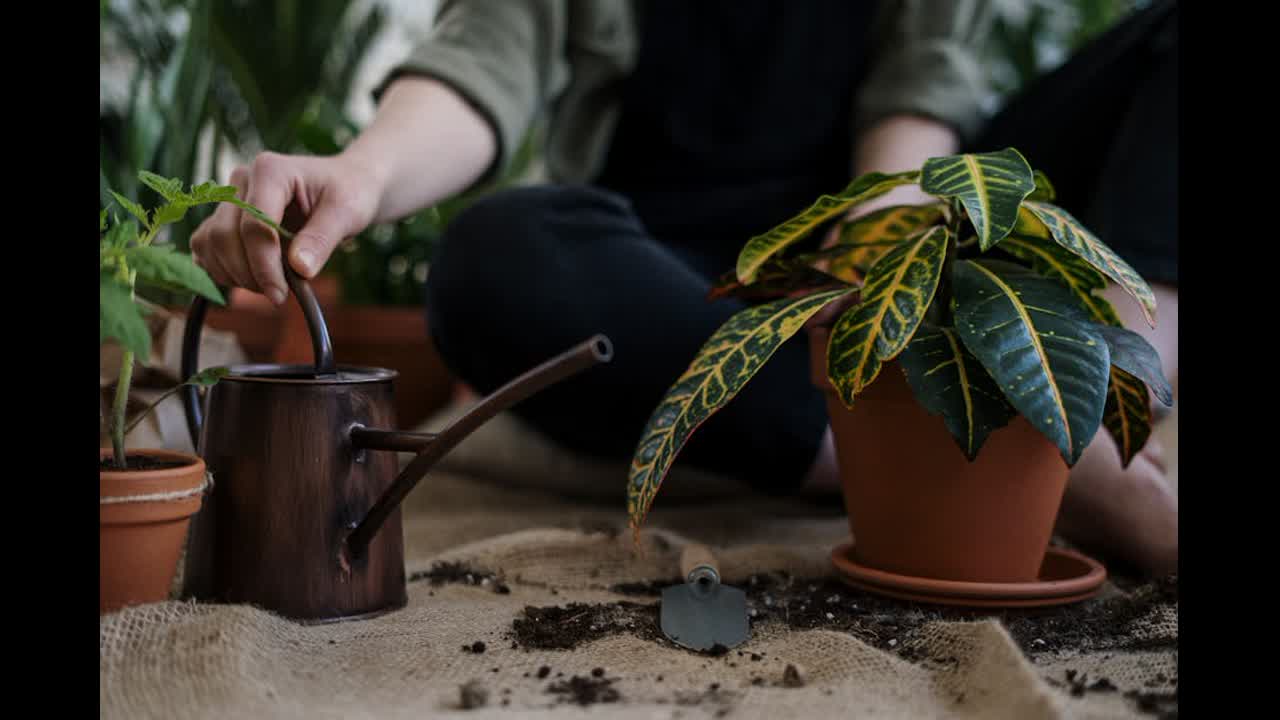
Overwatering
Overwatering is the most common cause of fiddle leaf fig death. The symptoms develop slowly: the soil stays wet for days after watering, the lower leaves turn yellow, the plant looks wilted even though the soil is moist, and new leaves are smaller than expected. By the time the symptoms are obvious, the root damage may be extensive.
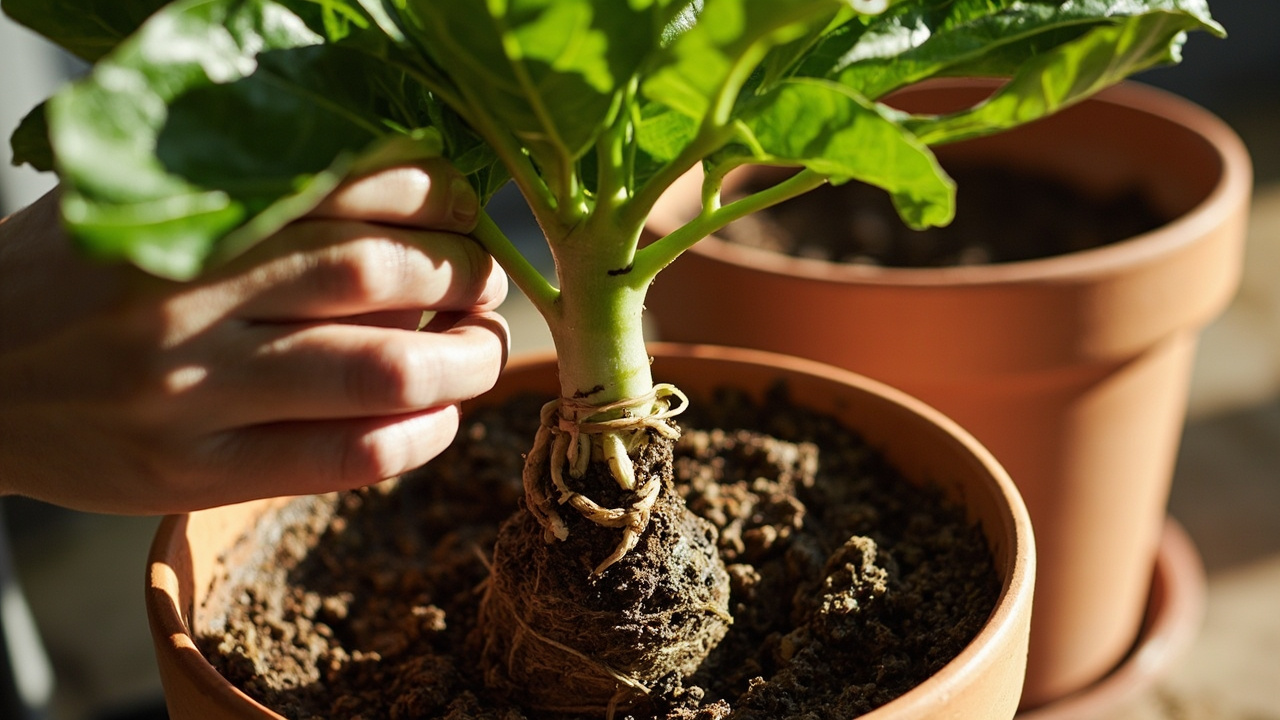
If the soil is consistently wet and the plant is declining, stop watering immediately and let the soil dry out. If the roots are already damaged — dark, mushy, or smelly — repot in fresh fast-draining soil, trim the damaged roots, and water very sparingly for several weeks. A fiddle leaf fig with root rot may lose most of its leaves before it recovers, but a healthy root system will eventually produce new growth.
Underwatering
Underwatering shows up as dramatic wilting — the large leaves collapse and the plant looks severely stressed. Within a few hours of thorough watering, the leaves should perk back up. Occasional underwatering causes no lasting damage. Chronic underwatering — allowing the soil to stay dry for weeks at a time — causes the leaf edges to turn brown and crispy, the plant to stop growing, and eventually the oldest leaves to yellow and drop.
The distinction between overwatering and underwatering wilting is the soil moisture. If the soil is wet and the plant is wilting, the problem is overwatering and root rot. If the soil is dry and the plant is wilting, the problem is underwatering. The fix for the latter is simply watering more thoroughly and more frequently.
Water Quality and Temperature
Fiddle leaf figs are not as sensitive to water quality as spider plants, but they do appreciate room-temperature water. Cold water shocks the roots and can cause temporary leaf drop. Let tap water reach room temperature before using it, particularly in winter.
The Right Pot
The pot material affects how quickly the soil dries. Terracotta pots are porous and allow the soil to breathe and dry faster — this reduces overwatering risk. Plastic pots retain moisture longer, which is helpful in very dry conditions but increases risk if you are prone to overwatering. Whatever material you use, ensure it has drainage holes and that you are checking the soil rather than watering on a schedule.
Turn That PDF Into a Spreadsheet in Minutes
You've seen how to do it manually — now let the tool handle the heavy lifting. Upload your bank statement and get Excel, CSV, or QBO in a few clicks.
Try It Free