Light is the single biggest factor in whether your hibiscus thrives or barely survives. Get this right and the plant manages other care inconsistencies with ease. Get it wrong and no amount of watering or fertilizing will produce the blooms you want. Understanding what hibiscus needs from light — and what happens when it does not get it — is the foundation of everything else.
What Hibiscus Needs: Full Direct Sun
Hibiscus rosa-sinensis requires a minimum of six hours of direct sunlight per day to grow well and produce flowers. This is not a plant that adapts gracefully to lower light — it compensates by slowing growth, dropping flower buds, and eventually refusing to bloom entirely while still looking superficially alive.
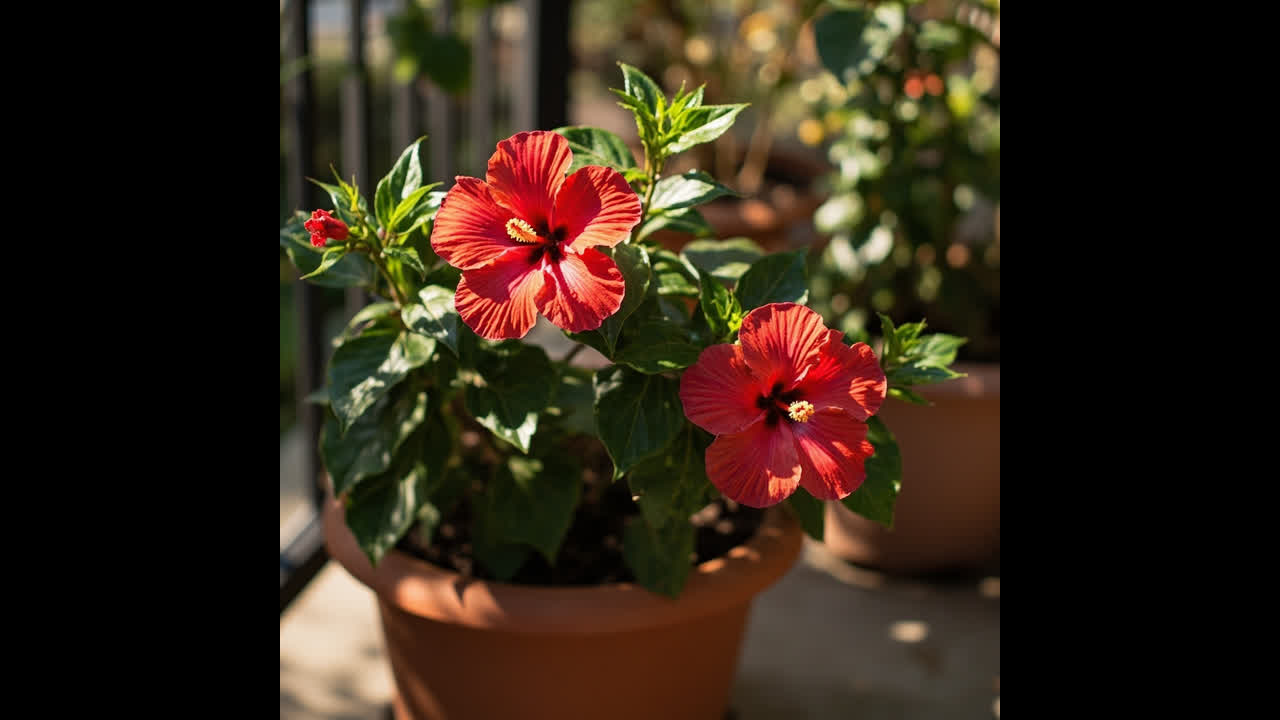
The ideal is 8+ hours of direct sun per day. In this conditions, hibiscus grows vigorously, branches densely, and produces blooms continuously from spring through autumn. The plant’s natural habitat is open, unshaded positions in tropical and subtropical regions — it evolved to handle intense, direct sun and actually depends on it.
Direct sun means sunlight that reaches the plant without passing through glass first. A sunbeam through a window is direct sun on that windowsill — but glass filters out some wavelengths and insulates against temperature fluctuations, so a hibiscus at a window is not getting quite the same quality of light as one outdoors. The difference matters at the margins, especially in winter or in rooms with less than full sun exposure.
What Happens When Light Is Too Low
Insufficient light is the most common reason for a non-blooming hibiscus. The symptoms are specific and recognizable:
- No flowers or flower buds, despite the plant looking otherwise healthy
- Leggy growth — long spaces between leaf nodes as the plant stretches toward available light
- Pale, yellowish leaves, especially on the side furthest from the light source
- Leaning or reaching — the plant tilts toward the light source
- Small, thin leaves — not the broad, glossy foliage the species produces in good light
These symptoms develop gradually. A hibiscus that was blooming well when placed by a bright south-facing window may slowly stop blooming as neighbouring trees grow and cast more shade. The change happens over months, which is why it is easy to miss until the plant is no longer flowering at all.
Indoor Light: The Windowsill Reality
Growing hibiscus indoors requires honest assessment of what your space can offer. Not all south-facing windows are equal. Consider:
- Large, unobstructed south-facing windows — the best indoor option. The hibiscus should be as close to the glass as possible, within 30 cm of the window. Light intensity drops sharply with distance from the window.
- East or west-facing windows — usable but marginal. These provide roughly half the light intensity of a south window in the northern hemisphere. Hibiscus in east/west windows may survive but will likely not bloom prolifically.
- North-facing windows — insufficient for hibiscus to bloom. The plant will survive as a foliage plant but will not flower and will gradually decline.
- Interior positions — more than 1–2 metres from a window — not viable for hibiscus. The light levels are too low to sustain basic metabolic processes.
Signs that an indoor hibiscus is receiving adequate light: the leaves are dark green (not pale), the plant produces flower buds, and there is no noticeable leaning toward the window. If the plant is leaning, rotate it 90 degrees every few weeks to keep growth even.
Supplemental Light: Grow Lights as a Solution
If your indoor space genuinely cannot offer enough natural light, grow lights are an effective supplement. A full-spectrum LED grow light placed 30–45 cm above the hibiscus, running 8–12 hours per day, can provide enough light for blooming in most indoor settings.
The key specifications to look for:
- Full spectrum — includes both red and blue wavelengths, covering the range plants need for both foliage growth and flowering
- At least 20–40 watts output for a standard grow bulb
- Placement close enough that the light feels warm when you hold your hand at plant level — lights too far above provide insufficient intensity
Even with grow lights, hibiscus benefits from natural light if any is available. Use the grow light to supplement, not replace, whatever natural light you have. A hibiscus in a bright east window with 4 hours of sun plus 8 hours of grow light performs better than one under grow light alone.
Moving Hibiscus Indoors and Outdoors
If you move a hibiscus between indoor and outdoor positions seasonally — common in cold climates — the light transition requires care. A plant that has been indoors all winter cannot go straight into full outdoor sun in spring without burning its leaves. The leaves have adapted to lower indoor light intensity and will photooxidize (turn yellow, then brown, and die) under sudden intense sun.
The solution is gradual hardening off:
- On the first warm day, place the hibiscus outdoors in deep shade for 1–2 hours
- Over the next 5–7 days, gradually increase time outdoors and move toward brighter positions
- After 7 days, it can handle direct sun without burning
This process feels excessive but it prevents leaf burn that can set the plant back by weeks. The reverse transition — bringing indoors for winter — should also be gradual if possible, with the plant spending progressively more time indoors before being brought in permanently.
Light Requirements in Different Seasons
Hibiscus light needs are not static through the year. In summer, natural light levels are high and most positions that receive sun for part of the day are sufficient. In winter, the sun is lower in the sky, days are shorter, and light intensity drops significantly even at the same windowsill.
A hibiscus that blooms well at a south-facing window in June may struggle to bloom at the same window in December — not because the plant has changed but because the light has. If your indoor hibiscus stops blooming in winter, this is normal and usually resolves as natural light increases in spring. You can supplement with grow lights through winter to maintain performance.
For the complete indoor care routine that supports the light your hibiscus needs — including watering, fertilizing, and humidity — see our hibiscus care guide. For container-specific indoor growing, see growing hibiscus in pots.
If your hibiscus is getting enough light but still not blooming, see our guide to the six causes of hibiscus non-blooming.
Turn PDF Bank Statements Into Workable Spreadsheets
Your bank statement is a mess of numbers, but your books shouldn't be. Use our converter to get Excel, CSV, or QBO files — ready for QuickBooks.
Try It Free Now