
Col
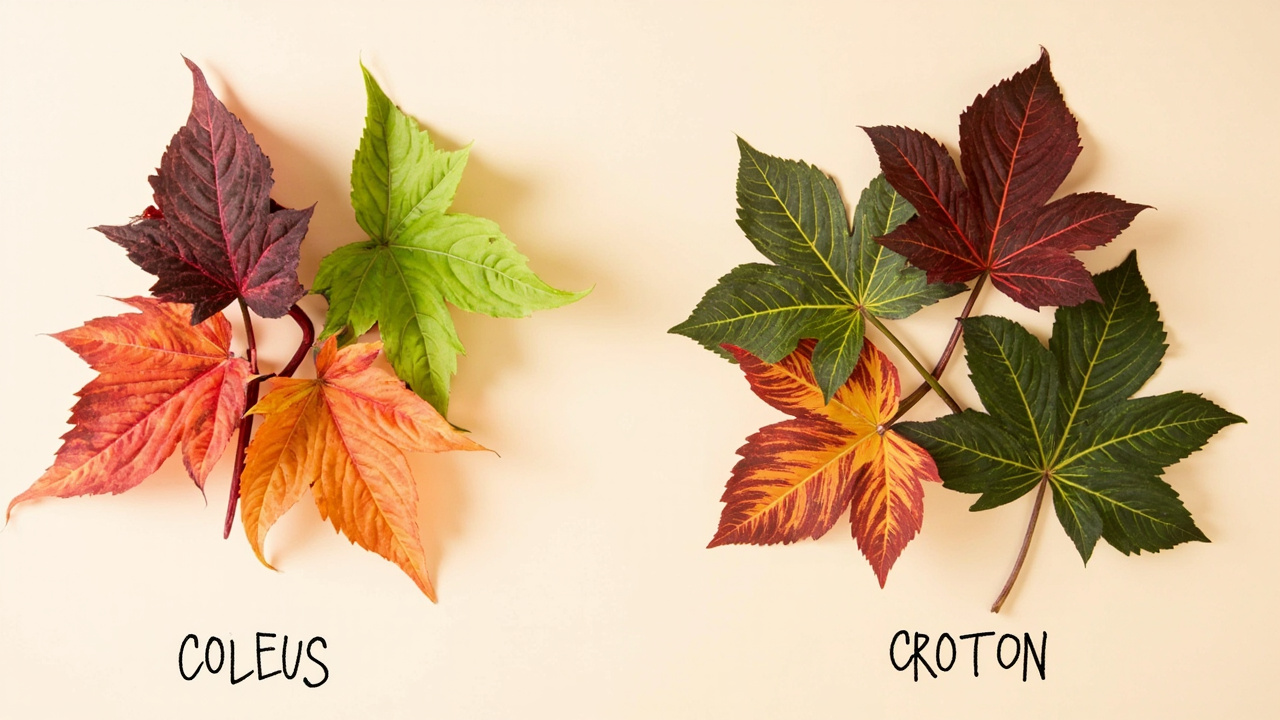
eus and croton are the two most popular colorful foliage plants in the houseplant world, and for good reason. Both deliver vivid leaf color that most flowering plants cannot match, both are widely available at garden centers, and both create an immediate visual impact in any room or garden bed. The question is which one belongs in your space.
The answer depends on your light conditions, care habits, and aesthetic preferences. Coleus thrives in shade and requires regular watering. Croton demands bright light and tolerates drought better. Coleus care and croton care differ significantly, and understanding these differences before you buy saves money, prevents plant death, and ensures you get the foliage color you are looking for.
This guide compares coleus and croton across every factor that matters: appearance, light needs, watering, temperature tolerance, propagation, maintenance, and pet safety. By the end, you will know exactly which plant is right for your situation.
Why Choose Between Coleus and Croton
Both coleus and croton belong to the category of foliage plants valued for their leaves rather than their flowers. In a market dominated by green houseplants, both species stand out for delivering red, orange, yellow, purple, and pink tones that transform interior spaces. They fill the same niche in home decor, which is why the comparison matters.
Coleus, botanically Plectranthus scutellarioides, is a tropical member of the mint family native to Southeast Asia. It grows as an annual in most climates, planted fresh each spring and replaced after frost. Indoors it performs as a long-lived houseplant with proper light and care. Coleus varieties available today range from compact 6 inch plants to upright 36 inch specimens with leaf colors spanning the entire spectrum.
Croton, botanically Codiaeum variegatum, is a tropical evergreen shrub from the Euphorbiaceae family native to Southeast Asia and the western Pacific. Unlike coleus, croton is a true perennial that can live for years indoors with proper care. Its leaf colors include red, orange, yellow, green, and purple, often on the same leaf in dramatic patterns that intensify with light exposure.
The practical difference is that coleus is treated as disposable in most garden settings, while croton is an investment plant that grows into a substantial indoor shrub over time. This affects how much care each plant warrants and how much you should expect to spend on the initial purchase.
Appearance and Color Range
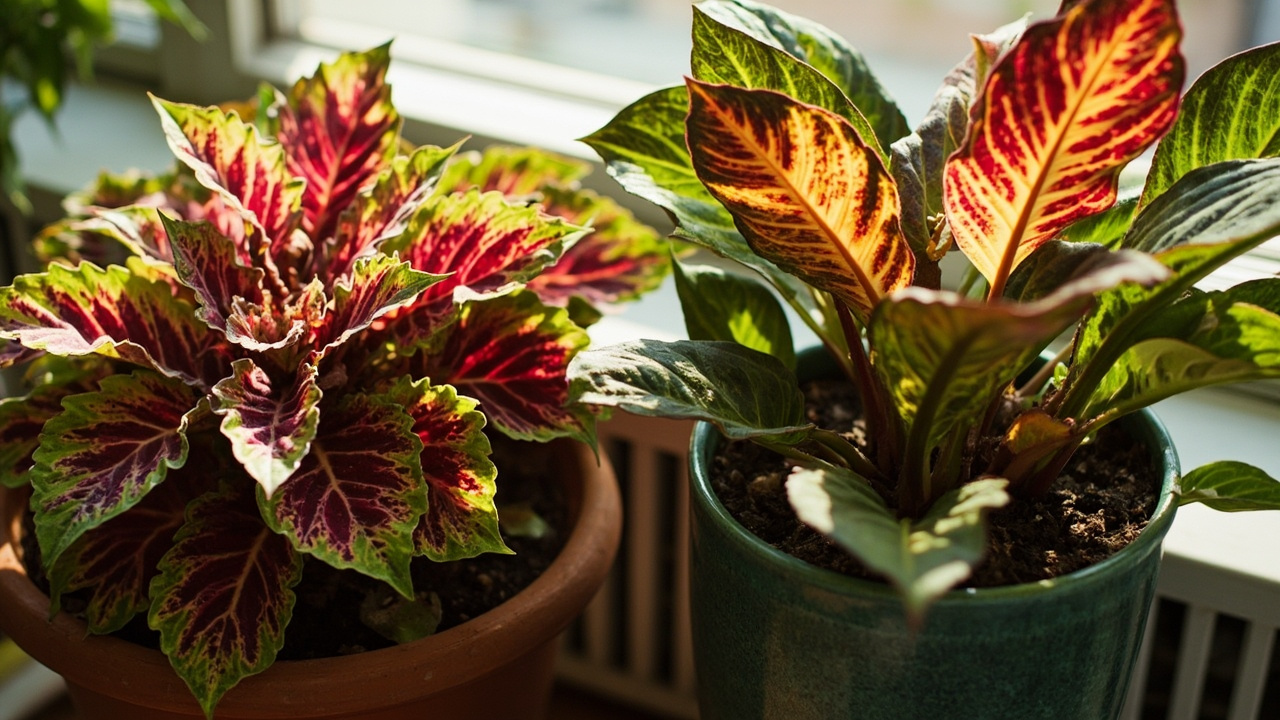
Coleus delivers the widest color range of any foliage plant available at retail. The cultivar list includes deep burgundy, bright red, lime green, sunset orange, electric pink, and almost-black purple, often all on a single plant. The leaves are typically oval to lance-shaped with serrated edges, growing on square stems that are soft and herbaceous. Coleus foliage has a matte or slightly velvety texture that absorbs light rather than reflecting it.
Croton leaf colors are more limited but more dramatic on individual leaves. The most popular varieties display red, orange, and yellow veins and patches against a dark green base, creating a painted effect that intensifies with light exposure. Croton leaves are thicker, glossier, and more leathery than coleus, with a waxy surface that reflects light. The leaf shapes range from narrow and oak-like to broad and oval, depending on the cultivar.
The key visual difference is that coleus color comes from the entire leaf surface, while croton color comes from patterns and veins against a green background. Coleus looks like a watercolor painting where the whole canvas is colored. Croton looks like a stained glass window where colored sections are separated by green framework. Both are beautiful, but they create different aesthetic effects.
For maximum color impact in a single plant, coleus wins. For dramatic patterned foliage that looks sculptural and structured, croton wins. The choice depends on whether you prefer all-over color or patterned contrast.
Light Requirements: The Biggest Practical Difference
Light requirements are where coleus and croton diverge most dramatically, and this difference often decides which plant is right for your space. Understanding this distinction prevents the most common cause of failure with either plant.
Coleus thrives in bright indirect light and tolerates partial shade well. It performs outdoors in partial shade and indoors near east or north facing windows. Direct afternoon sun through glass can scorch coleus leaves, causing brown edges and faded color. Modern sun-tolerant cultivars hold color in full sun, but older varieties need protection from intense light. The general rule is that more light produces more intense color, but direct sun is risky.
Croton demands bright direct light to maintain its vibrant coloration. Without at least six hours of direct sunlight daily, croton leaves revert to plain green within weeks. A south or west facing window is ideal for indoor croton. Outdoors, croton tolerates full sun in most climates and actually requires it for peak color performance. This is the opposite of coleus, where direct sun is the risk rather than the requirement.
The practical implication is straightforward. If your home has bright south or west facing windows, croton will thrive and display its best color. If your home has east or north facing windows, or if you want a plant for a shaded garden bed, coleus is the better choice. Growing croton in low light produces a green plant that loses the very color you bought it for. Growing coleus in direct sun produces scorched leaves that look damaged rather than colorful.
Watering and Humidity Needs
Coleus has high water needs and prefers consistently moist soil. The standard advice is to water when the top inch of soil feels dry, which typically means every two to four days during the growing season. Coleus wilts dramatically when underwatered, and the leaves drop quickly if the soil dries out completely. However, it also suffers from root rot if the soil stays waterlogged, so drainage is essential.
Croton tolerates drought better than coleus but still prefers regular watering. The standard approach is to water when the top two inches of soil feel dry, which usually means every five to seven days. Croton is more forgiving of missed waterings than coleus, but prolonged drought causes leaf drop that can take months to recover from. The key difference is that croton gives you more warning before declining, while coleus reacts immediately to water stress.
For humidity, both plants prefer average household levels of 40 to 60 percent. Coleus tolerates lower humidity better than croton, though both benefit from pebble trays or grouping with other plants in dry winter conditions. Croton is more sensitive to dry air and may drop leaves when humidity falls below 40 percent during winter heating season.
The watering comparison favors croton for owners who travel frequently or tend to forget watering schedules. Coleus demands more consistent attention but rewards regular care with faster growth and more prolific foliage production.
Temperature Tolerance and Seasonal Care
Coleus grows best between 18 and 24 degrees Celsius and suffers below 10 degrees Celsius. It is frost tender and dies with the first hard freeze. In most climates, coleus is treated as an annual outdoors and replaced each spring. Indoors, it survives as a houseplant as long as temperatures stay above 13 degrees Celsius and the plant receives adequate light.
Croton tolerates a wider temperature range, thriving between 16 and 29 degrees Celsius. It suffers below 13 degrees Celsius but recovers from brief cold exposure better than coleus. Croton is not frost hardy either, but it is a true perennial that can live for years indoors without declining. The temperature advantage belongs to croton, which handles seasonal fluctuations more gracefully.
For overwintering, coleus requires either bringing the plant indoors before frost or taking cuttings to root for spring. Croton simply stays where it is as a permanent houseplant, requiring no seasonal relocation. The maintenance burden of coleus overwintering is significantly higher than croton, which makes croton the lower maintenance choice for year-round color.
Propagation and Maintenance
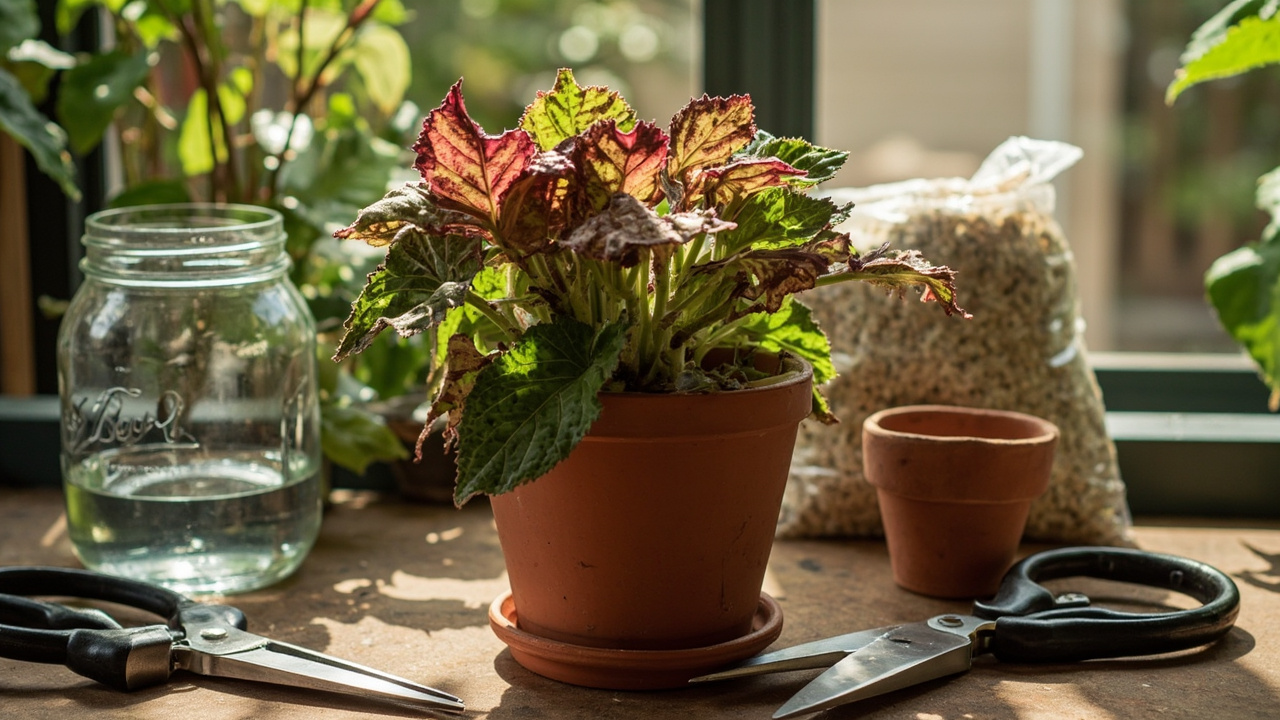
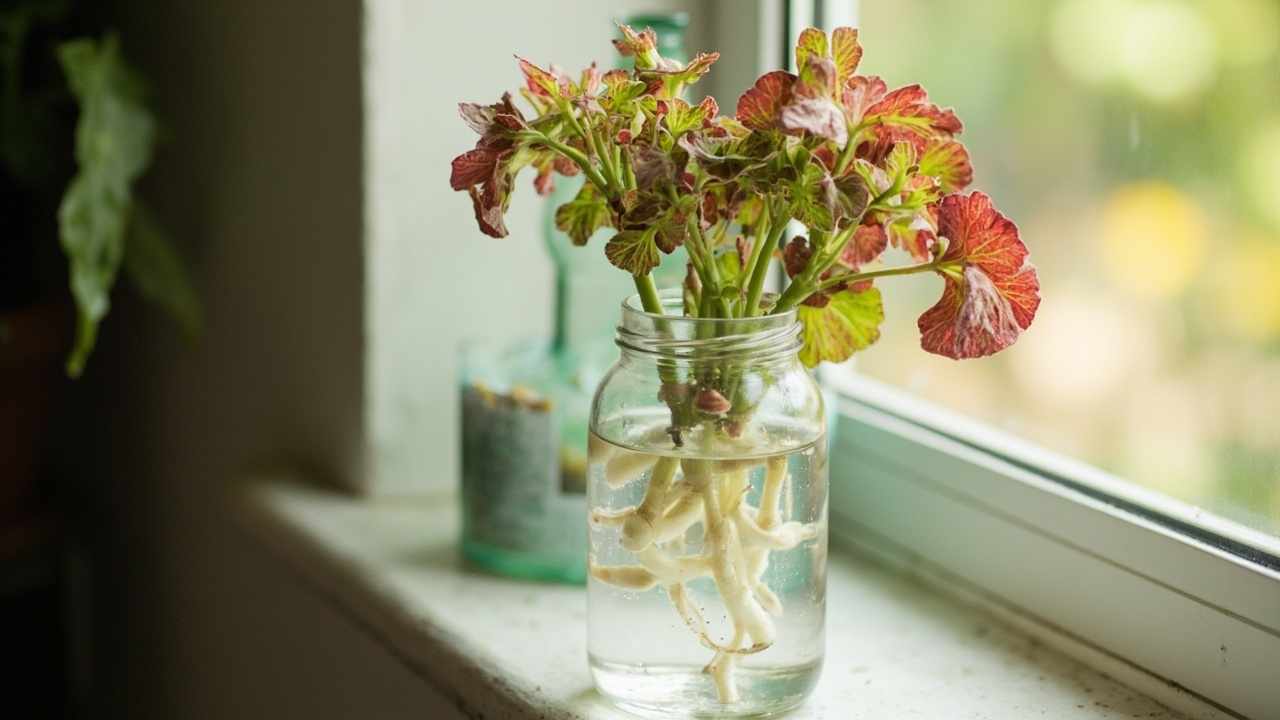
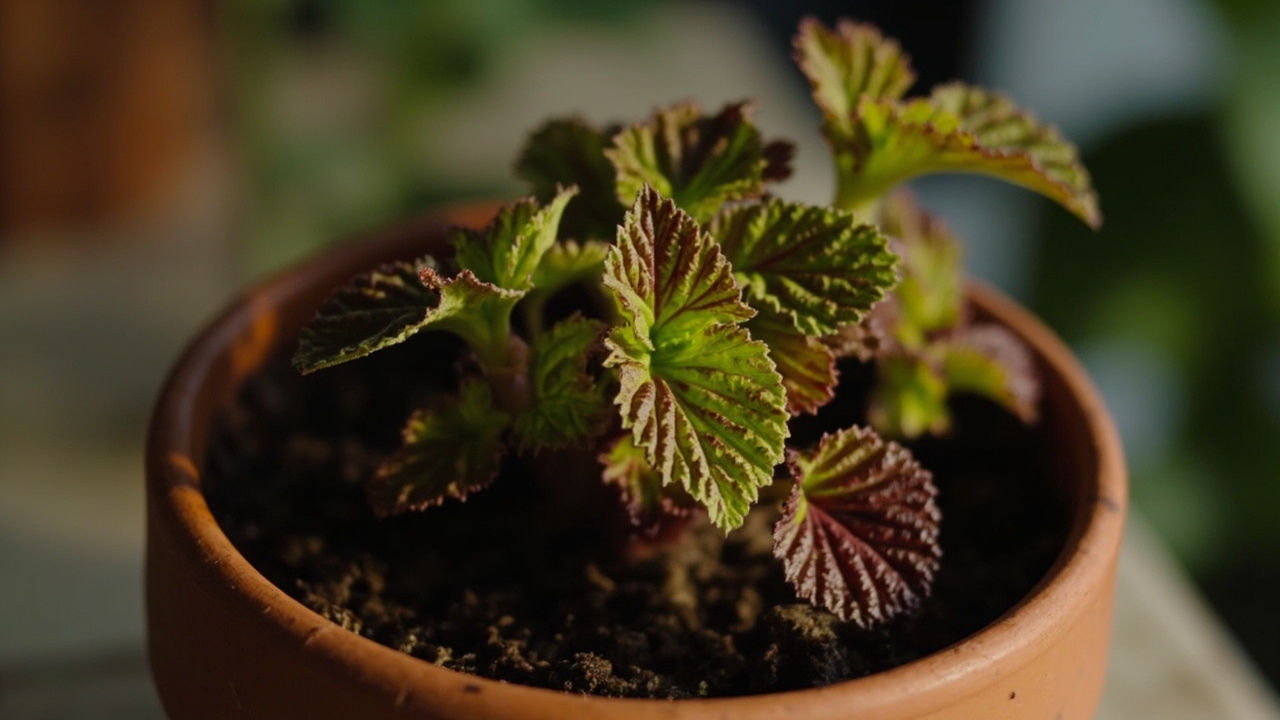
Coleus propagates easily from stem cuttings. A four inch cutting rooted in water or moist soil develops roots within seven to fourteen days. Coleus also responds vigorously to pinching and pruning, producing bushier growth from every cut. This makes coleus one of the most satisfying plants to propagate and share. Experienced growers maintain backup cuttings from favorite varieties as insurance against loss.
Croton propagates from stem cuttings too, but the process is slower and less reliable. Cuttings take three to six weeks to root, and the success rate is lower than coleus. Croton also produces a milky white sap when cut that irritates skin and eyes, making propagation messier and requiring gloves. Once established, croton grows into a substantial shrub that benefits from occasional pruning to maintain shape, but it does not respond to pinching the way coleus does.
The propagation comparison strongly favors coleus. If you enjoy multiplying your plant collection and sharing with friends, coleus rewards that impulse with fast reliable rooting. Croton propagation is possible but requires more patience and care.
Pet Safety and Toxicity
Pet safety is an important consideration when choosing any houseplant, and coleus and croton have different toxicity profiles that matter for households with cats, dogs, or other animals.
Coleus is classified as mildly toxic to cats and dogs according to the ASPCA. The sap can cause gastrointestinal irritation including vomiting and diarrhea if ingested. The symptoms are generally mild and self-limiting, resolving within 24 hours without veterinary treatment. However, ingestion should still be avoided, and coleus should be placed out of reach of pets that chew on plants.
Croton is more toxic than coleus. All parts of the plant contain diterpene esters that cause severe gastrointestinal irritation, vomiting, and diarrhea if ingested. The milky sap also irritates skin and eyes on contact. The ASPCA classifies croton as toxic to both cats and dogs, and ingestion warrants a call to the veterinarian. Croton should be placed well out of reach of pets, or avoided entirely in households with animals that chew on plants.
For pet households, coleus is the safer choice, though neither plant is truly pet safe. If you have curious pets that chew on houseplants, neither coleus nor croton is ideal, and you might consider pet safe alternatives like spider plant, calathea, or Boston fern instead.
The Verdict: Which Plant Should You Choose
Choose coleus if you have east or north facing windows, want the widest possible color range, enjoy propagating and sharing plants, prefer a plant that thrives in shade or partial sun, want a lower cost option that you can replace seasonally, or have pets that might nibble on houseplants.
Choose croton if you have south or west facing windows with direct sun, want dramatic patterned foliage that intensifies with light, prefer a long-lived permanent houseplant, want a plant that tolerates inconsistent watering better, like the sculptural look of glossy leathery leaves, or do not have pets that chew on plants.
For many growers, the decision comes down to light. If your brightest window faces south or west, croton will reward you with the most dramatic color display. If your brightest window faces east or north, coleus will give you more color with less risk of failure. Match the plant to your light conditions, and you cannot go wrong with either choice.
Both coleus and croton earn their place in the houseplant world by delivering foliage color that most plants cannot match. The right choice for your home depends on your specific conditions, not on which plant is objectively better. Both are excellent when matched to the right environment.
Turn PDF Bank Statements Into Workable Spreadsheets
Your bank statement is a mess of numbers, but your books shouldn't be. Use our converter to get Excel, CSV, or QBO files — ready for QuickBooks.
Try It Free Now