
Every coleus variety shares the same basic care requirements: well draining soil, consistent moisture without waterlogging, and bright indirect light. The differences between varieties come down to color intensity, leaf margin complexity, mature height and spread, and cold hardiness. Two plants from the same species can look nothing alike when they reach maturity.
A variety like Coleus ‘Blaze’ grows 18 to 24 inches tall with deep red foliage and upright habit, making it a border plant. A variety like Coleus ‘Pink Flash’ stays 8 to 10 inches tall with mounding habit and variegated leaves, making it a container edging plant. Both are coleus. Both need the same soil and water. One is a landscape statement; the other is a windowsill accent. The variety you choose determines the job it can do in your space.
Understanding variety differences upfront saves money, prevents return trips to the nursery, and eliminates the frustration of buying a plant that does not match your growing conditions. Garden centers stock popular varieties, but the full cultivar range includes over 1,000 named selections. Knowing what to look for lets you skip the guessing game.
Choosing the right coleus variety makes the difference between a plant that thrives for months and one that fades within weeks. The key is matching leaf color, mature size, and growth habit to your specific growing conditions.
Leaf Color Palette: Reds, Purples, Pinks, and Greens
Coleus foliage color falls into four dominant families, and each family has varieties that perform differently across light conditions. Understanding these color groups helps you match a variety to the light level in your home or garden.
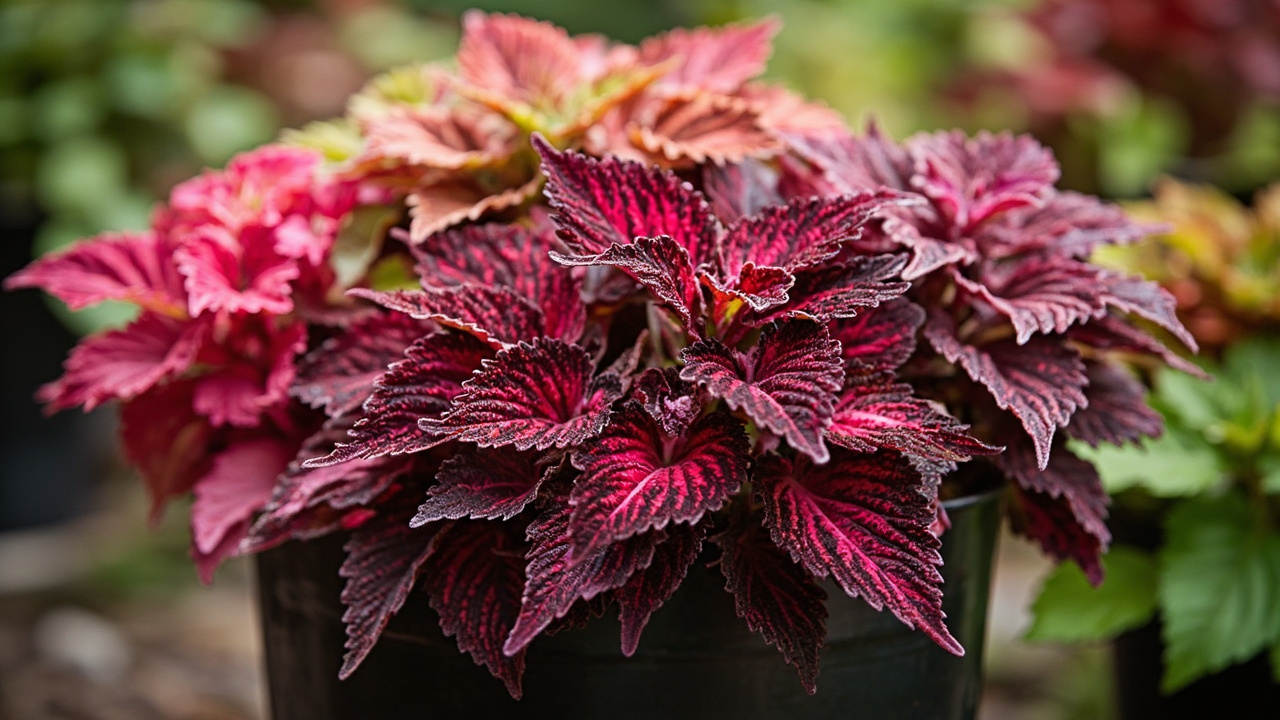
Red and burgundy coleus varieties include cultivars like ‘Java Red’, ‘Copperleaf’, and ‘Pirate’s Treasure’. These varieties display the most dramatic color contrast and look best in bright indirect light where the reds stay vivid rather than fading to dark maroon. In low light, red varieties tend to lose their intensity and appear brownish. ‘Java Red’ is the workhorse of the red group, reliable in both containers and garden beds, and it holds its color from planting through the first frost.
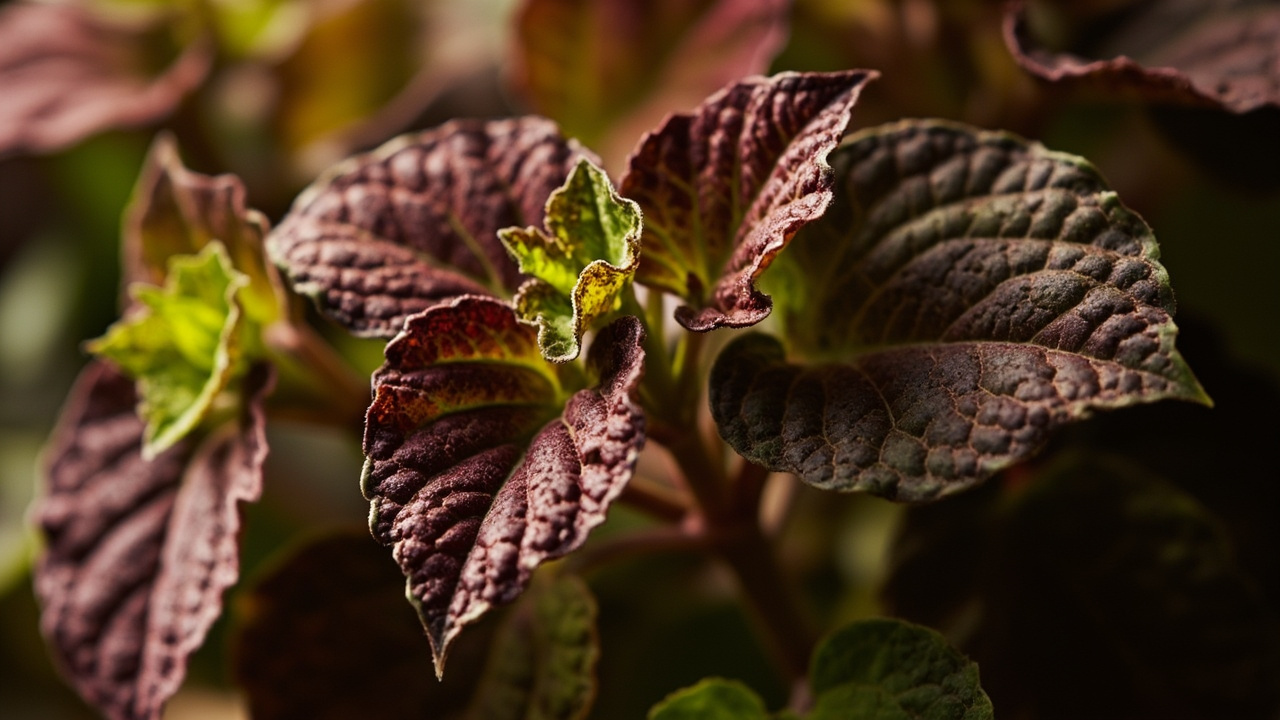
Purple and violet coleus varieties include ‘Black Prince’, ‘Purple Delight’, and ‘Velvet Eclipse’. Purple coleus is the most light tolerant of all color groups. ‘Black Prince’ can handle partial shade and still maintain deep purple to near black foliage. This makes purple varieties the safest choice for north facing windows or shaded garden corners. Learn more about optimal light conditions for coleus. Learn more about optimal light conditions for coleus. The dark foliage also creates strong visual contrast against lighter colored companions like hostas or ferns.
Pink and coral coleus varieties include ‘Pink Champagne’, ‘Summer Rose’, and ‘Sunglow’. These are the most delicate color group and require the brightest indirect light to maintain their pastel tones. In insufficient light, pink varieties turn green as chlorophyll production increases to compensate for the light deficit. ‘Sunglow’ is a notable exception, retaining its bright yellow pink foliage even in moderate light, which makes it one of the most forgiving varieties for beginners.
Green and variegated coleus varieties include ‘Green Wave’, ‘Tricolor’, and ‘Lemon Spark’. Green coleus is the most heat tolerant and the least fussy about light conditions. Variegated types with green edges and cream or yellow centers add texture contrast to mixed containers. ‘Lemon Spark’ has lime green centers with dark green margins and performs well in both shade and part sun, making it one of the most versatile varieties in the green group.
Leaf Shape and Texture: The Second Decision Factor
Leaf shape determines the visual texture a coleus variety brings to a container or border. Some varieties have smooth, pointed leaves that create a clean, graphic look. Others have deeply ruffled, almost crinkled margins that add ornamental interest even from a distance. Leaf texture also affects how light reflects off the foliage, which influences color perception.
Smooth leaf varieties include ‘Florida Frost’, ‘Emerald City’, and ‘Red Flash’. These have entire or nearly entire leaf margins with a glossy surface that reflects light and makes colors appear more saturated. Smooth leaf coleus works well in modern container designs and minimalist plantings where clean lines matter. The glossy surface also sheds water more efficiently, reducing the risk of fungal issues in humid conditions.
Ruffled and fringed leaf varieties include ‘Ruffled Red’, ‘Fred Hemmicks’, and ‘Doris Hayes’. These varieties have deeply incised leaf margins that create a lacy, almost tropical appearance. The complex leaf margins increase surface area for photosynthesis but also increase transpiration, meaning ruffled varieties tend to dry out faster than smooth leaf types. They benefit from consistent moisture and higher humidity. Proper watering technique prevents both drought stress and root rot. Proper watering technique prevents both drought stress and root rot. ‘Fred Hemmicks’ is a classic ruffled variety with deep red leaves edged in lime green, and it remains one of the most popular coleus cultivars worldwide.
Curly and tightly ruffled varieties include ‘Curly Fred’ and ‘Pirate’s Treasure’. These have leaves that curl upward at the margins, creating a cupped appearance that catches light differently than flat leaves. The curly habit also provides some protection against heavy rain, which can beat down flat leaves and damage the leaf surface. These varieties look particularly striking in hanging baskets where the curled foliage cascades downward.
Succulent leaf varieties include ‘Ruby Slippers’ and ‘Ping Pong’. These have thicker, fleshy leaves that store more water than typical coleus foliage. The succulent texture makes them more drought tolerant than other varieties and better suited to warm, dry conditions. ‘Ruby Slippers’ has deeply lobed, almost sculptural leaves in deep red with pink margins, and it performs well in xeriscape style container gardens.
Plant Size and Growth Habit: Matching Coleus to Your Container or Border
Mature plant size and growth habit are the practical factors that determine where a coleus variety belongs. A variety that stays 6 inches tall will look lost in a garden bed but perfect as a container edge plant. A variety that reaches 3 feet tall and wide will overwhelm a windowsill but anchor a shady border beautifully.
Compact and mounding varieties stay 6 to 12 inches tall and wide. These include ‘Mini Magic Mix’, ‘Mickey Mouse’, and ‘Baby Wave’. Compact varieties are ideal for container borders, rock gardens, and small space gardens. They respond well to regular pinching, which encourages bushy growth and maintains the compact form. ‘Baby Wave’ is a patented compact series available in multiple colors, and it is one of the easiest varieties to grow for beginners.
Medium and spreading varieties reach 12 to 20 inches tall and 14 to 24 inches wide. This is the most common size category and includes ‘Coleus blumei’ cultivars like ‘King Edward’, ‘Ambrosia’, and ‘Schumanni’. Medium varieties work in garden borders, mixed containers, and as specimen plants. They benefit from pinching back the stem tips to encourage branching and prevent the plant from becoming leggy.
Tall and upright varieties reach 24 to 36 inches tall. These include ‘Colossus’, ‘Titan’, and ‘Giant’. Tall varieties are best used as background plants in borders or as standalone specimens in large containers. They require staking in windy locations and benefit from regular pinching to encourage lateral branching. Without pinching, tall varieties tend to grow upward with sparse foliage near the base.
Trailing and cascading varieties have long, flexible stems that arch or hang downward. These include ‘Trailing Scarlet’, ‘Walter Henne’, and ‘Candlelight’. Trailing varieties are designed for hanging baskets, wall planters, and container edges where the stems can cascade freely. They root readily at the nodes where stems touch soil, which makes propagation trivial but also means the plant can spread aggressively if left unchecked in a garden bed.
Top 12 Coleus Varieties Ranked by Growing Condition
The following 12 varieties represent the most reliable, widely available, and visually striking selections across all growing conditions. Each entry includes the mature size, color profile, light preference, and best use case to help you make a confident purchase decision.
1. Coleus ‘Java Red’ , Mature size: 18 to 24 inches tall, 12 to 18 inches wide. Color: Deep crimson red with dark green undertones. Light: Bright indirect light. Best use: Garden borders, mixed containers, patio accent. ‘Java Red’ is the most reliable red coleus available at garden centers. It holds its color well, grows vigorously, and responds predictably to pinching. This is the variety to buy when you want bold red foliage with minimal guesswork.
2. Coleus ‘Black Prince’ , Mature size: 14 to 18 inches tall, 12 to 16 inches wide. Color: Near black purple with subtle green veins. Light: Partial shade to bright indirect. Best use: Shaded borders, container accents, contrast planting. ‘Black Prince’ is the darkest coleus available and the most shade tolerant. It adds dramatic contrast to lighter colored foliage plants and performs well under tree canopy where few other colorful plants survive.
3. Coleus ‘Sunglow’ , Mature size: 12 to 16 inches tall, 10 to 14 inches wide. Color: Bright yellow pink with green margins. Light: Partial shade to bright indirect. Best use: Container edging, shade gardens, mixed beds. ‘Sunglow’ is the most forgiving colorful coleus for low light conditions. The bright yellow pink foliage stays vivid in conditions where other colorful varieties fade to green. It is the best choice for north facing windows and shaded porches.
4. Coleus ‘Fred Hemmicks’ , Mature size: 16 to 20 inches tall, 14 to 18 inches wide. Color: Deep red center with lime green ruffled margins. Light: Bright indirect light. Best use: Mixed containers, specimen plant, cut foliage. ‘Fred Hemmicks’ is a classic ruffled variety with exceptional color contrast. The lime green margins frame the deep red center like a living painting. It is a favorite among experienced coleus growers and remains consistently available at major nurseries.
5. Coleus ‘Baby Wave Mix’ , Mature size: 8 to 10 inches tall, 10 to 12 inches wide. Color: Mixed colors including red, pink, purple, and orange. Light: Bright indirect to partial shade. Best use: Container borders, rock gardens, mass planting. ‘Baby Wave’ is a compact patented series available in mixed colors. The uniform mounding habit and small size make it ideal for container edging and Mass planting in shade gardens. It requires minimal pinching and stays neat without maintenance.
6. Coleus ‘Lemon Spark’ , Mature size: 10 to 14 inches tall, 8 to 12 inches wide. Color: Lime green center with dark green margins. Light: Partial shade to bright indirect. Best use: Shade containers, woodland gardens, companion planting. ‘Lemon Spark’ provides bright chartreuse foliage that stands out in shady conditions. The dark green margins create a natural frame that enhances the lime center. It pairs well with ferns, hostas, and other shade tolerant perennials.
7. Coleus ‘Ruby Slippers’ , Mature size: 12 to 16 inches tall, 10 to 14 inches wide. Color: Deep red with pink margins and sculptural curled leaves. Light: Bright indirect to partial sun. Best use: Container specimen, xeriscape style gardens, architectural planting. ‘Ruby Slippers’ has uniquely shaped leaves that look almost sculptural. The curled, almost lobed leaf form creates visual interest beyond color alone. It is more drought tolerant than typical coleus varieties due to its thicker leaf tissue.
8. Coleus ‘Pink Champagne’ , Mature size: 14 to 18 inches tall, 12 to 16 inches wide. Color: Soft pink with darker pink veining and green edges. Light: Bright indirect light. Best use: Pastel containers, romantic garden styles, mixed borders. ‘Pink Champagne’ delivers the softest pink tones available in coleus. The delicate coloration pairs well with white flowering companions and creates a refined, cottage garden aesthetic. It requires bright light to maintain the pink intensity.
9. Coleus ‘Emerald City’ , Mature size: 16 to 20 inches tall, 14 to 18 inches wide. Color: Deep glossy green with subtle purple undertones. Light: Partial shade to bright indirect. Best use: All shade conditions, foliage contrast planting, green on green gardens. ‘Emerald City’ is the most reliable green coleus for shady conditions. The glossy leaves reflect what little light is available, and the plant maintains its deep green color where other varieties turn pale. It is the go-to choice for deep shade locations.
10. Coleus ‘Tricolor’ , Mature size: 14 to 18 inches tall, 12 to 16 inches wide. Color: Green, cream, and pink variegation. Light: Bright indirect light. Best use: Mixed containers, patterned plantings, seasonal color displays. ‘Tricolor’ is a variegated classic with three distinct colors on each leaf. The cream and pink margins against green centers create a busy, textured look that adds visual complexity to container arrangements. It requires bright light to maintain the variegation pattern.
11. Coleus ‘Walter Henne’ , Mature size: 12 to 18 inches tall, trailing habit to 24 inches. Color: Green center with red and pink margins. Light: Bright indirect to partial shade. Best use: Hanging baskets, container cascades, wall planters. ‘Walter Henne’ is a trailing variety with long, arching stems that cascade beautifully from hanging containers. The green and pink coloration stays consistent in a range of light conditions, and the trailing habit makes it one of the easiest coleus varieties to propagate from stem cuttings.
12. Coleus ‘Colossus Red’ , Mature size: 30 to 36 inches tall, 20 to 24 inches wide. Color: Bold red with dark green centers. Light: Bright indirect to partial sun. Best use: Garden background, large container specimen, border anchor. ‘Colossus Red’ is the tallest variety on this list and makes a dramatic statement in any setting. The large red leaves provide bold color impact from a distance, and the upright habit creates vertical structure in mixed plantings. It benefits from staking in exposed locations.
How to Choose Your First Coleus Variety
Use this simple decision tree to narrow your choices from 12 potential varieties down to 2 or 3 that match your specific situation. Answer each question in order, and eliminate varieties that do not match your answers.
Step 1: What is your light condition? If you have a south or west facing window with bright indirect light, you can grow any variety. If you have east or north facing windows with moderate light, choose ‘Sunglow’, ‘Black Prince’, ‘Lemon Spark’, or ‘Emerald City’. If you have deep shade or a shaded garden corner, choose ‘Black Prince’, ‘Emerald City’, or ‘Lemon Spark’. Skip red and pink varieties in low light because they will fade to green.
Step 2: What is your container or garden space? If you have small containers or limited space, choose compact varieties like ‘Baby Wave Mix’, ‘Lemon Spark’, or ‘Mini Magic’. If you have medium containers or garden beds, choose medium varieties like ‘Java Red’, ‘Fred Hemmicks’, or ‘Pink Champagne’. If you have large containers or border space, choose tall varieties like ‘Colossus Red’ or ‘Trailing’ varieties for hanging baskets like ‘Walter Henne’.
Step 3: What color do you want? If you want bold drama, choose red varieties like ‘Java Red’ or ‘Ruby Slippers’. If you want dramatic contrast, choose dark purple like ‘Black Prince’. If you want soft pastel tones, choose pink varieties like ‘Pink Champagne’. If you want bright energy, choose yellow varieties like ‘Sunglow’ or ‘Lemon Spark’. If you want green foliage that works in any light, choose ‘Emerald City’ or ‘Tricolor’.
Step 4: How much maintenance do you want? If you want minimal maintenance, choose ‘Baby Wave Mix’ or ‘Sunglow’ because they stay compact and do not require frequent pinching. If you do not mind occasional pruning, choose any variety and pinch back the stem tips every 3 to 4 weeks during the growing season to encourage bushier growth.
After answering these four questions, you should have a short list of 2 to 3 varieties. Visit your local garden center or order online, and look for those specific cultivar names. Do not buy unlabeled coleus trays unless you are comfortable experimenting with unknown varieties. Specific cultivar names guarantee the traits described in this guide.
Buying and Care Tips for New Coleus Varieties
When you select your coleus varieties, inspect each plant before purchasing. Look for dense foliage with no yellowing, no brown leaf edges, and no visible pests. The leaves should feel firm, not limp or mushy. Avoid plants that are leggy with long bare stems, as these indicate insufficient light at the nursery and will continue to stretch in your home. Yellow coleus leaves often signal underwatering or nutrient issues. Yellow coleus leaves often signal underwatering or nutrient issues.
After bringing your new coleus varieties home, place them in their target location immediately rather than keeping them in the nursery plastic pot. Most garden center pots are too small for long term growth, and the plastic liners restrict root development. Repot into a container that is 2 inches larger in diameter with well draining potting mix within the first week.
Water your new coleus varieties when the top inch of soil feels dry to the touch. Coleus prefers consistent moisture but tolerates brief dry periods better than waterlogged soil. Overwatering is the most common cause of coleus decline, and newly purchased plants in small nursery pots are especially prone to root rot because the soil dries unevenly.
Begin pinching back the stem tips within two weeks of purchase if the plant is growing leggy. Pinch just above a leaf node, removing about one third of the stem length. This encourages lateral branching and creates a fuller, bushier plant. Regular pinching throughout the growing season maintains the compact form and extends the blooming period of colorful foliage.
Turn any PDF statement into a clean sheet
Skip the typos and the hours of copying. Our converter handles any bank statement format and outputs Excel, CSV, or QBO for QuickBooks. No file retention, free to try.