—
title: Overwintering Blueberry Plants: What Actually Works in Cold Climates
target: overwintering blueberry plants
slug: overwintering-blueberry-plants
cluster: blueberries
type: SEO Backbone
—
Most blueberry plants killed by winter are not killed by cold — they are killed by the combination of cold and exposure. The bush itself is hardy; the roots and the flower buds are the vulnerable part. Understanding the actual failure modes makes the preventive steps obvious, and most of them cost nothing.
This guide is for gardeners in USDA zones 5 and below, where winter temperatures regularly fall below 10°F and the threat is real. If you garden in zone 7 or above, winter protection is rarely necessary — but the sections on late-season watering and rodent protection still apply.
The Three Failure Modes of Blueberry Winter Survival
Winter damage in blueberries works in three distinct ways, and each requires a different response. The most common mistake gardeners make is applying the wrong protection because they haven’t identified which failure mode they’re defending against.
Chill hour requirements vary across berry crops — raspberries need 800–1200 chill hours depending on variety, while some southern highbush blueberries fruit with as few as 150–300 hours.
The first and most frequent failure mode is desiccation. Blueberry roots are shallow — they explore only the top 12 to 18 inches of soil — and in freezing temperatures, the soil freezes solid. When the soil is frozen, roots cannot replace water lost through the evergreen (or semi-evergreen) leaves. In strong winds and bright sun, a blueberry plant can lose moisture faster than its frozen roots can supply it. The result looks like severe drought stress: leaves dry, turn brown at the edges, and the canes die back from the tips.
The second failure mode is frost damage to flower buds. Blueberry flower buds tolerate winter temperatures down to about minus 15°F, but only when the plant is properly hardened off. If a warm period in late winter or early spring coaxes the buds to swell, a subsequent frost at that vulnerable swollen stage causes more damage than the same temperature would have caused when the buds were fully dormant. This is why late winter warm spells are more dangerous than the dead-of-winter cold.
The third failure mode is physical breakage. Heavy snow or ice loads on blueberry canes cause them to splay apart or snap, particularly in semi-erect varieties. This is structural damage — it doesn’t kill the bush, but it destroys the following year’s fruit production if the break occurs below the fruitwood.
Late-Season Preparation: Eight Weeks Before Hard Frost
The most important winter preparation begins in late summer, not late fall. This is when the plant hardens off — a physiological process that allows the wood and bud tissue to tolerate progressively colder temperatures. Anything that interrupts this process (heavy nitrogen fertilization, excessive pruning, or drought stress in late summer) reduces the plant’s cold tolerance going into winter.
Stop fertilizing nitrogen by mid-July in northern climates. The plant needs the remaining weeks of the growing season to complete this hardening cycle, and nitrogen applied after mid-summer promotes soft new growth that will not harden off before frost arrives.
Continue watering through leaf drop. This is counter-intuitive — most plants need less water in autumn — but blueberries are shallow-rooted and dependent on adequate soil moisture going into freeze. A thoroughly watered root zone freezes more slowly than a dry one, and that slow freeze is part of the hardening process. Water deeply before the ground freezes, usually in late October or early November depending on your climate.
Mulching: The Single Most Important Protection
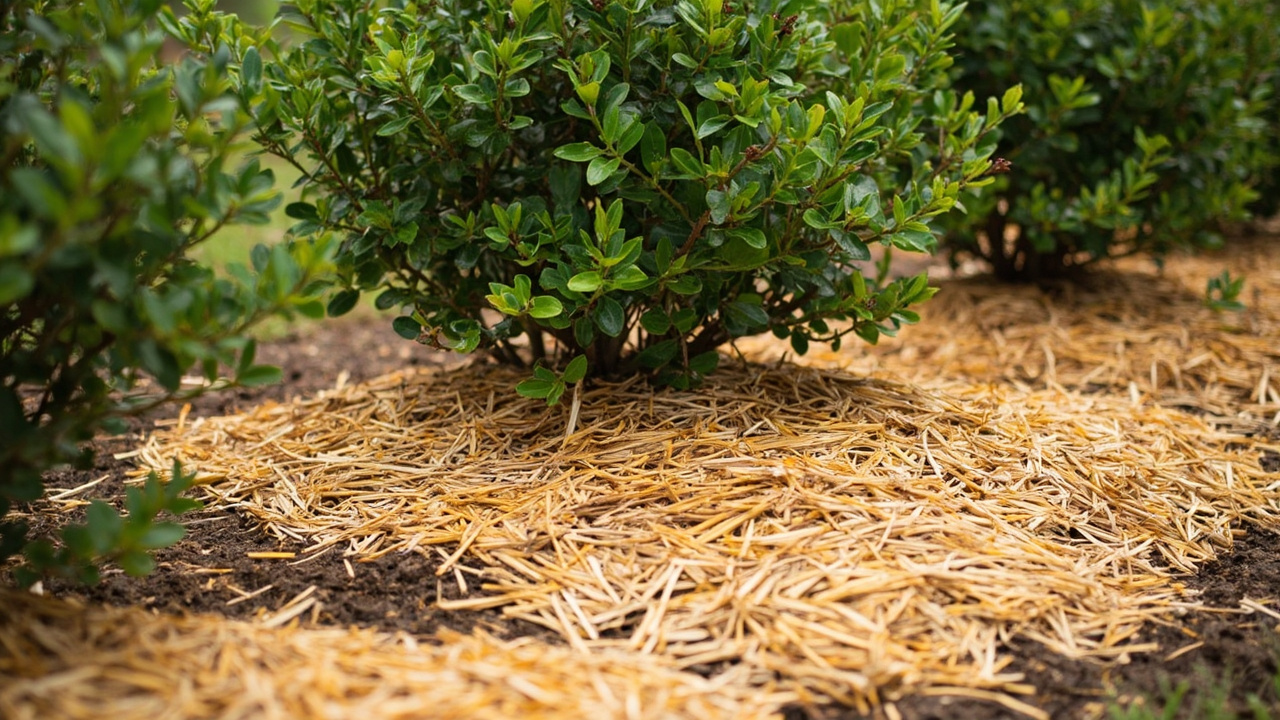
Apply a 4-to-6-inch layer of organic mulch over the root zone before the ground freezes. This does three things simultaneously: it insulates the soil (keeping it from freezing as deeply and as early), reduces temperature fluctuation in the root zone, and prevents frost heaving that can damage the shallow root system.
The best materials are shredded hardwood bark, pine bark nuggets, or composted sawdust. Avoid fresh sawdust from black walnut (allelopathic) or cedar (somewhat suppressive to blueberries). Wood chips from any other source are fine. In a container, mulch the surface of the pot to the rim — container-grown blueberries are significantly more vulnerable to winter root damage than in-ground plants because the root ball freezes from all sides.
Wrapping and Wind Protection
In zones 5 and below, or in exposed sites where the garden is not sheltered by buildings or windbreaks, burlap wrapping provides meaningful protection against desiccation. Wrap the bush loosely with burlap (not tight enough to compress the canes) after leaf drop and remove it gradually in spring as the buds swell — usually over the course of a week to avoid shocking the plant with sudden sun exposure.
Burlap does not add significant insulation — it acts as a windbreak, reducing the drying effect of winter sun and wind on the evergreen foliage. A bare bush in a site with strong winter winds loses more moisture than a wrapped bush in the same site at the same temperature.
Position containers against a north-facing wall if possible — the wall reflects less light and heat, keeping the plant more evenly cold and reducing the risk of mid-winter warm-spell damage. In an exposed site, sinking the container into the ground for winter and mulching the surface is the most reliable approach.
Rodent Protection
Mice and voles move through mulch layers in winter and chew the bark at the base of canes, often at or below the soil line. A blueberry bush that survives winter perfectly but is girdled by rodents in January is not a winter survival success story.
The most reliable prevention is a wire mesh guard — hardware cloth, 1/4-inch grid — wrapped around the base of each bush, extending from just below the soil surface to 18 inches above. Push it 2 inches below the soil line and secure it firmly so rodents cannot push underneath. Check the guard every spring and reposition it if frost heaving has lifted it.
Bait stations are an alternative but carry risks in gardens where pets or visiting wildlife might access them.
Spring Transition: The Most Overlooked Risk
Late spring frosts after the buds have swollen are more damaging to blueberry crops than winter cold. A frost at minus 5°F when the buds are fully dormant causes less damage than frost at 28°F when the buds are in the green-tip stage. This is why gradual spring warming is actually beneficial — it allows the hardening-off process to reverse slowly and the buds to gain cold tolerance for as long as possible.
When frost is forecast during the growing season (late April or May in most northern climates), cover the bush with breathable fabric row cover or a bedsheet overnight. Remove the covering in the morning once temperatures rise above freezing — keeping it on through a sunny day causes heat build-up that can be equally damaging.
The other spring risk is transplanting or disturbing the root system too early. Blueberry roots do not grow actively in cold soil. Transplanting in early spring before the soil has warmed to at least 50°F typically results in the plant sitting dormant for weeks while the roots slowly recover. Wait until soil temperature is consistently above 50°F — typically mid-May in USDA zone 5.
Winter Survival by Variety
Northern highbush varieties are bred for cold tolerance and will reliably survive winter in zones 4 and below when properly mulched. Rabbiteye varieties and southern highbush varieties are not reliably hardy below zone 7 — if you are growing these varieties in a cold climate, container culture with winter storage in an unheated garage or cold cellar is the only reliable approach.
For any variety, healthy, well-established plants survive winter better than stressed or recently transplanted ones. A blueberry bush that has been in the ground for at least two growing seasons has a developed root system and significantly better winter survival odds than a newly planted one.
For year-round care guidance, see blueberry plant care. For specific diagnosis of winter damage symptoms, see why blueberry leaves turn red.
The full year-round care calendar — from variety selection through harvest — is in our complete guide to growing blueberries at home.
Turn That PDF Into a Spreadsheet in Minutes
You've seen how to do it manually — now let the tool handle the heavy lifting. Upload your bank statement and get Excel, CSV, or QBO in a few clicks.
Try It Free