
Calathea brown leaves are one of the most common complaints with these plants, and they’re also one of the most treatable. The issue is almost always environmental — not disease or pest — which means once you understand what’s causing the browning, you can usually reverse it. If you’re new to Calathea care, see our complete Calathea care guide for the full environmental context this article builds on.
But there’s a nuance that most advice misses: Calathea leaves brown from multiple causes at the same time, and solving one doesn’t fix the others. If you’ve been treating your Calathea for low humidity and the leaves are still turning brown at the tips, the problem is probably the water quality — or vice versa.
Here’s what to look for, in order of likelihood.
Cause 1: Low Humidity (The Most Common Culprit)
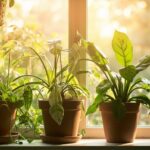
Calathea are tropical understory plants — they evolved in conditions where humidity stays above 60% almost all the time. In most homes, ambient humidity sits between 30-50%, which is well below what the plant wants. The leaf edges are the first casualty.
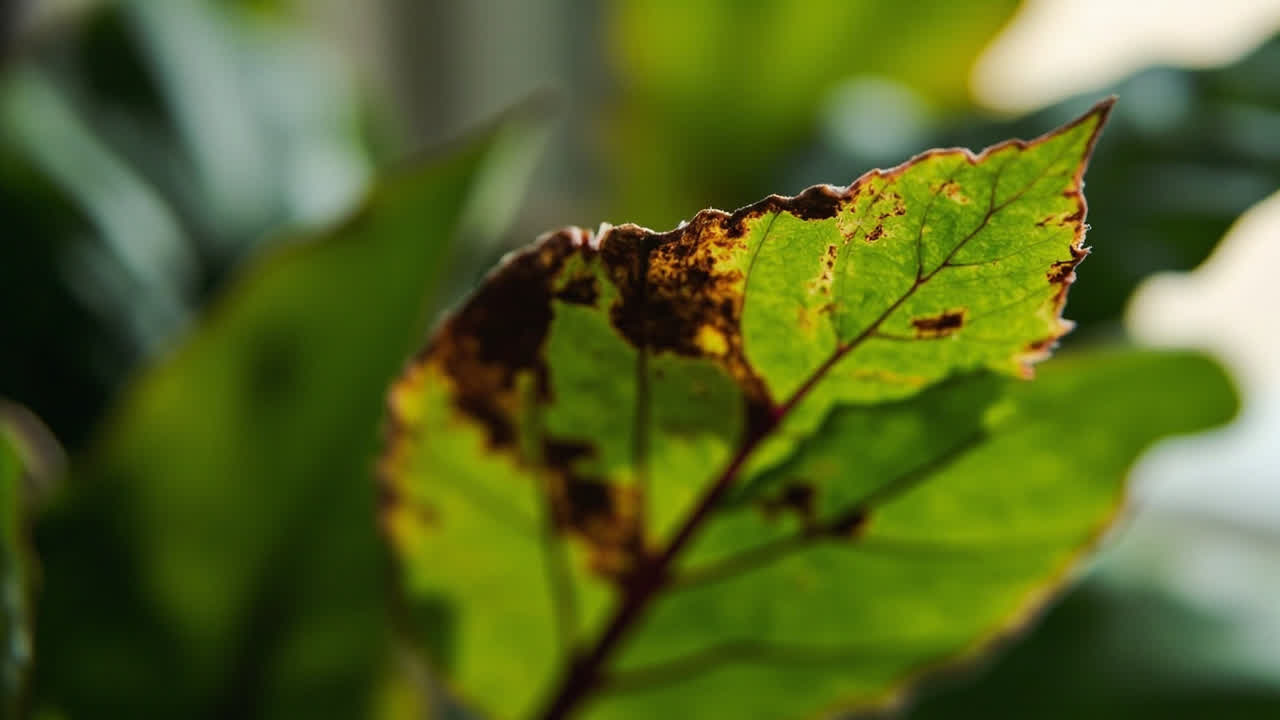
The browning from low humidity typically starts at the outer edges of the leaves and works inward. The center of the leaf stays green while the margins turn crisp and dry. You may also see the leaves curl slightly inward — that’s the plant trying to reduce its surface area and slow moisture loss.
What actually works to raise humidity
Most humidifiers solve the problem if they’re the right size for the room. For a single Calathea on a shelf, a small ultrasonic humidifier running continuously nearby is enough to maintain 55-60% humidity around the plant. Place it so the mist doesn’t directly hit the leaves — consistent ambient moisture is the goal.
Pebble trays help but only in enclosed spaces. A pebble tray in an open room provides minimal ambient humidity increase. If the plant is near a drafty window or a heating vent, the water evaporating from the pebbles will disappear before it reaches the leaves. For comparison, see how snake plant humidity requirements differ — they’re much more tolerant of dry air, which puts Calathea’s needs in perspective.
Grouping plants together creates a micro-humidity zone that benefits all of them. If you have multiple tropical plants, clustering them is the most energy-efficient way to raise humidity without running multiple humidifiers.
The trade-off: over-humidity and fungal risk
There’s a reason not to keep humidity too high (above 80% consistently): it creates conditions for fungal growth on the leaves, especially if air circulation is poor. The target is 55-65% — enough to prevent edge browning without creating a petri dish. A small fan near the plant group helps with air circulation without dropping the humidity significantly.
Cause 2: Tap Water Chemistry
Calathea are sensitive to dissolved minerals salts in tap water — particularly fluoride, chlorine, and calcium. These accumulate at the leaf edges and cause chemical burn, which shows up as brown tips even when everything else (humidity, watering, light) is correct.
The pattern is distinctive: brown tips with a yellow or dark brown transition zone right at the edge, while the rest of the leaf looks healthy. This distinguishes water quality browning from humidity browning, which affects the entire margin.
How to fix the water
Filtered water (via pitcher filter or Brita-style system) removes enough of the problematic minerals to help. Distilled water is the most complete solution. Rainwater works well if you’re in an area without significant airborne pollutants.
If you’re using tap water, letting it sit uncovered for 24 hours before watering allows chlorine to evaporate — but this doesn’t remove fluoride or calcium, which are the more common culprits in brown tip damage. The difference between tap water and filtered water often shows up in the plant within 2-3 watering cycles.
Accumulated salts in the soil
If you’ve been watering with tap water for months, the soil may have accumulated enough mineral salts to cause ongoing damage even if you switch to filtered water now. The solution is a soil flush: water the plant thoroughly with distilled water, let it drain completely, then repeat once more. This leaches the accumulated salts out over 24-48 hours.
Do this once a month if you’re using tap water consistently — more often if you notice the brown tips recurring despite corrected humidity.
Cause 3: Overwatering and Root Rot
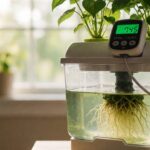
Calathea roots are fine and relatively fragile compared to most houseplants. They need oxygen in the soil as much as they need moisture. When the soil stays wet for more than 3-4 days between waterings, the roots start to suffocate and rot — and the first sign is usually brown leaf tips that spread to the entire leaf.
The difference between overwatering browning and humidity browning: overwatering typically affects the lower/older leaves first (the ones closest to the wet soil), while humidity and water quality affect leaves throughout the plant, often starting with newer growth. For a full breakdown of root rot signs and progression, see our root rot explained guide — the same diagnostic logic applies to Calathea.
If the soil is consistently wet and the plant has limp, yellowing lower leaves, stop watering immediately and let the soil dry to the top 2 inches before watering again. If the pot doesn’t have drainage holes, that’s the first problem to fix — Calathea must never sit in standing water.
Soil mix matters here
The right soil mix prevents most overwatering issues. Calathea need a mix that’s fast-draining but moisture-retentive: roughly 60% potting soil, 20% perlite, 20% bark or coco coir. This gives the fine roots both the moisture they need and the air pockets that prevent suffocation. See our Philodendron soil mix guide for the same principle applied to a related tropical plant.
Cause 4: Underwatering
Less common than overwatering but still significant. Calathea that dry out completely will brown at the tips and edges, and the leaves will often curl inward as a stress response. The difference from overwatering: the soil will be bone dry, and the plant will look generally wilted rather than just having localized leaf damage.
The fix is simple: water thoroughly until it flows from the drainage hole, then let it drain completely. Do not water again until the top 1-2 inches of soil are dry. Calathea recover from one episode of underwatering faster than most plants — they bounce back within a day or two of being watered correctly.
Cause 5: Light Burn
Direct sunlight causes Calathea leaves to bleach, then brown. The pattern here is distinct: the affected areas are pale (not just brown) and the damage is in the areas exposed to the light source. If your Calathea is in a sunny window, especially south or west facing, this is worth examining.
Calathea need bright indirect light — within 3-4 feet of a window but not in direct sun. An east-facing window with sheer curtains is ideal. North-facing windows are acceptable if the room gets good ambient light from other sources.
How to Identify Which Cause Is Active
Look at three things in order:
- Check the soil moisture — wet soil with lower leaf yellowing = overwatering. Bone dry soil = underwatering.
- Examine the brown pattern — tips and edges throughout the plant = humidity or water quality. Lower leaves first = overwatering.
- Consider the water source — tap water with fluoride/chlorine = probable water quality issue regardless of other conditions.
These causes compound each other. A Calathea in low humidity and tap water will brown faster than one with just one of those problems. Fixing one help manage the other.
A Note on Calathea Leaf Recovery
Brown leaf tissue does not recover. A brown edge or tip will stay brown even when the underlying cause is corrected — the plant cannot revert damaged cells to green. What does happen: new growth comes in healthy, and the overall appearance improves as older damaged leaves are replaced.
If the brown edges bother you, trim them with clean scissors — cut along the natural shape of the leaf, not a straight line. Leave a thin margin of brown tissue rather than cutting into green, which can cause the leaf to brown further from the cut edge.
The Takeaway
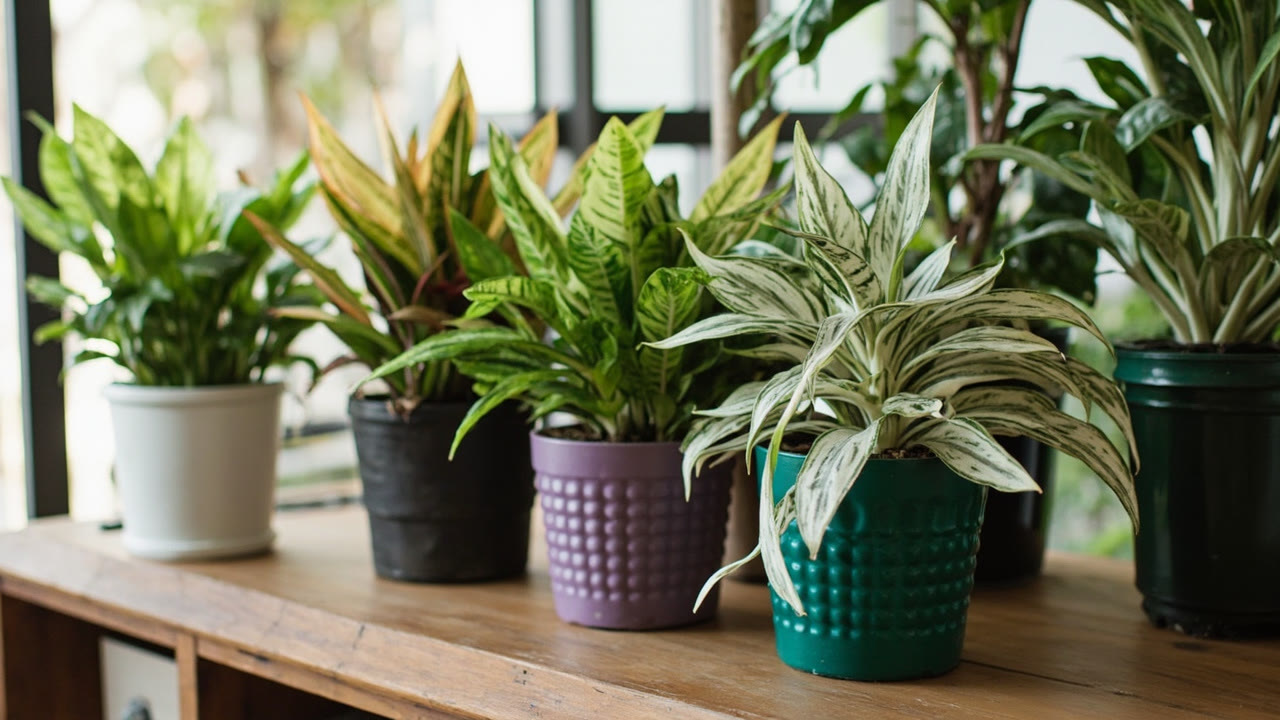
Calathea brown leaves are almost always correctable. The most common chain of events: low humidity + tap water chemistry working together to damage leaf edges. Fix the humidity first (humidifier or plant group), switch to filtered or distilled water, and check that the soil mix drains well. Within 2-4 weeks, new leaves should come in clean. Older damaged leaves can be trimmed as needed — they’re not going to recover, but they can be made less noticeable.
The key is addressing all causes at once rather than just one. If you raise the humidity but keep using tap water, the browning will slow but not stop. Both conditions need to be managed together for the plant to look its best.
Read also: why calathea leaves develop brown tips, the margin-death mechanism behind it, and the soil test that tells dry roots from salt build-up before you water again.
Turn any PDF statement into a clean sheet
Skip the typos and the hours of copying. Our converter handles any bank statement format and outputs Excel, CSV, or QBO for QuickBooks. No file retention, free to try.
Convert your statement