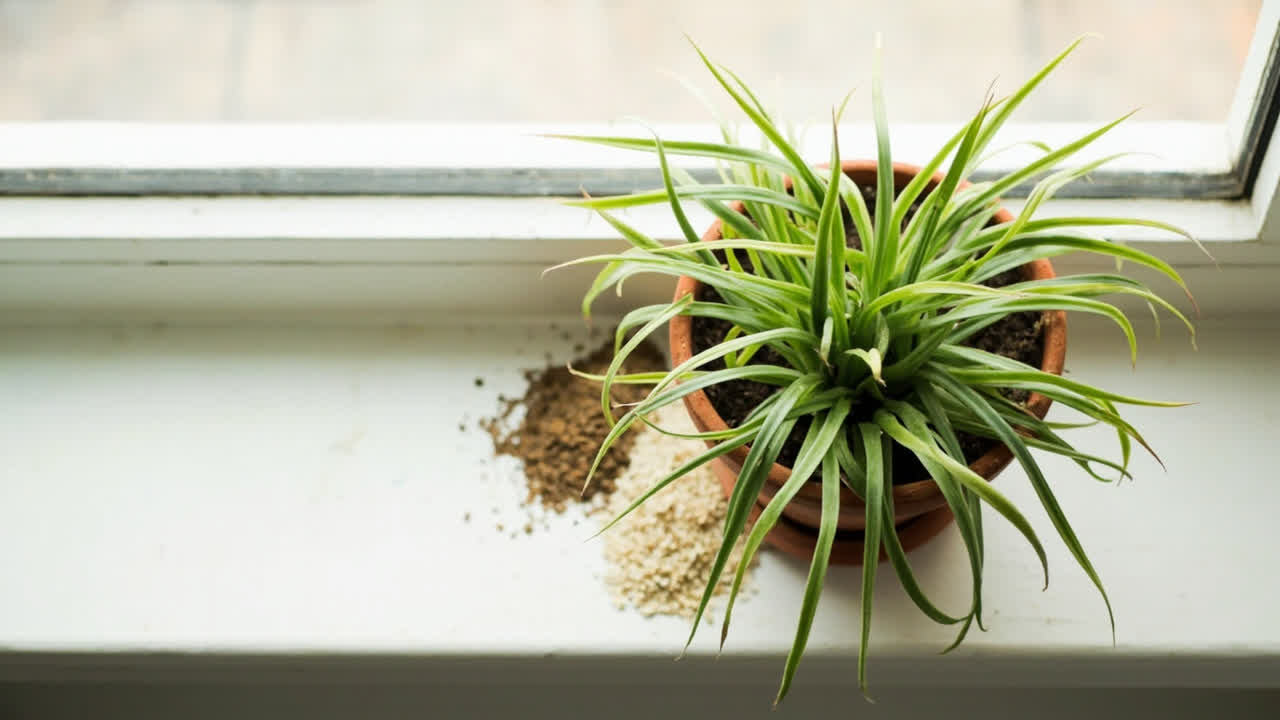
Walk into any garden center and you will see three or four spider plant pots labeled with different names. They look similar at a glance, but the names are not decoration. The cultivar you pick changes how your Chlorophytum comosum grows, how much light it tolerates, and how many spiderettes it sends out over the year. Picking the right one up front saves a year of fighting the wrong plant for the wrong room, and saves you from a root bound pot or a foliage plant that has stretched itself thin searching for sunlight. The right houseplant cultivar in the right pot, with proper drainage holes and the right soil moisture, rewards you for years.
This page covers the four spider plant cultivars indoor gardeners actually buy, what makes each one different, and how to match a cultivar to your specific room. The goal is a confident pick in five minutes, not a botany lecture, and a plant that rewards the right soil moisture, drainage holes, root ball condition, and root zone conditions for years to come. The species is forgiving once you match cultivar to room and let the plant mature at its own pace.
Why Spider Plant Cultivars Are Not Interchangeable
The spider plant species has more than 40 named cultivars in the horticultural trade, and most of them are nearly impossible to find outside specialty growers. The four you see at big-box stores, local nurseries, and online plant shops cover the realistic range of indoor situations. They diverge on three things that matter: leaf variegation pattern, growth habit, and how many spiderettes a mature plant produces. Each cultivar also responds a little differently to soil moisture, to the organic matter content of its potting mix, and to how much root room it has before becoming root bound. Pick the wrong one and you will spend months correcting root rot, fighting chlorophytum stress signals, or nursing a plantlet that refuses to push new foliage.
If you treat these cultivars as interchangeable, you will end up with a curly Bonnie in a low-light corner stretching toward the window, or a Vittatum losing its white stripes because it is sitting in a bright south-facing room. The cultivar shapes what your plant looks like in six months. A Vittatum in a hanging basket with bright indirect light rewards you with cascading foliage; the same plant in a dark corner loses variegation and looks like an ordinary chlorophytum. The full spider plant care guide covers species-wide needs; this page is about the choice point up front so you start with the right nursery stock for your space.
The Four Spider Plant Cultivars You Will Actually Find for Sale
The four cultivars that show up in real-world plant shops, in roughly the order of how often you will see them: Vittatum, Variegatum, Bonnie (also called the curly spider plant), and Hawaiian. They share the same species, but their variegated foliage reads very differently, and so does their growth speed, root ball development, and how the plant responds to indoor conditions as it reaches plant maturity.
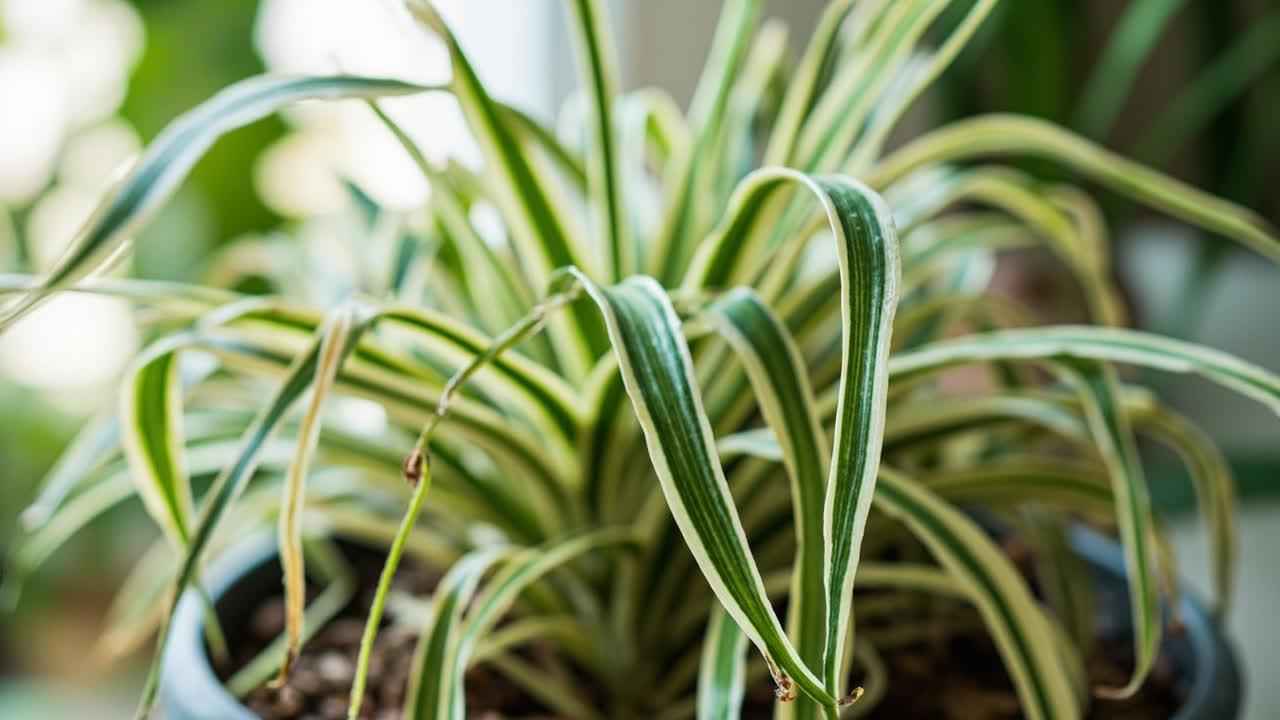
Vittatum has a wide creamy-white stripe down the center of each leaf with green margins. It is the classic “spider plant” most people picture. Variegatum flips that pattern: green center, white edges. Bonnie is the compact, curly-leaf form, shorter leaves that spiral instead of arching, and the foliage plant form most often chosen for hanging basket displays. Hawaiian is the solid-green cultivar, sometimes called “Shamrock,” with no variegation at all and the fastest growth rate of the four. Each has a place as nursery stock. None of them is the universal best choice. The deeper variety comparison sits in the spider plant varieties guide.
How to Read Variegation: Stripes, Margins, and Curly Leaves
The pattern of white pigment on a leaf is not just a color choice. It is a clue about how much light the plant needs and how quickly it photosynthesizes. The white sections of a variegated leaf contain less chlorophyll, so the plant has to work harder to feed itself. That trade-off shows up in growth speed and in tolerance for dim rooms where the foliage plant has to stretch for every photon it can catch.
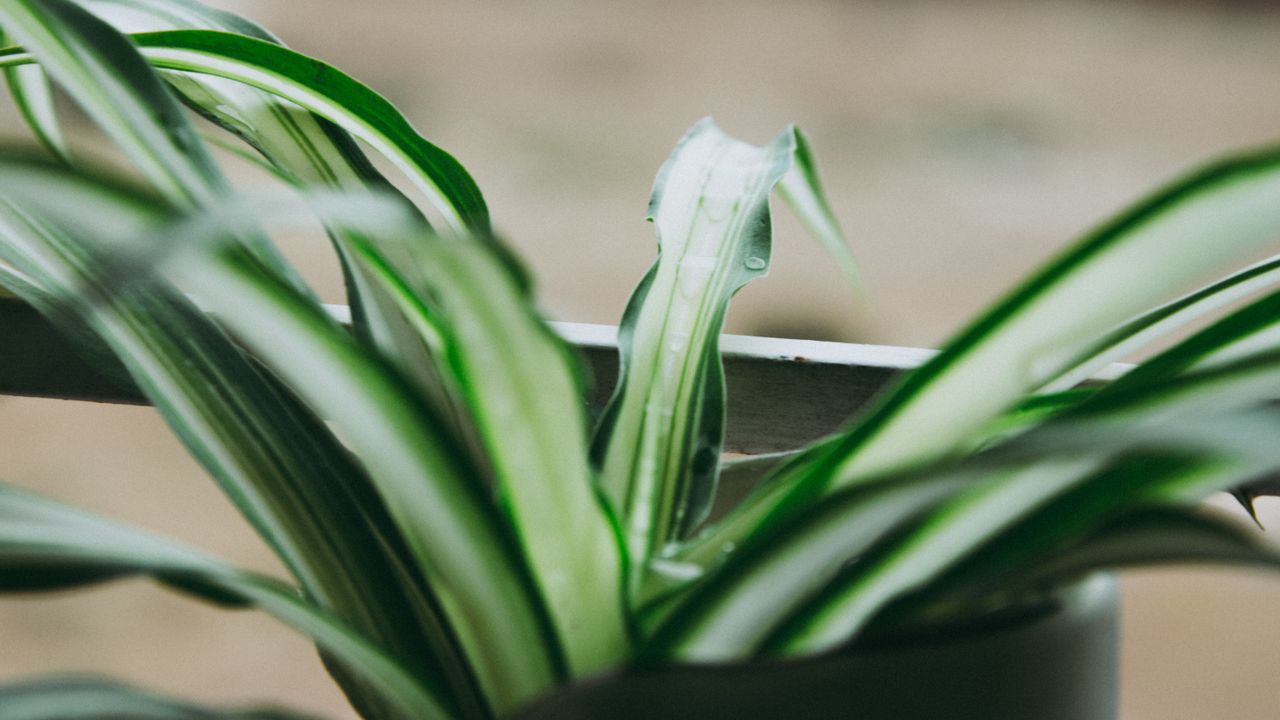
Center-striped forms like Vittatum tend to be the most common at retail, and they hold their variegation well in bright indirect light. Margin-variegated forms like Variegatum often have slightly crisper edges and tolerate a touch more direct sun, though both revert toward green in low light as the plant compensates for reduced photosynthesis by producing more chlorophyll. Curly forms like Bonnie sacrifice some leaf area to the spiral shape, so they grow a bit slower but stay compact and tolerate more handling. Reading the pattern before you buy prevents the most common disappointment: a Vittatum losing its stripes six months in because the room was simply too dim.
Light Tolerance by Cultivar: Which Spider Plant Suits Your Room
Light is where cultivar choice matters most. The Hawaiian, with no white pigment, is the most light-efficient and the most forgiving of lower light levels. It also stays greener and bushier when other cultivars start to fade, and it produces more spiderettes per mature plant. If your room has a north-facing window or you keep the plant a few feet back from a bright window, Hawaiian is the safest pick for an indoor houseplant.
Bonnie tolerates a wide light range too, partly because the curled leaves expose more surface area to whatever light is available. Bright indirect light keeps the curls tight and the variegation visible. Direct midday sun bleaches the leaves on any variegated cultivar, but Bonnie recovers faster than Vittatum. Variegatum wants bright indirect light to hold its white margins; in low light it fades toward green as the chlorophytum compensates by producing more chlorophyll. The detailed light requirements guide covers the numbers; the short version here is that Variegatum and Vittatum want bright indirect, Hawaiian and Bonnie are more forgiving of dim rooms where other foliage plants would stretch.
Spiderettes, Pups, and Which Variety Produces the Most
Spiderettes are the small plantlets that dangle from the long flower stalks of a mature spider plant. They are how the species propagates, and the cultivar you choose changes how many you get. Hawaiian and Vittatum are the most prolific producers once the plant is established, sending out long arching stalks with clusters of pups at the tips. Variegatum produces fewer but sturdier spiderettes. Bonnie produces the fewest, mostly because the plant channels energy into its compact curly form and into its smaller root zone rather than into offset division at the leaf tips. Each new plantlet that drops can be rooted as a fresh chlorophytum houseplant, so even Bonnie provides enough pups for a steady supply.
If your goal is propagation, more spiderettes per year means faster expansion of your collection or more to share. The trade-off is a plant that needs division more often, since the mother plant puts energy into the pups instead of into its own root system. The propagation guide walks through water vs soil rooting once you have the pups in hand.
Growth Habit and Mature Size: How Big Each Cultivar Gets
Spider plants are not all the same size at maturity. The cultivar you pick changes how much vertical and horizontal space the plant will use, and how fast it fills out a pot. This matters if you are working with a small shelf, a hanging basket, or a floor-standing planter with limited root zone volume. It also changes how often you will need to repot before the plant becomes root bound, and how much soil moisture the root ball holds between waterings.
Vittatum and Hawaiian are the largest growers. Mature plants send out arching leaves 12 to 18 inches long, and the flower stalks with spiderettes can reach 24 to 30 inches. They spread wider than the pot diameter and read as full, cascading plants with a healthy root ball that fills a 6 to 8 inch nursery stock container within a single growing season. Variegatum grows to a similar size but with a slightly tighter rosette, holding its white margin variegation cleanly even as the plant reaches full plant maturity. Bonnie is the compact form: leaves stay 6 to 10 inches long, and the plant holds a tight mound shape rather than arching out, which makes it the natural choice when pot size is constrained and offset division is the main propagation path.
If you want a hanging basket or a pedestal display where the plant cascades, Vittatum or Hawaiian is the right cultivar, and the long flower stalks with pups become a feature rather than a maintenance chore. If you want a desk plant or a small shelf accent, Bonnie is the more proportionate pick. The full hanging basket care guide covers the cascading form in detail if that is the look you are going for, including drainage holes, soil mix, and how to manage the weight of a mature plant in a hanging setup. Each cultivar eventually fills its container; the question is whether that container is a 4 inch starter pot, a 6 inch standard, or a 10 inch hanging basket.
Pet Safety, Toxicity, and Why Cultivar Choice Does Not Matter Here
One thing that does not change between cultivars: spider plants are mildly toxic to cats and dogs. All four cultivars, including Bonnie and Hawaiian, contain the same compounds that trigger mild gastrointestinal upset when chewed. The level of toxicity is low, and serious harm is rare, but if your cat or dog treats houseplants like a salad bar, any spider plant is a concern.
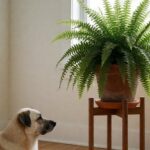
The reason this matters here: do not pick a cultivar expecting it to be safer for pets. The spider plant toxicity guide covers symptoms and safer alternatives in detail. The short version is that if pet safety is a hard requirement, a true pet-safe plant like a Boston fern or parlor palm is the right pick, not a different spider plant cultivar.
Picking the Right Cultivar for Your Home: A 4-Cultivar Match
To skip the rest of the article and just pick: low-light office or dim apartment, choose Hawaiian. Bright indirect living room with room to spread, choose Vittatum. Small shelf or tight space where you want a compact, decorative form, choose Bonnie. Pet-safe household where you want a vigorous green plant that fills out fast, choose Hawaiian again or Variegatum.
If you only ever buy one spider plant and you are not sure of your light, Hawaiian is the safe default. It stays green in dim corners, fills out quickly, and produces pups reliably. If you want the iconic striped look and you have a bright spot, Vittatum is the classic choice that most people picture when they say “spider plant.” For the full selection checklist including pot size, root bound indicators, and nursery stock condition, the buying guide is the next page. Your cultivar choice is the first decision; pot size and root condition are the second.
The right spider plant cultivar is the one that fits your room, your light, and your patience for propagation. Pick once at the start, and the next few years of growth take care of themselves. A chlorophytum in the right spot with the right soil moisture, proper drainage holes, and a root ball that has room to expand is one of the most forgiving houseplants you can grow. The cultivar choice is the first decision; everything else flows from it.
Turn That PDF Into a Spreadsheet in Minutes
You've seen how to do it manually — now let the tool handle the heavy lifting. Upload your bank statement and get Excel, CSV, or QBO in a few clicks.
Try It Free