Money plants (Epipremnum aureum) grow best between 65°F and 85°F (18°C–29°C). Below 55°F (13°C) or above 90°F (32°C), damage happens fast. This article covers the safe temperature range, what temperature stress looks like, and how to protect your plant.
As a tropical understory species, money plant evolved in the warm, stable temperatures of forest floors — shaded by a canopy that buffers both heat and cold. Indoors, that background means the plant is sensitive to rapid temperature shifts and prolonged exposure to temperatures outside its comfort band. It is not frost-hardy and it is not heat-tolerant the way some succulents are.
The two most common failure modes are cold damage from a window draft or an air conditioning blast in summer, and heat stress from proximity to radiators, heating vents, or direct afternoon sun. Both show distinctive symptoms that are easy to recognize once you know what to look for.
Why Temperature Matters for Money Plants
Temperature controls the rate of nearly every biological process in a living plant. In money plants, the mechanism that matters most is root-zone enzyme activity. Roots absorb water and dissolved nutrients most efficiently in the 65°F–85°F (18°C–29°C) range. Below about 55°F (13°C), root membrane fluidity drops sharply — the cell membranes become less selective about what they let through, and the roots effectively stop absorbing water even if the soil is moist. Above about 90°F (32°C), root respiration increases faster than the plant can compensate, and root stress begins within hours.
At the leaf level, temperature drives the opening and closing of stomata — the pores that let the plant breathe. Within the safe range, stomata open normally and the plant transpires at a healthy rate. Outside the range, stomata close partially or fully, which cuts off both water loss and the nutrient pull that comes with it.
The Safe Temperature Range
Money plants fit comfortably in most normal home temperatures. The numbers to know:
- Optimal range: 65°F–85°F / 18°C–29°C. Active growth, normal leaf expansion, healthy root function. This is where the plant looks its best.
- Tolerable low: 55°F–65°F / 13°C–18°C. The plant survives but growth slows noticeably. Below 60°F (16°C), stop fertilizing — the roots are not processing nutrients efficiently.
- Damage zone: below 55°F / 13°C. At these temperatures, root absorption fails and leaf tissue begins to suffer chilling injury. Extended exposure kills fine roots and causes soft, water-soaked patches on leaves within days.
- Heat stress zone: above 90°F / 32°C. At sustained high temperatures, root respiration outpaces the plant’s ability to move water, and wilting begins even in moist soil. Above 95°F (35°C) for more than a few hours, irreversible protein denaturation begins in leaf cells.
The range is wide enough that most homes are naturally fine for money plants. The problems come from localized extremes — a cold window in winter, a heating vent at floor level, or direct afternoon sun through glass that acts like a magnifying glass in summer.
Symptoms of Temperature Stress
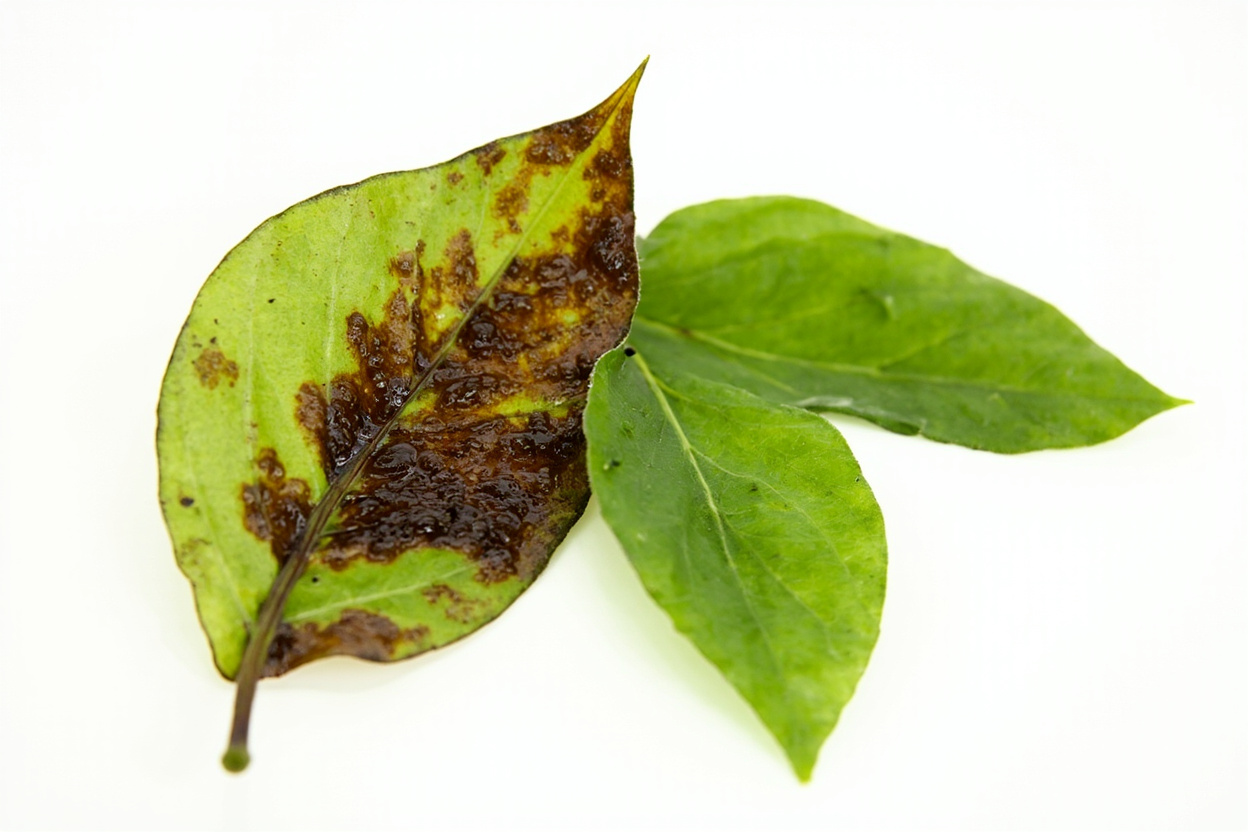
Temperature damage looks different depending on whether the plant got too cold or too hot. The patterns are distinct enough that you can usually tell which it is from a photograph of the symptoms.
Cold Damage
Cold damage typically shows as dark, water-soaked, or mushy patches on leaves, sometimes with a translucent quality. Older leaves are affected first. In severe cases, the entire leaf collapses and turns dark brown or black within 48 hours of exposure. The stems may feel soft below the soil line. Wilting that does not respond to watering is a classic sign of cold-damaged roots that can no longer absorb water.
Heat Damage
Heat stress first shows as wilting that occurs even in moist soil — the plant cannot move water fast enough to keep up with losses. Leaves may then develop pale, yellowish patches, particularly on the side facing the heat source. In extreme cases, leaf edges and tips dry out and turn papery brown while the rest of the leaf stays green. Unlike cold damage, heat damage is usually more localized to the exposed side of the plant.
Protecting Your Money Plant From Temperature Extremes
These steps prevent the most common temperature damage scenarios in typical homes:
- Keep the plant away from cold window glass in winter. A money plant sitting on a windowsill near single-pane glass can experience temperatures 10–15°F (5–8°C) colder than the rest of the room at night. Move it at least 6 inches (15 cm) back from the glass, or draw a curtain between the plant and the window.
- Block direct air conditioning airflow. A cold blast from a floor or ceiling AC unit in summer can shock a money plant within minutes. Keep the plant out of the direct path of any heating or cooling vent.
- Monitor floor-level temperatures. In homes with radiators, the floor can run significantly colder than chest height in winter. If your money plant is on a low shelf or the floor, check that it is not sitting in a cold pocket.
- Provide shade from afternoon sun. A money plant near a south- or west-facing window in summer can experience heat stress from solar gain through glass. Sheer curtains or moving the plant a few feet back from the window eliminates this.
- Move the plant to a stable room during weather extremes. During heat waves or cold snaps, the most reliable protection is simply moving the plant to the most thermally stable room in the house — typically an interior room without exterior walls or active HVAC vents.
Recovery from temperature stress takes 3–6 weeks if the damage was not severe enough to kill the roots. New growth appearing at the crown is the clearest sign the plant has bounced back. Do not fertilize during recovery — the roots are not processing nutrients efficiently until new root growth is underway.
Common Temperature Mistakes
The most frequent errors home gardeners make with money plant temperature:
- Moving a plant from a warm shop to a cold car in winter. This is the single most common cause of acute cold damage to house plants. Always wrap the foliage loosely in newspaper or place the plant in a bag for the trip, and warm up the car first.
- Placing plants near entry doors that open to cold outdoors. Frequent brief cold drafts do cumulative damage that may not show symptoms for weeks.
- Assuming the thermostat reading applies at plant level. A reading of 72°F (22°C) at head height can mean 58°F (14°C) at the floor in an uninsulated room in winter. Use a separate thermometer at plant level to know what the plant actually experiences.
- Overwatering a heat-stressed plant in an attempt to cool it. Heat stress and overwatering both cause wilting, and it is easy to misdiagnose one as the other. Check the soil moisture before watering anything that is wilting in summer.
Similar Epipremnum varieties like pothos follow the same temperature rules, and the pothos temperature tolerance range overlaps almost exactly with money plant. If you have successfully kept pothos healthy through a winter in your home, your money plant will do fine in the same spot. If you need to revive a money plant in water, starting the process quickly after temperature damage makes a real difference to recovery odds. The one thing that kills money plants quickly that pothos handles better is a single acute cold event — pothos is somewhat more forgiving of brief cold exposure.
Turn That PDF Into a Spreadsheet in Minutes
You've seen how to do it manually — now let the tool handle the heavy lifting. Upload your bank statement and get Excel, CSV, or QBO in a few clicks.