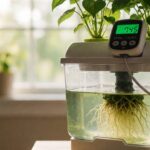
Pothos comes from the Solomon Islands, where it grows in tropical rainforest understory. That environment is warm, stable, and humid — and those conditions shape what the plant tolerates in your home. Temperature is one of the most consistent factors for Pothos health, and unlike light or water, you cannot compensate for a bad temperature with something else.
The Ideal Temperature Range for Pothos
18°C to 30°C is the range where Pothos grows well. Below 15°C, the plant starts to struggle — growth slows noticeably, the leaves lose some of their firmness, and the risk of cold damage increases. Below 10°C for more than a few hours, cold damage becomes visible: leaves turn dark, soften, and collapse. Sustained temperatures below 10°C can kill a Pothos.
Above 30°C, the plant is not in immediate danger but stress increases — the soil dries faster, the plant uses more water, and if humidity is also low, brown tips appear quickly. This is common in Singapore during the dry season when rooms without AC can exceed 32°C.
Where Pothos Gets Too Cold in Most Homes
The most common temperature problems for Pothos in Singapore are cold drafts and air conditioning:
Air conditioning vents. This is the number one cause of temperature-related Pothos damage. A pot placed directly under or near an AC vent receives cold, dry air that hits the leaves continuously. The plant loses moisture faster than it can replace it, the cells contract, and the leaves develop brown edges and crispy tips. The soil also stays wet longer because the plant is not actively transpiring — creating a compounding problem of cold plus overwatering.
Near single-pane windows in cool weather. On nights when outside temperatures drop, the glass near a window can become significantly colder than the room air. If the pot sits on a windowsill with the leaves brushing cold glass, the plant experiences localised cold stress even if the room is warm overall.
Outdoor patios or balcony areas during monsoon season. Pothos is an indoor plant in Singapore’s climate. During the rainy season, outdoor Pothos plants can experience sustained cool, wet conditions that lead to root rot and cold stress. Bringing them indoors during the monsoon months is better than leaving them exposed.
How to Tell If Temperature Is the Problem
Temperature stress tends to show up in a specific pattern:
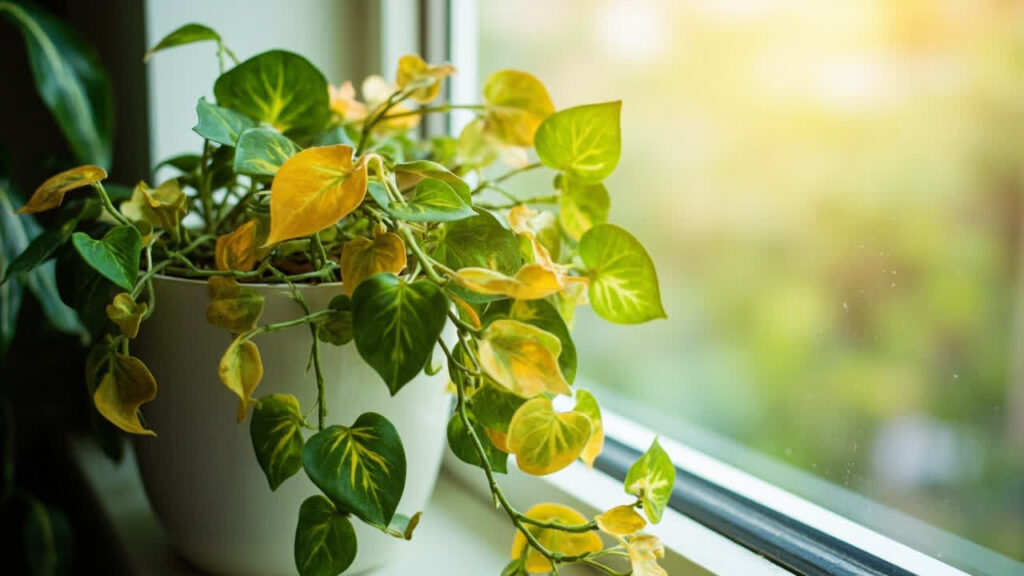
- Leaves curl inward — the margins roll up, the leaf feels thinner than usual
- Brown tips and edges, even when watering and humidity are correct
- Slowed or stopped growth, especially in what should be the active growing season
- Leaves that are uniformly dark and somewhat desiccated, not yellowing from the base
If your Pothos is in a room that runs AC most of the day and night, that is the most likely cause of ongoing stress symptoms even when everything else is correct.
Managing Temperature for Pothos
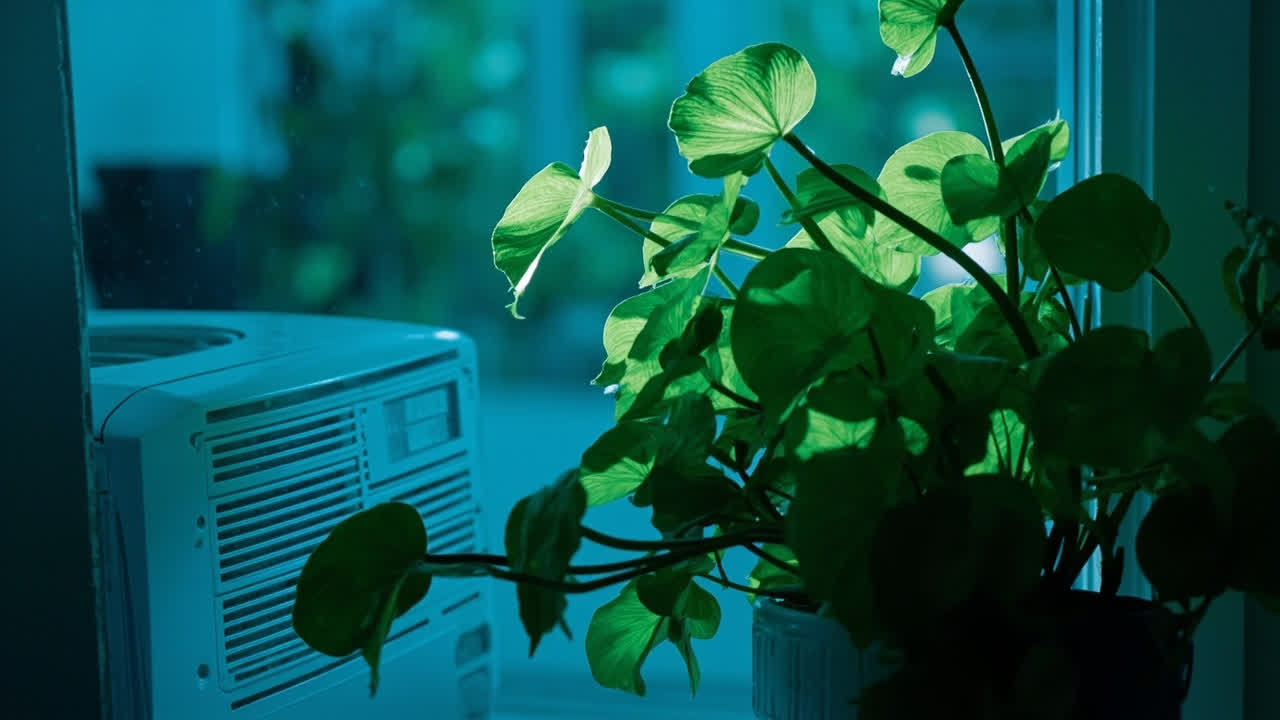
The best position for a Pothos is away from AC vents, at least a metre from any direct airflow. In a room that runs AC most of the day, a position 1.5 to 2 metres from the nearest vent is better than right beside it. If the plant is on a windowsill, check whether leaves touch the glass at night — move it back slightly if they do.
During cooler months when the AC usage drops and the room stays warmer, Pothos typically recovers noticeably within two to three weeks. New growth emerges, the leaves firm up, and any cold-related brown tips stop spreading. The damaged leaves do not recover, but the plant does.
Temperature and Seasonal Changes
In Singapore’s climate, the main seasonal variation that affects Pothos is the dry season (January to March), when outdoor temperatures can be slightly lower and indoor rooms can be cooler with the AC set higher. During this period, reduce watering slightly — the plant’s metabolism is slower in cooler conditions and the soil stays wet longer. This prevents the overwatering that often accompanies seasonal temperature drops.
For general Pothos care, see the Pothos Plant Care guide.
From Bank Statement to QuickBooks-Ready File
That manual cleanup you just read about? This tool skips it. Turn your PDF into QBO for QuickBooks without storing your data anywhere.
Start Converting