Water bamboo when the root zone has started to dry but before the leaves curl from drought stress. For most potted bamboo, that means checking moisture every few days in warm weather and watering deeply whenever the top 1 to 2 inches feel dry.
Bamboo uses a lot of water when it is growing fast, but it does not want stagnant, sour soil. The balance is steady moisture with drainage, not a pot that stays soaked for days.
The Basic Bamboo Watering Rule
The best watering rule is to water thoroughly, then let the upper root zone begin to dry before watering again. In containers, check the top 1 to 2 inches with your finger. In garden soil, check a few inches deeper because the surface can dry while the root zone is still moist.
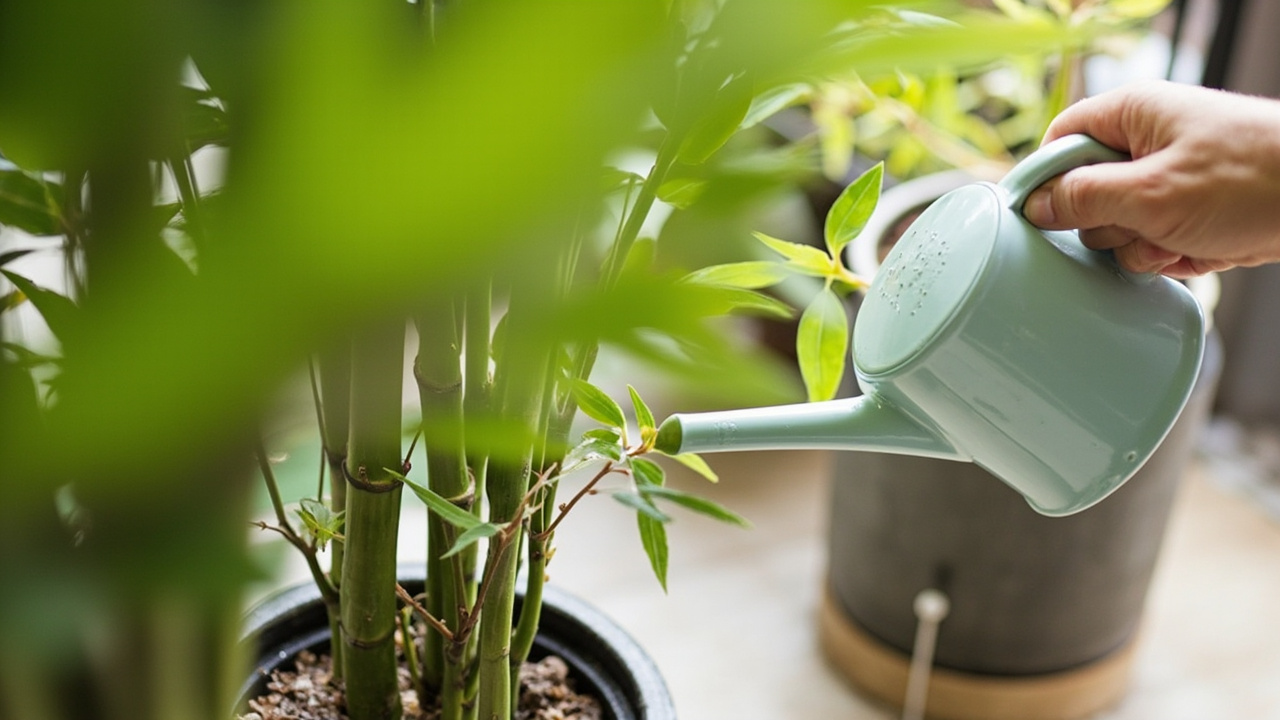
When you water a pot, water until moisture runs from the drainage holes. Then empty the saucer so the roots are not sitting in standing water. Light surface splashes create shallow roots and do not fully rehydrate the pot.
For the full routine, the guide on how to grow bamboo connects watering with placement and maintenance.
Light and Heat Change the Watering Schedule
Bamboo in brighter light uses water faster. More light drives more leaf activity, and heat increases evaporation from the pot and leaf surface. That is why the same plant may need water twice a week in one position and almost daily during a hot, windy spell.
Do not water by calendar alone. A plant in morning sun and afternoon shade dries very differently from one on a concrete patio in full afternoon heat. The bamboo light requirements page explains why sun exposure changes how quickly the pot dries.
If leaves curl during the hottest part of the day but recover by evening, the plant may be reacting to heat. If they stay curled after watering, the root zone is too dry or damaged.
Container Bamboo Needs Closer Moisture Checks
Container bamboo has less soil volume to buffer water swings. The roots are confined, the pot walls heat up, and drainage can either be too fast or too slow depending on the mix.
The honest trade-off is that pots give control but demand attention. A container can keep bamboo manageable, but it also makes drought stress easier to trigger. This is why bamboo in containers needs more frequent checks than bamboo planted in the ground.
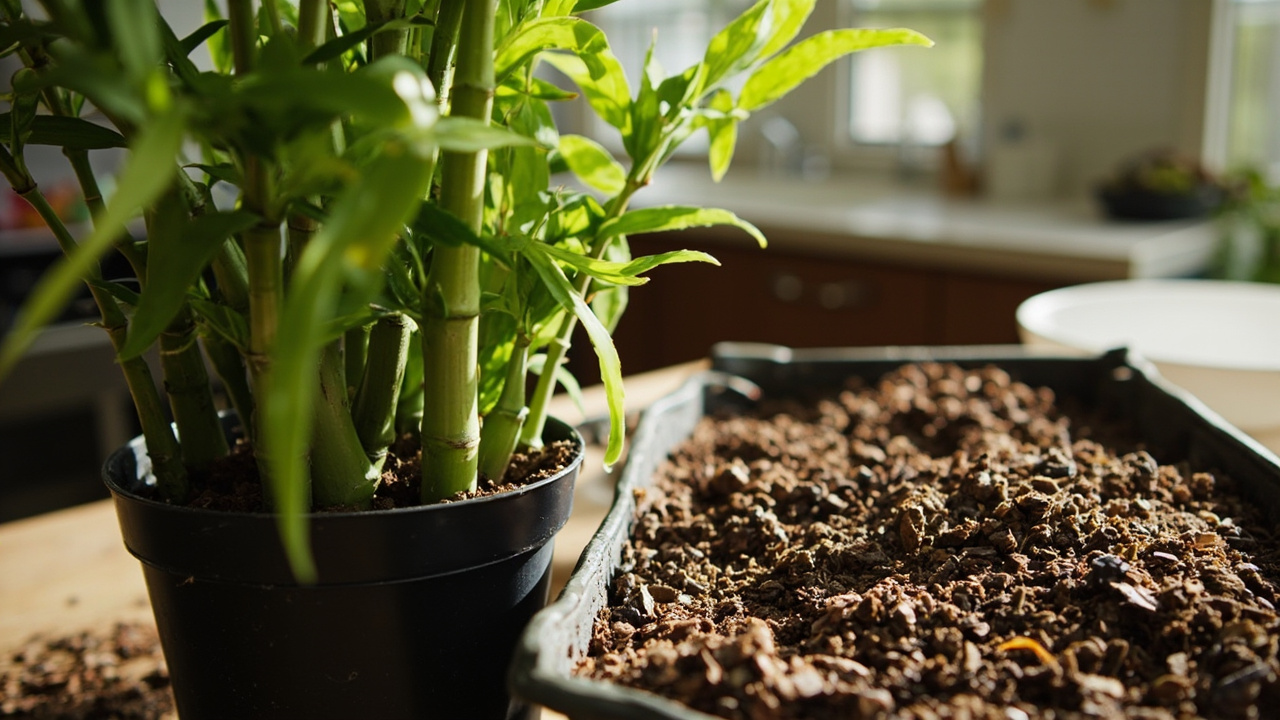
Use a pot with drainage holes and a mix that holds moisture without becoming heavy. If water runs straight through a root-bound pot, soak the pot slowly or repot into a larger container.
Signs You Are Watering Too Much or Too Little
Bamboo reacts quickly to water stress, but the symptoms can overlap. Check the soil before assuming the cause.
- Too dry: curled leaves, crispy tips, dull foliage, and a pot that feels light when lifted.
- Too wet: yellowing leaves, sour-smelling soil, soft new shoots, or algae on the soil surface.
- Uneven watering: dry edges around the pot while the center stays wet.
- Root-bound drought: water runs through quickly but the plant wilts again within a day.
If symptoms are already severe, use the guide to save dying bamboo after correcting watering.
Indoor Watering Is Slower and More Conditional
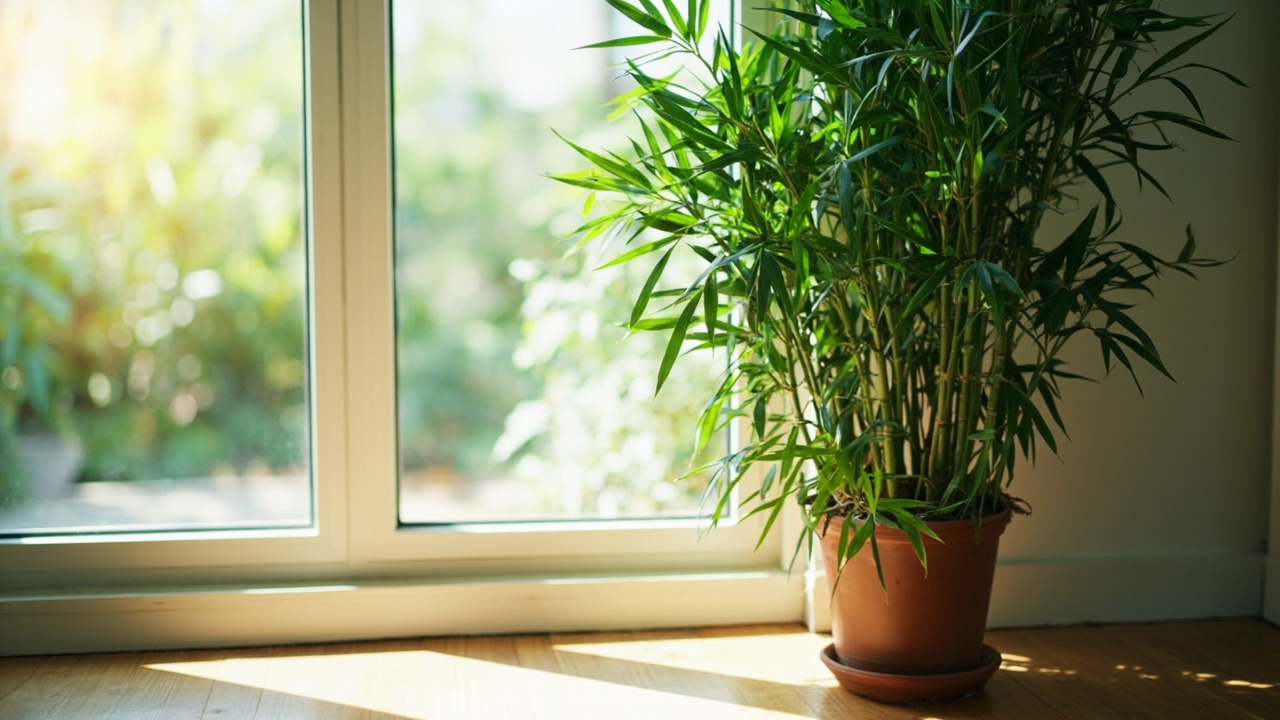
Indoor bamboo usually needs water less often than outdoor bamboo because light is weaker and wind is absent. In winter, growth slows further, so the pot may stay moist longer than expected.
Check before watering every time. Decorative cachepots are a common problem because they hide standing water. Lift the inner pot out after watering, let it drain, and return it only when the base is no longer dripping.
Indoor growers should also follow the guide to growing bamboo indoors for pot and placement details.