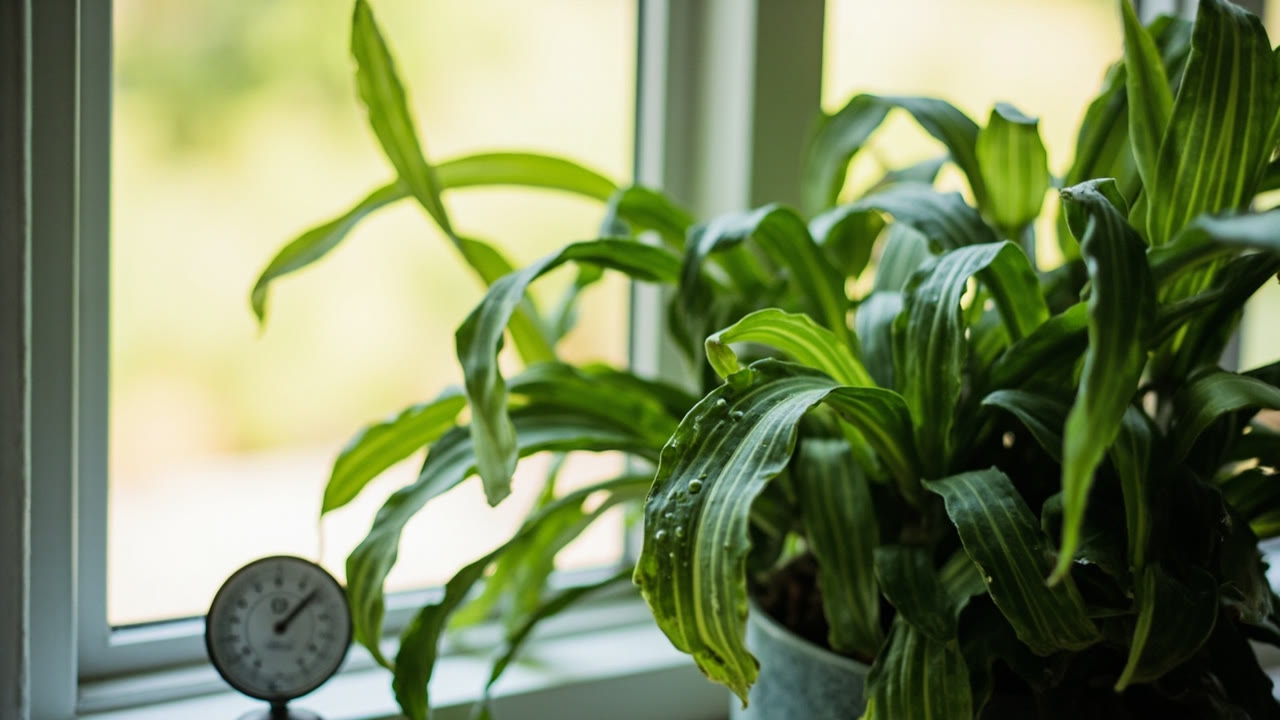
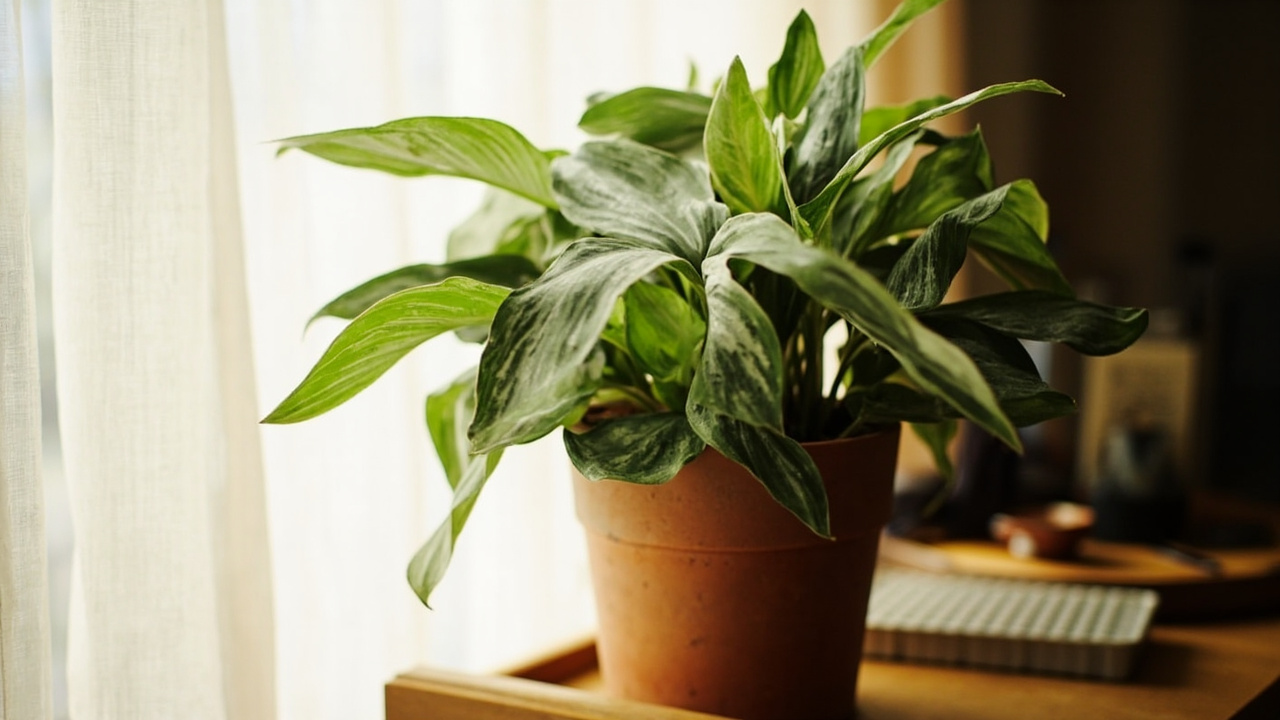
If your calathea is doing something wrong — a yellow leaf, a brown tip, a sudden curl, a wilt you can’t explain — you’re not alone, and you’re not looking at a rare problem. Most calathea problems come from the same five or six underlying causes wearing different masks. The leaf that yellows from overwatering looks almost identical to the leaf that yellows from low humidity, and the curl that says “I’m thirsty” can also say “the water had too much fluoride in it.” This is the diagnostic map for the calathea — the index that helps you name what you’re seeing, identify which cause class it belongs to, and open the right dedicated page for the actual fix.
Calathea (also called prayer plant, genus Calathea, now reclassified to Goeppertia) is grown for its patterned foliage and rewards stable conditions: bright indirect light, evenly moist soil, humidity above 50%, temperatures between 65–80°F (18–27°C), and water free of chlorine and fluoride. When one variable drifts, the plant complains. One note before the map: a healthy calathea raises its leaves at night and lowers them by day. That folding is called nyctinasty — it’s normal, not a symptom. If your plant is still doing that daily dance, the plant is fine.
How to Use This Page (The 2-Week Checklist First)
Before you scroll to a symptom, write down what changed in the last 14 days. Calathea problems almost always have a recent trigger. The most common triggers, in order: watering rhythm, water quality (chlorine and fluoride in tap), a light change, a humidity drop (winter heating, an AC vent), temperature swings, a fertilizer dose on dry soil, and a recent repot. If you can identify the trigger, the symptom usually sorts into a single cause class. If you can’t, treat the cause classes as a triage list in this order: water, water quality, light, humidity, temperature, fertilizer, pests.
The order matters because calathea problems compound. A slightly under-watered and slightly under-humid plant will show brown tips that look like a watering problem; raise the humidity and the brown stops spreading even though the watering hasn’t changed. Diagnose by symptom pattern, soil state, and recent change, not by a single leaf’s color.
The Symptom Map: Eight Calathea Problems and Where Each One Routes
What follows is the index. Each entry is named the way you’ll see it in a search query, paired with the most likely cause class, and linked to the dedicated page. The role of this page is to route, not to fix — so if you already know which symptom you have, jump straight to the linked page.
Yellow leaves on calathea
One yellow leaf at the base of an otherwise healthy plant is normal aging. The pattern that signals a problem is multiple yellowing leaves, new growth yellowing as it emerges, yellowing with soft stems, or yellowing concentrated along the veins or margins. The cause class is almost always watering rhythm (over-watering most often), water quality (chlorine and fluoride damage shows as tip-and-margin yellowing that progresses inward), or light. If your soil is wet, suspect watering first; if dry and the plant was fed recently, suspect fertilizer; if your tap water is hard and you’ve never used filtered or distilled water, suspect water quality. The full set of patterns and the recovery steps live on the calathea yellow leaves page.
Brown leaves and brown tips on calathea
Brown leaf tips and brown margins are the single most common calathea complaint, and they almost always point at the air and the water, not the soil moisture. Calathea needs humidity above 50%; below 40% the cells at the leaf edge dry out and die, leaving a tan-to-brown band. Tap water makes it worse because chlorine and fluoride accumulate at the leaf margin where transpiration is highest, which is why the brown starts at the tip and creeps down the edge. Direct sun scalds a brown patch in the middle of the leaf, a different pattern from tip burn. If you see crisp brown tips that don’t recover after misting, the answer is filtered or distilled water and a humidity fix, not more watering. The patterns and recovery timeline are on the calathea brown leaves page.
Leaf curl on calathea
When a calathea leaf rolls inward along its long axis, the plant is reducing the surface area it exposes to the air — a survival response, not a disease. The cause class is a moisture deficit: under-watering (the most common cause), low humidity, or a sudden temperature shock (a cold draft or hot air vent). It can also happen transiently right after watering. If the curl is tight and the pot is light, the cause class is watering. If the soil is moist and the air is dry, it’s humidity. The pattern guide is on the calathea leaf curl page.
Drooping leaves on calathea
Droop scares owners most because the plant suddenly looks like it’s giving up, but it’s one of the most reversible symptoms. The cause class is a hydration failure: the roots can’t move water up (over-watered, rotted, or pot-bound), the plant is losing water faster than it can replace it (severe under-watering, very low humidity, hot direct light), or the stems have lost turgor after cold damage. The diagnostic is fast — lift the pot. A heavy pot with droopy leaves points at over-watering. A light pot points at under-watering. Within minutes of a correct watering, an under-watered calathea starts to perk up; an over-watered one will not. The dedicated page for droop patterns and the recovery sequence is at calathea drooping.
Fading patterns and loss of color
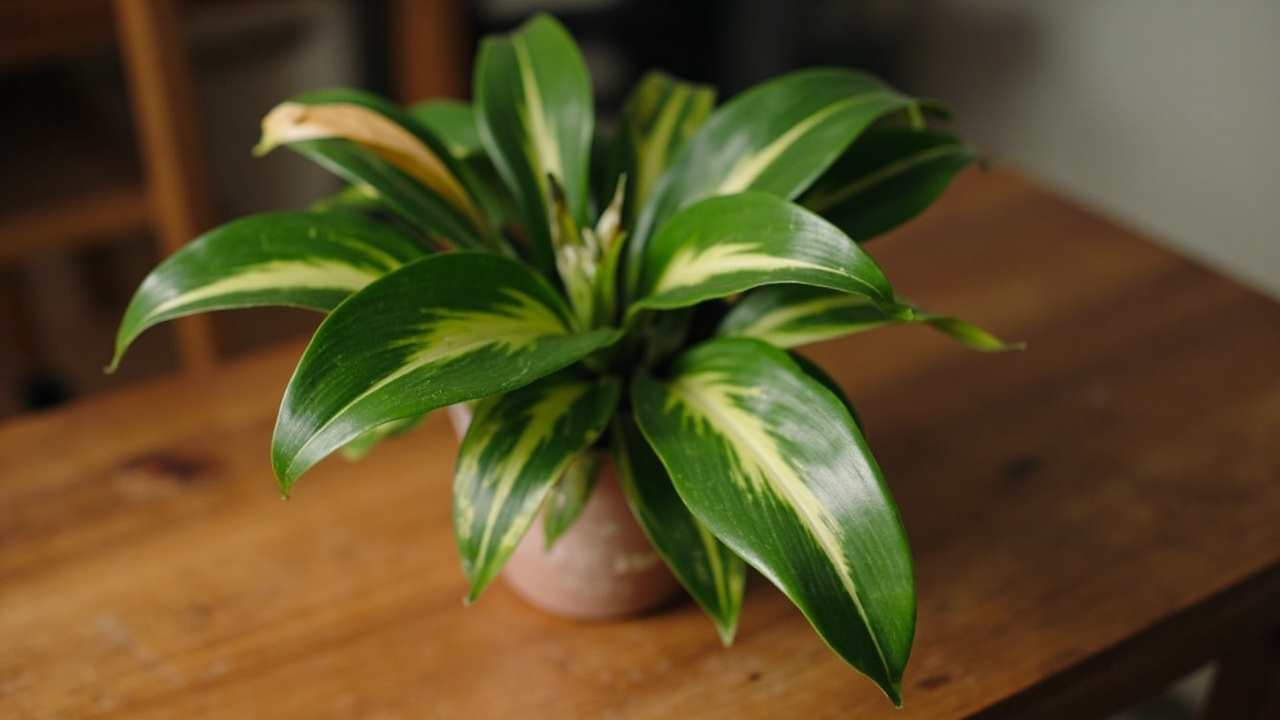
If the leaf shape and posture are fine but the pattern is washing out — stripes are getting dull, contrast between dark green and lighter markings is fading, new growth is coming in pale — the cause class is almost always light. Calathea needs bright indirect light to keep its variegation sharp. In low light the plant reduces chlorophyll production in the lighter bands and the pattern flattens. Direct sun does the opposite: it bleaches the leaf and crisps the edges. The fix is repositioning, not feeding. If your calathea is several feet back from a north or east window and the pattern is fading, the cause class is light placement. The dedicated page is calathea light requirements.
Leaf yellowing with mushy stems and a sour smell (root rot / collapse)
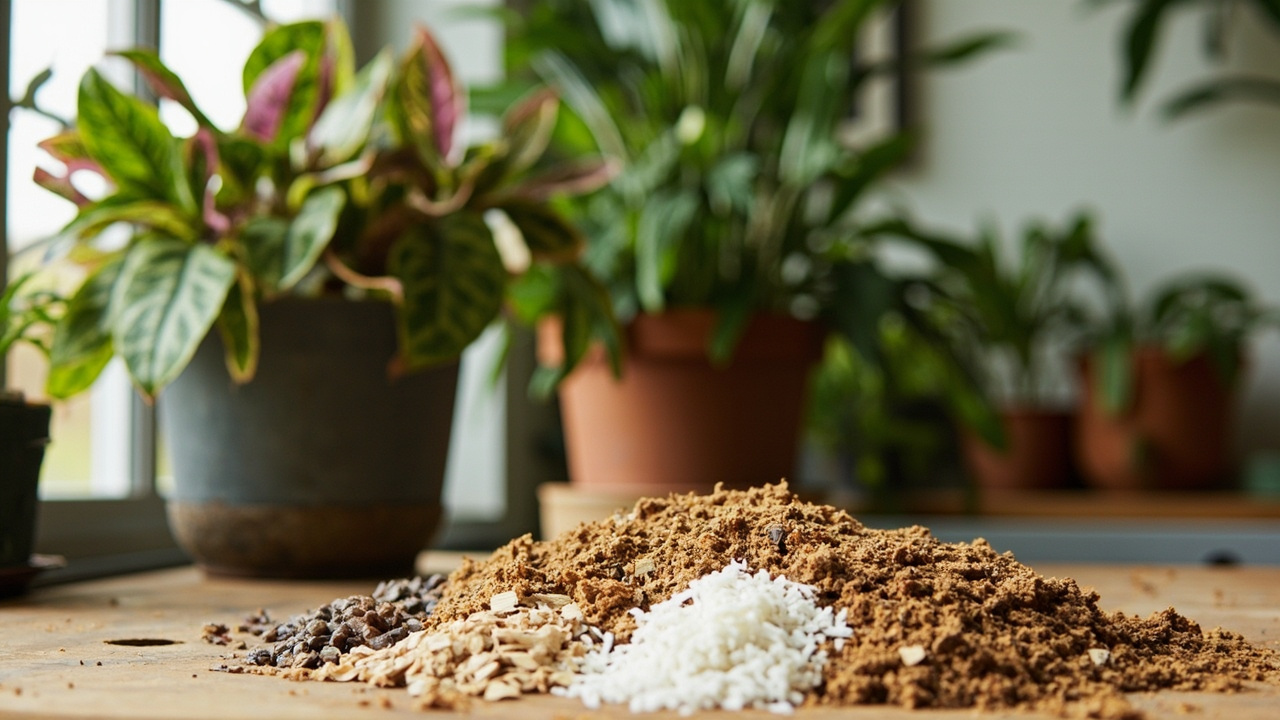
This is the symptom pattern that means the plant is in active decline, and it routes to the rescue page. The cause class is root rot, almost always a watering + soil + pot problem combined: soil that stays wet too long, a pot without drainage, a pot sitting in a saucer of water, or a compacted mix that has stopped draining. The signs are leaves going yellow and soft at the same time, stems that feel mushy at the base, soil that smells sour, and a root ball that is brown and slimy. Recovery depends on getting it out of the wet soil, trimming the rotted roots, and repotting into a fast-draining mix — within days, not weeks. The step-by-step rescue sequence is on the how to save a dying calathea page.
Pest damage (sticky leaves, stippling, fine webbing)
Calathea is not a pest magnet, but pest damage is easy to misread as a water or humidity problem. The cause class is insect or mite activity, and the visual signature is different: tiny yellow pinpricks (stippling) on the leaf surface, fine webbing at the leaf joints, sticky residue on the leaves, and visible small moving dots on the undersides of the leaves. Spider mites, mealybugs, and fungus gnats are the usual suspects. If the pattern is stippling, the cause class is not water — it’s pests. The full pest identification and treatment sequence is on the calathea pests page.
Sudden leaf drop after repotting (repotting shock)
A calathea that drops several leaves within a week of being moved to a new pot, new soil, or a new location is in repotting shock, not in a disease state. The cause class is a sudden change in the root environment — new soil with a different drainage profile, root damage during the repot, a larger pot that holds water the roots aren’t reaching, or a move to a room with different light and humidity. The plant is reacting to all the change at once, not to any single variable. The fix is patience and stable conditions, and not re-repotting to “fix” the leaf drop. Repotting shock has its own dedicated route in the cluster and is not treated on this page.
Why the Same Yellow Leaf Can Mean Three Different Things
Most calathea problems overlap because the plant has a limited vocabulary. It can’t tell you “the water has too much fluoride” — it can only yellow. It can’t tell you “the humidity dropped to 35%” — it can only crisp the tip. So the same symptom shows up from different cause classes, and the only way to tell them apart is pattern + soil + recent change. A yellow leaf on a plant in soggy soil in a cool room points at watering. A yellow leaf on dry soil, fed two days ago, points at fertilizer burn. A yellow leaf in moist soil with leaf-tip browning and hard tap water points at water quality. The symptom is the same. The triage is different.
That is the value of routing to dedicated pages. Each deep-dive page can hold the full pattern guide, the recovery timeline, and the “if this, then that” decision tree for a single symptom. This page is the front door. Once you’ve named your symptom, the dedicated page is the right place to be, because it can give the answer the index can’t.
Quick Cause-Class Reference (Read This Once, Use It Often)
If you’d rather skip the symptom map, the cluster has dedicated pages for the cause classes that cover roughly 90% of calathea problems. Watering rhythm and soil moisture is covered on the calathea watering guide — how to read soil moisture by weight, when to water, and how to recover from both over- and under-watering. Humidity is covered on the calathea humidity requirements page — the realistic ranges, the honest limitations of misting, and the setups that actually raise humidity to the level calathea needs. Light placement is covered on the calathea light requirements page. Water quality — the filtered or distilled water rule — is covered alongside the watering guide and the brown-leaves page, because it’s the cause class that is easiest to fix and the one most often missed.
The honest limitation of a single-page diagnostic is that it can’t replace reading the plant in your own home. The same yellow leaf under the same window in two different apartments can mean two different things, because the air, the water, and the soil are different. Use the symptom map to name what you’re seeing, the cause-class pages to fix the underlying variable, and the 2-week checklist to identify the trigger. After it, you should be able to answer three questions: which symptom, which cause class, and which page fixes it.
Turn any PDF statement into a clean sheet
Skip the typos and the hours of copying. Our converter handles any bank statement format and outputs Excel, CSV, or QBO for QuickBooks. No file retention, free to try.
Convert your statement