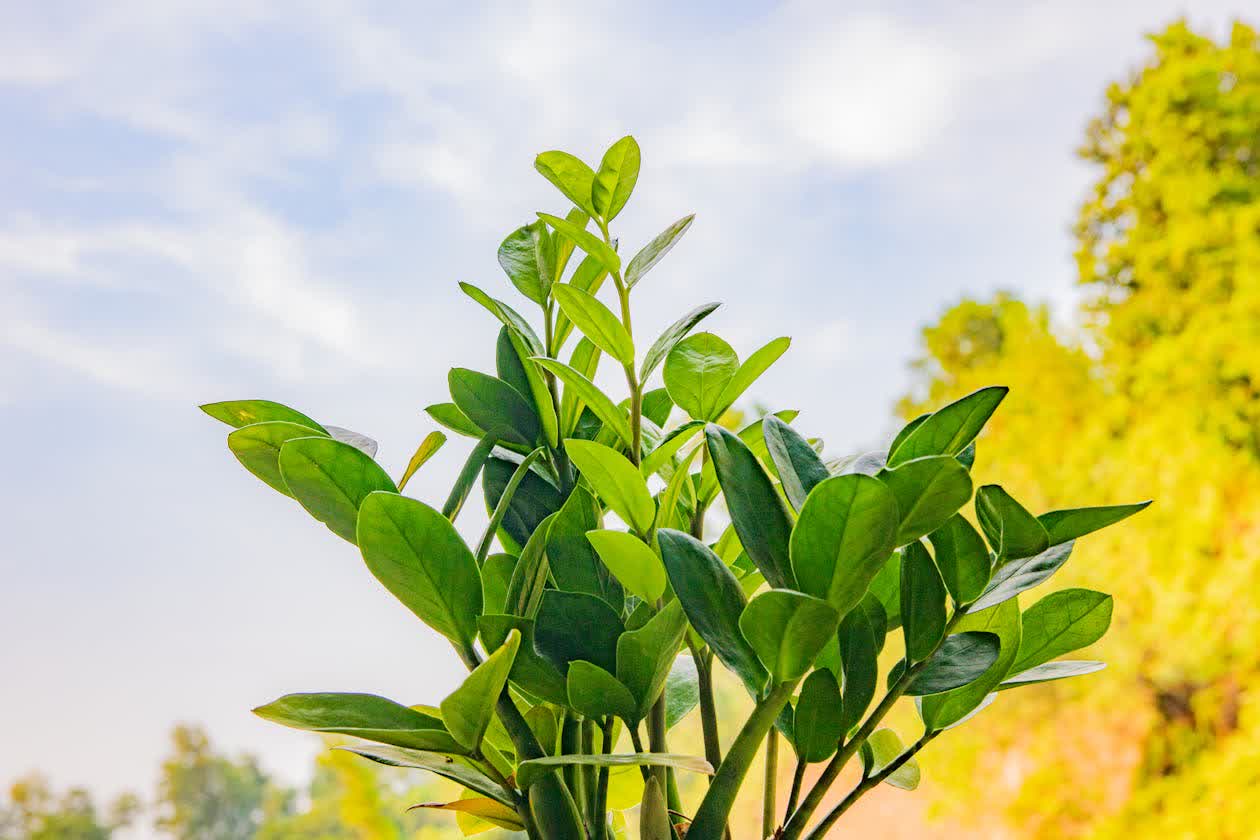

ZZ plants have a reputation for being nearly pest-proof, and for the most part that reputation is earned. But “nearly” is doing some heavy lifting there. Every so often, a ZZ plant does attract pests — and when it happens, it’s usually one of a small handful of common houseplant insects that found the plant and decided to stay.
The good news: ZZ plant pest problems are almost always treatable, and the plant’s hardiness means it recovers from damage more easily than most houseplants. The less good news: pests on ZZ plants are easy to miss because the plant’s waxy leaves don’t show the stippling or discoloration that makes spider mite damage obvious on other plants.
Why ZZ Plants Are (Mostly) Pest Resistant
ZZ plants have a natural defense: their leaves are thick, waxy, and slightly toxic to many insects. The plant contains calcium oxalate crystals — the same compound that makes dieffenbachia and philodendrons irritating to eat. Most chewing and sucking insects avoid ZZ plants unless they have no better options or the plant is already weakened.
That said, no plant is completely pest-proof. Mealybugs and scale are the two most common ZZ plant pests. Spider mites appear occasionally, usually in very dry indoor environments. Understanding what to look for and acting early is the difference between a quick treatment and a months-long pest problem.
Mealybugs on ZZ Plants
Mealybugs are the most common ZZ plant pest. They appear as small white to cream-colored cottony spots — usually clustered in the leaf joints, along the stems, or at the base of the plant where the rhizomes meet the stems. Unlike spider mites, which are nearly invisible, mealybugs are visible to the naked eye once you know what you’re looking at.
How to Identify Mealybugs
The waxy coating is the identifier. Mealybugs produce a cotton-like waxy secretion that protects their bodies. They’re usually found in groups rather than as individuals. Look in the joints where the stems emerge from the soil line, and along the stems at the leaf nodes.
A secondary sign: sticky honeydew residue on the leaves below where mealybugs are feeding. If your ZZ plant leaves look slightly sticky and there’s no other obvious cause, check the stems and leaf joints carefully for the white cottony clusters.
How to Treat Mealybugs
For light infestations, dab each visible cluster with a cotton swab dipped in 70% isopropyl alcohol. The alcohol dissolves the waxy coating and kills the insects on contact. Be thorough — check every stem joint and don’t miss clusters hidden at the soil line.
After treating all visible mealybugs, spray the entire plant with a dilute alcohol solution (1 part alcohol to 3 parts water) to catch anything you missed. The spray also acts as a preventive barrier. Apply weekly for 3-4 weeks to catch hatching eggs.
For heavier infestations, insecticidal soap or neem oil applied as a foliar spray is more practical. Apply to all leaf surfaces and stems, paying particular attention to the leaf joints where mealybugs hide. Repeat every 7-10 days for at least a month.
Scale on ZZ Plants
Scale appears as small brown or tan domed discs attached to the stems and leaf surfaces of ZZ plants. They’re usually concentrated on the lower stems, closer to the soil line, where they’re harder to see. A ZZ plant with scale may look like it has small brown bumps that are part of the plant’s natural texture — until those bumps start spreading.
How to Identify Scale
Scale insects are distinctive in their immobility. Adult scale insects attach to a location on the plant and stay there permanently, feeding by piercing the plant tissue and sucking out the sap. If you see a small brown bump on a stem and it doesn’t move when you touch it — if it feels fused to the plant — it’s almost certainly scale.
The damage shows up gradually: stems may become slightly yellowed near scale colonies, and leaves may yellow and drop prematurely. By the time the cosmetic damage is obvious, the scale has usually been present for a while.
How to Treat Scale
Scale’s waxy coating makes topical sprays less effective than on other pests. The most effective approach is manual removal: use a thumbnail, soft toothbrush, or cotton swab dipped in alcohol to scrape off each scale insect. This takes patience.
After manual removal, spray with insecticidal soap or neem oil to kill the juvenile crawlers — the newly hatched scale insects that are still mobile before they settle and form their own coating. Apply 7-10 days after manual removal to catch the hatching cycle.
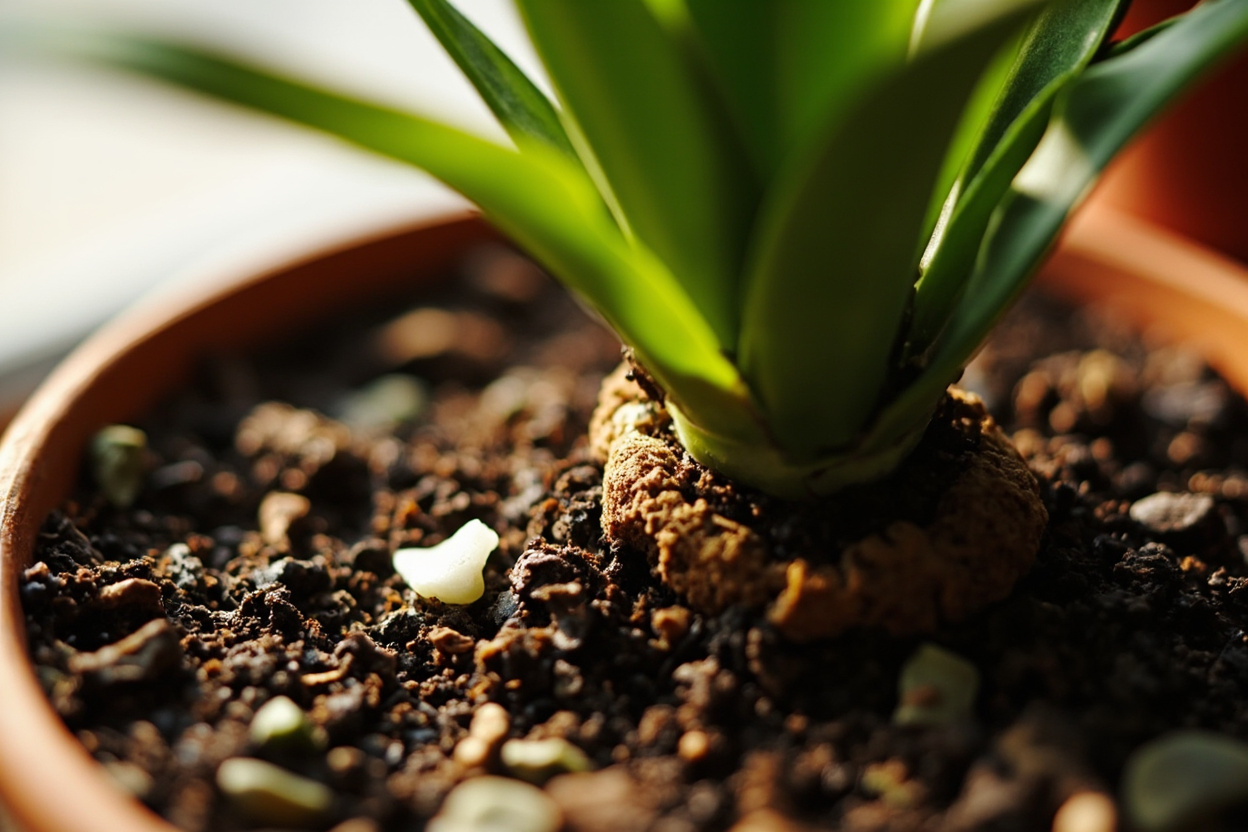
If scale is present on the rhizomes at the soil line, gently remove the top layer of soil and check the upper rhizome surface. Scale at the soil line is common and often missed.
Spider Mites on ZZ Plants
Spider mites are less common on ZZ plants than on most other houseplants, but they do occur — particularly in dry indoor environments with forced-air heating in winter. The challenge with spider mites on ZZ plants is that the damage is easy to miss because the leaves are naturally so glossy.
How to Identify Spider Mites
Spider mite damage on a ZZ plant shows up as fine stippling or tiny pale dots on the leaves — the same pattern as on other plants, but harder to see against the ZZ’s naturally dark green background. The only reliable early detection method is the paper test: hold a white piece of paper under a suspect leaf and tap the leaf sharply. If tiny dots appear on the paper and are moving, they’re spider mites.
Fine webbing between the stems is a late-stage sign — by the time webbing is visible, the infestation is established and significant.
How to Treat Spider Mites
Spider mites hate moisture. Start by taking the ZZ plant to a sink or shower and spraying it down with a strong stream of water — this removes many mites and clears webbing. Do this outdoors or in a bathtub.
After the rinse, apply insecticidal soap or neem oil to all leaf surfaces, including the undersides of leaves. The undersides are critical. Repeat every 3-4 days for at least 2-3 weeks — spider mite eggs hatch on a 3-7 day cycle and you need to catch every generation.
Raise the humidity around the plant while treating. A room humidifier nearby makes conditions less favorable for spider mites without harming the ZZ plant.
Preventing Pests on ZZ Plants
The single most effective prevention is inspection at every watering. Every time you water, take 30 seconds to check the stems near the soil line — this is where mealybugs and scale start. Catching them early means treating a small cluster instead of a full infestation.
Quarantine new plants for 2 weeks before adding them to your plant collection. Most pest introductions come from bringing home a new infected plant. For the full ZZ plant care baseline, the zz plant care guide has everything in one place.
ZZ plants that are healthy and growing in appropriate conditions are less vulnerable to pests. The waxy leaf coating that makes them naturally pest-resistant works best when the plant is in good health.
If you’ve had pest problems before, a monthly wipe-down of the leaves with a damp cloth removes dust and any early insects before they establish. It’s free, takes two minutes, and also keeps the leaves looking better — which is reason enough to do it. For other problems that can affect ZZ plants, the zz plant problems guide covers the full range.
From PDF to Excel in one click
Forget retyping line by line. Upload any bank statement, get a spreadsheet you can actually use. Your files are never stored, and you can test the converter with 3 free conversions.
Try it free