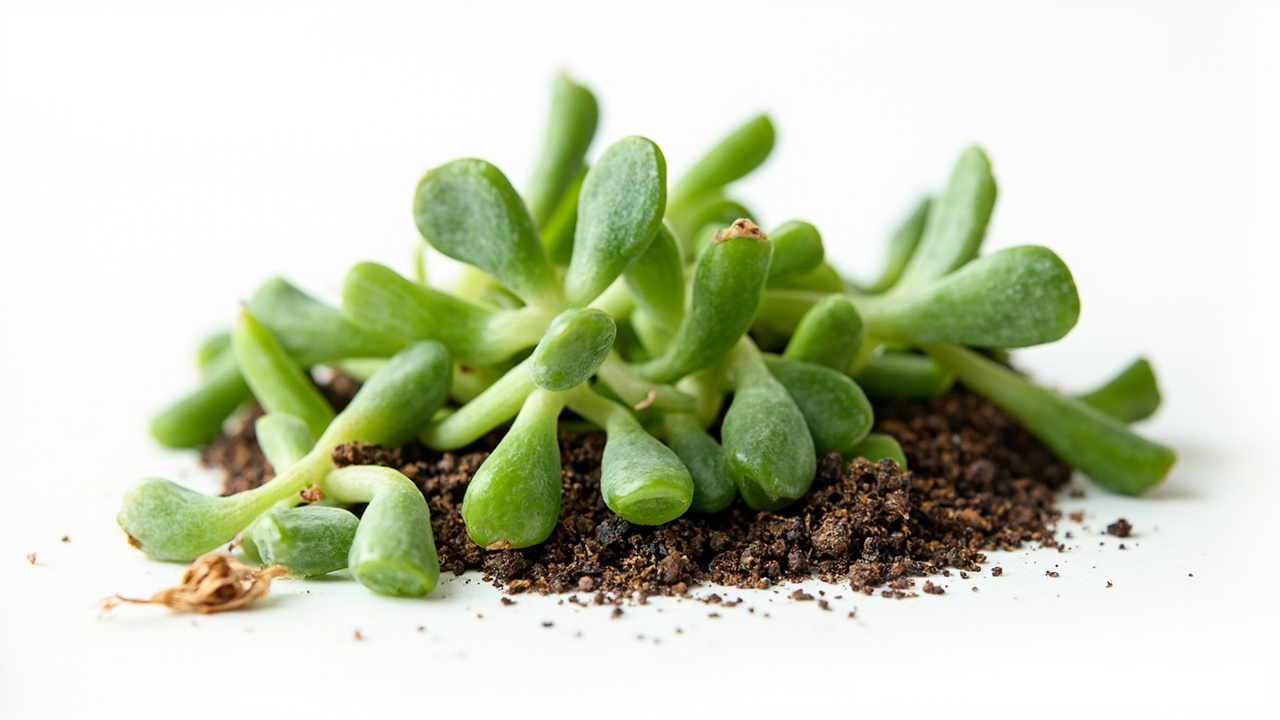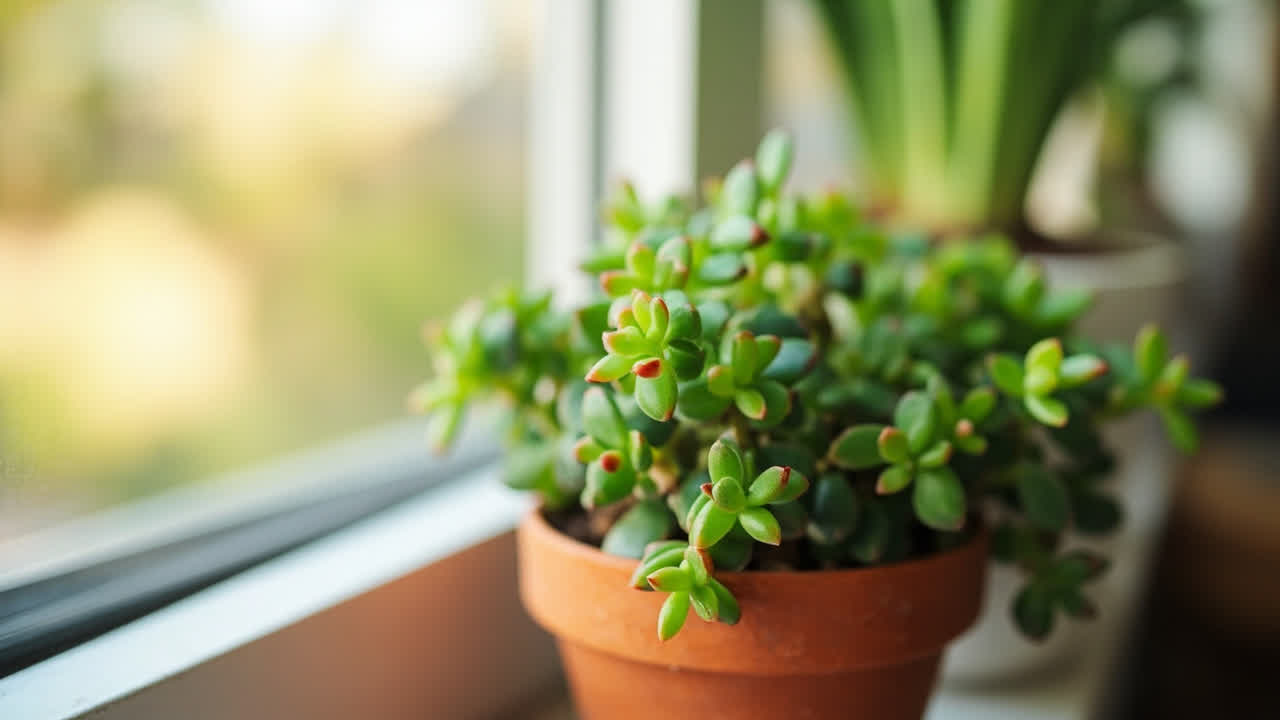

You’re checking your jade plant and you notice something wrong. White cottony spots where the leaves meet the stems. A fine webbing on the leaf undersides. Tiny brown discs that don’t wipe off easily. These are the three most common jade plant pests, and none of them are welcome guests.
The good news: jade plant pests respond well to treatment if you catch them early. The less good news: they spread fast and hide well, so knowing what to look for matters as much as knowing how to treat.
Mealybugs: The Cottony Invaders
Mealybugs are the most common jade plant pest. They look like small white or cottony spots — usually in the joint where leaves meet stems, under the leaves, and sometimes along the stems themselves. They’re about 1/10th of an inch long, and they cluster in groups rather than appearing alone.
What mealybugs actually are: small soft-bodied insects that feed on plant sap. They pierce the leaf surface and draw out the plant’s sugars, weakening the plant over time. They also excrete a sticky substance called honeydew, which coats the leaves and can lead to sooty mold — a black fungal coating that looks like someone sprinkled ashes on the plant.
How to Identify Mealybugs
Mealybugs are distinctive because of their waxy, cottony coating. The female insects cluster together and produce this wax as protection. You’ll usually find them in the following locations:
The leaf axils — where leaves attach to stems — are their preferred hiding spot. Check both the top and bottom of these junctions. They also hide under the rim of the pot and in any cracks or crevices where the stem branches.
A telltale sign: sticky honeydew residue on the leaves below them. If you see glossy sticky patches on jade plant leaves, look upward for the source.
How to Treat Mealybugs
For a light infestation, start with a cotton swab dipped in isopropyl (rubbing) alcohol — 70% concentration is fine. Dab directly on each visible mealybug. The alcohol dissolves their waxy coating and kills them on contact. This is effective, but it requires thoroughness — you need to find and treat every visible insect.
After alcohol treatment, spray the whole plant with a dilute alcohol solution (1 part alcohol to 3 parts water) to catch any you missed. Pay particular attention to the leaf axils, under leaves, and the pot rim.
For a heavier infestation, use insecticidal soap or neem oil. Insecticidal soap — applied as a spray to all leaf surfaces, stems, and the top of the soil — works by suffocating the insects. Neem oil works as both a contact insecticide and a systemic (the plant absorbs it and the insects ingest it when they feed). Apply either according to the product label instructions and repeat every 7-10 days for 3-4 cycles to catch hatching eggs.
Isolate the affected plant while treating. Mealybugs can crawl to nearby plants, so keep the jade plant separated until you’ve confirmed no reinfestation after two treatment cycles.
Spider Mites: The Fine Webbing Pest
Spider mites are not insects — they’re arachnids, related to spiders. They’re tiny, usually about 1/50th of an inch, which makes them nearly invisible to the naked eye. You’ll usually notice them first by their damage or their webbing rather than the mites themselves.
Spider mite damage shows up as small yellow or bronze speckles on the leaves — the mites feed by piercing leaf cells and draining their contents. Heavy infestation produces fine webbing between leaves and stems. If you see this, check your jade plant problems guide for the full symptom breakdown.
How to Identify Spider Mites
The first sign is usually the speckled leaf damage. If your jade plant leaves look stippled with tiny yellow dots, particularly on the upper leaf surface, check the undersides with a magnifying glass. You may be able to see the mites themselves — tiny moving dots, usually red, brown, or green.
A more reliable sign: fine webbing stretching between leaves, particularly in the growing tips and new leaves. Spider mites thrive in hot, dry conditions, so they’re most common in the heated winter months when indoor air is dry.
How to Treat Spider Mites
Spider mites hate moisture. The first step is to spray the entire plant down with water — a strong stream from a hose or showerhead knocks off many of the mites and clears the webbing. Do this outdoors or in a shower/tub. This is also a good moment to review your overall jade plant care routine — stressed plants are usually plants that are already on the edge from other care issues.
After the initial rinse, apply insecticidal soap or neem oil as a spray to all leaf surfaces, including the undersides. The undersides are critical — that’s where most spider mites live and feed.
Because spider mite eggs hatch on a 3-7 day cycle, you need to repeat treatment every 3-4 days for at least 2-3 weeks to catch every generation. A single treatment does very little. Persistence is the key.
Increase humidity around the jade plant while treating — spider mites thrive in dry air, and raising humidity helps suppress them. A humidifier nearby or regular light misting of the surrounding air (not the plant directly) creates less favorable conditions.
Scale: The Armored Domes
Scale insects appear as small brown or tan domed discs — roughly 1/8th to 1/4th inch in diameter — that cling to stems and leaf surfaces. They look like natural part of the plant at first glance, which is how they spread undetected. Unlike mealybugs, they don’t move once they’ve attached to feed.
There are two types: soft scales, which produce honeydew, and armored scales, which don’t. Jade plants are most commonly affected by soft scales, so watch for the sticky residue that signals their presence.
How to Identify Scale
The classic identification method is to try to scrape the “bump” off with a fingernail. If it doesn’t come off easily — if it feels fused to the plant — it’s probably a scale insect. A bump that scrapes off might be a bud or lenticel (a normal plant feature), but if it’s a cluster of them along a stem, that’s scale.
Look along the stems and the midrib of leaves. Scales prefer woody or semi-woody stems, and jade plants develop increasingly woody bases as they mature.
How to Treat Scale
Scales are harder to treat than mealybugs because their waxy coating protects them from topical sprays. The most effective approach for a light infestation is manual removal: scrape them off with a thumbnail, a soft toothbrush, or a cotton swab dipped in alcohol.
After manual removal, spray with insecticidal soap or neem oil to kill any remaining juveniles (called crawlers) that you couldn’t see. Follow up with a second spray 7-10 days later.
For a heavy scale infestation, you may need to prune away heavily infested stems to protect the rest of the plant. This sounds drastic, but it’s better than letting scale spread to the whole plant.
Preventing Pest Problems
The best pest strategy is prevention. Quarantine new plants for at least two weeks before adding them to your plant collection. Inspect both sides of leaves and the stem joints carefully before bringing anything new into the space.
A healthy jade plant in a well-draining pot with appropriate soil and proper watering is less vulnerable to pest infestations. Strong cell walls from good nutrition make the plant’s outer defenses harder for insects to penetrate.
Inspect your jade plant regularly — every time you water is a good rhythm. Look at the leaf axils, under the leaves, and along the stems. Catching an infestation early means treating fewer insects and a faster recovery.
The Alcohol Spray Preventative
If you’ve had pest problems before, a monthly spray with dilute alcohol (1 part 70% isopropyl to 3 parts water) applied to the whole plant can help prevent reinfestation. It’s not foolproof, but it creates an unfavorable environment for mealybugs and spider mites and disrupts the life cycle before populations can establish.
Turn any PDF statement into a clean sheet
Skip the typos and the hours of copying. Our converter handles any bank statement format and outputs Excel, CSV, or QBO for QuickBooks. No file retention, free to try.
Convert your statement