Not all hibiscus is the same plant. If you have been growing Hibiscus rosa-sinensis — the classic tropical variety with large, showy blooms — and you have just discovered there are hardy varieties that survive actual frost, or dwarf varieties that fit on a balcony shelf, the taxonomy can be confusing. This guide cuts through the confusion by covering the hibiscus types most relevant to home gardeners, what distinguishes them, and which situations each suits best.
The Three Main Categories of Garden Hibiscus
When gardeners talk about hibiscus, they usually mean one of three distinct groups. Understanding which one you are growing — or which one you should be growing — matters because each has different climate requirements, bloom characteristics, and care needs.
Tropical Hibiscus (Hibiscus rosa-sinensis)
This is the hibiscus most people recognise: large, waxy leaves, bold flowers in reds, oranges, yellows, pinks, and whites, and a bloom that lasts one to three days before falling. Hibiscus rosa-sinensis is native to East Asia and thrives in USDA zones 10–11 (minimum temperatures of 30–40°F / -1 to 4°C).
Tropical hibiscus does not tolerate frost. Even a light frost will kill it to the ground. In zones 9 and below, it must be grown in containers and brought indoors for winter, or treated as a tender annual. The reward for this extra effort is continuous blooming from spring through autumn, with the plant producing flowers on every branch tip in good conditions.
Tropical hibiscus is what Aqualogi covers throughout this cluster — it is the default “hibiscus” in most gardening content in tropical and subtropical regions.
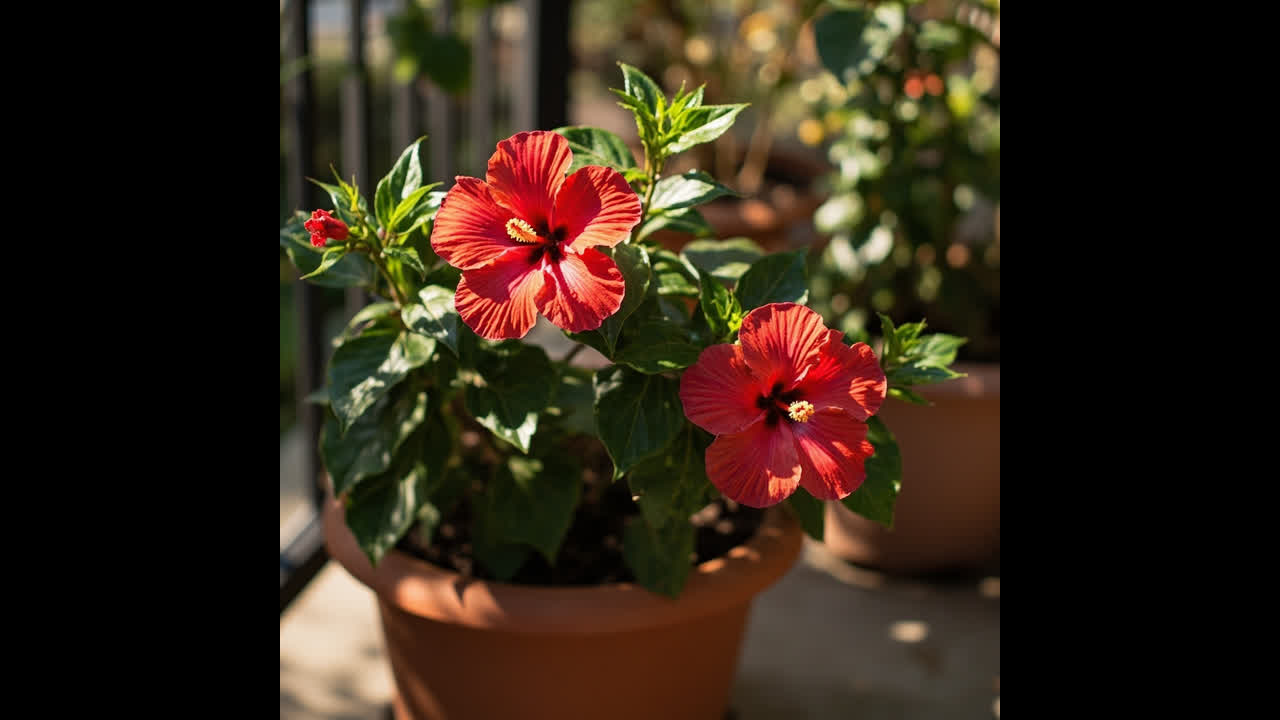
Hardy Hibiscus (Hibiscus moscheutos and hybrids)
Often called rose mallow or swamp rose, Hibiscus moscheutos is a North American native species that survives winters down to USDA zone 4 (as low as -30°F / -34°C). Unlike tropical hibiscus, hardy hibiscus dies back to the ground in autumn and resprouts from the roots in spring — a behaviour called herbaceous perennial dieback.
Hardy hibiscus flowers are often larger than tropical varieties — some hybrids produce dinner-plate-sized blooms up to 30 cm across. Colours range from white and pink to deep red and magenta. The trade-off is a shorter bloom season: hardy hibiscus typically flowers from mid-summer through early autumn, roughly six to eight weeks, rather than the months-long display of tropical types.
The most popular hardy hibiscus cultivars are hybrid crosses including the Lord Baltimore (deep red), Blue River II (white), and the Disco series. These are bred for flower size, colour range, and cold hardiness.
Key differences from tropical hibiscus:
- Dies to the ground in winter; resprouts from roots in spring (do not prune to soil level in autumn expecting woody stems)
- Much longer dormancy period — may not emerge until late spring, which can be alarming if you expect early growth
- Flowers last only one day each, but the plant produces many successive blooms over the season
- Requires full sun and moist soil — more forgiving of wet feet than tropical hibiscus
Rose of Sharon (Hibiscus syriacus)
Hibiscus syriacus — commonly called rose of Sharon — is a woody shrub hibiscus that behaves very differently from the other two types. It is deciduous, grows as a upright shrub up to 3–4 metres tall, and is hardy to USDA zone 5 (-20°F / -29°C). Unlike tropical hibiscus, Rose of Sharon sets seed rather than being sterile, which means it can self-seed prolifically and has become invasive in some regions.
Rose of Sharon blooms later in the season than most other shrubs — typically late summer into autumn when most other shrubs have finished flowering. Flowers are smaller and more delicate-looking than tropical hibiscus, with a consistent funnel shape, and appear along the length of each stem rather than only at the tips.
Popular cultivars include Blue Bird (blue), Red Heart (white with red centre), and Totus Alba (white). Recent breeding has produced double-flowered varieties and more compact forms suitable for container growing.
Comparing the Three Types
Here is a quick reference for choosing which hibiscus type fits your situation:
- Cold climate (zone 4–6): Hardy hibiscus (moscheutos) or Rose of Sharon. Tropical hibiscus is not viable without significant overwintering effort.
- Container on a balcony/patio: Tropical hibiscus (standard or dwarf varieties) or compact Rose of Sharon cultivars. Avoid large hardy hibiscus if space is limited — they are big plants.
- Continuous colour through summer: Tropical hibiscus — it blooms continuously from spring through autumn. Hardy hibiscus has a defined six-to-eight-week window.
- Very hot climates (tropical, subtropical): Tropical hibiscus thrives. Hardy hibiscus may struggle with extreme summer heat unless given afternoon shade and consistent moisture.
- Low-maintenance landscape shrub: Rose of Sharon — once established it needs very little attention and provides late-season colour when little else is blooming.
- Very large flowers: Hardy hibiscus hybrids — dinner-plate sized blooms are a centrepiece feature no tropical hibiscus can match.
Dwarf and Compact Hibiscus Varieties
If you are growing hibiscus in containers, on a small balcony, or as a houseplant, dwarf and compact varieties are worth seeking out. Standard tropical hibiscus can reach 2–3 metres in the ground, which is overwhelming in a container and difficult to manage indoors.
Dwarf tropical hibiscus varieties (typically 30–60 cm / 12–24 inches) include:
- Mandarin — compact with bright orange flowers
- Double Yellow — compact, double lemon-yellow blooms
- Jackie — small growing with pink and white variegated foliage
These varieties suit containers because they do not require frequent repotting and the root system remains manageable in a 20–30 cm pot. For container growing specifics, see our growing hibiscus in containers guide.
Choosing the Right Hibiscus for Your Climate
The single most important factor in choosing a hibiscus variety is matching it to your climate zone. A tropical hibiscus in zone 4 will die the first winter regardless of care. A hardy hibiscus in zone 10 may not bloom well because it needs winter cold to trigger spring growth.
If you are in a tropical or subtropical climate (zone 10+): tropical hibiscus is the clear choice — it will thrive outdoors year-round with minimal intervention.
If you are in a temperate climate (zone 7–9): you have options. Tropical hibiscus works in containers with summer outdoor placement and winter indoor storage. Hardy hibiscus can be grown in-ground as a perennial. Your choice depends on how much effort you want to invest versus the display you want.
If you are in a cold climate (zone 4–6): hardy hibiscus or Rose of Sharon are the only viable options for outdoor growing. Tropical hibiscus is too tender to keep alive through winter without heated indoor space.
For the complete care guide for tropical hibiscus — the type Aqualogi focuses on — see our hibiscus care guide. For problem-specific guides for tropical hibiscus, see the linked articles throughout the cluster.
Turn any PDF statement into a clean sheet
Skip the typos and the hours of copying. Our converter handles any bank statement format and outputs Excel, CSV, or QBO for QuickBooks. No file retention, free to try.