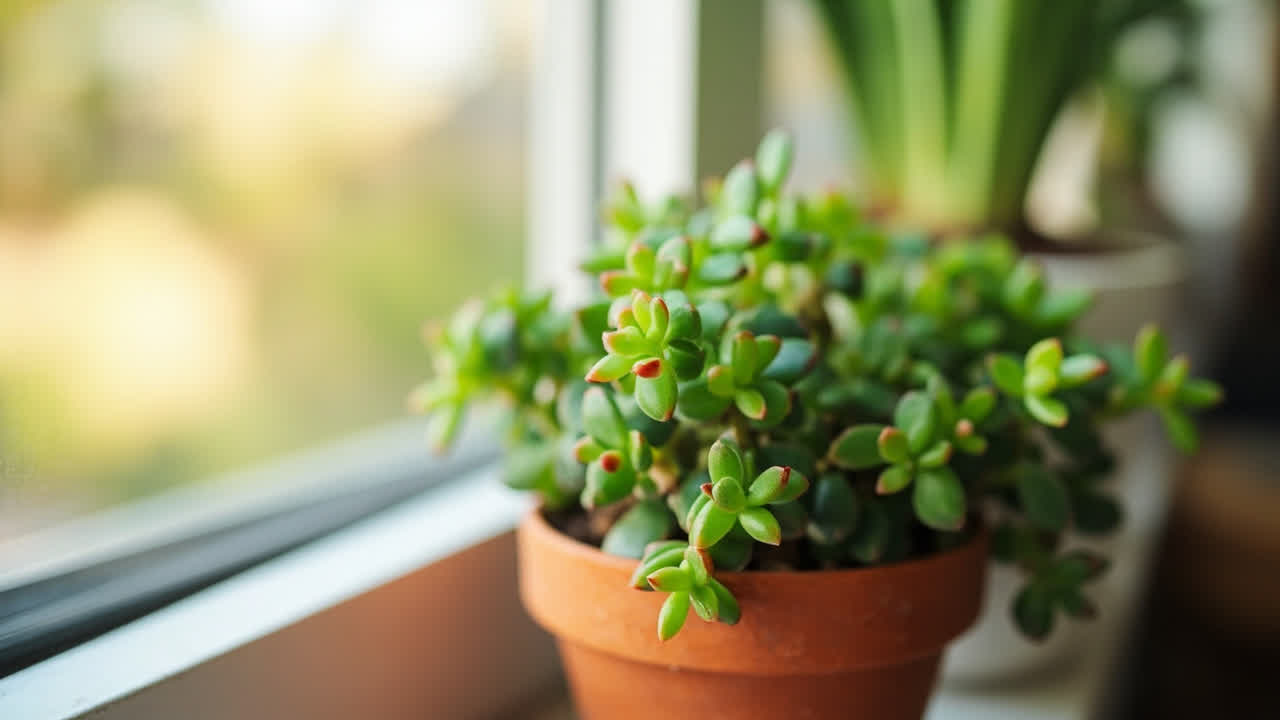
Pruning jade plant is one of the most rewarding maintenance tasks you can do — and one of the most misunderstood. Most jade plant owners either never prune and watch their plant grow long and leggy, or they prune too aggressively and remove the parts that would have made the plant more beautiful. The right approach is selective, incremental, and driven by a clear vision of the shape you want.
This guide covers when to prune jade plant, which stems to cut and which to leave, how to make cuts that heal cleanly, and what to do with every cutting you remove — because every pruning session is also a free propagation opportunity.
When to Prune Jade Plant : Timing Matters
The best time to prune jade plant is in spring, from March through May in the Northern Hemisphere. The plant is entering its active growing season, cuts heal faster, and new growth emerges quickly from cut points. Pruning in spring produces visible results within weeks — new branches appear and the plant fills in within the same growing season.
Summer pruning is also acceptable if you need to remove damaged growth or correct legginess. The plant will still respond, though more slowly than in peak spring. Summer pruning works well for removing dead or damaged material as soon as you notice it — do not wait for spring if something is clearly wrong.
Do not prune in autumn or winter. From roughly October through February, jade plant’s growth slows significantly. Cuts made in winter heal slowly, if at all, and the plant may respond by dropping leaves near the cut points or pushing weak, etiolated growth in spring rather than healthy branching. If you pruned in winter by mistake and see leaf drop or weak spring growth, this is likely why.
How to Know If Your Jade Plant Needs Pruning
Jade plant needs pruning when you see one or more of these conditions:
Leggy, stretched growth: Long bare stems with leaves only at the tips. This happens when light is insufficient and the plant reaches for the nearest light source. Each bare stem can be cut back to encourage branching at the cut point.
One-sided growth: The plant leans toward light or grows disproportionately to one side. Prune the longer side to encourage balanced regrowth on both sides.
Disproportionate height: The plant has grown tall without developing a full canopy of leaves. Cutting the central stem back encourages lateral branching and a fuller, more compact plant.
Dead or damaged stems: Stems that have dried, blackened, or broken. Remove them regardless of season — dead material is a liability, not an asset.
What to Cut : The Basic Pruning Strategy
The goal of jade plant pruning is a compact, full plant with a thick central trunk and branching at multiple levels. Every cut should serve that vision. Here is how to prioritize:
First: Remove dead material. Any stem that is clearly dead — brown, dried, hollow — comes out first. Make the cut at the nearest healthy junction or at the base if the entire stem is dead. Dead material does not recover and can harbor fungal organisms that spread to healthy tissue.
Second: Reduce leggy stems. Cut leggy stems back to a point where the stem is thicker and the leaf nodes are closer together. Make the cut just above a leaf node — the point where leaves attach to the stem. New growth will emerge from that node within weeks in active growing season.
Third: Shape for balance. Step back and look at the plant as a whole. Remove any branch that makes the plant look asymmetric or unbalanced. Cut it back to a main branch or the central trunk. Never remove more than twenty to thirty percent of the plant’s living material in a single pruning session — removing too much at once stresses the plant and can cause leaf drop.
Making the Cut Correctly
Use clean, sharp scissors or pruning snips. Blunt tools crush the stem rather than cutting it cleanly, which slows healing and can introduce infection. Make each cut at a slight angle — this prevents water from pooling on the cut surface, which reduces rot risk during healing.
Make cuts just above a leaf node, leaving about a quarter inch of stem above the node. Do not cut flush with the node — the small remaining stem protects the node and heals cleanly. Cutting too close to the node can damage it and prevent regrowth from that point.
After cutting, leave the plant in bright indirect light and do not water for three to five days. This gives the cut surface time to callous over naturally. Watering immediately after pruning, particularly before a cut has sealed, increases the risk of rot entering through the wound.
What to Do With Every Cutting
Every healthy cutting can become a new plant. Our how to propagate jade plant guide covers rooting in detail.
Every jade plant cutting is a potential new plant. This is the compounding benefit of pruning jade plant — you are not just maintaining the parent plant, you are multiplying your collection at no cost. Do not discard healthy cuttings.
The process for rooting jade plant cuttings is covered in detail in our how to propagate jade plant from cuttings guide, but here is the quick version: let the cutting callous for two to three days in a warm, dry location away from direct sun, then plant in a small pot of well-draining succulent mix. Water sparingly — just enough to moisten the top inch of soil — and place in bright indirect light. Roots develop in two to four weeks in spring and summer.
If you are new to jade plant propagation, start with stem cuttings of three to four inches — they root faster and are more forgiving than leaf cuttings. Each healthy stem cutting you remove during pruning can become a new plant within two to three months.
When to Root Cuttings vs. Discard Them
Root every healthy cutting that is at least two inches long. Cuttings shorter than two inches have insufficient stored energy to root reliably and are better discarded. Damaged or very thin cuttings can also be discarded — they will not produce healthy plants even under ideal conditions.
Healthy prunings from a mature jade plant can yield five to fifteen new cuttings in a single session, depending on the size of the plant and how much corrective pruning is needed. That is a significant return from a single maintenance session.
Shaping Your Jade Plant Over Time
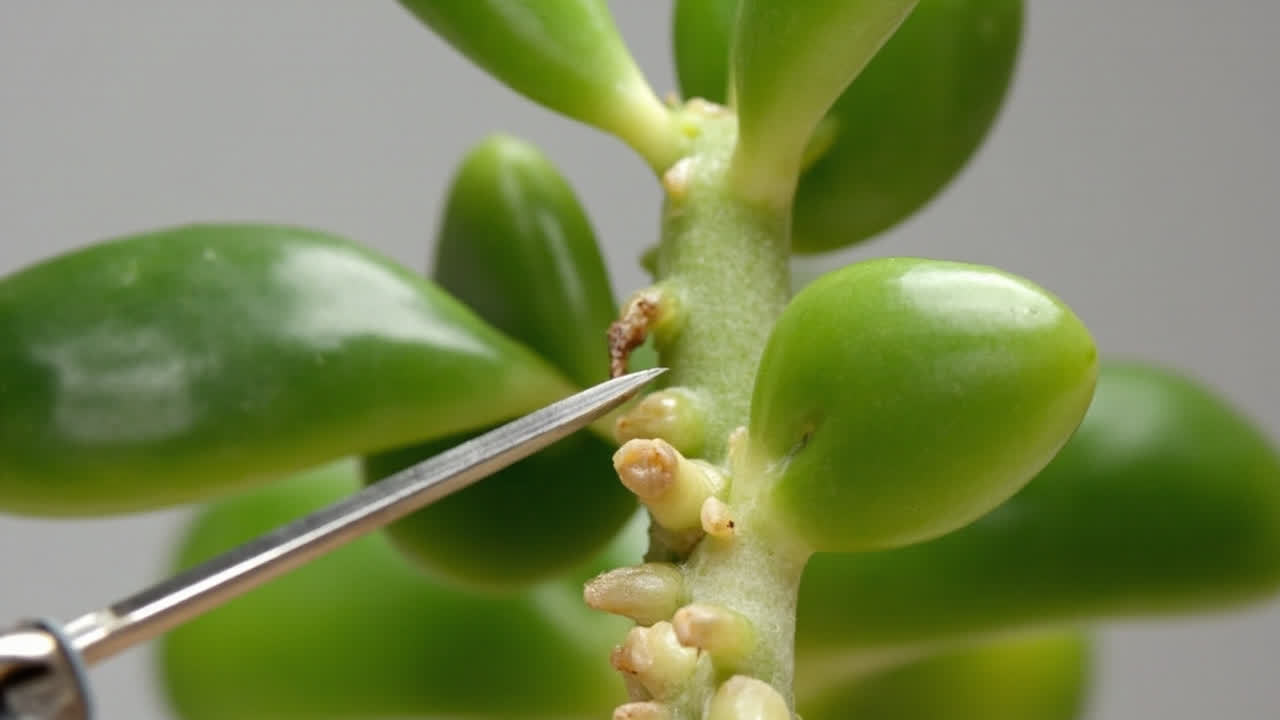
Jade plant pruning is not a one-time event — it is a cumulative process. The plant you want in three years depends on the decisions you make in pruning sessions this year and next. Here is how to think about it:
First pruning: Establish the basic structure. Remove dead material, reduce the most leggy stems, and create a framework of main branches. This may remove fifteen to twenty percent of the plant’s living material. Accept that the plant will look slightly bare immediately after — it will fill in within six to eight weeks as new growth emerges from cut points.
Second pruning (the following spring): Refine the shape. Now that you can see how the plant responded to the first pruning, remove any new growth that does not serve the shape you want. Encourage branching at the cut points from the first session by pruning just above outward-facing nodes — this directs new growth outward rather than inward, creating an open, balanced canopy.
Ongoing maintenance: Once the plant is shaped, prune once a year in spring to maintain the structure. Remove any branch that has grown out of proportion, cut back new leggy growth if light conditions have caused it, and continue to propagate every healthy cutting you remove.
The Trunk Development Goal
If you want a jade plant with a thick, woody trunk — the miniature tree form that makes mature specimens so attractive — trunk development happens through the pruning process. Every time you cut a stem and stimulate branching, the remaining stems thicken slightly as the plant directs resources to the remaining structure. Stems that are left unpruned remain relatively thin, while stems that are cut back repeatedly develop more wood and less height.
This is why selective pruning over multiple years produces a thick-trunked jade plant while never-pruned plants remain relatively thin-stemmed even at maturity. If trunk thickness is your goal, be patient and prune annually.
Common Pruning Mistakes and How to Avoid Them
Pruning too much at once: Removing more than twenty to thirty percent of a jade plant’s living material in a single session causes significant stress — leaf drop, weak regrowth, and in severe cases, stem dieback. If a jade plant needs extensive correction, spread the work over two or three pruning sessions, leaving at least six weeks between each.
Pruning without a plan: Random cuts produce unpredictable results. Before you cut, step back and look at the whole plant. Decide which branches stay, which are reduced, and which are removed entirely. Make cuts in that order: remove first, reduce second, shape last.
Pruning in winter: Cutting jade plant during its dormant or semi-dormant period produces slow healing, potential leaf drop near cuts, and weak spring growth. The only exception is removing clearly dead or diseased material, which should be done as soon as you notice it regardless of season.
Not propagating the cuttings: Every healthy pruning cutting is a free new plant. Leaving them on the soil surface or discarding them is waste. Have a propagation setup ready before you prune — a small pot of succulent mix, a warm bright location, and a label for each cutting so you know which plant it came from.
What Comes After Pruning : Aftercare
After pruning, move the jade plant to its brightest available location. The new growth that emerges from cut points needs the most light the plant can get — insufficient light after pruning produces the same leggy, stretched growth you were trying to correct. South or west-facing windowsills are ideal in spring and summer.
Do not fertilize immediately after pruning — the plant has reduced foliar mass and its nutrient needs are temporarily lower. Wait at least four to six weeks after pruning before feeding, and use half the normal concentration to avoid over-fertilizing a plant that is still recovering root mass to support the new growth.
Watch for leaf drop in the two to three weeks after pruning. Some leaf loss near cut points is normal — the plant is adjusting to a reduced canopy and may shed leaves that are no longer supportable with the remaining root system. If significant leaf drop continues beyond three weeks, check that the plant is not overwatered and that light is adequate.
The Compounding Value of Regular Pruning
For the full care system that supports regular pruning, see the complete jade plant care guide.
A jade plant pruned annually in spring for three consecutive years will be a more attractive, more compact, more structurally sound plant than one pruned once and then left to grow freely. Each session builds on the previous — branching becomes denser, the trunk thickens, and the plant takes on the characteristic tree-like form that makes mature jade plants so distinctive.
And because every pruning session produces multiple new plants from the cuttings, regular pruning multiplies your collection at no additional cost. A single mature jade plant, pruned annually for three years, can produce fifteen to twenty new plants — all from healthy material that would otherwise have been discarded. That is the compounding logic of jade plant pruning: you maintain the parent plant while simultaneously expanding your collection.
From PDF to Excel in one click
Forget retyping line by line. Upload any bank statement, get a spreadsheet you can actually use. Your files are never stored, and you can test the converter with 3 free conversions.
Try it free