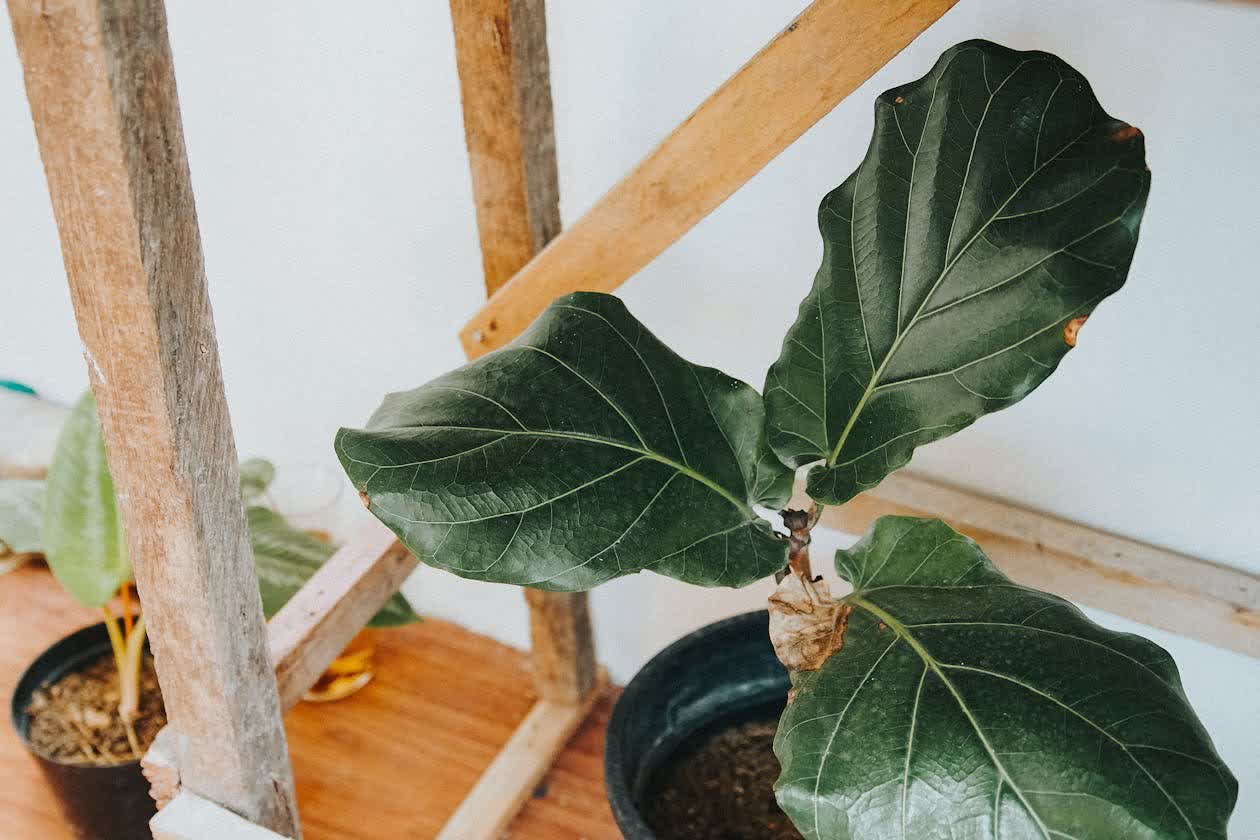
Fiddle leaf figs are heavy feeders during the growing season. The large leaves require significant nutrients to develop and maintain, and without regular feeding, the plant shows it — slow growth, pale leaves, and leaves that never reach their full size potential. Understanding when, how, and how much to fertilize your fiddle leaf fig makes a meaningful difference to its health and appearance.
When to Fertilize
Fertilize during the active growing season — spring through early autumn. This is when the plant is producing new leaves and allocating resources to growth, and when it can make productive use of the nutrients. During winter, when growth slows or stops, the plant does not need additional nutrients. Fertilizing in winter leads to salt buildup in the soil, which causes root damage and brown leaf tips.
The fertilizing season for fiddle leaf figs in most climates is approximately March through September. In tropical climates with no winter slow period, reduce feeding during the cooler months even if the plant continues growing.
What to Use
A balanced liquid houseplant fertilizer — with roughly equal nitrogen, phosphorus, and potassium, such as a 10-10-10 or 20-20-20 formulation — is correct for fiddle leaf figs. Dilute to half the strength recommended on the label. Full-strength fertilizer is too concentrated and causes salt buildup and root burn.
Apply to moist soil, never to dry soil. watering first and then applying the diluted fertilizer solution prevents the fertilizer from burning the fine root tips that absorb nutrients.
How Much Is Enough
Once per month during the growing season at half strength is the standard recommendation. This is sufficient for a fiddle leaf fig in a pot with fresh soil. If the plant has not been repotted in several years and the soil is depleted, a second application six weeks after the first during the active growing season can help, but only if the plant shows signs of nutrient deficiency — yellowing lower leaves, pale new growth, slow growth.
More is not better. Over-fertilizing is more common and more damaging than under-fertilizing. A fiddle leaf fig that is not fertilized at all will grow more slowly than one that is well-fed, but it will not develop the salt damage, root burn, and brown tips that over-fertilizing causes.
Signs of Over-Fertilizing
A white crust on the soil surface is the first sign of over-fertilizing — salts from the fertilizer have accumulated and are visible on the soil. This is most common with tap water that is high in minerals combined with regular fertilizing at full strength.
Brown leaf tips with a bleached, burnt appearance around the edges indicate excess fertilizer. This is different from fluoride damage — the pattern is more uniform and appears across many leaves simultaneously rather than on the oldest leaves alone.
If you see salt buildup, flush the soil thoroughly: run water through the pot multiple times, letting it drain fully each time. This leaches the accumulated salts out. Reduce fertilizing frequency or concentration after flushing.
Signs of Nutrient Deficiency
Yellow lower leaves that drop — not just one or two, but several in a short period — can indicate nitrogen deficiency, particularly if the plant has not been fed for a long time. The fix is straightforward: begin a monthly fertilizing routine at half strength and the plant will recover over the following months.
Pale, washed-out new leaves that never develop the deep green colour of the mature foliage can indicate iron deficiency or general nutrient depletion. This is more common in plants that have been in the same soil for several years without repotting or feeding. Addressing the fertilizing routine usually resolves it.
Turn That PDF Into a Spreadsheet in Minutes
You've seen how to do it manually — now let the tool handle the heavy lifting. Upload your bank statement and get Excel, CSV, or QBO in a few clicks.
Try It Free