Spider plants are among the most pest-resistant houseplants you can grow. Their thick, somewhat waxy leaves and vigorous growth make them a difficult target for most common houseplant pests.
That said, no plant is completely immune, and when pest problems do occur on spider plants, they are usually from three culprits: spider mites, mealybugs, and scale insects.
Catching spider plant pests early makes treatment straightforward; letting them establish makes it much harder.
This guide covers how to identify each spider plant pest, what damage it causes, and how to treat it — including organic and low-toxicity options for indoor use.
Spider Mites
Spider mites are the most common pest issue for spider plants, particularly in dry indoor environments and in winter when heating systems reduce humidity. They are not insects — they are arachnids, related to spiders — and they are tiny: barely visible to the naked eye as moving dots. What you see first is usually their damage, not the mites themselves.
Damage: fine stippling or tiny yellow dots on the leaf surface, most visible on the upper side of the leaf. As the infestation progresses, fine webbing may appear between leaves and at the base of leaf joints.Severely affected leaves yellow and may dry out. Spider mites thrive in dry conditions, so they are most problematic in winter when indoor humidity drops.
How to identify: hold a white piece of paper under a suspected leaf and tap the leaf firmly — if spider mites are present, you will see tiny dots crawling on the paper. Inspect the undersides of leaves and the joints where leaves meet stems for fine webbing.
Treatment: increase humidity around the plant immediately — spider mites hate moist conditions. Wipe the leaves with a damp cloth to remove surface mites and webbing. Spray the plant with a solution of water and a few drops of liquid dish soap (neem oil-based soap is more effective), covering the undersides of all leaves. Repeat every three to four days for two weeks. For persistent infestations, a targeted miticide such as neem oil or a pre-mixed insecticidal soap is effective and relatively low-toxicity for indoor use. If your spider plant is already severely weakened, refer to our guide to saving a dying spider plant.
Mealybugs
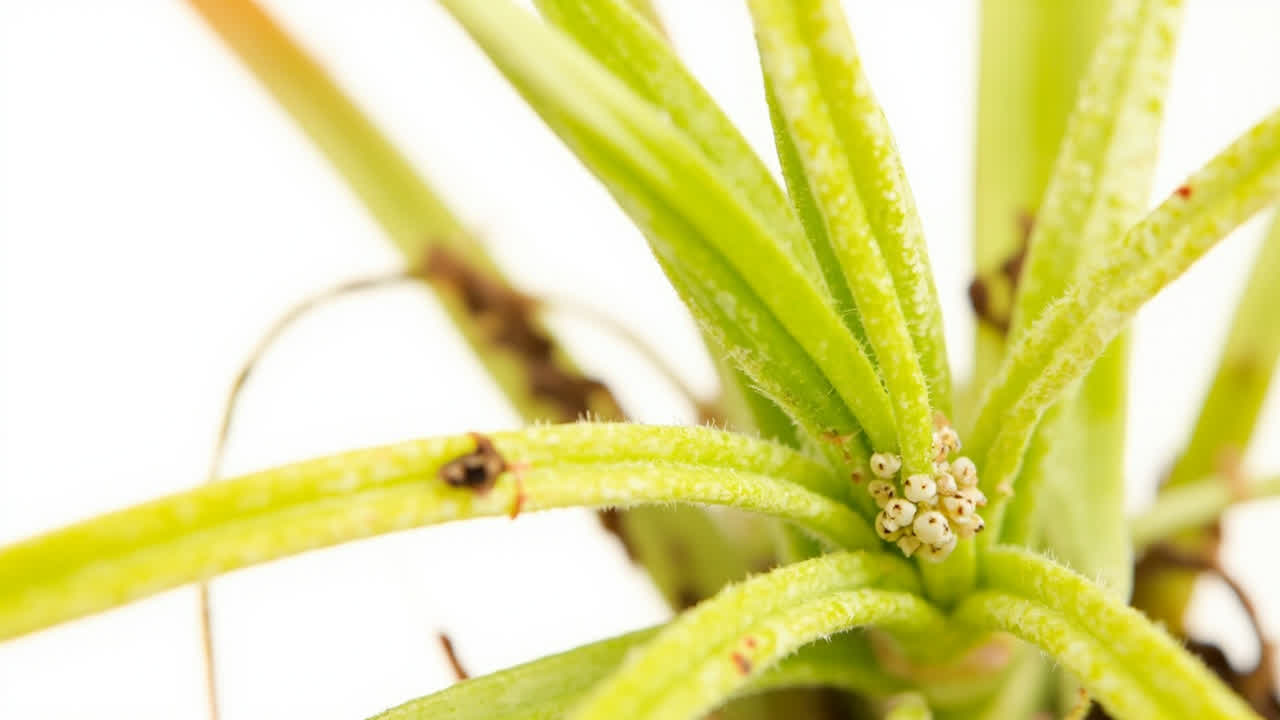
Mealybugs are small, soft-bodied insects that cluster in protected spots on plants — in the joint between leaf and stem, at the base of leaves, and in any tight crevice.
They cover themselves in a white, waxy coating that makes them look like small dots of cotton batting. They feed by sucking sap from the plant, which causes yellowing, stunted growth, and leaf drop if left untreated.
Damage: the first sign is usually sticky honeydew on the leaves — a clear, shiny secretion that mealybugs produce as they feed. This can attract ants and promote sooty mould, which appears as a black coating on the honeydew. The plant may look generally unhealthy, with yellowing leaves and slowed growth.
How to identify: look for the white waxy masses in the leaf joints and under leaves. They are most visible at the base of leaves and along the main stems. A heavy infestation can cover large areas of the plant.
Treatment: for light infestations, dab each visible mealybug with a cotton swab dipped in rubbing alcohol — the alcohol dissolves their waxy coating and kills them on contact.
For larger infestations, spray the entire plant with a solution of rubbing alcohol diluted in water (one part alcohol to three parts water), or use a neem oil spray covering all surfaces including the undersides of leaves.
Repeat every five to seven days for three weeks to catch newly hatched insects. Remove heavily infested leaves if the infestation is severe.
Scale Insects
Scale insects attach themselves to plant stems and leaves and form a hard, shell-like protective coating that makes them look like small brown or tan bumps on the plant. Unlike the mobile spider mites and mealybugs, adult scale insects do not move — they lock into position and feed by sucking sap from the plant. There are two types: soft scale, which produces honeydew, and armored scale, which does not.
Damage: the plant loses vigour, leaves yellow, and growth slows. Soft scale produces honeydew that coats leaves and attracts sooty mould. Heavy infestations can kill a spider plant over time by draining it of nutrients and water.
How to identify: look for small brown or tan bumps on stems and the undersides of leaves — they do not wipe off with a finger but can be scraped off with a fingernail. The bumps are the protective shells of the adult insects underneath.
Treatment: for light infestations, scrape each scale insect off by hand using a fingernail or a soft brush, then wipe the plant with a damp cloth.
For more established infestations, apply a horticultural oil spray (such as neem oil or insecticidal oil) that coats and suffocates the insects under their shells. Apply every seven to ten days for three to four weeks to catch the hatching juveniles before they form their own shells.
When using oil sprays, avoid applying in direct sun or very hot conditions, as this can burn the leaves.
Fungus Gnats: A Different Problem
Fungus gnats are not a pest of the spider plant itself — they are a pest of the soil. The adult gnats are small, dark, and fly around the soil surface. Their larvae live in the soil and feed on organic matter and, in large numbers, on fine plant roots. For spider plants, fungus gnat larvae can cause damage to young roots and seedlings, but established plants with healthy root systems are rarely seriously harmed.
Damage: adult gnats flying around the plant; larvae in the soil can stunt young plants or allow fungal pathogens to enter damaged roots. For spider plants, fungus gnats are more of a nuisance than a serious threat.
How to identify: small dark flies hovering around the soil surface, especially when you water the plant. Larvae are visible as tiny translucent worms in the top inch of soil if you dig carefully.
Treatment: let the soil dry out completely between waterings — fungus gnat larvae need moist soil to survive, and a dry top inch disrupts their lifecycle. Place a thin layer of sand or fine gravel on top of the soil to deter adult gnats from laying eggs.
Yellow sticky traps placed near the plant will catch adult gnats. For persistent problems, a diluted hydrogen peroxide soil drench kills larvae on contact.
Preventing Pest Problems on Spider Plants
The best pest prevention for spider plants is consistent, correct care. A healthy spider plant growing in good conditions — bright indirect light, proper watering, well-draining soil — is genuinely resistant to most pest problems. Following a comprehensive spider plant care guide prevents most pest problems before they start.
The most common entry point for pests is overwatering followed by root decline, because stressed plants attract opportunistic insects. A healthy root system — firm, cream-colored, and well-draining — is the foundation of pest resistance. Regular inspection of new plants before bringing them into your home is the most effective prevention step you can take.
Check the undersides of leaves and the soil of any new plant before introducing it to the rest of your collection. Quarantine new plants for two weeks if possible. Understanding spider plant light requirements also helps you place new acquisitions in positions where they will thrive rather than struggle. This prevents the introduction of pests that can then spread to your existing plants.
For spider plants already in your home, a monthly wipe-down of the leaves with a damp cloth removes dust and gives you a chance to inspect for early signs of pest activity before a minor problem becomes a significant infestation.
From PDF to Excel in one click
Forget retyping line by line. Upload any bank statement, get a spreadsheet you can actually use. Your files are never stored, and you can test the converter with 3 free conversions.
Try it free