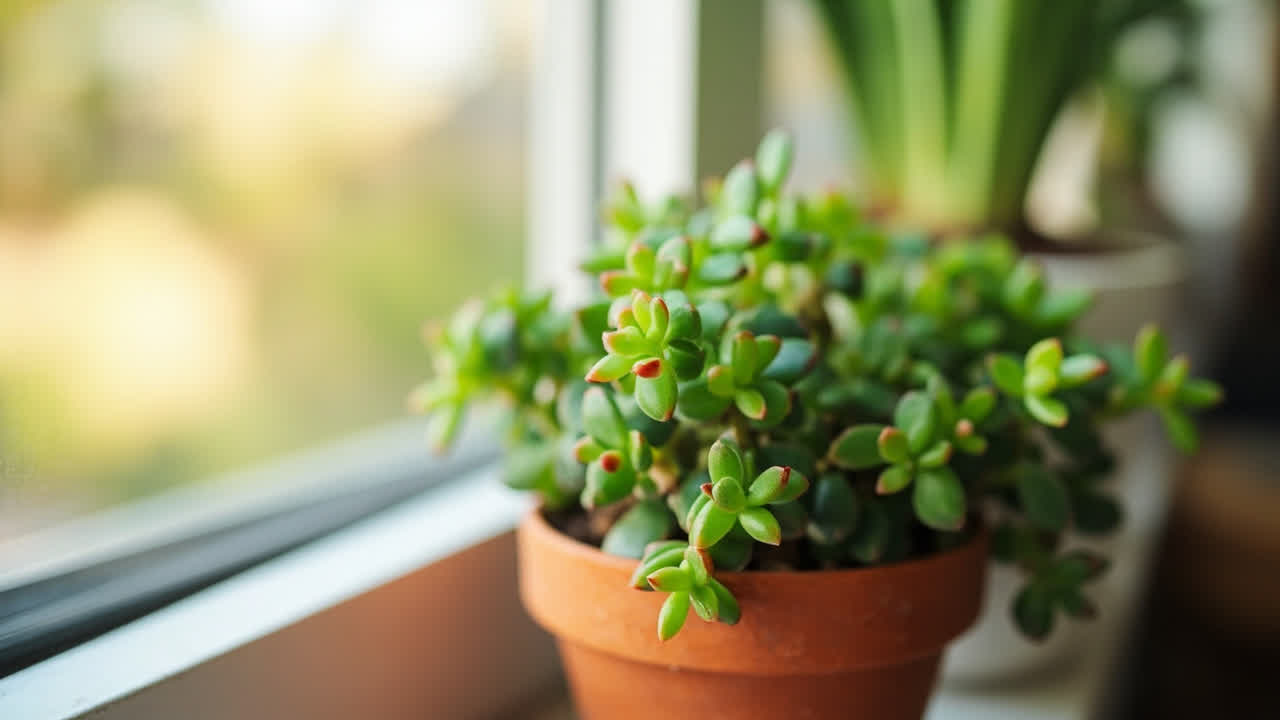
Fertilizing jade plant is straightforward to the point of being almost unnecessary. As a succulent evolved in nutrient-poor South African soils, Crassula ovata has adapted to thrive with minimal feeding. Most jade plants in normal home conditions do well with no more than two to three fertilizing applications per year. The temptation to feed more is one of the more common mistakes that leads to problems — and those problems are easily avoided by understanding how little jade plant actually needs.
When Jade Plant Needs Fertilizer
For the full care context including watering and soil, the jade plant care guide covers everything together.
Jade plant growing in fresh cactus and succulent mix does not need fertilizer for the first two to three months after potting — the fresh soil provides sufficient nutrients. After that, during the active growing season from early spring through late summer, a light feeding twice during the growing season is usually sufficient for healthy growth.
The signs that jade plant would benefit from fertilizing include slow growth during the active season despite adequate light and proper watering, leaves that appear paler than normal (not yellow from overwatering but genuinely pale green), and a plant that has been in the same soil for more than a year without being repotted. If the plant looks healthy and is growing normally, fertilizer is optional — not essential.
What Fertilizer to Use for Jade Plant
A balanced liquid fertilizer diluted to half strength works well. A typical formulation like 10-10-10 or 8-8-8 provides equal amounts of nitrogen, phosphorus, and potassium — the three macronutrients all plants need. For jade plant, half strength means mixing the fertilizer at half the concentration the label recommends for general use.
The reason for dilution is that jade plant’s root system is sensitive to salt buildup. Concentrated fertilizer solutions leave salts in the soil that draw moisture away from the roots, causing the same symptoms as over-fertilizing: brown leaf tips, stunted growth, and in severe cases, root burn. Diluting to half strength reduces this risk substantially while still providing the nutrients the plant needs.
Alternative formulations that also work well include a succulent-specific fertilizer, if available, or a cactus formula. These are formulated for the lower nutrient requirements of succulents and cacti and tend to be closer to the right concentration without dilution. However, a standard balanced fertilizer at half strength is equally effective.
When to Fertilize Jade Plant
Time fertilizing to the plant’s active growing season. The first feeding should be in early spring — March or April in the Northern Hemisphere — when the plant is coming out of its slower winter period and new growth is beginning to emerge. The second feeding, if you choose to do two, should be in mid-summer — June or July — to support continued growth through the warmest months.
Do not fertilize in late autumn or winter. From roughly October through February, jade plant’s growth slows significantly as light levels drop and temperatures cool. Fertilizing during this period forces new growth that the plant cannot sustain well, producing soft, weak growth that is more susceptible to pests and problems. The plant’s natural cycle is to slow down in winter — working with that cycle rather than against it produces healthier plants.
How to Apply Fertilizer
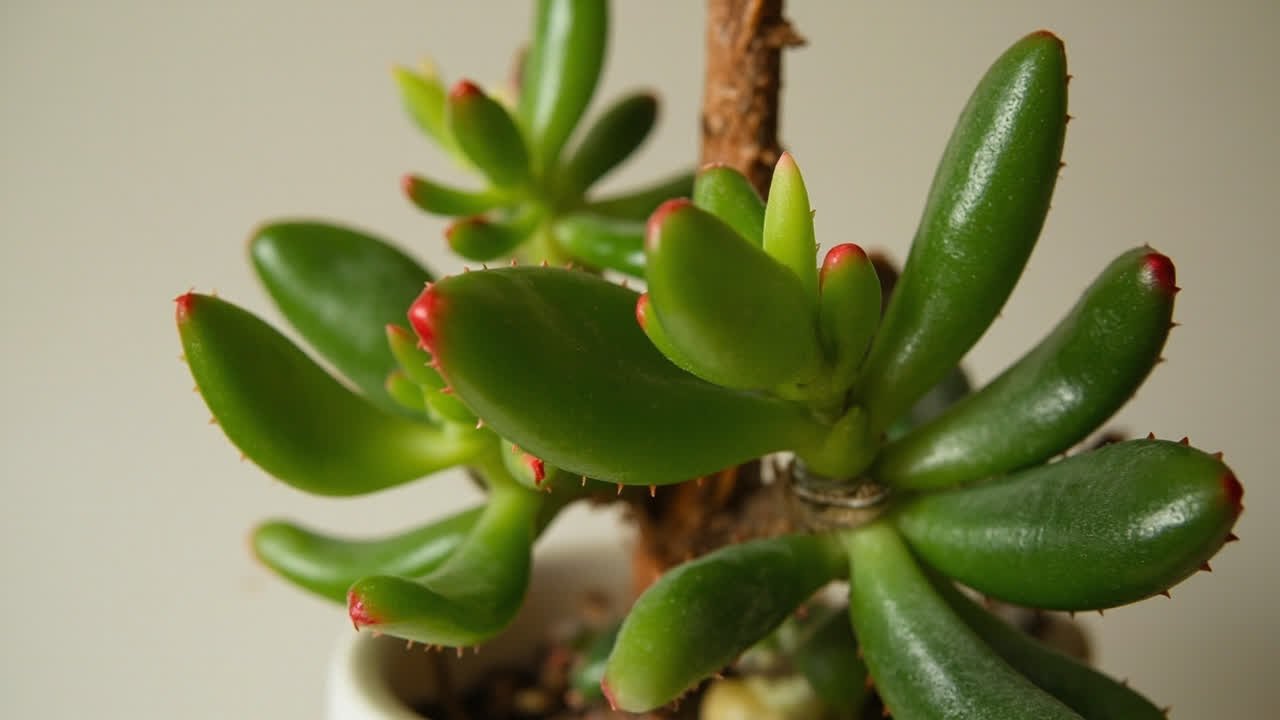
Apply fertilizer to moist soil — never to dry soil. Water the plant a day or two before fertilizing so the soil is slightly damp. Applying fertilizer to bone-dry soil can cause root shock. Pour the diluted fertilizer onto the soil until it flows from the drainage hole, just as you would when watering normally. This ensures the nutrients are distributed evenly through the root zone.
If you accidentally apply fertilizer to very dry soil, water immediately and let the excess drain freely — this dilutes and flushes the concentration away from the roots.
Signs of Over-Fertilizing
If over-fertilizing has caused problems, our jade plant problems guide covers recovery steps.
Over-fertilizing is more common than under-fertilizing and causes more visible problems. The primary signs include:
Brown leaf tips: The most common sign. The edges and tips of leaves turn brown and crispy while the rest of the leaf looks normal. This is caused by salt buildup drawing moisture from the leaf tissue. If you see this, flush the soil thoroughly with plain water by running water through the pot several times and letting it drain fully. Reduce future fertilizing frequency.
White crust on soil surface: Visible salt deposits forming on the top of the soil. This indicates that fertilizer salts are accumulating faster than the plant is using them. Flush the soil, and consider switching to a lower concentration or less frequent feeding schedule.
Soft, weak growth: New leaves and stems that feel soft rather than firm. This happens when a plant receives too much nitrogen, which pushes fast but structurally weak growth. The stems are soft, the leaves are large and tender, and the plant is generally more vulnerable to problems than a plant grown with minimal feeding.
No growth response: Paradoxically, over-fertilized plants can stop growing. Salt accumulation damages roots, which reduces the plant’s ability to absorb water and nutrients, creating a cycle where more fertilizer makes things worse. The fix is to flush the soil, stop feeding, and let the plant recover naturally.
Flushing After Over-Fertilizing
If you suspect over-fertilizing, flushing the soil removes accumulated salts and gives the root system a fresh start. Water the pot thoroughly — enough that water flows from the drainage hole — and let it drain. Repeat this two to three times in succession, each time letting the water flow through completely. This rinses salts from the soil more effectively than a single thorough watering.
After flushing, do not fertilize again for at least two months. Let the plant recover and return to its normal feeding schedule at half the previous frequency.
Not Fertilizing at All : Is That Okay?
If problems have developed, our jade plant problems guide has diagnosis and treatment.
Jade plant growing in fresh soil and receiving adequate light will survive and grow reasonably well with no fertilizer at all. The plant’s adaptation to low-nutrient environments means it does not require regular feeding to stay healthy. Many experienced jade plant growers fertilize rarely or never — and their plants thrive.
The practical approach is to fertilize only when the plant shows signs of needing it, and to use a light hand when you do. If you have repotted a jade plant recently in fresh cactus mix, you can skip fertilizing for a full growing season and simply monitor the plant’s growth. If it looks healthy and is putting out new leaves, the soil still has what it needs. Only add fertilizer when growth slows or leaves look genuinely nutrient-deficient, not just to follow a routine.
From Bank Statement to QuickBooks-Ready File
That manual cleanup you just read about? This tool skips it. Turn your PDF into QBO for QuickBooks without storing your data anywhere.
Start Converting