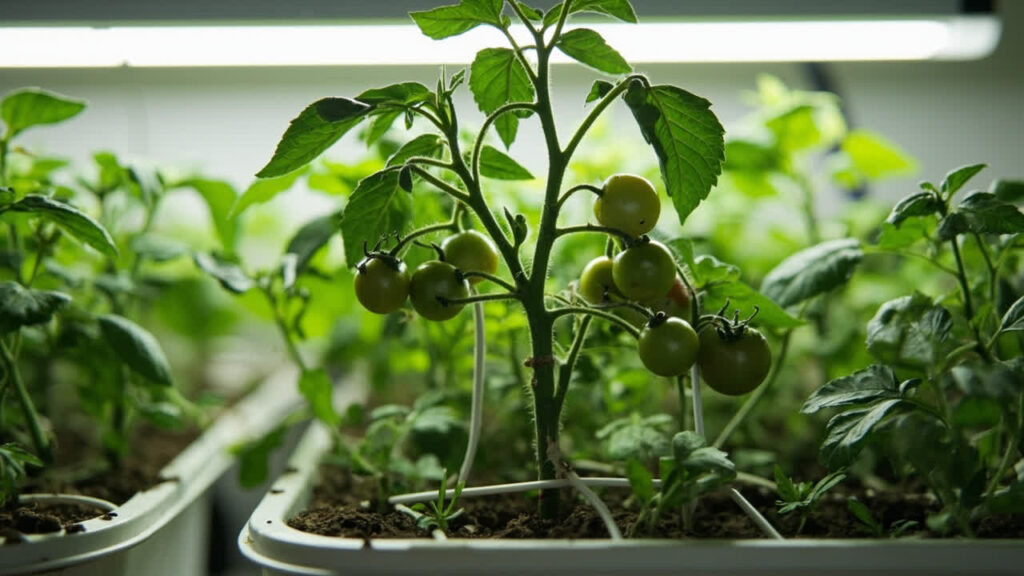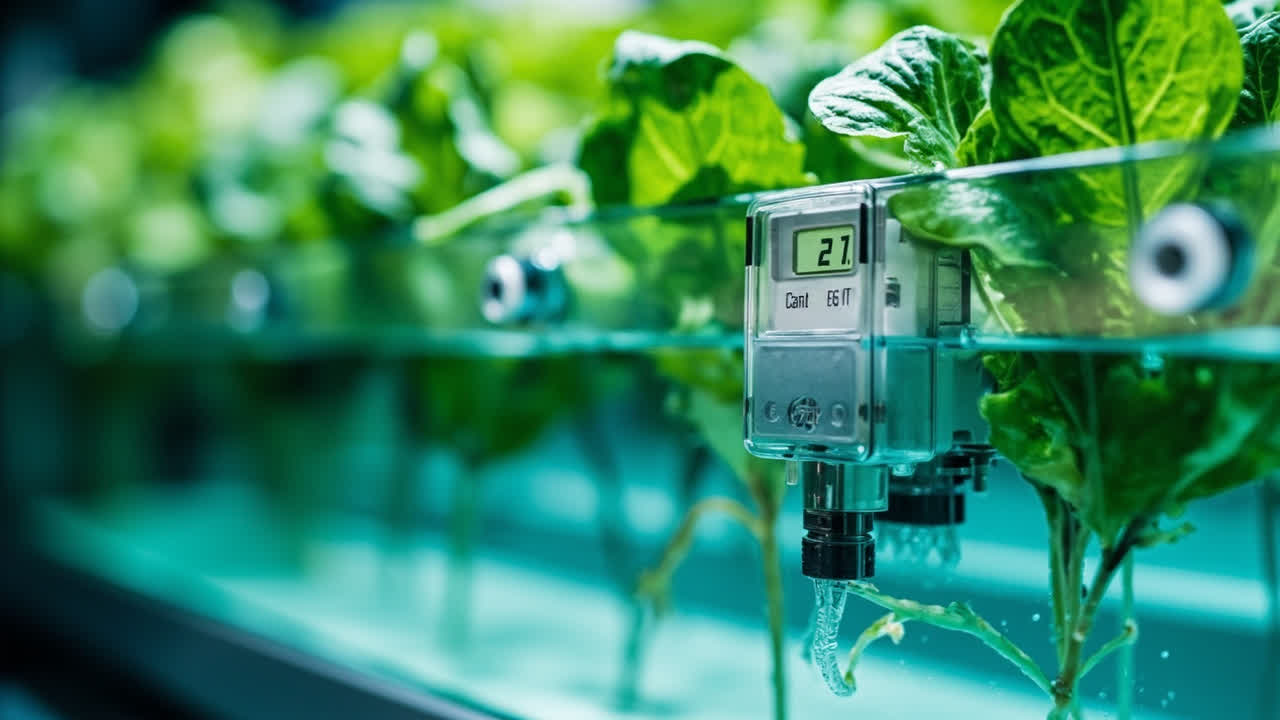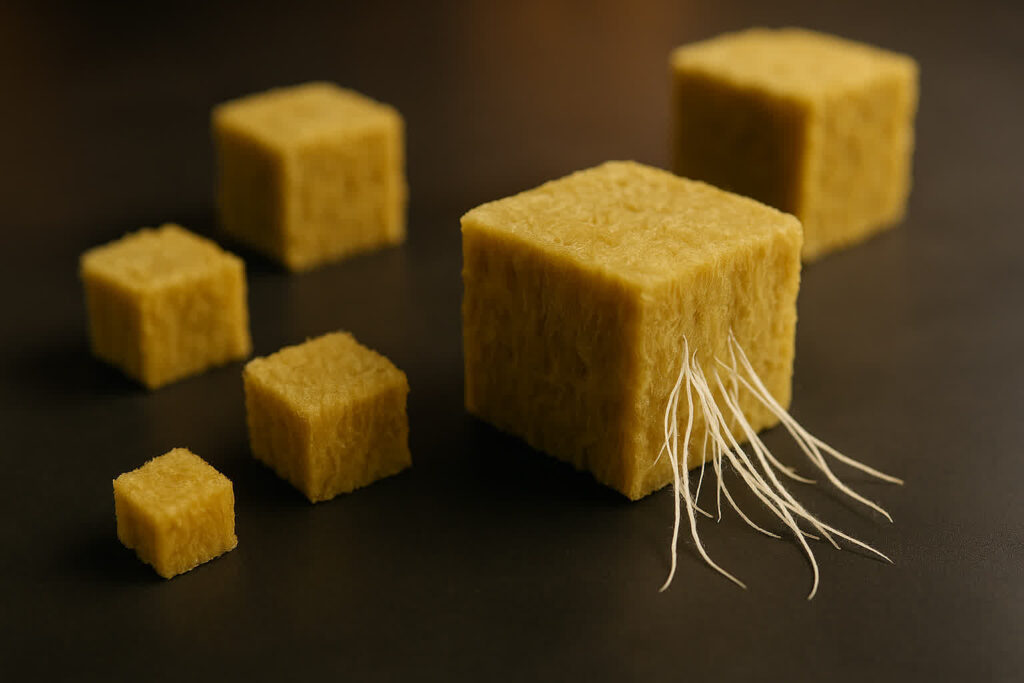

Picking the wrong rockwool cube size is one of the most common beginner mistakes in hydroponics. A cube that is too small dries out within hours under a grow light, cutting off nutrient uptake at the root zone. A cube that is too large stays waterlogged at the bottom, suffocating roots and inviting root rot. The right rockwool cube size is the one that matches your crop, your hydroponic system, and the growth stage the plant sits in right now.
Rockwool cube size is not a one-size-fits-all decision. Three variables interact: crop type, system water delivery, and growth stage. This guide maps all three so you can make a confident size pick on the first try.
Why Cube Size Is the Hidden Lever Behind Most Hydroponic Problems
Most hydroponic failures blamed on nutrient solution strength, pH, or lighting actually trace back to substrate volume. Once roots fill a rockwool cube’s pore space, water management becomes impossibly sensitive: the plant swings between drought stress and waterlogging in a matter of hours. This cliff-edge condition is not a nutrient problem. It is a rockwool cube sizing problem that no amount of pH adjustment can fix.
Cube size is also upstream of irrigation frequency. A 1-inch rockwool cube dries in roughly 2 to 4 hours under a typical grow light; a 3-inch cube holds moisture for 8 to 12 hours. If your drip system runs every 4 hours and your cube dries in 2, no nutrient mix will save a wilted seedling. Choosing the right cube size means your irrigation cycle and your substrate drying rate finally line up.
For the broader context on rockwool as a soilless growing medium, see the rockwool hydroponic guide. This page focuses only on the size decision, not on the full preparation protocol.
How Cube Size Shapes Water and Air in the Root Zone
Rockwool is a mineral wool substrate made from molten basalt rock spun into fibers and pressed into cubes. The fibers create a matrix of tiny air pockets, which gives rockwool its signature balance of water retention and air porosity around the root zone. Compared with other soilless media such as coco coir or clay pebbles, rockwool holds more water per unit volume, which is why sizing decisions matter more than they do for perlite-based mixes.
Cube size changes that balance. In a 1-inch rockwool cube, roughly 40 to 45 percent of the volume is air at field capacity. In a 3-inch cube, air porosity drops to around 20 to 25 percent because gravity compacts the lower fibers and water fills more of the pore space. The size-dependent air-to-water ratio is the core variable every size decision stems from.
Smaller cubes favor oxygen around the root zone, which accelerates early root development and lowers the risk of root rot in humid indoor growing environments. Larger cubes favor moisture consistency, which prevents drying stress in water-hungry fruiting plants like tomatoes, peppers, and cucumbers. Choose the cube that fits the plant’s immediate need and the system’s delivery rhythm, not the size you hope the plant will need later.
Matching Cube Size to Crop Type
Crop type determines root mass and water demand. Matching cube size to root volume prevents two failure modes: root binding in undersized cubes, and waterlogging in oversized ones. The crop categories below cover roughly 90 percent of what home hydroponic growers actually plant, from lettuce and basil in NFT channels to fruiting tomatoes in drip trays.
Leafy Greens: 1-Inch to 1.5-Inch Cubes
Lettuce, spinach, basil, cilantro, mint, kale, and parsley develop fibrous, shallow root systems that colonize a 1-inch rockwool cube quickly without becoming root-bound. A 1.5-inch cube works well for basil and mint, which carry slightly more aggressive root mass. These crops prioritize fast turnover and consistent moisture; small cubes dry faster between irrigation cycles, which keeps oxygen high in the root zone and reduces disease pressure and algae growth in humid grow tents.
Fruiting Plants: 2-Inch to 3-Inch Cubes or Grow Blocks
Tomatoes, peppers, cucumbers, and strawberries need larger cubes because their root systems are dense and extensive. A 2-inch rockwool cube covers early vegetative growth; upgrade to a 3-inch cube or a 4-inch grow block when the plant reaches transplant size. Fruiting plants extract water and nitrogen at high rates once they begin flowering, and an undersized cube forces daily, sometimes twice-daily, irrigation cycles that most home drip systems cannot sustain reliably. The full crop walkthrough lives in the hydroponic tomatoes guide.
Microgreens: 0.5-Inch to 0.75-Inch Cubes or Pads
Microgreens and early sprouts are harvested before roots fully develop, so they need only minimal substrate volume. A 0.5-inch or 0.75-inch cube, or a rockwool pad, provides enough moisture for the 7 to 14 day growth cycle without waterlogging. The biggest risk with microgreens is overwatering: poor drainage in larger cubes creates mold pressure that destroys the harvest before it reaches the kitchen.
Matching Cube Size to Your Hydroponic System
Your system’s water delivery method determines how quickly the rockwool cube dries between irrigation cycles. Matching cube size to system type prevents the most common cause of substrate-related crop failure in any hydroponic setup. The system types below cover the four most common home configurations; the hydroponic systems explained hub walks through DWC, NFT, Kratky, Ebb and Flow, drip, and aeroponic in full.
DWC (Deep Water Culture)
In a DWC system, roots sit directly in oxygenated nutrient solution inside a reservoir. Rockwool cubes serve as a starting medium for seedlings, not as the primary water source. Because the reservoir constantly bathes the lower portion of the cube, you need a larger cube, at least 2 inches, to provide enough root support and moisture buffer above the water line. A 1-inch cube in DWC dries unevenly and creates a dry band at the top that stresses seedlings within hours. Adding an air pump with an air stone to the reservoir keeps the nutrient solution oxygenated around the cube’s lower fibers.
NFT (Nutrient Film Technique) and Drip Systems
NFT channels and drip systems deliver a thin, continuous film of nutrient solution to the cube’s base. Because moisture arrives gradually and predictably, a smaller cube in the 1-inch to 1.5-inch range works well. The continuous feed keeps the root zone consistently moist without the waterlogging risk of DWC, and NFT roots grow fast because oxygen access at the cube surface stays high. Kratky systems work the same way at the seedling stage, with the cube suspended above a static reservoir.
Ebb and Flow (Flood and Drain)
Ebb and flow systems flood the growing tray periodically, then drain completely. This wet-dry rhythm suits cubes in the 1.5-inch to 2-inch range, depending on flood frequency. Larger cubes hold more moisture during drain cycles, which prevents rapid drying between floods; smaller cubes dry faster and suit high-frequency flood schedules. Once the size is locked in, the rockwool preparation guide covers the pH buffer that every cube needs before it goes into service, along with the electrical conductivity (EC) range that keeps nutrient uptake stable.
The Propagation to Grow Block Transition
Rockwool cubes are sized for specific growth stages. Moving a plant too early stresses roots; leaving it too long causes root binding that stunts growth permanently. The transition window is short, but the visual cue is reliable.
The Root Protrusion Signal
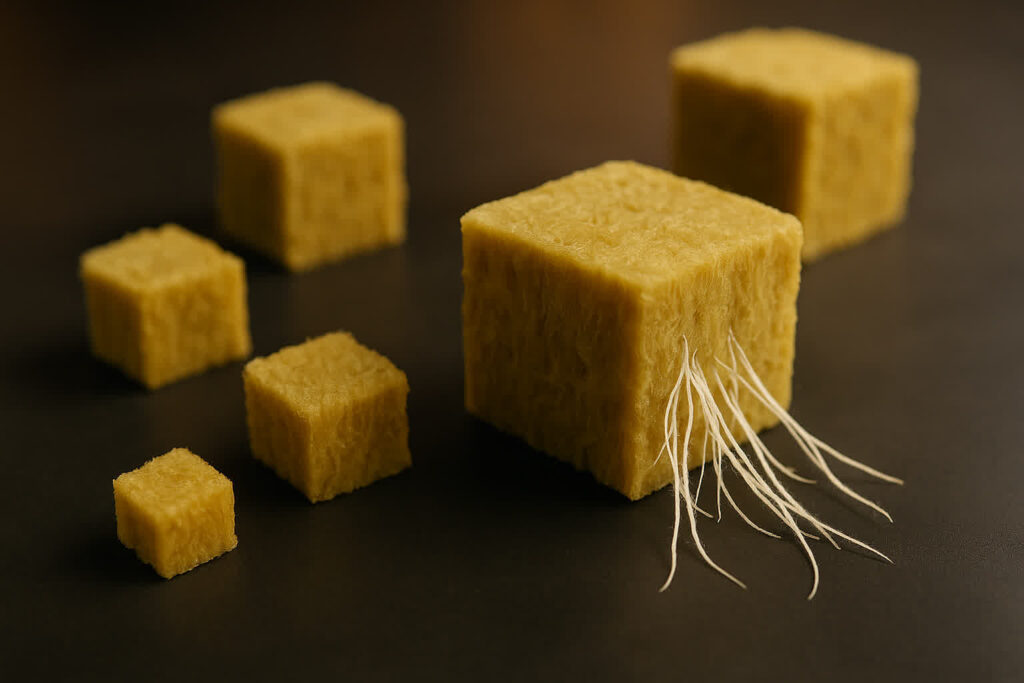
When roots emerge from the bottom or sides of a propagation cube, the plant has outgrown its current substrate volume. This is your visual trigger: transplant within 2 to 3 days of seeing root protrusion. Waiting longer allows roots to circle the cube interior, creating a bound root mass that struggles to establish in a larger grow block. The full transplant walkthrough is in how to transplant seedlings into rockwool cubes.
Propagation Cube to Grow Block
Most growers start seeds in 1-inch propagation cubes. When the seedling shows its second or third set of true leaves and roots protrude, transplant into a 3-inch or 4-inch grow block, or directly into the system’s net pot. The transition is least stressful when done in the morning, giving the plant a full day to recover before the next irrigation cycle. At this stage, keep an eye on the nutrient solution’s EC and pH in the reservoir; a stressed seedling recovers faster when those two numbers are dialed in.
The Cliff-Edge Saturation Failure
Root-bound rockwool cubes create a condition called cliff-edge saturation: the root mass fills all available pore space, so any slight overwatering floods the entire volume instantly. The plant cannot recover because there is no air pocket left to supply oxygen. Early signs include rapid wilting after watering, yellowing lower leaves, and stunted growth despite correct nutrient EC. This is the failure mode that pushes growers toward root rot in hydroponics, and it almost always traces back to a cube that was kept one stage too long.
Trade-Offs: The Real Cost of Going Too Small or Too Large
Every rockwool cube size carries an inherent compromise. Understanding the trade-off prevents the most expensive mistake in hydroponic growing: picking a cube based on convenience rather than plant biology.
Larger cubes hold more water, which reduces irrigation frequency and buffers against pump failures or missed watering schedules. The downside is slower drying cycles that increase root rot risk, particularly in DWC and NFT systems where the cube sits over standing water. In hot, dry indoor growing environments such as greenhouse tents under high-intensity lights, large cubes can still dry faster than expected, creating an inconsistent wet-dry cycle that stresses plants and causes calcium and magnesium uptake to stall.
Smaller cubes dry faster, which keeps oxygen levels high around the root zone and reduces disease pressure from fungal pathogens. The cost is precision irrigation timing. In a drip system with infrequent cycles, a 1-inch cube can drop to near-zero moisture within four hours under high-intensity lighting, causing immediate wilting and nutrient concentration spikes as phosphorus, potassium, and other salts accumulate in the shrinking substrate volume.
The honest limit: no cube size compensates for a poorly tuned irrigation timer, an out-of-range nutrient solution, or a reservoir running on hard water. Cube size is one variable in a three-variable system, and it only works when the other two are also right.
Cube Size Selection Matrix
Use this matrix to resolve the most common rockwool cube size decisions based on crop, system, and growth stage.
| Crop Type | Propagation Stage | Vegetative Stage | Fruiting or Transplant Stage | Best System Types |
|---|---|---|---|---|
| Lettuce and leafy greens | 1-inch cube | 1.5-inch cube | 1.5-inch cube, no transplant | NFT, drip, Ebb and Flow |
| Basil, mint, and culinary herbs | 1-inch cube | 1.5-inch cube | 2-inch cube | NFT, drip |
| Tomatoes and peppers | 1-inch cube | 2-inch cube | 3-inch cube or 4-inch grow block | Drip, Ebb and Flow, DWC |
| Cucumbers and squash | 1-inch cube | 2-inch cube | 3-inch cube or 4-inch grow block | Drip, Ebb and Flow |
| Strawberries | 1-inch cube | 1.5-inch cube | 2-inch cube | NFT, drip |
For most home hydroponic setups, a stock of 1-inch rockwool cubes covers 80 percent of propagation needs, and a bag of 3-inch grow blocks covers the fruiting transplant. Stocking both sizes lets you respond to plant signals without overcommitting substrate volume before you understand a crop’s growth rate.
Picking the Right Rockwool Cube Size for Your Setup
Start with the crop. If you are growing lettuce, basil, or microgreens, a 1-inch propagation cube and a 1.5-inch transplant cube are enough. If you are growing tomatoes, peppers, or cucumbers, plan to step up from a 1-inch propagation cube to a 3-inch or 4-inch grow block at the root protrusion signal.
Then check the system. In a DWC reservoir, use at least a 2-inch cube for seedlings, with an air pump and air stone keeping the nutrient solution oxygenated. In NFT channels and drip trays, a 1-inch to 1.5-inch cube is the right band. In Ebb and Flow trays, match the cube size to the flood frequency, with 1.5-inch to 2-inch covering most schedules.
Before any cube goes into service, buffer it to pH 5.5 to 6.0 with a 24-hour soak so the fibers do not lock out calcium, magnesium, and the other micronutrients from the nutrient solution. Skipping that step is the single most common cause of slow growth and interveinal chlorosis in rockwool-grown plants, regardless of cube size.
The right cube size is the one that lines up with your crop, your system, and your stage. When all three agree, the rest of the hydroponic setup finally has a substrate that does its job quietly in the background.
Turn That PDF Into a Spreadsheet in Minutes
You've seen how to do it manually — now let the tool handle the heavy lifting. Upload your bank statement and get Excel, CSV, or QBO in a few clicks.
Try It Free