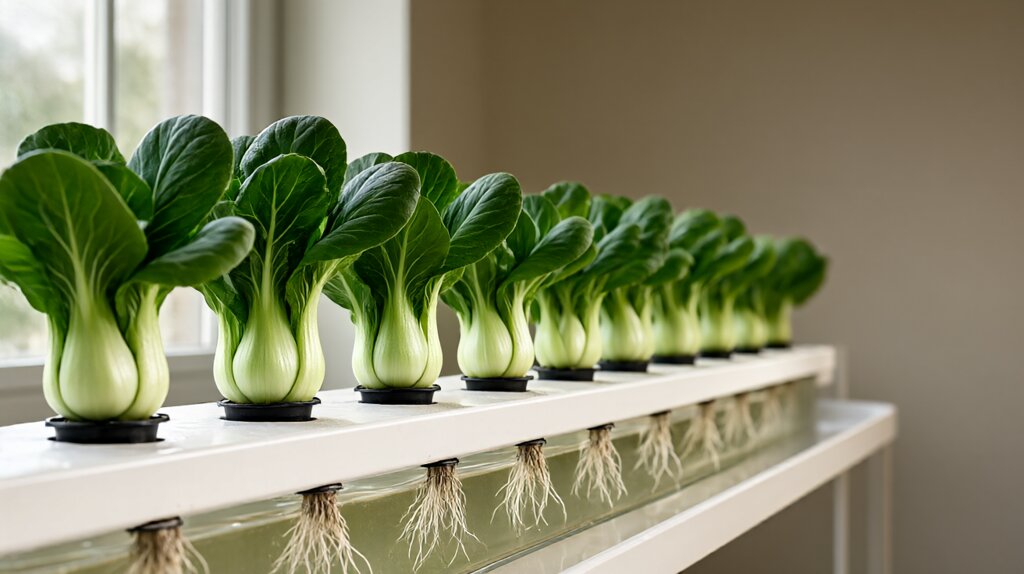

Hydroponic bok choy is the crop that teaches you the difference between a plant that tolerates heat and one that survives it. It grows fast, it forgives a lot, and it will hand you a full head in 30 to 45 days if you give it cool water and a modest feed. Push the reservoir past 24C or let the EC climb past 2.5, and the same plant bolts, burns at the tips, or turns bitter before you ever cut it.
Bok choy is a brassica, and like arugula it is a light to medium feeder with a real ceiling. Run it at 1.5 to 2.0 mS/cm EC, hold pH at 6.0 to 6.5, keep the reservoir between 18 and 22C, give 12 to 14 hours of light, and cut at 30 to 45 days. That is the whole recipe. Everything below is the reason each number exists.
What Hydroponic Bok Choy Needs From You
Brassica rapa subsp. chinensis, sold as bok choy, pak choi, or Chinese cabbage, is a cool-season brassica with a short clock and a low tolerance for heat. It wants a cool reservoir, a modest feed with enough calcium, and a fast harvest. Give it those three things and it is one of the most productive crops in a home system. Ignore any one of them and it will bolt, burn, or stall within three weeks.
- Temperature: 16 to 22C in the canopy for a full, mild head, with the crop bolting above about 24 to 27C air temperature. The reservoir band is 16 to 21C, the same cool-season profile arugula, kale, and spinach share.
- Feed strength: 1.5 to 2.0 mS/cm EC, sitting below the band you would run for peppers or tomatoes and above the band you would run for arugula.
- pH: 6.0 to 6.5, the window most leafy greens occupy, because a brassica at a pH it cannot use stops taking up the calcium it needs for new leaf tissue.
- Light: 12 to 14 hours a day, with growth stalling below about 10 hours of day length.
- Cycle: 30 to 45 days from transplanting to full head, with baby bok choy ready at 25 to 30 days.
Bok choy is a crop you size by temperature, not by tonnage. A head that finishes in 40 days on a cool reservoir is worth more than a head that bolts on day 28 because the water ran warm. The plan you make for bok choy is a climate plan first and a feeding plan second.
The Nutrient Band: EC, pH, and the Calcium Problem
The EC Ceiling
The EC band for bok choy is a ceiling rather than a target. UpStart University lists bok choy at 1.5 to 2.0 mS/cm, and most home growers who run it higher report tip burn before they report faster growth.
A peer-reviewed study on pak choi (PMC6114716) measured the best fresh mass at EC 1.8 or 2.4 mS/cm, with the lower band producing the cleaner leaf and the higher band pushing nitrogen into bitterness. The practical read is that 1.5 to 2.0 is the band where the plant grows fast without changing its chemistry.
That sits between hydroponic arugula, which peaks at 1.5 to 1.8 and punishes anything above it, and hydroponic lettuce, where the standard band sits at 1.0 to 1.6 and the plant responds cleanly to more feed. Bok choy behaves like a medium feeder with a low ceiling: it uses more than arugula, but it does not want the strength you would give a fruiting crop. Push the EC past 2.5 and you buy bitterness and tip burn, not size.
Bok choy has a low ceiling, not a low target. The band is narrow because the plant changes chemistry when you push it, and that change arrives faster than the size gain you were hoping for.
Nitrogen Is a Separate Dial
Nitrogen drives the leaf, but the form matters. A mix heavy in ammonium nitrogen pushes bok choy toward soft, dark, bitter growth and makes tip burn worse. A nitrate-dominant mix at 125 to 175 ppm nitrogen gives the plant what it needs for thick white petioles without the softness. If your nutrient stock is ammonium-heavy, dilute it and top up with a nitrate source rather than running the stock at full strength.
For reference, Oklahoma State University Extension publication HLA-6722 lists bok choy at 1.5 to 2.0 mS/cm and pH 6.0 to 7.0, inside the general leafy-green band. That figure is a tolerated range rather than a target, and running at the top of it is a common reason home growers get a crop that looks lush and tastes harsh.
The Calcium Problem Nobody Warns You About
Tip burn on bok choy is almost always a calcium problem, and it is almost always caused by the grower, not the nutrient. Calcium moves with transpiration, so a plant in still air, high humidity, or warm water takes up less calcium even when the solution is rich in it. The leaf edges brown and curl because the new tissue cannot finish forming. The fix is airflow and temperature, not more calcium in the reservoir. Run a small fan, keep the reservoir cool, and the burn stops before it starts.
Tip burn is a transpiration problem, not a feeding problem. Add more calcium to a tank that the plant cannot move, and you have spent money on a problem you created with still air.
Which System Fits Bok Choy
Nutrient Film Technique and Deep Water Culture
NFT and DWC both suit bok choy well. NFT gives the roots steady oxygen and a shallow film, which keeps the petioles crisp. DWC gives the roots a deeper, cooler reservoir, which suits a crop that bolts in warm water. If your space runs warm, DWC with a chiller or frozen bottle is the safer choice. If your space stays cool, NFT is simpler and uses less water.
Kratky, the passive method with no pump, also works for bok choy because the crop finishes before the reservoir runs dry. It is the lowest-effort option for a single head on a windowsill, and it is the method most likely to fail if the water warms past 24C in a sunny spot.
Spacing Inside the Channel
Bok choy is a wide plant. Space heads 20 to 25 cm apart in the channel, and do not crowd them to save space. A crowded channel shades the lower leaves, traps humidity, and invites the tip burn you were trying to avoid. If you want more yield per channel, grow baby bok choy at 12 to 15 cm spacing and cut at 25 to 30 days instead of waiting for full heads.
For a broader view of where bok choy sits among the crops worth growing, see best plants for hydroponics and hydroponic nutrient schedule for the weekly feeding rhythm that keeps the EC steady through the crop.
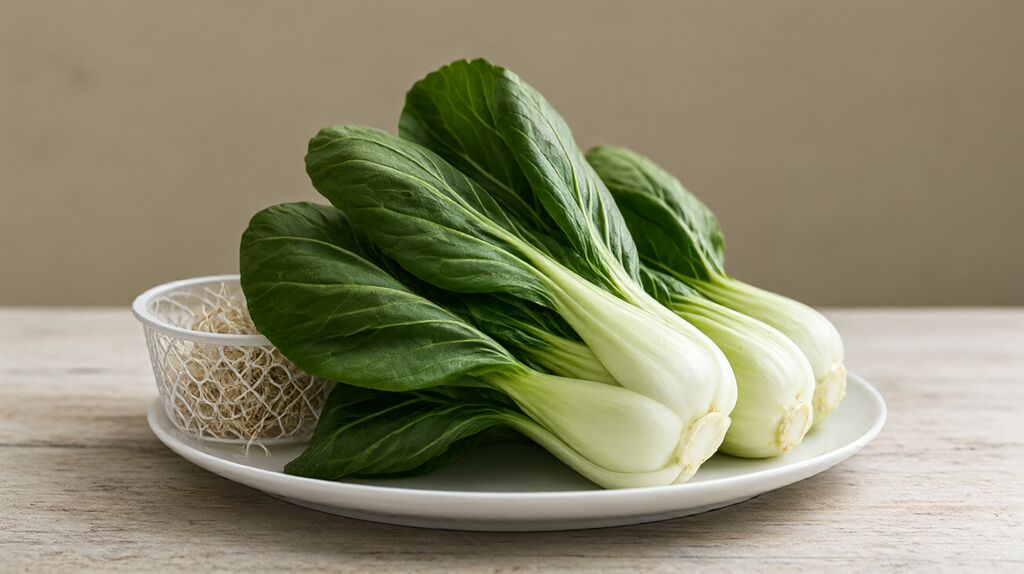
Starting Bok Choy From Seed
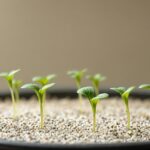
Germination is the easy part. Bok choy seed sprouts in 3 to 5 days at 18 to 24C, and the only failure mode is temperature: seed held above 27C either fails to sprout or produces weak, stretched seedlings. Sow into rockwool or a coco plug, keep the cube moist but not waterlogged, and move the seedling to the system as soon as the first true leaf appears, usually 7 to 10 days after sowing.
Do not start bok choy in a warm spot and move it to a cool system. The seedling adapts to the temperature it germinates in, and a plant started at 27C will stall when it meets 18C water. Start it cool, or start it where it will finish.
Start bok choy where it will finish. The seedling remembers the temperature it germinated in, and a warm start is a stalled transplant.
The Light Question: Where Fresh Weight Lies to You
Bok choy needs 12 to 14 hours of light a day, and it responds to more light with more leaf, up to a point. Below 10 hours the plant stretches and the petioles stay thin. Above 16 hours the plant keeps growing but the leaves turn darker and more bitter, the same chemistry that makes arugula harsh when it is stressed. The sweet spot is 12 to 14 hours, and the difference between 12 and 14 is mostly size, not flavor.
If you are growing under LEDs, a PPFD of 150 to 250 micromoles per square meter per second is the band where bok choy grows fast without bolting. Higher light pushes the plant toward flowering, and a bok choy that flowers is a bok choy you have already lost.
The Four Mistakes That End Most Bok Choy Crops
- Warm water. A reservoir above 24C is the single biggest cause of bolting. Bok choy is a cool-season brassica, and warm water tells it the season is over. Keep the water below 22C, and chill it if your room runs warm.
- Tip burn from still air. Brown, curling leaf edges are calcium deficiency from poor transpiration, not a missing nutrient. Add airflow before you add calcium.
- Overfeeding. EC above 2.5 buys bitterness and burn, not size. Hold the band at 1.5 to 2.0 and let the plant grow at its own pace.
- Crowding. Heads spaced too close shade each other, trap humidity, and invite the tip burn you were trying to avoid. Give them 20 to 25 cm.
Most bok choy failures are temperature failures dressed up as feeding problems. Fix the water temperature first, and half the problems on this list never appear.
Harvesting Bok Choy: Cut Early, Cut Often
Baby bok choy is ready at 25 to 30 days, full heads at 30 to 45 days. Cut the whole head at the base with a clean knife, or harvest outer leaves only and let the plant regrow for a second cut. The regrowth cut is smaller and slightly more bitter, but it extends the life of a single plant by two to three weeks.
Harvest before the plant bolts. Once the center elongates and the leaves tighten, the head is still edible but the flavor has shifted from mild to sharp. A bolting bok choy is a bok choy you should have cut a week ago.
The Numbers That Decide a Bok Choy Harvest
- EC: 1.5 to 2.0 mS/cm, ceiling 2.5.
- pH: 6.0 to 6.5.
- Reservoir temperature: 16 to 21C.
- Air temperature: 16 to 22C, bolting above 24 to 27C.
- Light: 12 to 14 hours, PPFD 150 to 250.
- Nitrogen: 125 to 175 ppm, nitrate-dominant.
- Spacing: 20 to 25 cm for full heads, 12 to 15 cm for baby.
- Cycle: 25 to 30 days baby, 30 to 45 days full head.
Sources and further reading
- UpStart University, “Bok Choy (Pak Choi)” growing guide: EC 1.5 to 2.0 mS/cm, pH 6.0 to 7.5.
- PMC6114716, “Effects of EC on Growth and Quality of Pak Choi in Hydroponics”: best fresh mass at EC 1.8 or 2.4 mS/cm.
- Oklahoma State University Extension, HLA-6722, “Hydroponic Vegetable Production”: bok choy 1.5 to 2.0 mS/cm, pH 6.0 to 7.0.
- USDA-ARS, “Determination of Optimum pH and EC Levels for Hydroponic Lettuce and Pak Choi”: active project on per-crop optima.
- Hydroponic reservoir water temperature by crop for the per-crop temperature table.
- Hydroponic arugula, hydroponic kale, and hydroponic spinach for the other cool-season brassicas and greens.