
A growing medium for seed starting and propagation must be fine-textured, moisture-retentive, and sterile so that seeds germinate reliably and seedlings establish strong early root development. For hydroponic growers, the best seed-starting media are inert, low-nutrient, well-aerated substrates such as rockwool, coco coir, and perlite or vermiculite mixes that hold enough water for germination while draining freely enough to prevent rot. Mature hydroponic nutrient solution is usually held back until seedlings develop their first true leaves, so the medium itself must supply the right physical environment rather than nutrition.
This guide is written for growers moving from traditional soil into soilless hydroponics, where the growing medium is the single most important variable in propagation success. It draws on established horticultural practice for fine-textured substrates, moisture management, and damping-off prevention, and it connects each recommendation to the physical properties that govern germination. If you are new to soilless systems, the hydroponics for beginners primer covers the broader setup before you fine-tune your propagation medium.
What Seed Starting Medium Needs to Do
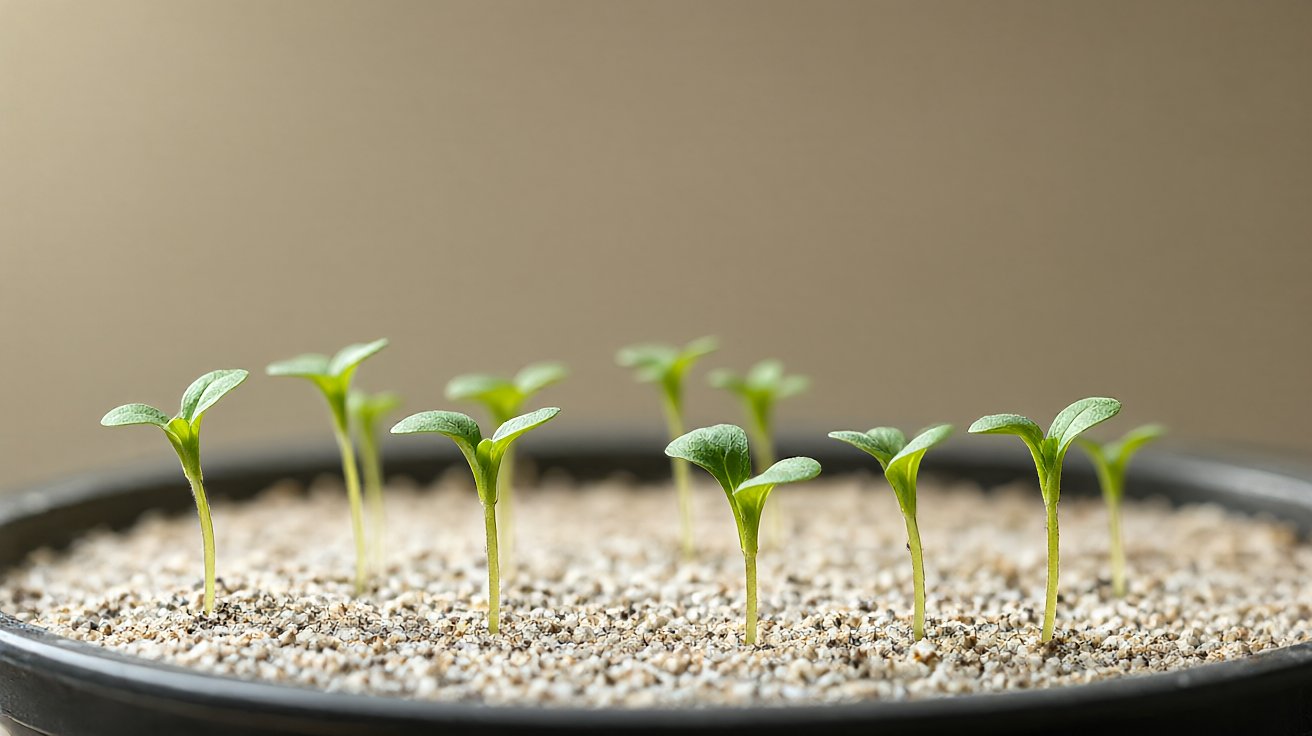
Seed starting is the process of germinating seeds under controlled conditions, and the medium is the environment in which that germination happens. A good seed-starting medium performs four jobs at once: it anchors the seed, delivers water to the embryo, supplies oxygen to the developing root, and excludes pathogens that cause disease. Unlike mature plant media, which can be coarser and nutrient-rich, a seed-starting medium must be uniform and fine-textured so that tiny seeds make consistent contact with moisture.
The ideal medium is sterile, meaning free of weed seeds, fungal spores, and bacteria that compete with or attack the seedling. It should hold moisture without becoming waterlogged, maintain a stable structure as it wets and dries, and provide enough aeration at the root zone for the first roots to breathe. Because seeds carry their own food reserves, the medium does not need to be fertile; in fact, fertility in the propagation stage often causes salt stress and damping off. Keeping the medium inert and clean is the foundation of reliable propagation.
Beyond these basics, the medium must also be easy to handle and consistent from batch to batch. Variability in particle size or moisture content leads to uneven emergence, which complicates transplant timing and wastes bench space. Growers who standardize on a single propagation medium and a single moisture target generally see more uniform germination, faster root development, and fewer losses during transplant. Consistency is therefore as important as any single physical property.
Best Media for Germination
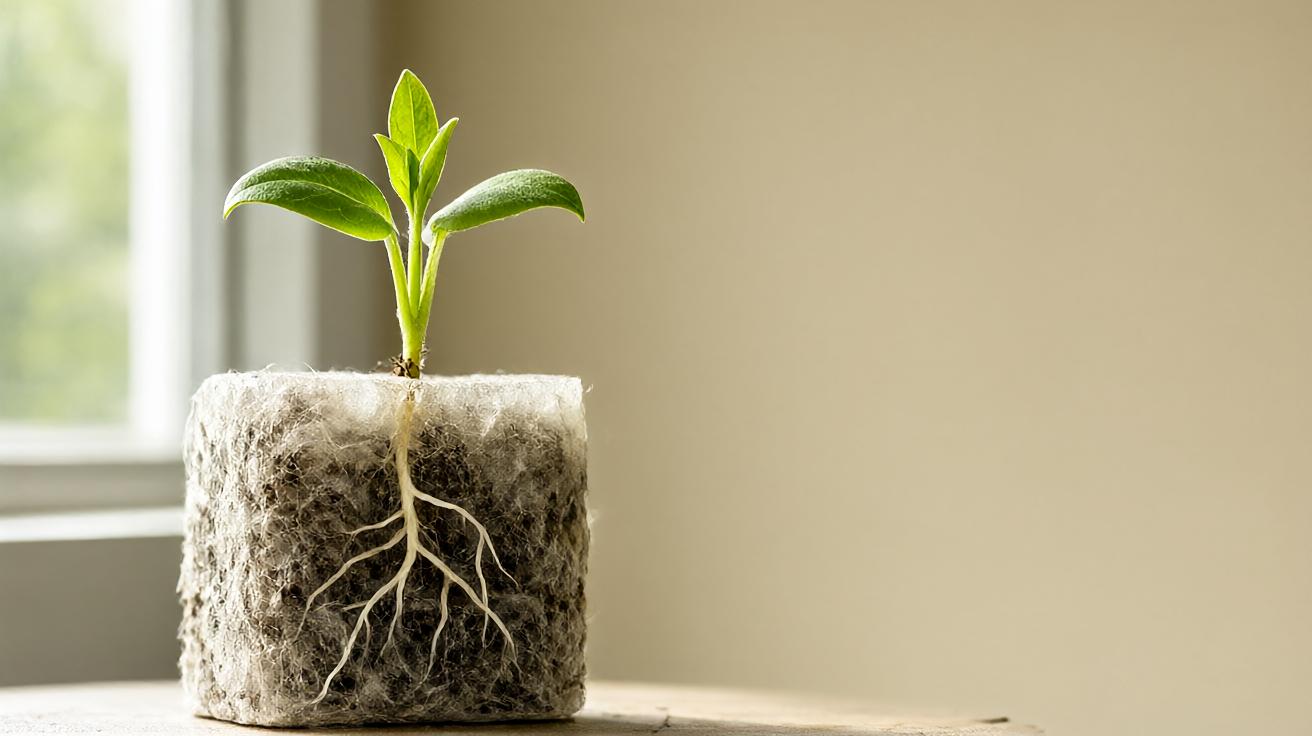
Several substrates dominate hydroponic seed starting, each with distinct physical traits. Rockwool cubes are the industry standard for hydroponic propagation because they offer excellent water retention, consistent aeration, and a sterile, pH-stable matrix that seeds germinate in reliably. Coco coir provides a natural, renewable alternative with strong moisture retention and good cation exchange capacity, though it must be rinsed and buffered before use. Perlite and vermiculite mixes are lightweight, inexpensive, and easy to blend to a desired texture, while peat-based mixes remain popular for their water-holding capacity and familiar handling.
For a deeper comparison of how these substrates perform across the full growing cycle, see the guide to compare hydroponic growing media. In propagation specifically, the choice comes down to water retention versus drainage: rockwool and coco coir suit growers who want a plug-and-transplant workflow, while perlite-heavy blends suit growers who prefer to sow directly into larger containers. Peat mixes are forgiving for beginners but can compact and hold too much water if overwatered.
Rockwool cubes deserve special attention because their fiber matrix creates a network of capillary pores that wick moisture upward while leaving air channels open at the surface. This combination produces the fine-textured, moisture-retentive environment that germination demands without the compaction risk of organic mixes. Coco coir performs similarly when graded to a fine particle size, though its natural variability means growers should test each batch. Perlite alone drains too quickly for most seeds, which is why it is usually blended with vermiculite to slow water loss and improve contact around small seeds.
Moisture and Aeration for Seeds
Optimal Moisture Range
Moisture and aeration are the two variables that most directly control germination speed and uniformity. Seeds need a consistently moist environment to activate enzymes and soften the seed coat, but the medium must never be saturated, because waterlogged pores displace the oxygen that roots require. The balance between water retention and air-filled porosity is what separates a good seed-starting medium from a poor one, and it is governed by particle size and pore structure.
Optimal germination moisture is 60-70% of the medium’s water-holding capacity; below 50% germination stalls, above 80% damping off risk rises sharply.
Drainage for Seeds
Fine texture helps here: smaller particles create more capillary pores that hold water against gravity, while larger inter-particle pores let excess water drain and air enter. This is why a fine-textured, moisture-retentive medium outperforms coarse bark or gravel for germination. For a full breakdown of how water retention, aeration, porosity, and CEC interact, review the growing medium properties. In practice, aim for a medium that feels like a wrung-out sponge: damp throughout, with no free water pooling at the bottom of the tray.
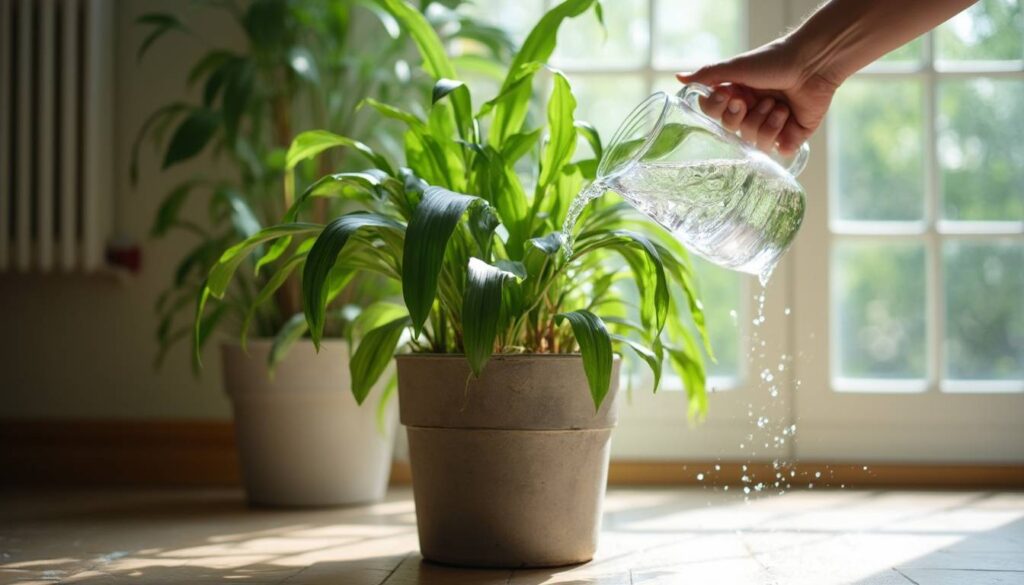
Managing moisture is as much about method as medium. Bottom-watering lets the substrate wick water upward evenly, keeping the surface slightly drier and reducing surface-borne disease. Misting from above is useful for very fine seeds but risks washing them out of place. Whatever method you choose, check moisture daily and water before the medium dries completely, since even brief desiccation can kill a germinating seed. Good aeration also depends on tray design: drainage holes and a slight slope prevent standing water and keep air channels open.
Sterility and Disease Prevention (Damping Off)
Sterilization Methods
Sterility is non-negotiable in seed starting because the most common seedling killer, damping off, is caused by soil-borne fungi and oomycetes such as Pythium, Rhizoctonia, and Fusarium. These pathogens thrive in cool, wet, poorly aerated conditions and attack seedlings at the soil line, causing stems to collapse and seedlings to fall over overnight. A sterile medium removes the inoculum, while proper moisture and aeration management removes the conditions that let it spread.
To prevent damping off, use fresh sterile medium for every propagation cycle, sanitize trays and tools between batches, avoid overwatering, and provide gentle airflow and warmth. Bottom-watering keeps the surface drier and reduces surface-borne infection. If damping off appears, remove affected seedlings immediately, improve ventilation, and let the medium dry slightly before rewatering. Prevention is far more effective than treatment, so sterility and disciplined watering are the core defenses.
Preventing Damping Off
Temperature also plays a role in disease pressure. Cool, wet media favor the pathogens that cause damping off, while warmer media around 20 to 24 degrees Celsius support faster germination and reduce the window of vulnerability. Heat mats can help, but they must be paired with adequate aeration to avoid cooking roots. Combining sterile medium, controlled moisture, good airflow, and appropriate warmth gives seedlings the best chance to outgrow disease pressure during the fragile early stages of root development.
Transplanting Seedlings into Hydroponics
Once seedlings have developed their first true leaves and a healthy white root system, they are ready to move from the propagation medium into the main hydroponic system. The goal of transplanting is to minimize root disturbance and shock while adapting the plant to the higher nutrient concentrations and stronger flow of the production system. Handle seedlings by their leaves rather than stems, and keep the root ball intact during the move.
Rockwool plugs transplant especially well because they can be dropped directly into larger rockwool blocks or net pots without removing the seedling. Coco coir and perlite mixes can be gently teased apart, but avoid tearing fine roots. After transplanting, gradually introduce nutrient solution at quarter to half strength for the first few days, then ramp to full strength as the plant establishes. For step-by-step handling of rockwool at this stage, consult the rockwool preparation guide.
Timing the transplant correctly protects the root development that occurred in propagation. Moving too early risks damaging fragile, underdeveloped roots and stalling growth; moving too late risks root binding and transplant shock. A good indicator is visible roots emerging from the bottom of the plug or cube, combined with at least one set of true leaves. At that point, the seedling has enough root mass to handle the transition into the production medium and nutrient regime.
Medium Differences: Seeds vs Mature Plants
Seeds and mature plants have fundamentally different medium requirements. Seeds need fine texture, high moisture retention, and sterility because they are small, immobile, and vulnerable to desiccation and disease. Mature plants need coarser structure, stronger drainage, and higher aeration because their larger root systems demand oxygen and can tolerate intermittent drying. A medium optimized for germination would suffocate a mature plant, while a medium optimized for mature plants would let seeds dry out and fail.
This is why most hydroponic operations use a two-stage approach: a fine, moisture-retentive propagation medium for germination and early seedling growth, then a coarser production medium such as expanded clay, larger rockwool blocks, or coco slabs for the vegetative and flowering stages. Matching the medium to the growth stage is one of the simplest ways to improve both germination rates and final yield.
Seeds need finer texture and higher moisture than mature plants because their root systems are undeveloped; as seedlings mature, shift to a coarser, better-drained medium to prevent waterlogging.
The transition between stages is also where root development strategy changes. In propagation, the goal is rapid, dense root initiation in a small volume; in production, the goal is extensive, well-oxygenated root exploration throughout a larger volume. Choosing media that support each goal, rather than forcing one medium to do both jobs, is the hallmark of an efficient propagation program.
Common Seed Starting Mistakes
The most common seed-starting mistakes are overwatering, using non-sterile or recycled medium, sowing too deep, and exposing seeds to temperature swings. Overwatering is the leading cause of damping off and root rot; the medium should be moist, never saturated. Reusing old medium reintroduces pathogens and weed seeds, so always start fresh. Sowing too deep delays emergence and can exhaust the seed’s reserves before it reaches light.
Other frequent errors include using nutrient solution too early, which burns delicate roots, and transplanting before roots are established, which causes stunting. Finally, inconsistent moisture during germination leads to uneven emergence and weak seedlings. Avoiding these mistakes comes down to respecting the simple principle that propagation is about controlling moisture, aeration, sterility, and temperature rather than feeding the plant.
One more mistake worth highlighting is ignoring humidity and light after germination. Seedlings need gentle light soon after emergence to prevent legginess, and they benefit from gradually reduced humidity to harden off before transplant. Failing to harden seedlings leaves them vulnerable to the drier, brighter conditions of the production system. Treating propagation as a complete process, from sowing through hardening, rather than just a germination step, separates successful growers from frustrated ones.
Review date: 2026-11-03. Sources: standard horticultural references on seed propagation and soilless growing media; internal aqualogi guides on growing medium properties, hydroponic media comparison, rockwool preparation, and hydroponics fundamentals.
Last reviewed on 3 November 2026. Updated as new evidence and extension guidance are checked.
Sources and further reading
The claims in this guide come from extension services, plant science references, and horticultural practice.
University of Minnesota Extension , Starting seeds indoors.
Johnny’s Selected Seeds , Seed starting and propagation resources.
Premier Tech Horticulture , Hydroponic growing media guide.
Turn PDF Bank Statements Into Workable Spreadsheets
Your bank statement is a mess of numbers, but your books shouldn't be. Use our converter to get Excel, CSV, or QBO files — ready for QuickBooks.
Try It Free Now