
The fertilizer aisle is divided into two camps: bags that mix several nutrients together, and bags that deliver just one. Most gardeners grab whichever is on sale, or whichever name they recognize, without knowing which type fits the job. That mismatch is where wasted money and damaged plants come from. Blended fertilizers and single-nutrient fertilizers solve different problems, and choosing between them comes down to one question: do you already know what your soil is missing?
Both camps have a place in a well-run garden. The mistake is treating them as interchangeable. A blend is a generalist. A single-nutrient product is a specialist. Knowing when to reach for each one, and when to spend money on a soil test instead, separates efficient feeding from expensive guessing.
What a blend is
A blend is a pre-mixed fertilizer that delivers two or three primary nutrients in a fixed ratio. The classic examples are 10-10-10 and 20-20-20, where the three numbers on the label represent nitrogen, phosphorus (as P2O5), and potassium (as K2O). Because the ratio is locked at the factory, every application adds all three nutrients in that proportion, regardless of what your soil actually needs. Blends are convenient, predictable, and forgiving, which is why they dominate the home garden shelf.
They are designed for general maintenance on soil that is reasonably healthy and balanced. A balanced blend spreads a modest amount of each nutrient across the bed, supporting steady growth without pushing any single element to excess. Think of it as a multivitamin for soil: not tailored, but broadly supportive. The label numbers themselves are worth understanding before you buy, and the NPK ratio explained covers what those figures actually mean, including the P2O5 and K2O conversions that trip up most shoppers.
Blends also come in many ratios beyond the equal ones. A 5-10-10 blend leans on phosphorus and potassium for flowering and fruiting crops. A 30-0-0 lawn fertilizer is technically a blend in spirit but delivers nitrogen only with no phosphorus or potassium. The point is that the ratio is chosen for you, and you accept it as a package deal. If your soil only needs one of the three, the other two are along for the ride.
Slow-release blends add another layer. Coated or polymer-wrapped granules meter out nitrogen over weeks, reducing burn risk and leaching. They cost more per pound, but the steadier supply often means fewer applications and less waste. For containers and lawns, that convenience is usually worth the premium.
What a single-nutrient product is
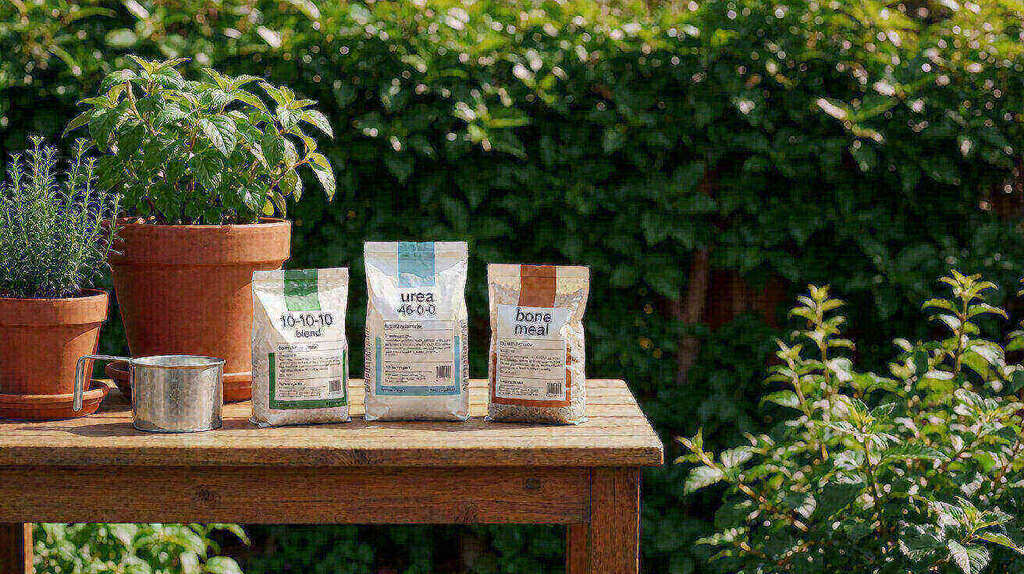
A single-nutrient product delivers one nutrient and almost nothing else. Urea (46-0-0) is nitrogen only. Bone meal (0-10-0) is phosphorus only. Muriate of potash (0-0-60) is potassium only. These products exist so you can correct a specific shortfall without adding nutrients you do not need. They are the precision tools of fertilizer work: you use them when a soil test or a clear deficiency symptom points to one missing element.
Because they contain no filler nutrients, single-nutrient products also tend to be cheaper per unit of the nutrient you actually want. A 50-pound bag of urea at 46% nitrogen delivers far more nitrogen per dollar than a 50-pound bag of 10-10-10, which is only 10% nitrogen. That cost advantage is real, but it only matters if nitrogen is the thing your soil is short on. Buying cheap urea for a garden that is already nitrogen-sufficient wastes both money and plant health.
Single-nutrient products also give you control over timing. You can add nitrogen during early vegetative growth without pushing phosphorus that the plant cannot use yet. You can hold back potassium until fruit set. That kind of scheduling is impossible with a fixed-ratio blend, which always delivers everything at once. The trade-off is that singles demand more knowledge and more planning, which is why they reward gardeners who test first.
When blends work
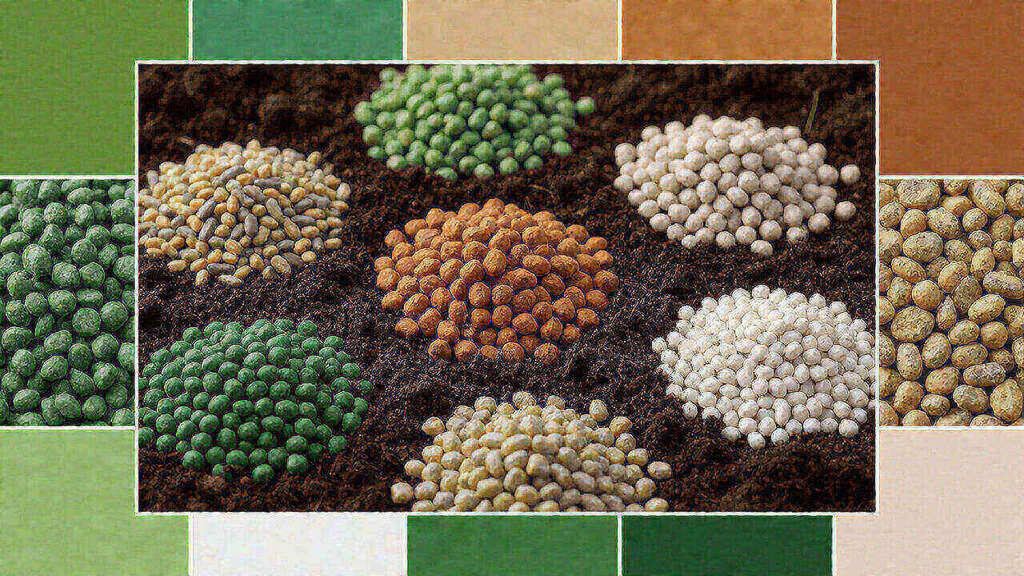
Blends earn their place in three situations. First, general maintenance on established beds where the soil is already reasonably balanced. A light application of 10-10-10 in spring keeps a vegetable garden moving without overthinking it. Second, when you do not know your soil’s status. If you have never tested, a balanced blend is the safe default because it adds a little of everything rather than a lot of one thing. Third, when convenience matters more than precision: container mixes, lawn feeding, and quick seasonal touch-ups.
The trade-off is that you may be adding phosphorus or potassium your soil already has in excess, which wastes money and, in the case of phosphorus, can run off into waterways. That is not a reason to avoid blends, but it is a reason to test your soil every few years and stop guessing. For help reading an actual test report, see how to read a soil test report.
Blends also shine for new gardeners and for low-stakes beds. If you are feeding annual flowers in a planter, the precision of a single-nutrient correction is rarely worth the effort. A balanced blend keeps growth steady and forgiving, and the cost of a small over-application is minor. Save the specialist products for beds where you have measured a real problem.
When single nutrients work
Single-nutrient products are the right call when you have evidence. A soil test showing low nitrogen calls for urea or another nitrogen source. A phosphorus deficiency in a cold, wet spring calls for bone meal or superphosphate. A potassium shortfall in sandy soil calls for muriate of potash. The key is that the decision is data-driven, not guessed. Used this way, singles prevent the over-application that blends can cause.
Deficiency symptoms can also guide you, though they are less reliable than a test. Yellowing older leaves often point to nitrogen. Purple-tinged foliage can signal phosphorus shortage. Scorched leaf edges may indicate potassium stress. These clues are worth acting on when a test is not practical, but they should be confirmed rather than assumed, because several deficiencies look alike and because soil pH can lock up nutrients that are technically present.
Single nutrients also suit targeted timing. You can add nitrogen in early vegetative growth without pushing phosphorus that the plant cannot use yet. You can add potassium as fruit develops. That kind of scheduling is impossible with a fixed-ratio blend, which always delivers everything at once. The cost is more planning, which is why singles reward gardeners who test first and keep records.
The “custom blend” trap
Many gardeners try to beat the system by mixing their own blend from single-nutrient bags, thinking they will get a cheaper, better-matched product. Usually they will not. Home mixing introduces three problems. You cannot achieve the even distribution a factory produces, so one scoop may be nitrogen-heavy and the next phosphorus-heavy. You lose the convenience that makes blends worth buying. And you still have to do the math to hit a target ratio, which most gardeners get wrong.
Unless you are running a large operation with a spreader and a calculator, buy a commercial blend when you need a blend and buy singles when you need singles. The factory mixing, quality control, and uniformity are worth the markup. If you are tempted to combine bags anyway, read whether you can mix NPK fertilizers first, because compatibility and reaction risks add another layer of trouble.
There is also a safety angle. Some combinations react badly when mixed dry or in solution. Calcium and phosphorus sources can precipitate. Concentrated nitrogen and certain micronutrients can burn foliage if combined carelessly. Commercial blends are formulated to avoid these interactions. Home mixes are not.
Cost comparison
On a per-unit-of-nutrient basis, single-nutrient products are almost always cheaper. The blend’s price buys you convenience and balance, not efficiency. However, cost only favors singles when you actually need that one nutrient. The honest comparison is not sticker price; it is cost per unit of the nutrient your soil test says you need. When you are choosing a product, the fertilizer buying guide walks through the label details.
A useful way to compare is to calculate the dollars per pound of the nutrient you need. Divide the bag price by the pounds of nutrient it contains. A 40-dollar, 50-pound bag of 10-10-10 contains 5 pounds each of nitrogen, phosphate, and potash. A 30-dollar, 50-pound bag of urea at 46-0-0 contains 23 pounds of nitrogen. The urea is far cheaper per pound of nitrogen, but only nitrogen. If your soil needs nitrogen, urea wins. If your soil needs all three, the blend may be the better buy.
| Product | N-P-K | Best use | Cost efficiency |
|---|---|---|---|
| 10-10-10 blend | 10-10-10 | General maintenance, unknown soil | Low per nutrient |
| 20-20-20 blend | 20-20-20 | Container feeding, high demand | Low per nutrient |
| Urea | 46-0-0 | Nitrogen deficiency | High for nitrogen |
| Bone meal | 0-10-0 | Phosphorus deficiency | High for phosphorus |
| Muriate of potash | 0-0-60 | Potassium deficiency | High for potassium |
The decision rule
The rule is simple and it starts with a soil test. If you have not tested, or your soil is healthy and you are doing routine maintenance, use a blend. If you have tested and the report shows a specific deficiency, use the matching single-nutrient product. That is the whole framework. No blend is smarter than a test, and no single nutrient is better than knowing you need it. The decision is not about which product is better; it is about whether you have the information to be specific. Test first, then buy.
Imagine two gardeners with the same tomato bed. One tests and finds nitrogen low but phosphorus and potassium adequate. She buys urea, spends less, and avoids adding phosphorus that could run off. The other skips the test, buys 10-10-10, and adds nutrients the soil already has. Both get tomatoes, but one paid more and risked an imbalance. The difference was not the product; it was the information behind the choice.
Make the test a habit rather than a one-time event. Soil changes as crops remove nutrients and as organic matter builds or depletes. A test every two to three years keeps your decisions grounded in current conditions rather than memory. When you do test, record the results and the products you used, so the next decision is faster and better informed.
Common mistakes to avoid
- Feeding on a schedule without testing, which stacks nutrients the soil already holds.
- Assuming a higher N-P-K number is always better, when it usually just means more filler-free concentration.
- Mixing two different blends to “balance” them, which defeats the purpose of buying a blend.
- Applying singles at blend rates, which can burn roots and foliage.
- Ignoring soil pH, which can lock up phosphorus and iron even when they are present.
If you are unsure about rates, fertilizer application rate math shows how to convert a label recommendation into the amount your bed actually needs.
Last updated: October 28, 2026.
Sources
- Penn State Extension, “Fertilizer Analysis”
- Washington State University Extension, “Plant Mineral Nutrition”
- University of Minnesota Extension, “Understanding Fertilizer Labels”
- Purdue Extension, “Fertilizer Basics”
- Colorado State University Extension, “Fertilizers”
The actual number is the decision.
Turn That PDF Into a Spreadsheet in Minutes
You've seen how to do it manually — now let the tool handle the heavy lifting. Upload your bank statement and get Excel, CSV, or QBO in a few clicks.
Try It Free