

The word “complete” on a fertilizer bag is the most reassuring word in the garden aisle, and it is also the most misleading. It sounds like a seal of quality, a guarantee that this product has everything your plants need. It is not. “Complete” is a technical term with a narrow meaning, and understanding that meaning is the difference between buying what your soil actually needs and buying a bag of marketing.
Most gardeners assume “complete” means “best.” The opposite is often true. A complete fertilizer is convenient, but convenience is not the same as correctness. The right fertilizer is the one that fills the gap your soil actually has, and that gap may be a single nutrient that a complete blend delivers in the wrong proportion or not at all.
This article explains what “complete” really means, why it does not mean “balanced,” when an incomplete fertilizer is the better choice, and how to decide between them using a soil test.
What “complete” actually means
A complete fertilizer is simply one that contains all three macronutrients: nitrogen (N), phosphorus (P), and potassium (K). That is the entire definition. The ratio between them does not matter. A 10-10-10 is complete. A 20-5-10 is complete. A 5-10-5 is complete. A 30-0-0 is not, because it has no phosphorus and no potassium. A 0-20-0 is not. A 0-0-24 is not.
The word describes presence, not proportion. It says the bag contains all three primary nutrients, nothing about whether the proportions suit your soil or your crop. A complete fertilizer can be wildly lopsided: a 46-0-0 with a small phosphate and potash addition to qualify, a 29-3-4 turf product, a 12-48-8 starter blend. All complete, all very different in what they actually deliver.
This is why reading the three numbers matters more than reading the word. The numbers tell you the actual content. The word tells you only that none of the three is zero. A product with 2 percent of each nutrient qualifies as complete while delivering almost nothing of any of them. The guaranteed analysis, not the marketing word, is where the real information lives.
So when you see “complete” on a label, read it as “contains N, P, and K,” not as “contains what you need.” Whether it contains what you need is a separate question, and the answer lives in your soil test, not on the bag. For a full breakdown of how the three label numbers relate, see what the NPK ratio numbers actually mean.
Complete vs balanced: the confusion
“Complete” and “balanced” are often used as if they were synonyms. They are not. Complete refers to whether all three macronutrients are present. Balanced refers to the ratio between them, usually a roughly equal or deliberately proportioned blend such as 10-10-10.
A fertilizer can be complete without being balanced. A 20-5-10 contains all three nutrients, so it is complete, but it is heavily nitrogen-weighted, not balanced. A 5-10-5 is complete and roughly balanced. A 3-18-18 is complete and phosphorus-and-potassium weighted. “Complete” tells you nothing about the balance.
A fertilizer can also be balanced without being complete in the strict sense only if one nutrient is absent, which would make it unbalanced by definition. The useful point: the two words answer different questions. “Is all three present?” and “Are the three in a useful proportion?” Both matter, and neither word on the bag answers the second question for your garden.
The confusion persists because marketing copy uses “complete” to imply “you are done thinking.” It suggests the bag is a finished solution. It is not. It is a starting point that may or may not match your soil.
Incomplete fertilizers: when less is more
Incomplete fertilizers contain only one or two of the three macronutrients. They are single-nutrient or two-nutrient products, and they are often the better choice when a soil test reveals a specific gap.
Nitrogen-only products include urea (46-0-0), ammonium nitrate (34-0-0), and ammonium sulfate (21-0-0-24S). These are the workhorses of targeted nitrogen correction. If your soil test shows adequate phosphorus and potassium but low nitrogen, a nitrogen-only product delivers exactly what is missing without piling on nutrients you do not need.
These single-nutrient products are also more flexible. You can adjust the dose and timing of nitrogen independently of phosphorus and potassium, which matters because nitrogen is the nutrient most often needed in split applications through the season. A complete fertilizer forces you to reapply all three nutrients every time you top up nitrogen, which is rarely what the soil needs.
Phosphorus-only products include bone meal and triple superphosphate. Potassium-only products include muriate of potash and sulfate of potash. Each addresses a single, confirmed shortfall.
The case for incomplete fertilizers is environmental and economic. Applying phosphorus when soil phosphorus is already adequate does not help plants; it accumulates in soil and can run off into waterways, contributing to algal blooms. Applying potassium when it is not needed wastes money and can create nutrient imbalances. Nitrogen applied in excess beyond plant demand leaches or volatilizes. Targeted correction avoids all of this.
Targeted correction also protects against the “too much of a good thing” problem. Excess phosphorus can lock up iron and zinc. Excess potassium can suppress magnesium uptake. A complete fertilizer applied blindly to soil that already has enough of one nutrient can create deficiencies in another. Single-nutrient products let you correct the actual gap without collateral damage.
There is also a cost angle. A complete fertilizer delivers all three nutrients, so you pay for phosphorus and potassium even when your soil already holds them. Over a season, applying only what is missing is cheaper than applying a balanced blend to soil that is not balanced. The savings grow with garden size, but the principle holds for a single raised bed too.
For a deeper look at what nitrogen, phosphorus, and potassium each do in the plant, see what nitrogen does for plants, what phosphorus does for plants, and what potassium does for plants.
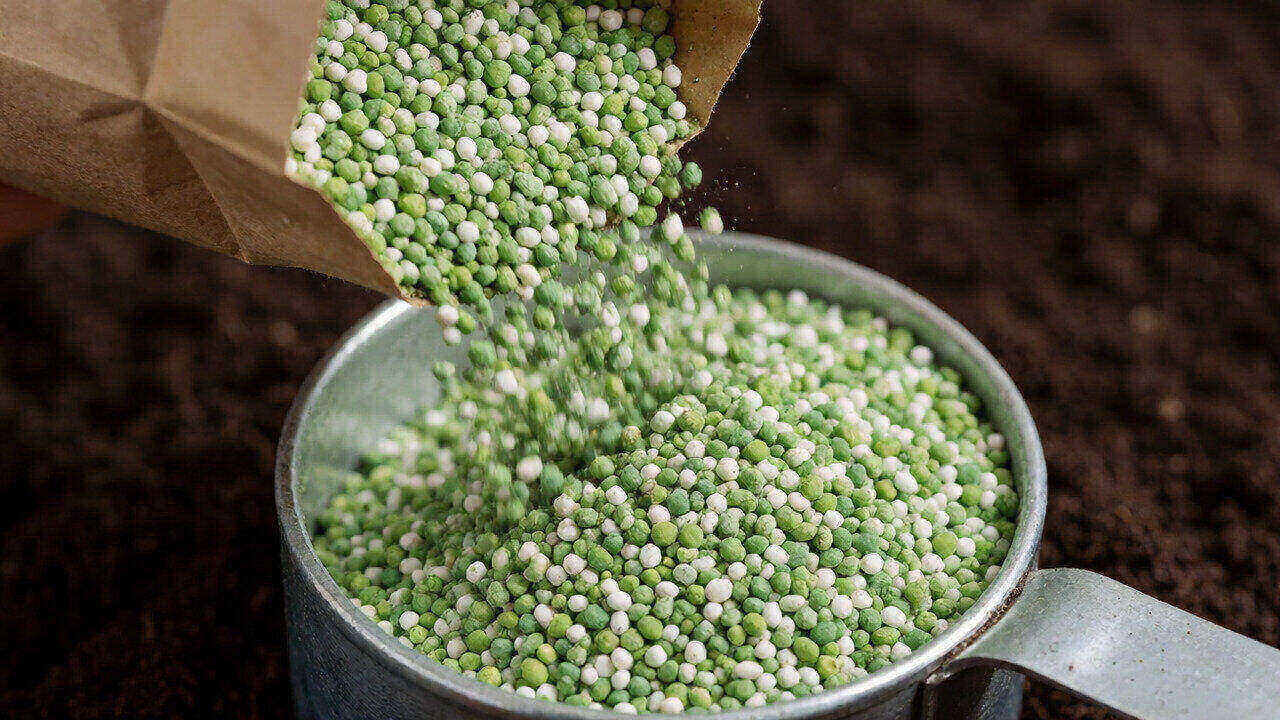
Why “complete” is a marketing term
“Complete” is a marketing term because it sounds like a quality standard while being only a presence check. No regulator evaluates whether a “complete” fertilizer is good for your soil. The guaranteed analysis on the label lists the percentages of nitrogen, phosphate, and potash, plus any secondary nutrients or micronutrients claimed. It guarantees content, not suitability.
The guaranteed analysis is the real promise. It tells you exactly how much of each nutrient is in the bag, expressed as a percentage by weight. A 10-10-10 guarantees 10 percent nitrogen, 10 percent available phosphate (as P2O5), and 10 percent soluble potash (as K2O). That is a verifiable, standardized claim. “Complete” is just a word that follows from it: if all three numbers are greater than zero, the product is complete.
This is why two products with the same “complete” label can be radically different. A 4-4-4 organic blend and a 24-8-16 synthetic are both complete. One releases slowly over months; the other is available within days. One adds organic matter; the other does not. The word “complete” erases all of that difference.
The marketing appeal is obvious. “Complete” implies you do not need anything else, that one bag solves the problem. It flatters the buyer’s desire for a simple answer. But soil fertility is not simple, and no single bag is complete for every garden. The only way to know what your garden needs is to test the soil and match the product to the result. For help reading a test, see how to read a soil test report.
The word also hides the form of the nutrients. A complete fertilizer may deliver nitrogen as urea, as ammonium, or as nitrate, each with different speed and loss characteristics. It may deliver phosphorus as phosphate rock or as water-soluble phosphate. The label numbers do not always distinguish these forms, but the form determines how the nutrient behaves in your soil. “Complete” tells you nothing about that either.
How to decide: complete or targeted?
The decision flow is short. Start with a soil test. If the test shows all three macronutrients are low or moderate, a complete fertilizer is appropriate, and the ratio should roughly match the recommendation on the test report. If the test shows only one or two nutrients are low, use an incomplete, targeted product to correct the specific shortfall.
For new gardens or beds with unknown history, a complete fertilizer is a reasonable default because you are starting from an unknown baseline. Even then, a soil test before the first application is better than guessing. For established gardens with a testing history, targeted correction is usually the better and cheaper path.
Crop matters too. Heavy feeders such as corn, tomatoes, and lawns often need more nitrogen than a balanced complete blend provides, which is why nitrogen-weighted complete products (20-5-10, 32-0-4) exist. But if your soil test shows adequate phosphorus and potassium, a nitrogen-only product plus a complete micronutrient package may be cleaner than a high-nitrogen complete blend.
Cost and convenience also play a role. A single complete product is simpler to buy and apply. Targeted correction requires more knowledge and sometimes multiple products. But the cost of overapplying nutrients you do not need, in money and in environmental impact, usually exceeds the inconvenience of a targeted approach. For guidance on choosing among products, see the fertilizer buying guide.
In practice, most home gardeners fall into a rhythm. They test every two or three years, apply a complete fertilizer when the report calls for it, and use single-nutrient products for midseason corrections. That rhythm keeps soil in balance without overapplication, and it keeps the word “complete” in its proper place: a description of the bag, not a judgment about the garden.
The rule of thumb: test first, then match the product to the gap. Complete when all three are short. Targeted when only one or two are. Never apply a nutrient the soil already has enough of, and never trust the word “complete” to make that decision for you.
Last updated: October 28, 2026.
Sources
- Penn State Extension, “Fertilizer Analysis”
- University of Minnesota Extension, “Understanding Fertilizer Labels”
- Purdue Extension, “Fertilizer Basics”
- Colorado State Extension, “Fertilizers”
- Iowa State Extension, “Fertilizer Analysis”
The actual number is the decision.
From Bank Statement to QuickBooks-Ready File
That manual cleanup you just read about? This tool skips it. Turn your PDF into QBO for QuickBooks without storing your data anywhere.
Start Converting