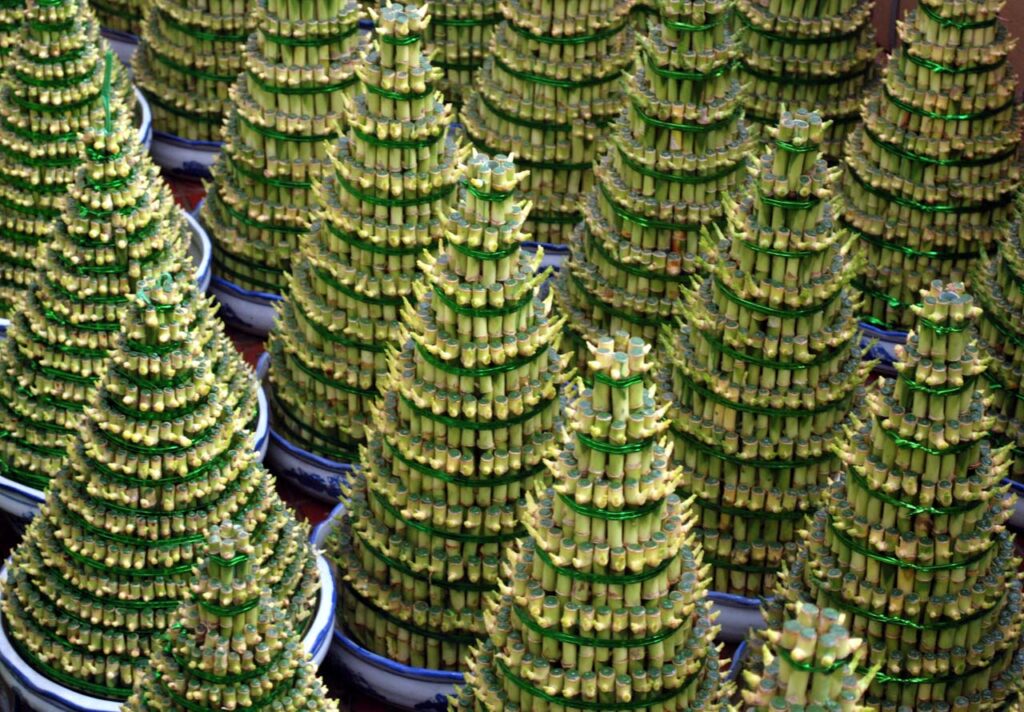

Growing bamboo at home requires choosing between two fundamentally different growth habits: running bamboo, which spreads via long rhizomes and can invade neighboring areas if not contained, and clumping bamboo, which stays in a tight cluster and expands only 2-12 inches per year. Running bamboo grows faster and taller but requires a rhizome barrier or regular division to prevent escape. Clumping bamboo is slower but far more manageable for home gardens. The distinction matters because planting running bamboo without containment leads to a plant that takes over your yard within 3-5 years.
Bamboo is a grass — not a tree — and its growth pattern reflects this. New culms (stems) emerge from underground rhizomes in spring and reach their full height within 60-90 days. After that, the culm never grows taller or wider; it only produces leaves. Each year, new culms emerge thicker and taller than the previous year’s growth until the plant reaches its mature size. This means a newly planted bamboo will look thin and sparse for 2-3 years while the root system establishes. Patience is the primary requirement.
This guide covers how to choose the right bamboo type for your space, how to plant and contain it, and the ongoing care that keeps it healthy without letting it take over.
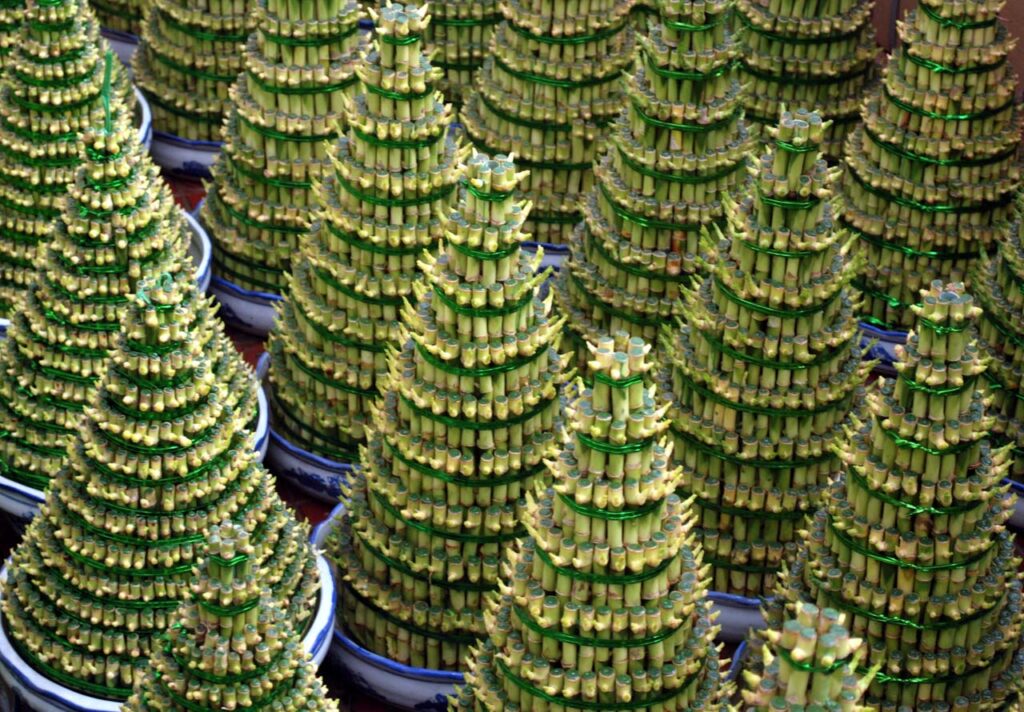
Running vs Clumping Bamboo: The Critical Choice
Running bamboo spreads via long rhizomes that can travel 5-10 feet underground before sending up new culms. Phyllostachys species (Golden Bamboo, Black Bamboo) are runners. They grow 20-40 feet tall and produce dense screens quickly — ideal for privacy hedges. The trade-off: they escape containment if not properly barriers. A rhizome barrier (40-60 mil HDPE plastic, buried 30 inches deep) is essential for running bamboo. Without it, runners will appear in neighbors’ yards, under driveways, and through garden beds.
Clumping bamboo has short rhizomes that stay close to the central plant. Bambusa and Fargesia species are clumpers. They grow 10-25 feet tall and expand slowly — 2-12 inches per year. Fargesia is the most cold-hardy clumping bamboo, surviving temperatures to -20°F (-29°C). Bambusa is tropical and damaged below 32°F (0°C). For home gardens, clumping bamboo is almost always the better choice because it requires no barrier and minimal maintenance.
The growth rate difference is significant. Running bamboo can produce 3-5 feet of new culm growth per year once established. Clumping bamboo produces 1-2 feet. If you need a screen fast, running bamboo with a barrier is the answer. If you want a low-maintenance specimen plant, clumping bamboo is safer.
How to Plant Bamboo
Container: For running bamboo, use a heavy-duty plastic or fiberglass pot at least 24 inches wide and deep. Terracotta cracks under rhizome pressure. For clumping bamboo, an 18-inch pot works for the first 2-3 years. Repot every 2 years or when roots circle the pot interior.
Soil: Bamboo tolerates most soil types but performs best in well-draining loam with a pH of 5.5-6.5. Heavy clay soils cause root rot in winter; amend with 3-4 inches of compost and perlite to improve drainage. Sandy soils drain too fast and require more frequent watering; amend with coco coir to retain moisture.
Planting depth: Set the root ball so the top sits 1-2 inches below the soil surface. Planting too deep causes crown rot; planting too shallow exposes roots to drying. Water thoroughly after planting to settle soil around roots.
Containment for running bamboo: Install a rhizome barrier before planting. Use 40-60 mil HDPE plastic, buried 30 inches deep with 2 inches above soil level. Overlap seams by 12 inches and seal with waterproof tape. The barrier should extend 3-4 feet beyond the planting area in all directions. Check annually for rhizomes that have escaped over the top — cut them immediately.
Watering and Fertilizing
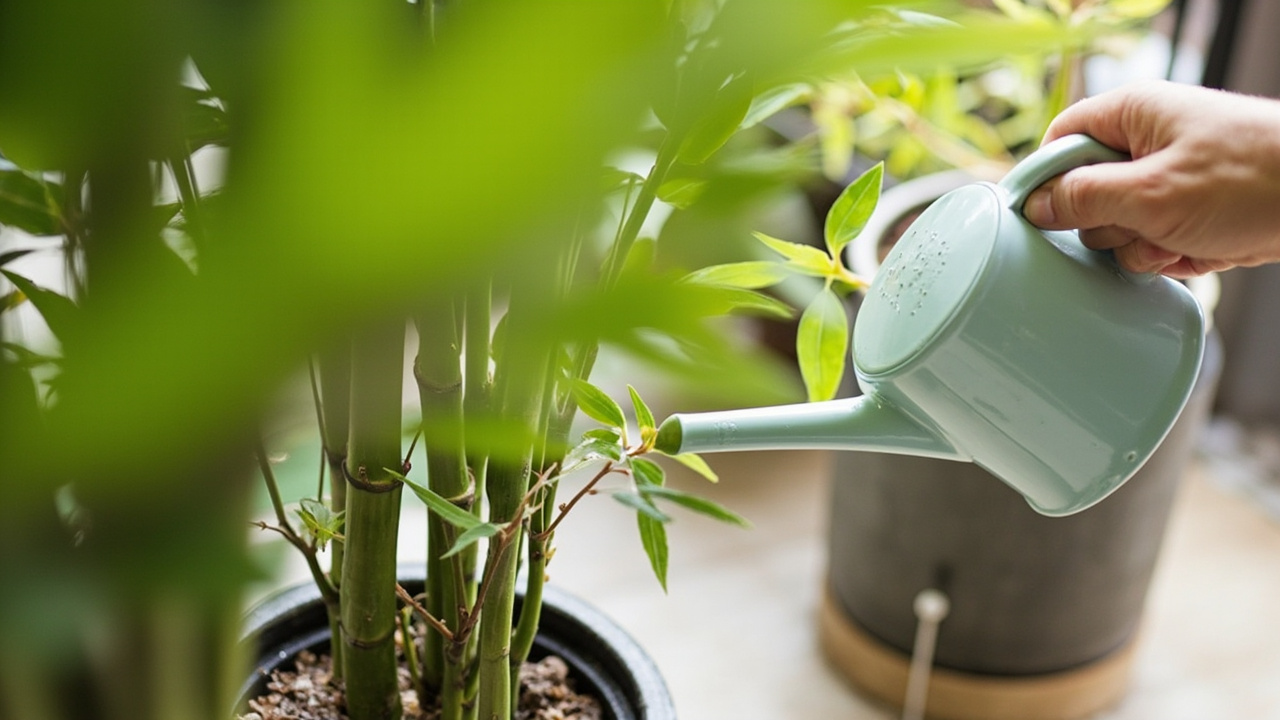
Newly planted bamboo needs daily watering for the first 2-3 weeks until roots establish. After that, water when the top 2 inches of soil feel dry. In hot, dry conditions (above 85°F / 29°C), this may mean every 2-3 days. In cool, humid conditions, every 7-10 days. Overwatering is the most common killer — bamboo roots rot in waterlogged soil within 72 hours at temperatures below 60°F (15°C).
Bamboo is a heavy feeder because of its rapid growth. Apply a high-nitrogen fertilizer (20-10-10 or similar) monthly from March through September. Slow-release granular fertilizer works well — apply 1-2 pounds per 100 square feet of planting area. Organic alternatives include blood meal (12-0-0) at 1 pound per 100 square feet or fish emulsion at half strength every 2 weeks. Stop fertilizing in October to allow the plant to harden off before winter.
Mulch with 3-4 inches of wood chips or shredded leaves to retain moisture and suppress weeds. Keep mulch 3-4 inches away from culms to prevent rot. Replenish mulch annually as it decomposes.
Pruning and Maintenance
Prune bamboo annually to maintain shape and remove dead or weak culms. Cut dead culms at ground level with loppers or a pruning saw. Thin dense stands by removing the oldest culms (3-5 years old) to allow light to reach new growth. Old culms are darker, less flexible, and have fewer leaves than new ones.
For running bamboo, check the rhizome barrier annually in spring. Remove any rhizomes that have escaped over the top or around the edges. If you find escaped culms, dig down and trace the rhizome back to the main plant — cut it and remove the section. Escaped rhizomes can travel 10-15 feet before sending up new culms, so act quickly.
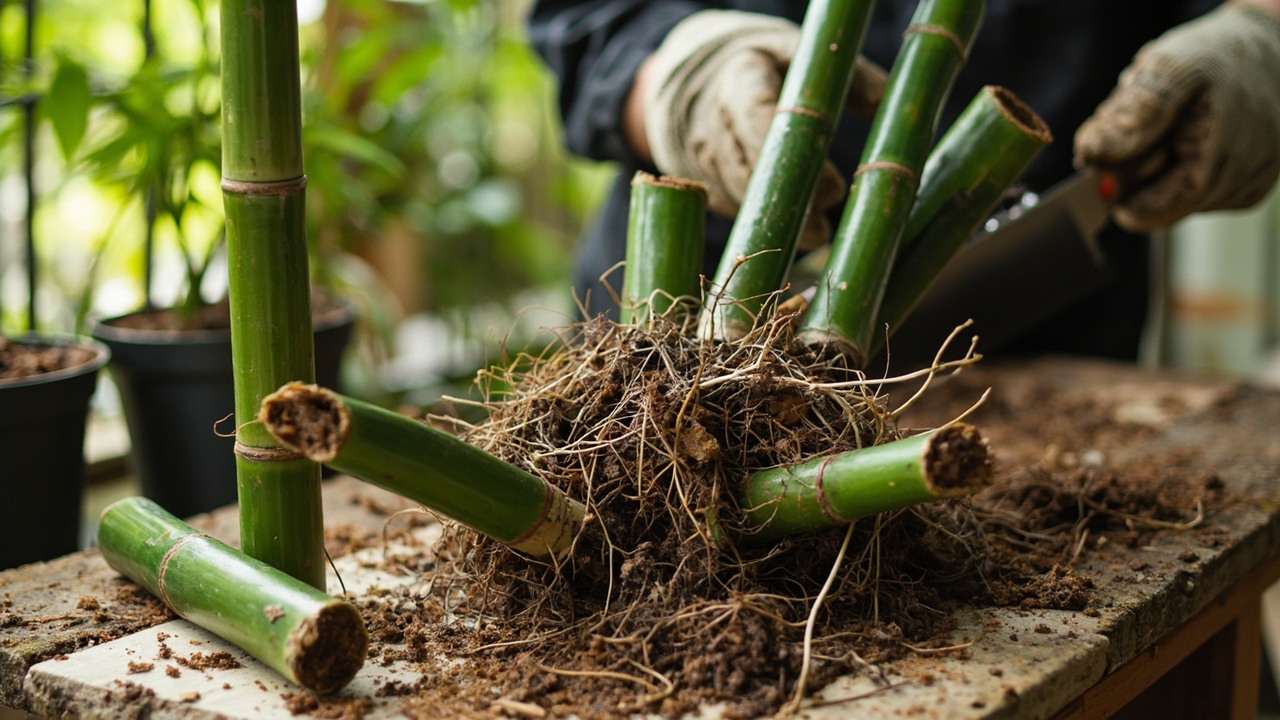
For clumping bamboo, divide every 3-4 years if the clump becomes too large. Dig up the entire clump in early spring, divide into sections with a sharp spade, and replant immediately. Water thoroughly after division and provide shade for 2-3 weeks while roots re-establish.
Common Problems and Solutions
Yellow leaves indicate overwatering, nutrient deficiency, or natural leaf drop. If yellowing is uniform across the plant, check soil moisture — if soggy, reduce watering. If yellowing is on older leaves only, it is likely nitrogen deficiency — apply high-nitrogen fertilizer. If yellowing is on new leaves with green veins, it is iron deficiency — apply chelated iron and check pH (above 7.0 locks out iron).
Brown leaf tips indicate underwatering, low humidity, or fertilizer burn. Increase watering frequency if soil is dry. If humidity is below 40%, mist leaves daily or use a humidity tray. If you recently fertilized, flush the soil with clean water to remove excess salts.
No new culms for 2+ years indicates the plant is root-bound, undernourished, or receiving too little light. Repot container bamboo into a larger container. For in-ground bamboo, apply high-nitrogen fertilizer and ensure the plant receives at least 4-6 hours of direct sun daily.
For more on bamboo care and propagation, see our lucky bamboo species guide and our growing bamboo in containers guide.
Turn any PDF statement into a clean sheet
Skip the typos and the hours of copying. Our converter handles any bank statement format and outputs Excel, CSV, or QBO for QuickBooks. No file retention, free to try.
Convert your statement