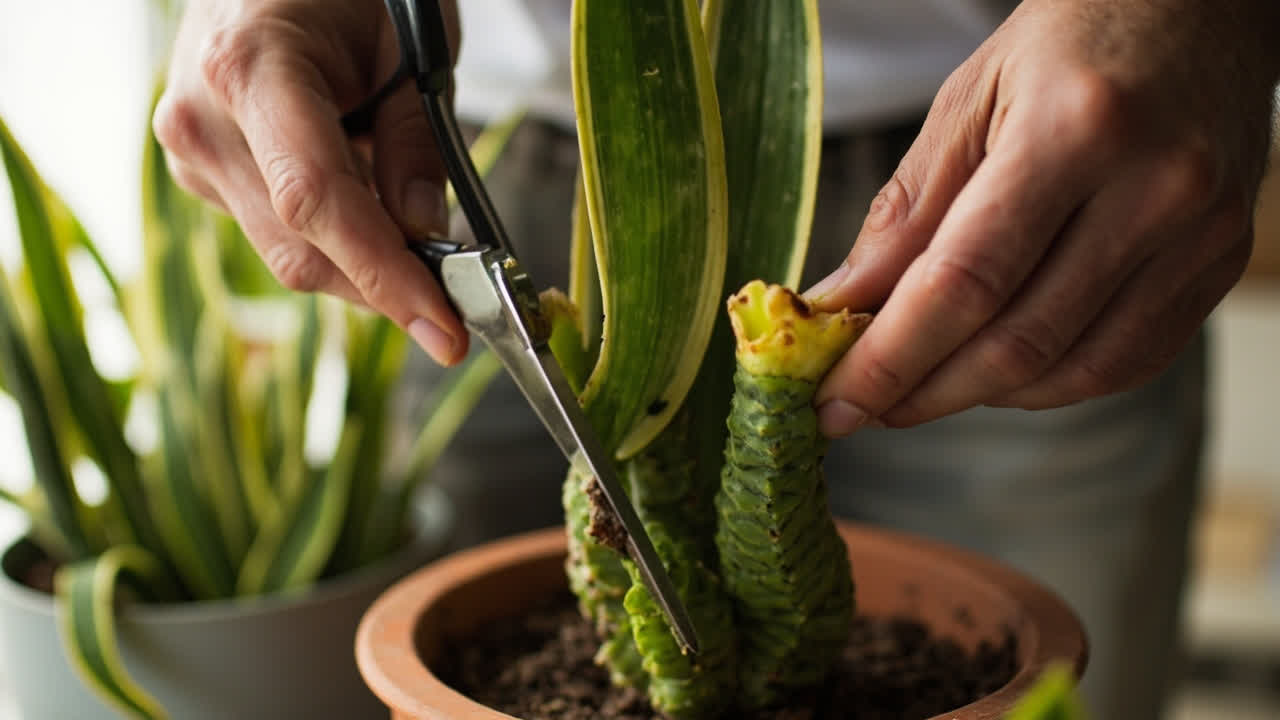
Snake plants are not just remarkably durable — they are also remarkably easy to multiply. Whether you want to fill your home with them, share them with friends, or just propagate the new growth that your plant produces naturally, snake plant propagation is forgiving and successful even for beginners. Here is every method that works.
Understanding Snake Plant Structure
Before propagating, it helps to know the basic parts of a snake plant:
- Rhizome: the underground horizontal stem that stores energy and produces new growth. It is the root system and the plant’s energy reserve in one.
- Leaf: the upright, sword-like part that stores water and photosynthesises. Each leaf is a potential new plant if treated correctly.
- Roots: grow from the rhizome and anchor the plant in the soil.
- Pups: new shoots that emerge from the rhizome as separate vertical leaves, eventually forming their own rhizome and root system.
Division : The Easiest Method
When a snake plant becomes densely packed with multiple shoots, division is the fastest and most reliable way to propagate. The plant has already done the hard work of growing new sections — you are simply separating them.
Step 1 — Remove the plant from the pot. Tip the pot sideways and slide the root ball out. You will see the rhizome with multiple upright shoots attached. Each shoot has its own roots originating from the main rhizome.
Step 2 — Identify separation points. Each shoot with its own section of rhizome and its own roots can be separated as an independent plant. You do not need to cut — often the sections separate by hand or with minimal cutting.
Step 3 — Separate cleanly. Use a clean, sharp knife to cut through the rhizome between sections. Make sure each separated piece has at least one healthy shoot and a portion of the rhizome with roots attached.
Step 4 — Pot separately. Plant each division in its own pot with fast-draining soil (one part potting mix, one part perlite). Water once, then leave them alone. New growth typically appears within a few weeks as each division establishes its own rhizome.
Leaf Cutting Propagation : Slower but Reliable
Snake plant leaves can be rooted to produce new plants, though it takes longer than division. This method is useful if you only have one leaf to work with or want to produce many plants from a single leaf.
Step 1 — Take a cutting. Select a healthy, mature leaf. Cut it at the base where it meets the rhizome. Using a clean sharp knife or scissors, cut the leaf into sections 8 to 12 cm long. Mark the bottom of each section (the end that was closest to the soil) — this matters for rooting orientation.
Step 2 — Option A: Root in water. Place the bottom end of each cutting in a small container of water, just enough to cover the bottom 2 to 3 cm. Change the water every few days. Roots appear in three to six weeks. Once roots are 5 to 7 cm long, plant the cutting in soil. Note that water-propagated cuttings sometimes produce pups more slowly than soil-propagated ones.
Step 2 — Option B: Root in soil. Insert the bottom end of each cutting into fast-draining soil, about 2 to 3 cm deep. The cutting should stand upright. Keep the soil lightly moist — not wet — and place in bright indirect light. Roots form in four to eight weeks. New growth at the base of the cutting is the sign that rooting was successful.
Important: the leaf must be placed bottom-down in the growing medium. If you plant it upside down, it will not root. Mark the bottom before cutting.
What to Expect After Propagation
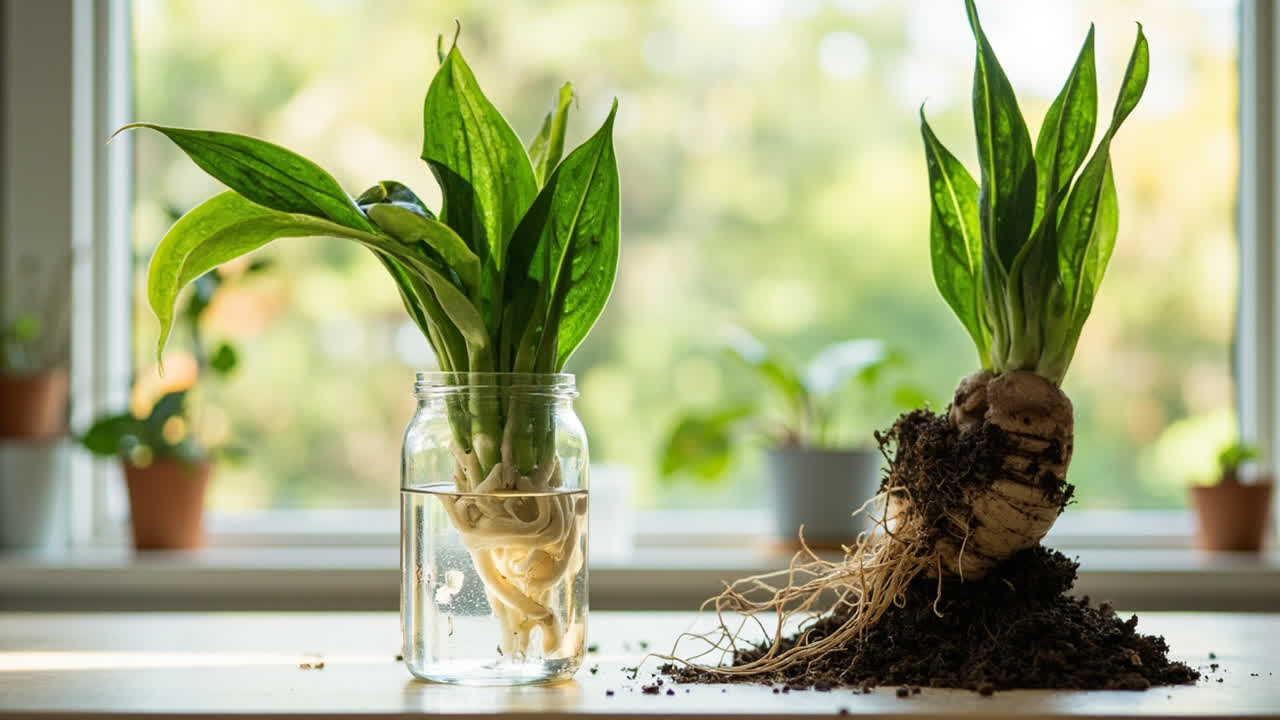
Snake plant propagation takes patience. Whether by division or leaf cutting, expect at least four to eight weeks before you see visible new growth. The leaf cutting methods in particular can be slow — the cutting is growing a new rhizome from scratch before producing new leaves.
Variegated snake plants — like the popular Laurentii with yellow edges — may lose their variegation when propagated from leaf cuttings. The new plant that grows from a leaf cutting may produce solid green leaves instead of variegated ones. Division preserves the variegation because it keeps the existing rhizome structure intact. If you want to preserve variegation on a special variety, division is the better method.
For general snake plant care, see Snake Plant Care guide.
From Bank Statement to QuickBooks-Ready File
That manual cleanup you just read about? This tool skips it. Turn your PDF into QBO for QuickBooks without storing your data anywhere.
Start Converting