
A photo captures what the eye cannot always see in the moment. Leaf color, texture, pattern, and posture all tell a story. Learning to read those visual cues turns a photo into a diagnostic tool. You do not need to be an expert to start. You need a clear photo, good light, and a systematic way to look.
The most common mistake is taking one photo from far away and trying to diagnose from it. A single distant photo hides detail. You need close-ups of affected leaves, the soil surface, the stem base, and the overall plant. Multiple angles and lighting conditions give you the full picture.
What Photo Diagnosis Can and Cannot Do
Photo diagnosis works well for visible symptoms: leaf color changes, spots, curling, wilting, legginess, and pest damage. It works less well for root problems, which are hidden below the soil, and for nutrient deficiencies, which often require soil testing to confirm.
A photo captures a moment in time. It does not show progression, watering history, or environmental conditions. Use photos alongside your observations and knowledge of the plant’s care routine.
How to Take a Useful Plant Photo
Take photos in bright, indirect natural light. Avoid harsh direct sun, which creates glare and shadows. Use a neutral background if possible. A plain wall or paper behind the plant helps the camera focus on the plant, not the surroundings.
Take at least four photos: one of the whole plant, one close-up of the most affected leaf, one of the soil surface, and one of the stem base and roots if visible. Include a reference for scale, such as a coin or your hand, in one shot.
Shoot from multiple angles. Top-down shows leaf arrangement and density. Side view shows stem posture and leaf orientation. Close-up reveals spot patterns, pest damage, and texture changes.

Reading Visual Cues
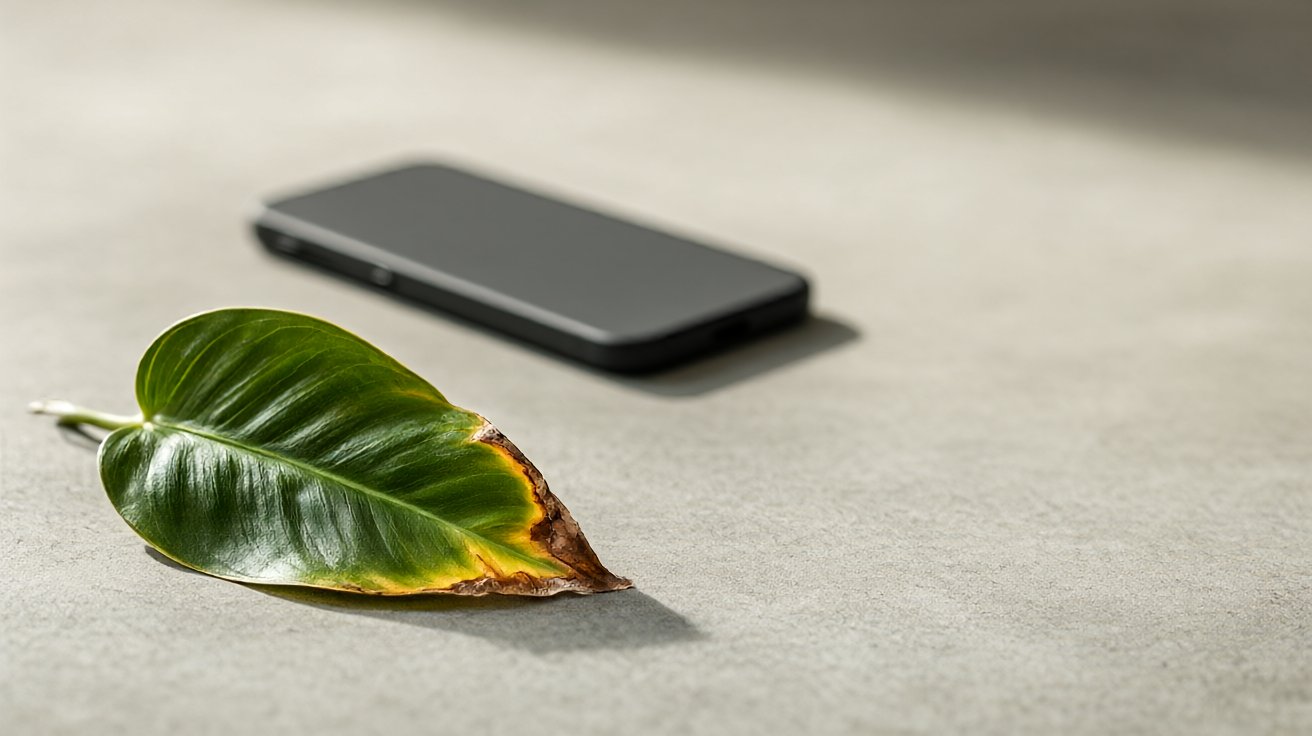
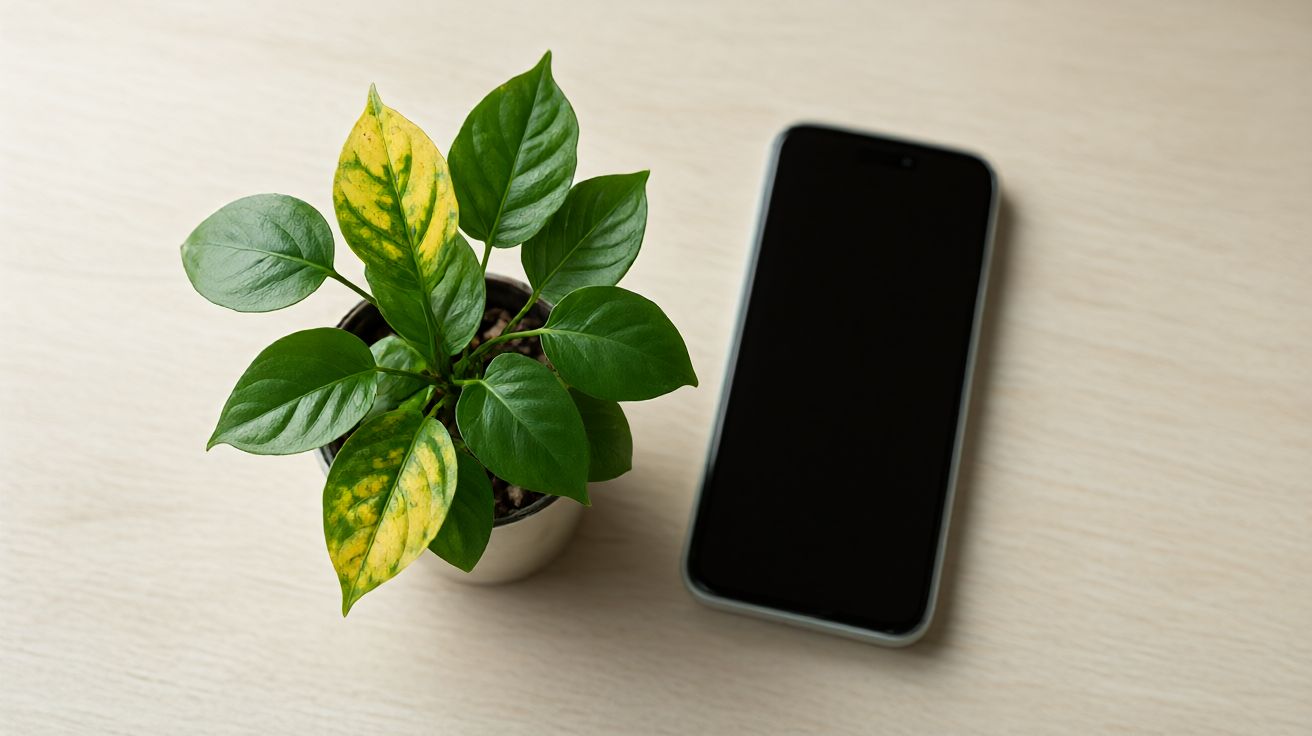
Color tells you about nutrition and stress. Yellow leaves suggest nitrogen deficiency or overwatering. Pale leaves suggest insufficient light. Dark, purplish leaves suggest phosphorus deficiency. Brown tips suggest low humidity or fertilizer burn.
Texture tells you about water status. Crisp, dry leaves suggest underwatering. Soft, limp leaves suggest overwatering or root rot. Thick, leathery leaves that feel turgid suggest adequate hydration.
Pattern tells you about the cause. Spots with halos suggest fungal or bacterial infection. Bleached patches suggest sunburn. Curling edges suggest low humidity or underwatering. Yellowing between veins suggests iron or magnesium deficiency.
Posture tells you about light and water. Leaning toward light suggests insufficient light. Drooping suggests underwatering or root problems. Stiff, upright posture suggests adequate conditions.
Common Photo Patterns
Yellowing lower leaves with green upper leaves often indicates nitrogen deficiency or natural aging. Yellowing all over with wet soil indicates overwatering. Yellowing all over with dry soil indicates underwatering.
Brown spots with yellow halos on older leaves often indicate fungal infection. Angular, water-soaked spots suggest bacterial infection. Dry, bleached patches on sun-facing leaves suggest sunburn.
Curling leaves with brown tips often indicate low humidity. Upward curling with dry soil indicates underwatering. Downward curling with wet soil indicates overwatering.
Leggy, stretched stems with small leaves indicate insufficient light. Compact growth with pale leaves indicates nutrient deficiency.
When to Seek Expert Help
Photo diagnosis has limits. Root rot, hidden pests, and nutrient deficiencies often require physical inspection or soil testing. If your photo-based diagnosis does not match the symptoms, or if the plant continues to decline despite treatment, consult a local extension service or plant clinic.
Bring multiple photos, your care routine, and the plant itself if possible. Experts can inspect roots, test soil, and identify pests under magnification.
For related symptoms, see plant diagnosis, yellow leaves on plants, and spots on plant leaves.
Last reviewed on November 10, 2026
Sources and further reading: The Spruce, diagnosing plant problems; Gardening Know How, plant photo diagnosis; University of Maryland Extension, plant problem diagnosis.
A photo is a frozen symptom; read it slowly and the diagnosis usually names itself.