
Spots on plant leaves are the plant’s way of showing that something is wrong at the tissue level. A spot is a localized area of dead or damaged cells. The color, shape, and pattern of the spot tell you what caused it. Fungal spots, bacterial spots, and sunburn all look different, and the fix for each is different.
The most common mistake is treating every spot as a fungal infection and spraying fungicide. Many spots are not fungal. Some are bacterial. Some are caused by sunburn, physical damage, or mineral deposits. Applying the wrong treatment wastes time and can damage the plant further.
What Leaf Spots Are
A leaf spot is a localized lesion on leaf tissue. The cells in that area have died or are dying. The spot may be brown, black, yellow, or translucent. It may be round, irregular, or angular. It may have a border, a halo, or a ring pattern.
The spot itself is not the disease. It is the visible result of the disease or damage. The underlying cause is what matters. Fungal and bacterial pathogens invade leaf tissue and kill cells. Sunburn damages cells through excess light and heat. Physical damage crushes or tears cells. Mineral deposits leave residue that burns tissue.
Diagnosis: What Is Causing the Spots?
Work through the possible causes by examining the spot characteristics, location, and pattern. The most common causes of leaf spots in houseplants are fungal infection, bacterial infection, sunburn, and physical damage.
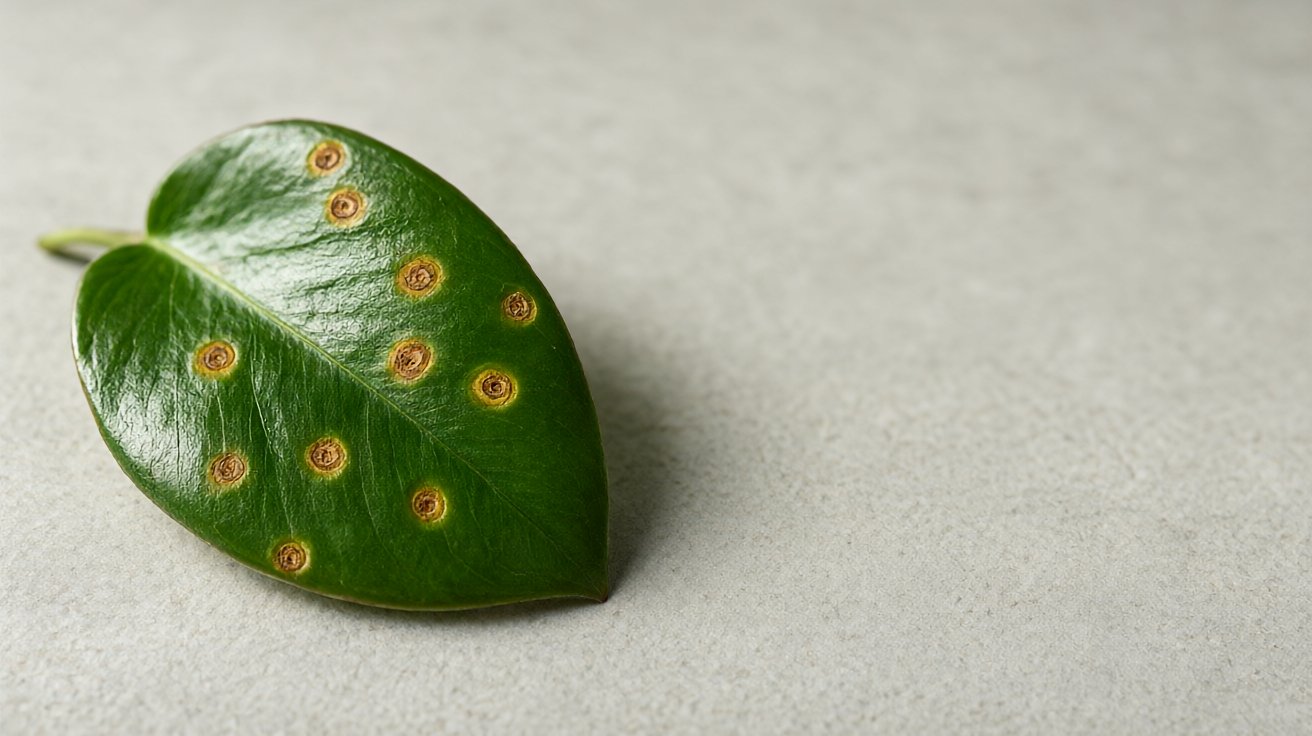
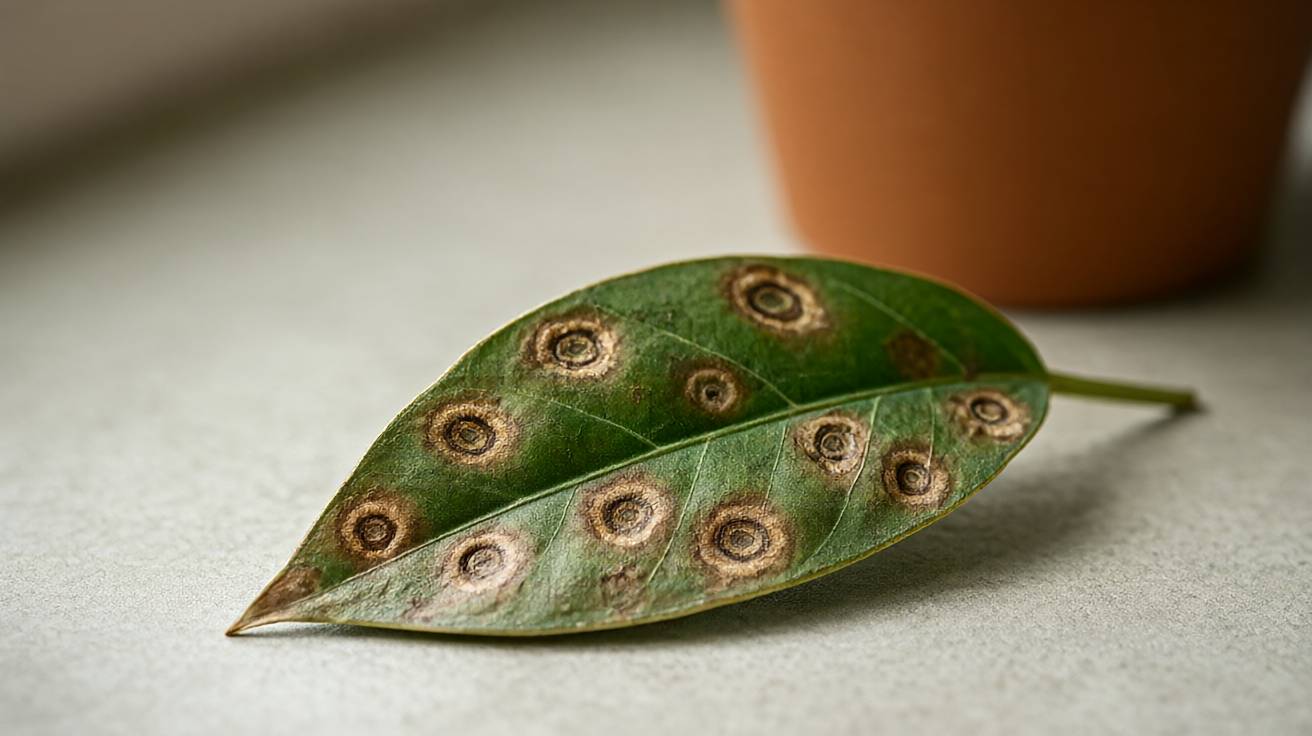
Fungal spots are usually round or oval with a defined border. They may have concentric rings, a dark center, and a yellow halo. They often start on older leaves and spread outward. Common fungal diseases include anthracnose, cercospora, and septoria.
Bacterial spots are often angular because they are limited by leaf veins. They may be water-soaked, translucent, or greasy-looking. They often have a yellow halo. Bacterial spots spread quickly in wet conditions and often appear after overhead watering.
Sunburn spots are dry, bleached, or brown patches on leaves that receive direct sunlight. They appear on the side of the leaf facing the light source. The tissue feels dry and papery. Sunburn does not spread and does not have a halo.
Physical damage causes irregular spots or tears from handling, wind, or contact with objects. The damaged area turns brown as the tissue dies. The spot follows the shape of the injury.

Fungal Leaf Spots
Fungal pathogens thrive in warm, humid conditions with poor air circulation. They spread through water splash, contaminated tools, and infected plant material. Overwatering and overhead watering create the wet conditions fungi need.
The fix is to remove affected leaves, improve air circulation, and reduce humidity around the plant. Water at the base, not overhead. Allow the soil surface to dry between waterings. Apply a copper-based or sulfur-based fungicide if the infection is severe.
Prevention is more effective than treatment. Space plants for airflow. Avoid wetting foliage. Remove fallen leaves promptly. Quarantine new plants before introducing them to your collection.
For related symptoms, see plant leaves curling, yellow leaves on plants, and plant diagnosis.
Bacterial Leaf Spots
Bacterial pathogens enter through wounds or natural openings in leaves. They spread rapidly in wet, warm conditions. Bacterial spots often appear after misting or overhead watering, especially when water sits on leaves.
The fix is to remove affected leaves, stop overhead watering, and improve air circulation. Copper-based bactericides can slow spread but rarely cure established infections. Severely affected plants may need to be discarded to protect others.
Bacterial infections are harder to treat than fungal ones. Prevention focuses on keeping foliage dry, using clean tools, and avoiding overcrowding. Do not reuse contaminated soil or pots.
Sunburn and Physical Damage
Sunburn occurs when a plant receives more direct light than it can handle. The affected area turns pale, yellow, or brown and feels dry and papery. Sunburn does not spread and does not have a halo or border.
The fix is to move the plant to a location with less direct light or to filter the light with a sheer curtain. Damaged leaves will not recover, but new growth should be normal once light levels are corrected.
Physical damage from handling, wind, or contact with objects causes irregular brown spots or tears. The fix is to remove damaged tissue and prevent further contact. New growth will replace damaged leaves over time.
How to Fix Leaf Spots
First, identify the cause using the diagnosis steps above. Examine the spot shape, color, border, and location. Check watering practices, light exposure, and air circulation.
Second, remove affected leaves. This reduces the source of infection and improves the plant’s appearance. Sterilize pruning tools between cuts.
Third, apply the appropriate treatment. Fungicide for fungal spots. Bactericide or removal for bacterial spots. Light adjustment for sunburn. Prevention for physical damage.
Fourth, improve growing conditions. Increase air circulation, reduce humidity, water at the base, and avoid overcrowding. These changes prevent recurrence.
For related symptoms, see brown tips on plant leaves, plant leaves dropping, and how to save a dying plant.
Last reviewed on November 10, 2026
Sources and further reading: The Spruce, leaf spot diseases; Gardening Know How, fungal leaf spots; University of Minnesota Extension, bacterial leaf spot.
Trust the pattern on the leaf: spots are the plant telling you exactly what went wrong.