Your office has no windows. Or maybe one narrow window on the far side of the room that does not reach your desk. You have seen a Mass Cane Plant in someone’s lobby and you are wondering: can that plant survive here? The short answer is yes — with the right conditions and realistic expectations. Here is the full picture of what a Dracaena Massangeana needs to thrive in an office environment.
What Makes an Office Environment Challenging for Houseplants
Offices create a specific set of stresses that most homes do not. Before choosing any plant, it helps to understand what the plant will actually be dealing with:
Low or absent natural light. The most limiting factor. If your office has no windows or only fluorescent overhead lighting with no access to daylight, you need a plant that is genuinely shade-tolerant — not just “can survive” in shade, but one that maintains health in fluorescent-only conditions.
Temperature and air conditioning. Most Singapore offices run on full air conditioning from 9am to 6pm. The air is dry, the temperature is low, and the airflow from vents can be directed at specific positions constantly. Cold, dry draughts are a stress condition that most tropical houseplants handle poorly.
Irregular watering. In a home, you water your own plants. In an office, the person responsible for watering might be a facilities manager who visits every few days, or no one in particular at all. Plants that need consistent moisture struggle. Plants that tolerate occasional drought do better.
Neglect periods. During public holidays, extended leave, or work-from-home periods, office plants may go two to three weeks without any attention at all. Any plant placed in an office environment needs to survive these gaps.
Why Mass Cane Plant Is a Strong Candidate for Office Spaces
The Dracaena Massangeana — Mass Cane Plant or Corn Plant — checks most of the boxes that make an office plant viable. Here is why:
Tolerance of low light. The Mass Cane Plant survives in genuinely low-light conditions. In an office with only fluorescent lighting and no natural daylight, it will not grow actively — it may go months without producing new leaves — but it will maintain itself without yellowing or declining rapidly. It is one of the more shade-tolerant architectural plants available.
Drought tolerance. Because the cane stems store water, a Mass Cane Plant can survive three to four weeks without watering in low-light office conditions. This makes it forgiving of missed watering schedules and public holiday gaps. The risk is overwatering, not underwatering — and in an office where watering is sporadic, that bias toward drought tolerance is an asset.
Air conditioning resilience. Unlike many tropical plants that suffer badly from cold draughts, the thick, waxy leaves of a Mass Cane Plant resist moisture loss from air conditioning airflow. It tolerates temperatures as low as 15°C without visible stress. This makes it one of the better choices for constantly air-conditioned office environments.
Upright growth habit. The Mass Cane Plant’s vertical, contained growth habit means it fits neatly into corners, beside desks, in reception areas, or in narrow spaces where a spreading plant would be awkward. It does not trail onto walkways or need shelves. It is a floor and corner plant by nature.
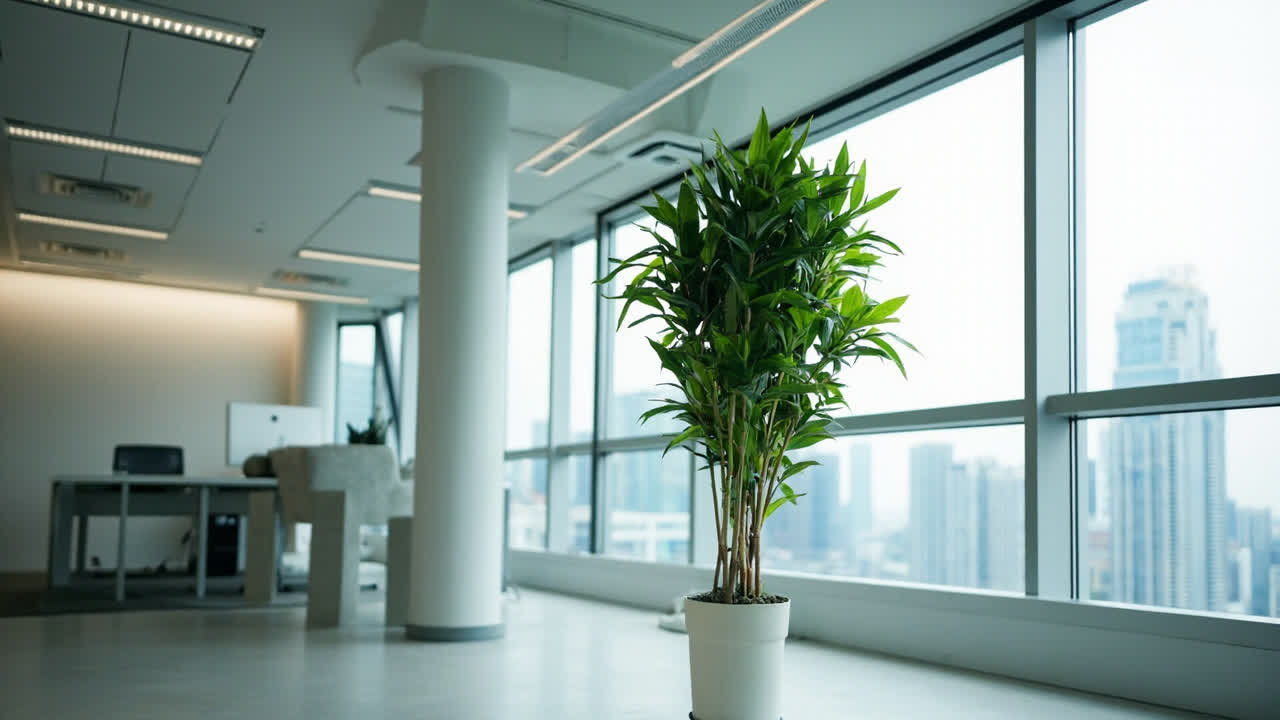
How Much Light Does a Mass Cane Plant Actually Need in an Office?
The light question is the most important one to get right, because it determines whether your office can actually support a Mass Cane Plant at all.
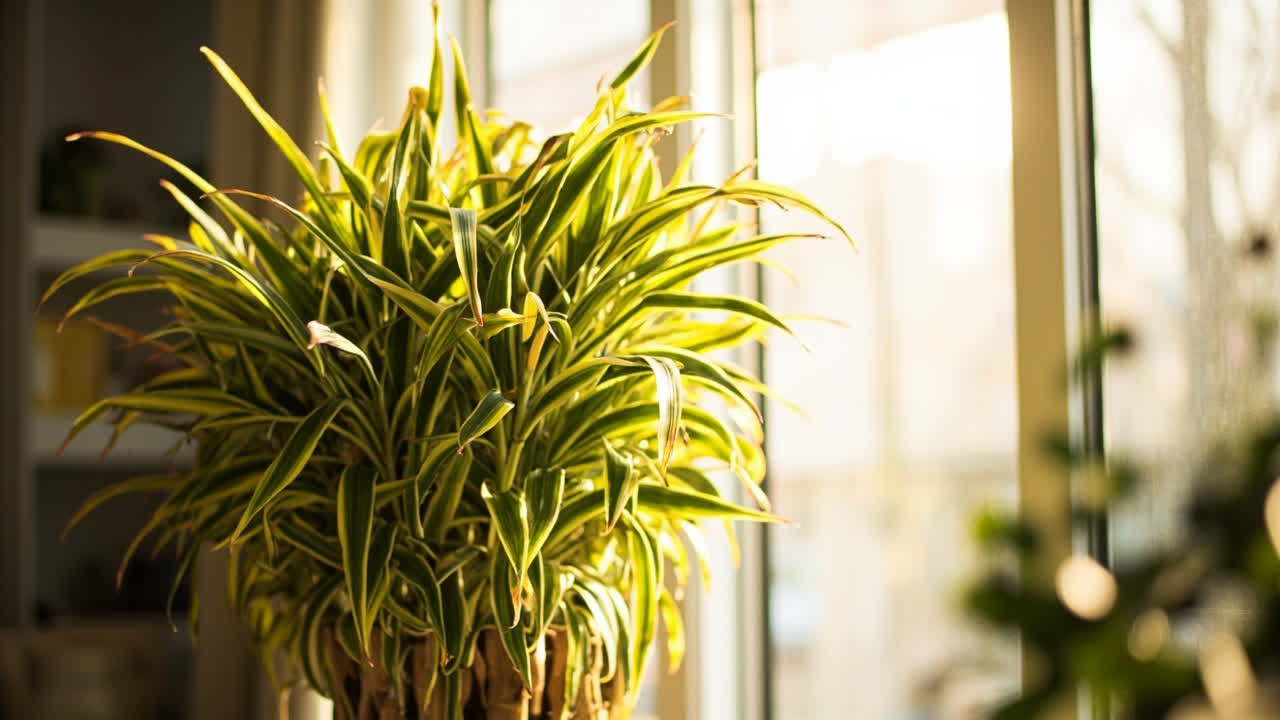
Best case — indirect natural light within 3 metres of a window. If your office has windows and the plant can be positioned within three metres of one, the Mass Cane Plant will grow actively. It will produce one to two new leaves per month. It will maintain its colour and vigour. This is the ideal scenario.
Acceptable — north-facing window or filtered light from a distance of 3 to 5 metres. The plant will survive and maintain itself, but growth will be slow. You should not expect active new growth throughout the year. The plant is using its stored energy to maintain existing leaves rather than expand. If this is your situation, lower your expectations and accept slower recovery after any stress.
Fluorescent-only lighting with no natural daylight at all. The Mass Cane Plant will survive, but it will not grow actively. It may produce no new leaves for six months or more. The existing leaves may gradually yellow and drop — this is normal for a plant in genuinely insufficient light. The plant is not dying; it is in maintenance mode. If you need a plant that actually grows and looks fresh over time, this environment is below the threshold for healthy Mass Cane Plant maintenance.
For more detail on the specific light ranges and what to watch for, see the Mass Cane Plant light requirements guide.
Watering Strategy for Office Environments
The biggest risk to office plants is not underwatering — it is well-meaning but incorrect overwatering by different people on different schedules. Here is how to manage watering for a Mass Cane Plant in an office:
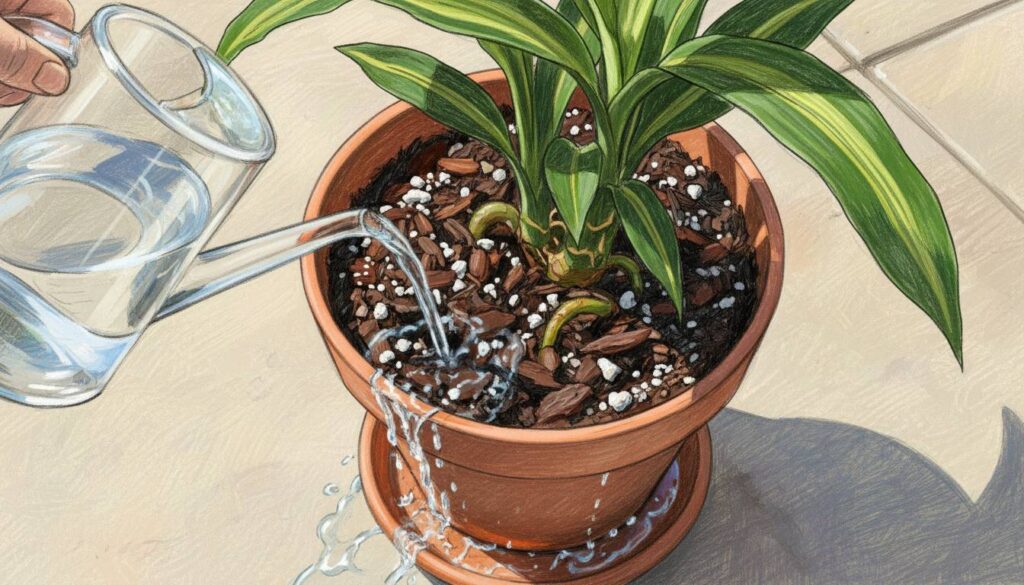
Establish a once-a-week check. Once a week, check the soil by inserting a finger 5 cm deep. If it is completely dry, water lightly — enough to dampen the soil evenly but not enough to saturate it. If it is still damp, do not water. In a low-light office environment, the plant will not need water more frequently than once a week, and in winter or low-activity periods, once every 10 to 14 days may be sufficient.
Use a self-watering planter if possible. A planter with a water reservoir at the base — a wicking system — keeps the soil consistently moist without daily attention. This eliminates the risk of both underwatering and overwatering and is the most reliable setup for office plants that may be neglected over holidays.
Watch for early signs of stress. If the leaves begin to droop and the soil is dry, the plant needs water immediately — this is underwatering stress and it is recoverable within hours of watering. If the leaves yellow and the soil is moist, the plant has been overwatered and the roots may already be rotting — see the fixing a drooping Mass Cane Plant guide to assess and recover.
For a full watering schedule and what to look for, see the Mass Cane Plant watering schedule guide.
Placement in the Office : Where Does the Mass Cane Plant Work Best?
Not all office positions are equal. Here is a practical breakdown:
Reception areas and lobbies. These typically have the most natural light in an office building — windows, high ceilings, possibly skylights. A Mass Cane Plant in a reception area can be a genuine statement piece, actively growing and making an impression. This is the ideal position. Large floor specimens in lobbies and beside reception desks are the most common successful office applications.
Corner positions beside desks. If the desk is within 3 metres of a window, a medium-sized Mass Cane Plant in a pot beside or behind the workstation is viable. It fits neatly into the corner, takes up minimal floor space, and provides the upright green element that softens an office environment. Avoid placing it directly in the path of an air conditioning vent.
Conference rooms. Conference rooms often have windows on one wall. A Mass Cane Plant placed near the window wall but away from direct AC draught can do well. The low frequency of use in many conference rooms means less disturbance and stable conditions — which many plants actually prefer.
Interior desks with no nearby windows. A desk in the centre of an open-plan office with no window within 5 metres — a Mass Cane Plant will survive here but will not grow actively. It will serve as a maintaining presence rather than a visibly thriving one. If your office has no natural light at all, consider whether the plant will look its best over time in this position before committing.
Managing Temperature and HVAC Stress
Air conditioning is the hidden stress factor in most Singapore offices. Here is how to position the Mass Cane Plant to minimise HVAC-related damage:
- Keep the plant at least 1.5 metres away from any air conditioning vent. The constant cold airflow strips moisture from the leaves faster than the root system can replace it, causing brown leaf tips.
- Avoid placing the plant directly against a single-pane window in an air-conditioned office. The window glass can be cold on one side and the interior air is cold — creating a double chill effect on the leaves nearest the glass.
- If the office temperature drops significantly after 6pm when the AC is turned off, the daily temperature swing is not a major problem for Mass Cane Plant — it tolerates this range well. The issue is sustained cold exposure, not temperature fluctuation per se.
What to Do If the Plant Starts Looking Tired
After three to six months in an office, a Mass Cane Plant may start to look less vibrant — older leaves yellowing and dropping, growth slowing beyond normal maintenance levels. This is usually one of three causes:
Light is insufficient for maintenance. If the plant has been in a genuinely dark position for months, it is using stored energy to maintain itself. Eventually the stored energy depletes and the plant starts declining. The fix is to move it to the brightest position available. Even a move from the centre of a room to near a window can be transformative.
Root rot from overwatering. If the soil has been kept consistently moist — because someone watered it on a fixed schedule without checking soil first — the roots may have rotted. This is the most common cause of sudden decline in office Mass Cane Plants. See the Mass Cane Plant root rot guide for recovery steps.
Natural leaf drop from age. Dracaena Massangeana drops its oldest leaves naturally as new growth emerges. If only the bottom one or two leaves are yellowing and the rest of the plant looks healthy, this is normal. Remove the yellow leaf at the base and continue normal care.
Alternatives if Your Office Has No Natural Light
If your office has truly zero natural light — no windows, no skylights, only fluorescent overheads — and you want something that actively grows rather than just survives, consider these alternatives:
Peace Lily (Spathiphyllum). Genuinely shade-tolerant and capable of growth and even blooming under fluorescent-only lighting. More demanding on watering consistency than Mass Cane Plant, but a stronger performer in genuinely dark spaces.
Snake Plant (Sansevieria). Thrives in low light, survives weeks without water, tolerates air conditioning with minimal stress. It does not grow fast in shade but it maintains itself indefinitely with almost no care. The structural upright form is similar in spirit to Mass Cane Plant but even more resilient.
If you want the architectural presence and long-term resilience of a Mass Cane Plant and your office has at least some ambient daylight within 5 metres, the Mass Cane Plant is the right choice. If your office is genuinely lightless, one of the alternatives above will give you better results.
For more on what to expect from a Mass Cane Plant in low light, the Mass Cane Plant light requirements guide covers the full range of conditions and what to watch for.
Turn PDF Bank Statements Into Workable Spreadsheets
Your bank statement is a mess of numbers, but your books shouldn't be. Use our converter to get Excel, CSV, or QBO files — ready for QuickBooks.
Try It Free Now