They’re both tall, strappy, and sold in the same section of the garden centre. They look similar enough that most people assume they’re the same plant — or at least close enough that care instructions are interchangeable. Dracaena massangeana and Dracaena fragrans (corn plant) are related but distinct species, and the differences matter more than most plant labels reveal.
If you’ve been caring for one thinking it was the other, small but persistent problems start to make sense — the watering frequency that works for corn plant can slowly suffocate mass cane, and the light levels that keep corn plant looking lush can bleach mass cane’s distinctive yellow-striped leaves. This guide settles the comparison clearly, so you can stop guessing and start growing the right plant the right way.
Dracaena Massangeana vs Corn Plant : What They Actually Are
Both plants belong to the Dracaena genus, which sits within the Asparagaceae family. Both are native to tropical Africa. Both are sold commercially as indoor foliage plants under multiple common names. That’s where the straightforward similarities end.
Dracaena massangeana — also called mass cane, corn cane, or happy plant — is technically a cultivar of Dracaena fragrens, specifically selected for its broad leaves with a characteristic yellow-cream stripe running down the centre. It’s the plant most people mean when they say “mass cane.”
Dracaena fragrans — the species — is what florists and nurseries call “corn plant” because the undulate, arching leaves resemble maize. The plain green or variegated forms (such as ‘Lemon Lime’ or ‘Massangeana’) have a different growth habit and different care tolerance than the massangeana cultivar.
The practical distinction for indoor gardeners: massangeana is the variegated, slower-growing, more humidity-sensitive one. Corn plant (fragrans) is generally tougher, faster-growing, and more forgiving of variable conditions.
Visual Differences : How to Tell Them Apart
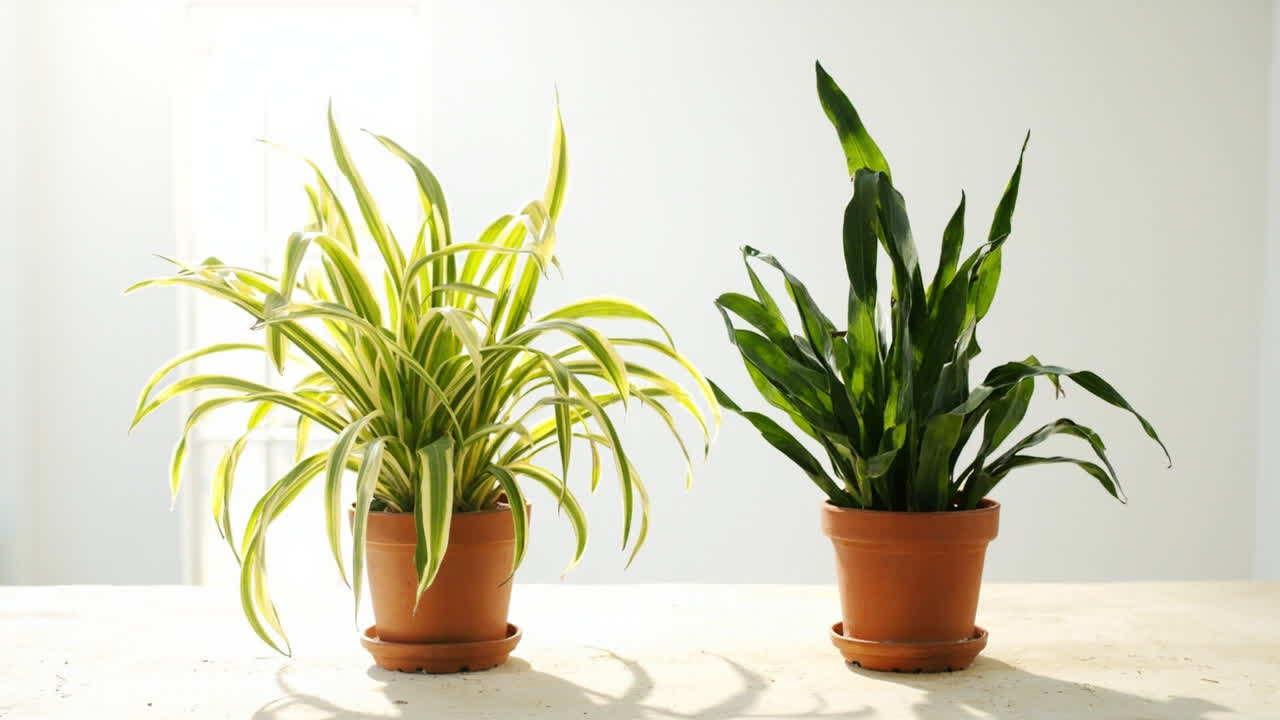
You can tell these two apart most reliably by looking at the leaves. The differences are subtle if you haven’t been shown what to look for, but they become obvious once you know.
Leaf Colour and Pattern
Massangeana has a broad, central yellow to cream-coloured band running the full length of each leaf. The leaf itself is darker green on the margins, creating a distinctive striped effect visible from across a room. The stripe is stable and consistent across most cultivated specimens.
Corn plant (Dracaena fragrans) typically has plain green leaves without the prominent central stripe. Some cultivars carry a lighter variegation — usually a lighter green or yellow at the leaf margins rather than down the centre — but the overall pattern is less dramatic than massangeana. In low-light conditions, corn plant leaves may lose some variegation entirely and look almost uniformly green.
Leaf Shape and Growth Habit
Massangeana leaves are broader, flatter, and more arching. The leaf width tends to be 5–8 cm at the widest point, and the growth is relatively symmetrical — the plant forms a clean, single or multi-stemmed fountain shape over time.
Corn plant leaves are narrower and tend to undulate more — they don’t lay completely flat and often have a gentle wave along their length. The growth habit is more vertical and open, and with age, corn plant stems can become quite tall and bare at the base, giving it a more tree-like appearance than massangeana.
Stem and Cane Characteristics
Both plants develop cane-like stems as they mature, but there is a consistent difference in how those canes look. Massangeana canes are smoother and more uniform in colour. Corn plant canes often show the prominent leaf scar rings where old leaves have dropped — the knuckle-like rings are more textured and visible on corn plant than on massangeana.
Care Comparison : Where the Differences Actually Matter
The visual differences are interesting, but the care differences are what actually cause problems for indoor gardeners. Here’s where the two plants diverge most significantly.
Light Requirements
Massangeana is more sensitive to direct light and more tolerant of low-light conditions than corn plant, but the quality of light matters differently. The yellow striping on massangeana leaves contains less chlorophyll than solid green tissue — which means the plant is slightly less efficient at photosynthesising under low light than corn plant. In very low light, massangeana will gradually lose variegation and grow more slowly.
Corn plant handles low light more gracefully and grows faster in bright, indirect light. It also tolerates some direct morning sun better than massangeana, whose leaves will bleach and develop pale patches in direct afternoon sun.
Watering and Humidity
This is the area of greatest practical divergence. Massangeana has a lower transpiration rate than corn plant and is notably more sensitive to overwatering. The soil needs to dry more thoroughly between waterings, and the root system is less forgiving of compaction or waterlogging.
Corn plant is significantly more robust in its watering tolerance. It can handle a wider moisture range without showing stress — which is why it’s often the better choice for people who tend to water more frequently or inconsistently.
Both benefit from humidity above 40%, but massangeana shows fluoride sensitivity more readily than corn plant, producing brown leaf tips in response to fluoride in tap water or certain fertilisers. If you live in a hard-water area and see persistent brown tips on a plant labelled “corn plant,” there’s a reasonable chance you’re growing massangeana — which is more reactive to fluoride and salts.
Growth Rate and Maturity
Corn plant grows faster under good conditions — typically adding 15–30 cm of height per growing season. Massangeana is slower-growing and more compact in its natural form, adding roughly 10–20 cm per year under ideal conditions. For indoor gardeners with limited space, massangeana’s slower rate and more compact growth habit is a practical advantage.
Common Confusion Points
Why Garden Centres Often Mislabel Them
Both plants are routinely sold under the common name “corn plant” or “mass cane” interchangeably, depending on the supplier and region. In some markets, massangeana is the dominant form sold and is labelled simply as “corn plant.” This has created genuine confusion that persists even among experienced gardeners.
The reliable identifier — the yellow central stripe — is visible on young plants in the nursery pot. If the plant you’re looking at has no visible stripe, you’re looking at Dracaena fragrans or one of its other cultivars. If in doubt, ask a staff member at a specialist nursery — big-box garden centres frequently mislabel both.
Which One Is Easier to Keep Alive
Corn plant (Dracaena fragrans) is the more forgiving and generally tougher plant. It tolerates inconsistent watering, lower humidity, and a wider range of light conditions without rapid decline. Massangeana rewards more attentive care — specifically more careful watering and better light management — but is not difficult to keep healthy once the conditions are right.
If you’re a beginner or tend to forget to water, corn plant is the more forgiving choice. If you want a more compact, visually distinctive plant and you’re willing to adjust your watering habits, massangeana is the more elegant addition to a living room or bedroom.
Which Should You Choose?
Both are excellent long-lived indoor plants. The choice comes down to three practical factors:
- If you want the yellow-striped look and have bright, indirect light — massangeana is the right plant. Its distinctive colouring is more dramatic and the slower, more compact growth means it stays shaped well for longer.
- If your space gets lower light and you water inconsistently — corn plant is the better fit. It’s harder to accidentally kill and more forgiving of the occasional forgotten watering schedule.
- If you’re not sure which you’re buying — ask to see the leaves clearly. No yellow central stripe means corn plant (fragrans) or another Dracaena cultivar.
For either plant, our mass cane care and maintenance guide provides the full care framework — watering, light, and the soil basics that keep both Dracaena varieties healthy long-term.
If you’re setting up a new space and deciding between multiple indoor plants, our mass cane plant benefits article covers why Dracaena massangeana specifically is worth considering — beyond aesthetics — for indoor air quality and low-maintenance resilience.
From PDF to Excel in one click
Forget retyping line by line. Upload any bank statement, get a spreadsheet you can actually use. Your files are never stored, and you can test the converter with 3 free conversions.
Try it free