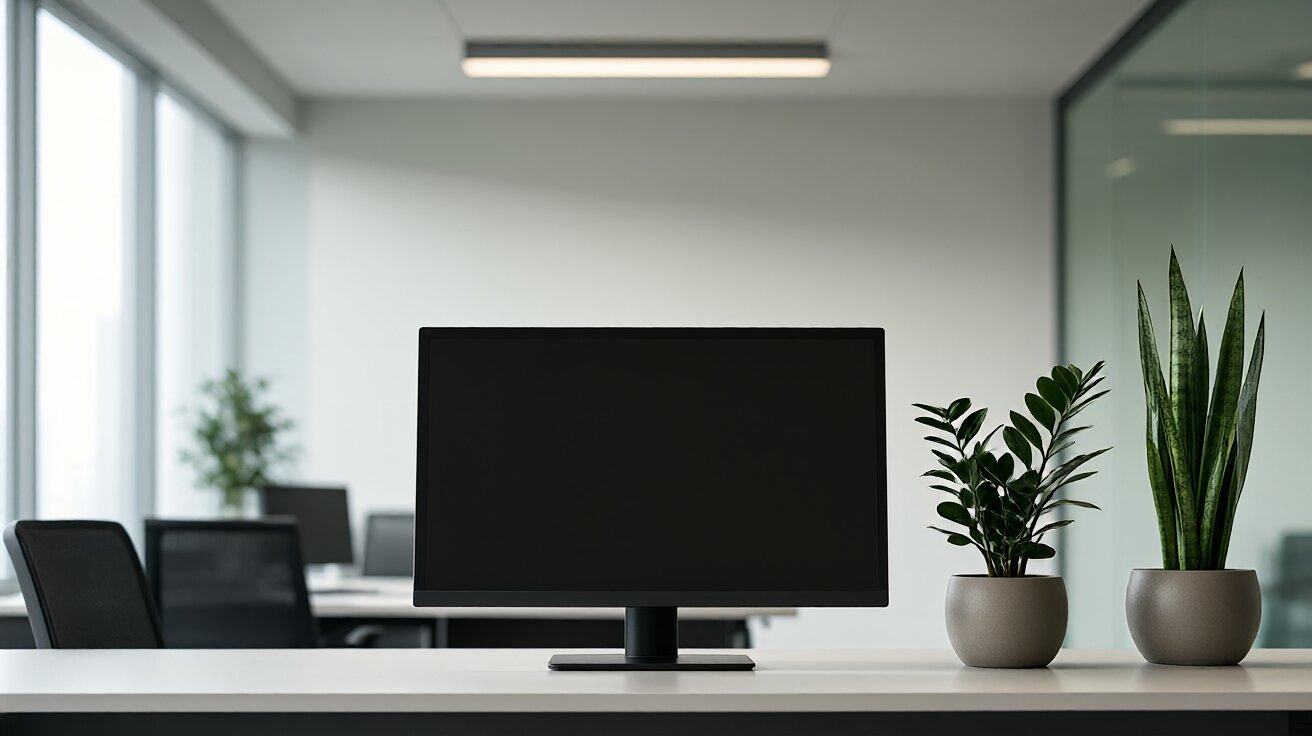

A fluorescent-lit office desk is one of the hardest spots you can put a plant, and most of the ones you are handed at work are already on their way out within a month. The reason is not that you forgot to water it. It is that the light is weak, the air is dry, and the plant goes three or four days without attention every week. The seven plants on this list survive exactly that combination, and they stay desk-sized. They are ranked by how little they need, so if you are only going to keep one, start at the top.
What you cannot change at a work desk is the light and the humidity, so the choice of species does most of the work. Below is how to read the light you actually have, why the dry air matters more than the watering does, and which of the seven will hold up best in your specific corner. The full ranking of low-light species lives on best indoor plants for low light; this page is the office-only slice of that list, with the fluorescent-light and dry-air facts worked out.
What Low Light Actually Means at a Desk
When a plant is described as low-light tolerant, the light range that matters is measured in foot-candles. University of Missouri Extension puts general low-light houseplants between 50 and 250 foot-candles. A desk under standard ceiling fixtures sits at or below the bottom of that range, and a desk with no window at all can be down near 20 foot-candles or less. That number is the whole reason most office plants fail: they are sold to you for a sunlit home, not for a corner three meters from the nearest tube.
How to measure the light at your desk
You do not need a meter to make the call. Hold your hand up in front of you where the plant would sit and look at the shadow. A hard, dark shadow on the wall behind your hand means bright light. A soft, fuzzy shadow means low light, and a shadow you cannot see at all means the spot is in the range where only the toughest species will stay green. If you want a number, a phone light meter reads 50 to 250 foot-candles for a usable low-light desk, and the measurement guide for converting between foot-candles, lux, and the windowsill distance is in indoor plant light levels.

The dry-air and weekend gap
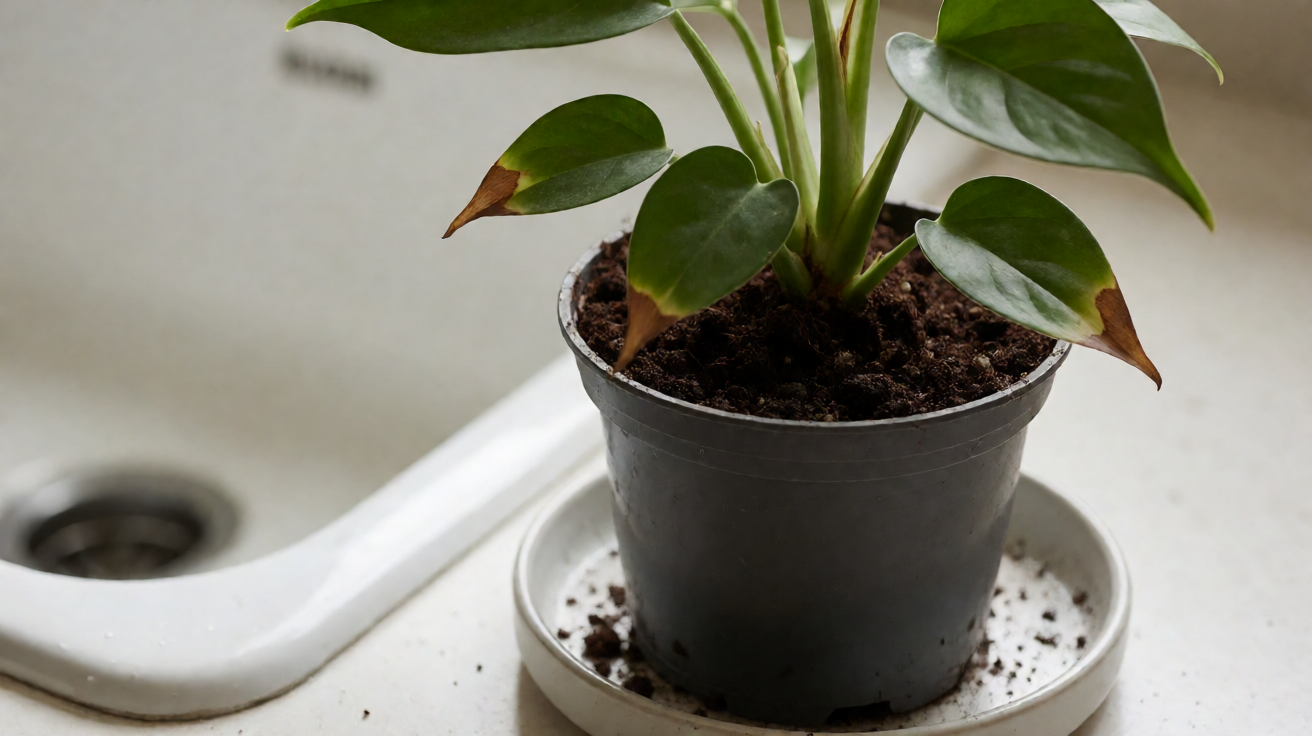
Dry air hurts office plants more than weak light does. Air-conditioned and heated rooms run their relative humidity down to around 30 to 40 percent, which is dry enough to brown the edges of tropical leaves even when the soil stays perfect. On top of that, an office plant goes three to four days without water every weekend and often a whole holiday week in December. The species that survive are the ones that store water in thick leaves or rhizomes and do not panic when the pot dries out. Cold shutdowns are the quiet killer: a night with the heating off can drop a room below the 55 degrees F (13 degrees C) floor that several of these plants need, and that is what finishes off the sensitive ones on a holiday weekend.
The cactus trap
The little succulent or cactus that shows up on a desk is the first plant in the office to fail, and the reason is the light. Succulents are the wrong tool for a low-light corner: they are the one group on this list that wants bright light, so in a shadowed spot they stretch, pale, and drop leaves even with perfect watering. A cactus on a north-facing desk is not a maintenance problem, it is a mismatch. If you are given one, the only two settings where it works are a genuinely sunny windowsill or under a grow light, and even then it should be watered far less often than you will be tempted to water it.
The Drought Tolerant Two: ZZ and Snake Plant
These are the two you reach for when the desk is in shadow and you will genuinely not be there to water it. Both store water and both forgive the weekend gap.
ZZ plant
The ZZ plant (Zamioculcas zamiifolia) is the most forgiving plant on this list. It is a slow grower, so it will not outgrow a desk, and its narrow, upright form takes almost no space. It tolerates deep shade and a missed watering both, which is exactly the office combination. The full care set, including the rhizome that lets it survive a long dry spell, is in ZZ plant care.
Snake plant
The snake plant (Dracaena trifasciata) is technically a succulent, which is why it can go a month or more between waterings without closing its leaves. It grows upright, so you can line a shelf with several without stealing desk space. It takes the lowest light of the seven and still looks fine. The watering interval, pot-bound tolerance, and the brown-tip warning for hard tap water are covered in snake plant care.
The Forgiving Pattern Makers: Pothos and Chinese Evergreen
These two give you more leaf interest than the two above, at the cost of being a little fussier about the light.
Pothos
Pothos (Epipremnum aureum) is the trailing option: let it run off the edge of the desk or hang it above a high shelf. It is fast to propagate from cuttings in water, so it doubles as a way to share a plant with a colleague. It is the one of the seven that really wants a window desk to keep its variegation, and in the darkest corner it will still live but go plain green. The full list of varieties and the propagation method is in pothos.
Chinese evergreen
Chinese evergreen (Aglaonema) is the plant that brings color to a spot with no other color. The pink and red varieties are the prettier ones but need more light; the dark green and silver ones are the ones that survive a shadowed desk. University of Missouri Extension notes that aglaonema can take light as low as 10 foot-candles, which suits a corner desk with no window. Its one weakness is cold, so keep it off a cold window in winter.
The Statement Plants: Cast Iron and Dracaena
When you have a floor spot or a wide desk rather than a small one, these two fill the space.
Cast iron plant
The cast iron plant (Aspidistra elatior) earns its name: it is one of the hardiest foliage plants you can keep, and it actually prefers the shade of an office to direct sun. Its sword-shaped leaves take up floor space next to a desk, and it shrugs off the temperature swings that office thermostats throw at it. It is the plant for the corner that gets no attention and no light and still looks intentional.
Dracaena
A dracaena (Dracaena spp.) gives you the height and the leafy mass that a desk pot cannot. It tolerates low light better than its bright preference suggests, but it is the one of the seven that gets brown leaf tips from the fluoride and chlorine in hard tap water, so the fix is to let the pot drain and use filtered or decanted water when you do top it up.
The Two With a Catch: Peace Lily and Lucky Bamboo
These two are the popular office picks, and both need one adjustment to the usual care.
Peace lily
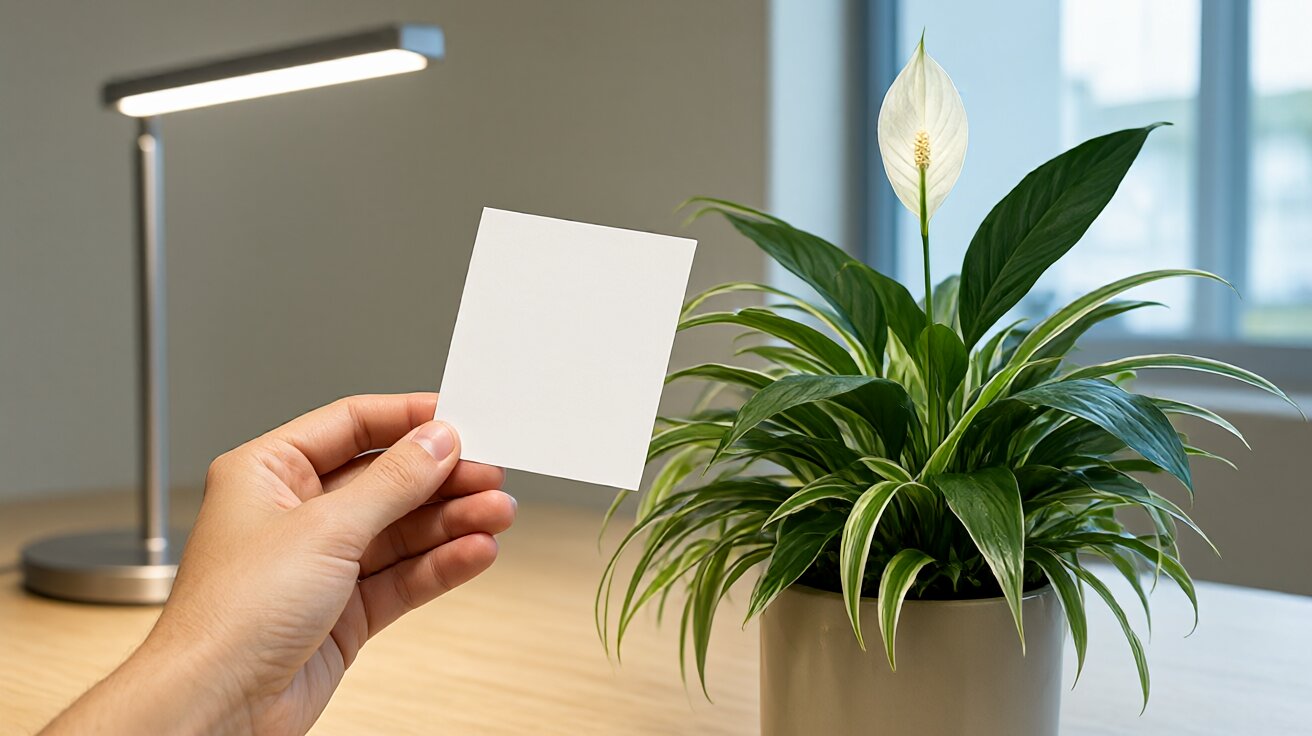
The peace lily is the only plant on this list that tells you it is thirsty by drooping hard and standing back up within hours of a drink, so it is the easiest of the seven to read. The catch is the light: it will live in low light but only flowers in medium, and it sags in dry air faster than the others. It is the best pick for a reception desk or meeting room with a window, not for the darkest cubicle. The care and flowering details are in peace lily care.
Lucky bamboo
Lucky bamboo grows in nothing but a vase of water and a few pebbles, so there is no soil to spill on a desk and no gnats in a sealed room. It tolerates fluorescent light without complaint. The catch is that it is the most fragile of the seven: the base rots fast if the water sits, so the rule is to change the water weekly and keep the plant off a hot, sunny windowsill, which is the one spot where it will fail.
The Office-Plants Comparison Table
| Plant | Min light it tolerates | Water interval | Weekend and dry-air tolerance | One office tip |
|---|---|---|---|---|
| ZZ plant | Deep shade | 2 to 4 weeks | Excellent | The pick for the darkest, driest desk |
| Snake plant | Deep shade | 2 to 4 weeks | Excellent | Use filtered water to stop brown tips |
| Chinese evergreen | 50 to 10 foot-candles (darker forms) | When top 2 to 3 cm dry | Good, cold-sensitive | Keep off a cold winter window |
| Pothos | Low to medium | When top 2 to 3 cm dry | Good | Wants a window desk to keep variegation |
| Cast iron plant | Low, shade-preferring | When top 2 to 3 cm dry | Excellent, big pot | Floor spot next to the desk |
| Dracaena | Low to medium | When top 2 to 3 cm dry | Good | Decant tap water, it is fluoride-sensitive |
| Peace lily | Medium to flower | Every 7 days, it droops to tell you | Fair in dry air | Window side, not the darkest cubicle |
| Lucky bamboo | Fluorescent is fine | Change water weekly | Fragile base | No soil, no gnats, no hot windowsill |
What to Do in Your First Two Weeks
Plant it, then stop touching it for the first two weeks. Overwatering in the first fortnight is the fastest way to kill an office plant, because the pot has nowhere to drain when it is crowded with soil at the desk. Check the soil only when you think it should be dry: a finger pushed 2.5 cm (1 inch) into the mix should come back dry before you water. If the leaves are browning at the edges and the soil is fine, the air is the problem, not the watering, and a small humidifier or moving the pot away from the AC vent is the fix. If the whole plant looks pale and leggy, it is the light, so either ask for a desk by a window or add a small clip-on light. Everything else is a short list that stays desk-sized, and it is in 16 indoor plants for office desk.
Your desk is not a bad place for a plant. It is a dry, low-light one, and the seven on this list live in exactly that. Pick the one that matches how much light you have, water it less than you think, and it will outlast the project you are working on.
Sources and further reading
University of Missouri Extension, houseplant light and watering bulletins, covering the 50 to 250 foot-candle range for low-light houseplants, the foot-candle tolerance of Aglaonema down to about 10 foot-candles, and species selection for indoor light levels.
Iowa State University Extension and Outreach, interior plant management bulletins on watering frequency, light requirements, and the selection of drought- and low-light-tolerant houseplants for interior spaces.
Last reviewed on 11 November 2026