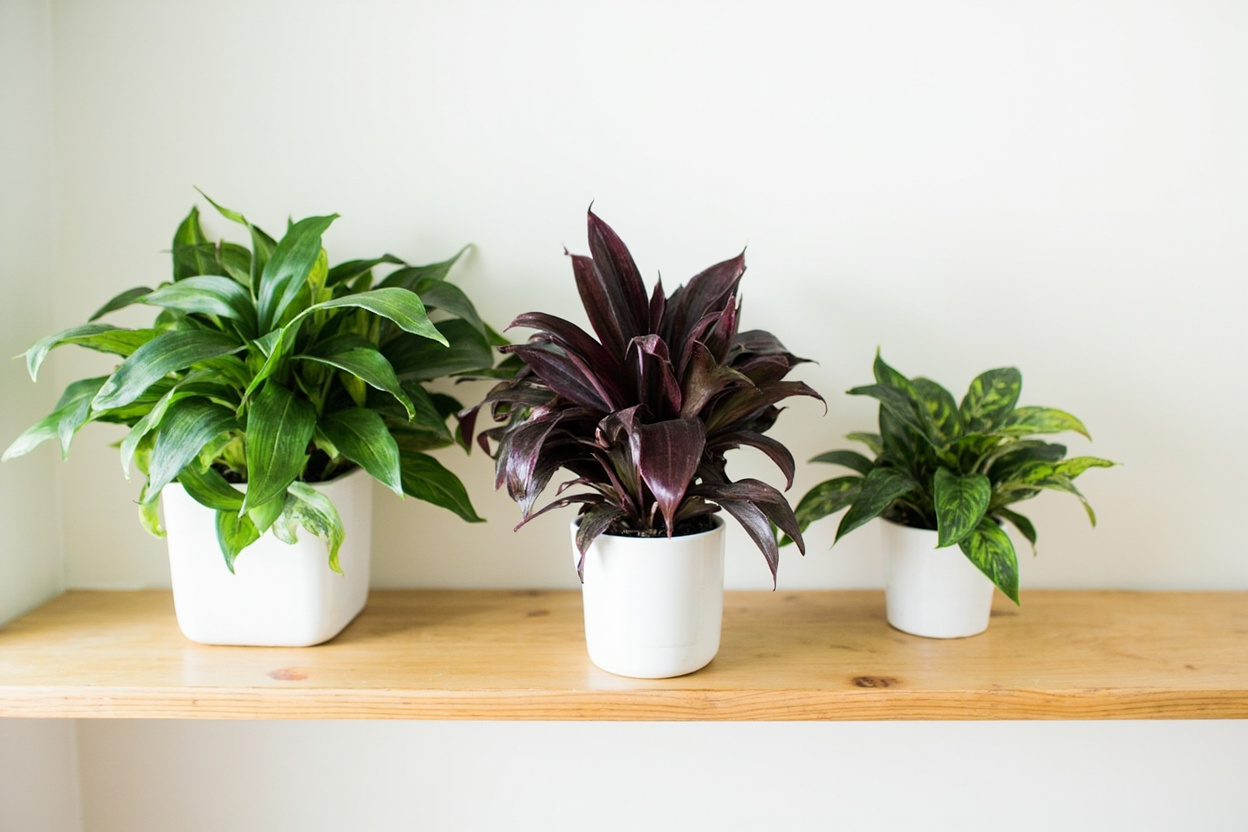
Propagate aglaonema by division — it is the most reliable method and the only way to maintain the exact characteristics of the parent plant. Stem cuttings in water work for some varieties but are slower and less consistent. Division gives you an established plant with a root system from day one.
When to Propagate: Spring Is Best
The care guide covers the growing conditions that help divisions establish quickly.
Divide aglaonema in spring when the plant is entering its active growing season. The warm temperatures and increasing daylight trigger rapid root development, and the plant recovers from the disturbance within weeks. Avoid dividing in winter when growth is dormant — the divisions sit idle and are vulnerable to rot.
The best time to divide is when you are already repotting. If the plant has outgrown its pot or the soil needs refreshing, take the opportunity to split it at the same time.
How to Divide an Aglaonema
Remove the plant from its pot and gently shake off the excess soil so you can see the rhizome structure. Agalonema grow from thick underground stems (rhizomes) that produce both roots and shoots. Look for natural divisions — points where the rhizome has branched and each branch has its own set of leaves.
Using a clean, sharp knife (sterilize with rubbing alcohol), cut through the rhizome at the natural division points. Each division should have at least two or three leaves and a healthy cluster of roots. If the rhizome is thick and woody, a serrated knife or clean secateurs work better than a straight blade.
Dust the cut surfaces with cinnamon powder (a natural antifungal) and let them dry for 30 minutes. This callusing step reduces the risk of rot when the division goes into moist soil.
Pot each division in a small pot (8 to 10 cm / 3 to 4 inches) filled with the standard aglaonema mix (potting soil, perlite, and orchid bark). Water lightly and place in a warm, bright spot out of direct sun. Keep the soil lightly moist — not wet — for the first two weeks while new roots establish.
Aftercare: The First 6 Weeks
Newly divided aglaonema may wilt for the first week as the reduced root system struggles to supply water to the full leaf canopy. This is normal. Do not increase watering — wet soil will rot the damaged roots. Instead, raise humidity around the plant by covering it loosely with a clear plastic bag (propped up so it does not touch the leaves) or placing it in a propagator.
Remove the humidity cover after two weeks. By this point, new root growth should be underway. Resume normal watering when the top inch of soil dries. The first new leaf is the sign that the division has fully established — expect this 4 to 6 weeks after dividing.
Stem Cuttings in Water: A Slower Alternative
Some aglaonema varieties (particularly ‘Silver Queen’ and ‘Emerald Bay’) can be propagated from stem cuttings in water. Cut a stem section that includes at least one node (the swollen point where leaves emerge) and place it in a jar of clean water. Change the water every 3 to 4 days.
Roots appear from the node in 3 to 6 weeks. Once roots are 3 to 5 cm (1 to 2 inches) long, pot the cutting up in standard aglaonema mix. Keep humid for the first two weeks. Water propagation is satisfying to watch but slower than division and does not work reliably for all cultivars — heavily variegated types often revert to solid green when propagated from cuttings.
Common Propagation Mistakes
For troubleshooting yellow leaves after division, the yellow leaves guide covers diagnosis.
Making divisions too small: a single leaf with a tiny piece of rhizome and no roots will not survive. Each division needs at least two leaves and a reasonable root mass.
Overwatering after division: the reduced root system cannot take up much water. Keep the soil lightly moist, not wet. The most common cause of division failure is rot from overwatering.
Too much sun while establishing: newly divided aglaonema are stressed and cannot handle bright light. Place in bright indirect light and move to the final position after 4 to 6 weeks.
From Bank Statement to QuickBooks-Ready File
That manual cleanup you just read about? This tool skips it. Turn your PDF into QBO for QuickBooks without storing your data anywhere.
Start Converting