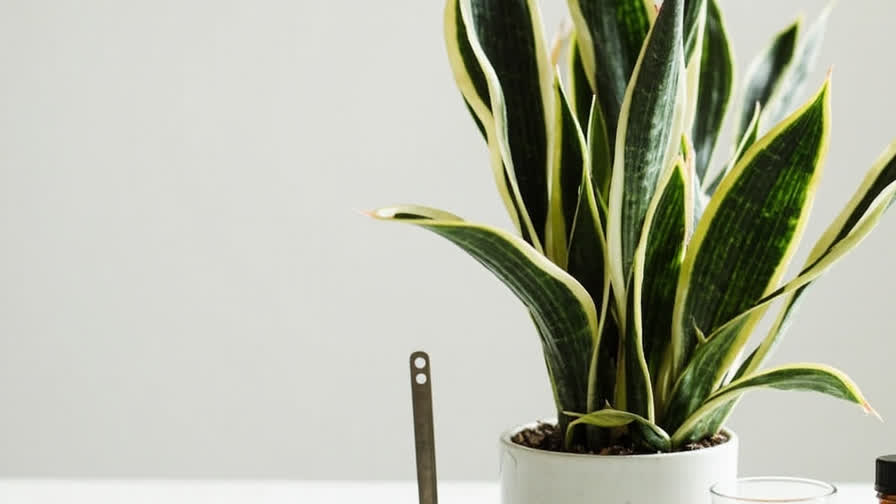
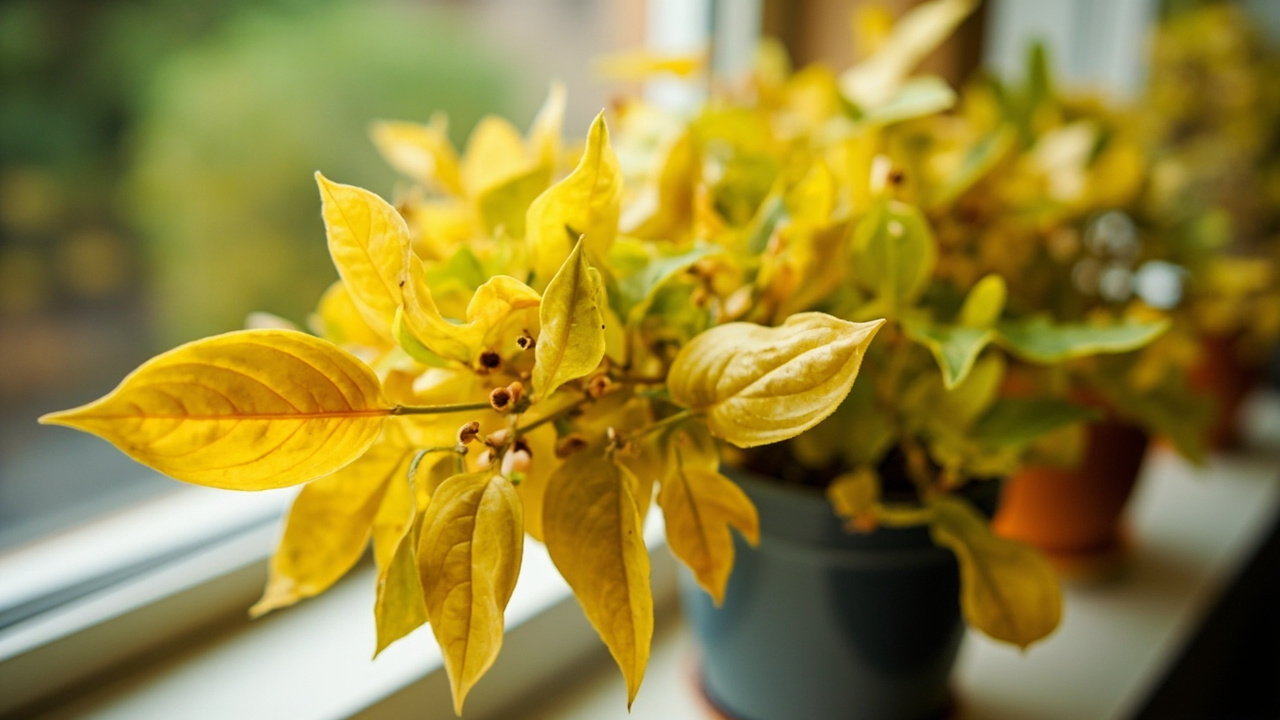
Two yellow leaves appeared on the lower Hoya vine this week. By next week, there were five, and one dropped onto the soil surface with a soft plop. Yellow Hoya leaves are the plant’s distress signal, but the message is ambiguous: the same symptom means overwatering, root rot, nutrient deficiency, or normal aging depending on where the yellow appears and how fast it spreads.
The diagnosis starts below the soil line. In 80% of cases, yellow Hoya leaves trace back to root-zone conditions — saturated mix, oxygen-starved roots, or fungal invasion of the root tissue. The remaining 20% split between nutrient deficiency and natural senescence.
This guide gives you the four diagnostic patterns, the corresponding causes, and the recovery protocol for each — including when the yellow leaves signal a point of no return.
The Yellow Leaf Map: Four Patterns, Four Causes
Identify the pattern before reaching for the watering can or the fertilizer. Pattern one: lower leaves turn uniformly yellow and feel soft or mushy. This is overwatering — roots suffocating in saturated mix, oldest leaves dying first.
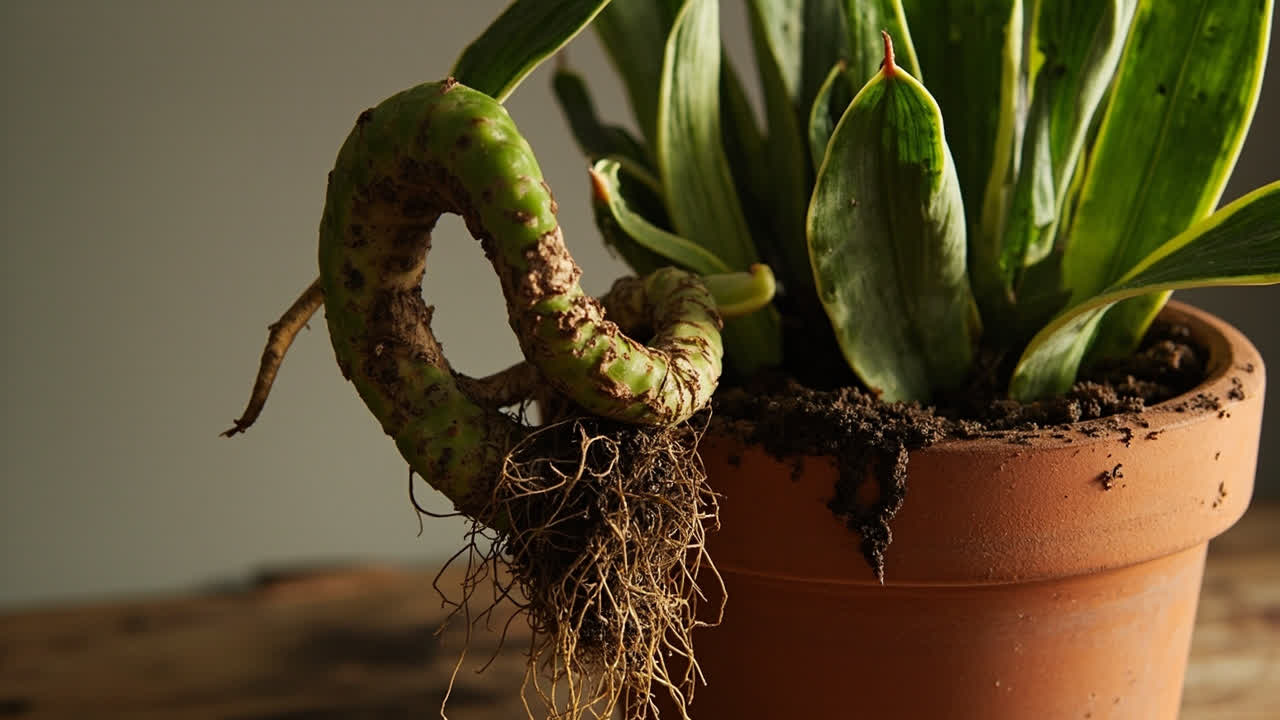
Pattern two: yellow leaves appear mid-stem, roots are brown and slippery when you slide the plant from the pot. This is root rot — Pythium or Phytophthora fungi have colonized the root tissue. Pattern three: all leaves pale yellow-green while veins stay dark green, growth has slowed.
This is nitrogen deficiency — the mix has been depleted and the plant is remobilizing nitrogen from older leaves. Pattern four: lowest 1–2 leaves turn yellow and drop per quarter, the rest of the plant looks healthy and continues growing. This is natural senescence — normal aging, no action required.
The location of the yellow tells the story. Overwatering and senescence affect lower leaves first because the plant sacrifices old growth to sustain new shoots. Nutrient deficiency shows in upper leaves first if the nutrient is iron (immobile in the plant) or lower leaves first if nitrogen (mobile — the plant relocates it).
Root rot can appear at any height because the damage is at the source: the roots cannot supply any leaf with adequate water or nutrients.
Overwatering: The Most Common Mistake and How to Confirm It
The Hoya watering guide names the standard: water only when the top 2 inches of mix feel dry to the touch. In a 70°F room, this typically means every 7–10 days; in an 80°F room, every 5–6 days. The most common violation is watering on a schedule instead of checking the mix — and the consequence is yellow leaves within 5–7 days.
Saturated mix displaces air in the pore spaces between bark and perlite particles. Hoya roots need oxygen; without it, root cells begin dying within 48 hours. The dead roots stop transporting water to the leaves, and the oldest leaves (farthest from the root tips, lowest priority for water delivery) turn yellow first.
The fix: slide the plant from the pot, check root color (white or cream = healthy, brown = rot), and if roots are white, allow the mix to dry for 3–5 days before the next water. Resume watering only when the top 2 inches feel dry.
Prevention is simpler than correction. Use a pot with drainage holes (non-negotiable), an epiphytic mix that drains within 30 seconds (the Hoya soil mix guide covers the 50/50 perlite-bark ratio), and water thoroughly once instead of small daily sips that keep the lower mix permanently wet.
Root Rot: When Yellow Leaves Signal a Root Emergency
Root rot progresses faster than overwatering damage. Within a week of inoculation, fungal hyphae colonize the outer root tissue; within 2–3 weeks, roots turn brown, soft, and slip off the central core when pulled. The yellow leaves accelerate — not 2–3 per week, but 5–10 across the whole plant.
The smell is detectable: a sour odor from the root ball, distinct from the neutral or earthy smell of healthy mix.
The surgical protocol: slide the plant from the pot, wash the root ball under lukewarm water to remove all old mix, trim every brown, slimy, or hollow root back to firm white tissue with sterilized scissors. Dip the remaining root system in a 1:9 bleach-water solution for 30 seconds. Let the roots air-dry for 2 hours.
Pot into a completely dry (not moist) epiphytic mix and do not water for 7 days — this allows cut ends to callus before encountering moisture that harbors fungal spores. The Hoya potting guide covers the full repotting sequence.
Success depends on how far the rot has advanced. If rot has reached the crown — the thickened base where stems emerge from the roots — the plant is unsalvageable. The tissue at the crown turns brown and collapses when pressed; compost the plant and start over with a healthy cutting.
If rot is confined to the roots and the crown is firm, the plant recovers in 4–6 weeks at 72°F after the surgical repot.
Nutrient Deficiency: The Nitrogen Lockout Pattern
All-over pale yellow-green leaves with dark green veins signal nitrogen deficiency. The plant is remobilizing nitrogen from older leaves to sustain new growth, and the older leaves chlorophyll-break into yellow while the veins retain their pigment. Growth slows, internodes shorten, and the plant’s overall demeanor is stunted rather than wilted.
The fix: apply a balanced liquid fertilizer (10-10-10 or 20-20-20) at half strength every 2 weeks for 3 applications. The yellow leaves will not reverse — once chlorophyll breaks down in a leaf cell, it does not regenerate — but new growth emerges green if the nutrient supply is restored. After 3 applications, return to a monthly feeding schedule.
Iron deficiency is different and less common in Hoya plants: upper leaves turn yellow while veins stay dark green, and the cause is usually high pH in the mix (above 7.0) rather than lack of iron. Correct with a chelated iron drench and adjust future watering to keep the mix at pH 6.0–6.5. The Hoya humidity guide covers pH management in container epiphytic mixes.
Natural Senescence: When Yellow Is Not a Problem
The Hoya plant care complete guide notes that a healthy Hoya drops 1–2 lower leaves per quarter through normal aging. The leaf turns uniformly yellow over 1–2 weeks, detaches cleanly at the petiole joint, and the plant continues producing new growth at the vine tips. No intervention needed.
The diagnostic threshold: if more than 3 yellow leaves appear per quarter, or if yellow appears on any leaf other than the lowest 2–3, the cause is mechanical (overwatering, root rot, or nutrient deficiency) rather than chronological. A Hoya in active growth always produces new leaves at a rate that matches or exceeds the shed rate.
When Yellow Means the End: Crown Rot and Unsalvageable Plants
The honest limit: no protocol saves a Hoya once the crown rots. Fungal invasion at the crown destroys the meristematic tissue that produces new stems and leaves; the plant cannot regenerate from this point. The diagnostic: press the crown gently with your thumb.
If it yields to pressure and is brown inside when sliced, the plant is beyond recovery.
Before discarding a crown-rotted Hoya, inspect the vines. Any vine segment longer than 6 inches with green, firm tissue and at least 3 nodes can be used for propagation. The save dying Hoya plant guide covers the rescue protocol: cut 4-inch sections from healthy vines, root them in water or soil as described in the Hoya propagation guide, and discard the crown-rotted root ball.
You lose the original plant but keep the genetics.
A Hoya that has lost 50% or more of its leaves to any cause — overwatering, root rot, or senescence accelerated by stress — should be evaluated for the energy budget. A plant with fewer than 6 healthy leaves cannot photosynthesize enough to fuel root recovery AND new leaf production. In these cases, aggressive pruning to reduce leaf mass and careful moisture management offer the best odds.
But if the plant has fewer than 3 healthy leaves and the crown is firm, consider it a semi-dormant animal — keep the mix barely moist, maintain bright indirect light, and wait 6–8 weeks for a recovery that may or may not come.
Sources and the limits of the four-cause diagnosis
The University of Florida IFAS Extension plant pathology team classifies Hoya leaf yellowing into four diagnostic categories: water stress (over or under), root pathogens (Pythium and Phytophthora species), natural senescence, and nutrient deficiency. The Royal Horticultural Society (RHS) adds a fifth: cold damage at temperatures below 50°F (10°C). However, the four-cause model has limits: a Hoya can show two causes simultaneously — root rot plus nitrogen deficiency, for example — and the variable that produced the yellowing may have changed weeks before the symptom appeared.
For instance, an overwatered Hoya placed near a cold window in February will continue yellowing in March even after watering is corrected. The variables that control Hoya leaf color are intertwined, and recovery time depends on which combination is active. Apply the four-cause test in order, but expect a 4–6 week recovery window once the dominant cause is identified.
The underlying cause of nutrient-related yellowing is straightforward: Hoya roots absorb nitrogen and iron from a slightly acidic mix (pH 5.5–6.5), and a substrate that has drifted to pH 7.0 or above locks out both nutrients. The components of a healthy Hoya substrate — orchid bark, perlite, coco coir, and activated charcoal — buffer pH over a 6–12 month window. If you see yellowing concentrated on new growth, the variables to test are substrate pH and the nitrogen content of the fertilizer, not watering frequency.
The ratio of nitrogen to potassium in a balanced Hoya fertilizer should sit between 1:1 and 2:1.
Turn That PDF Into a Spreadsheet in Minutes
You've seen how to do it manually — now let the tool handle the heavy lifting. Upload your bank statement and get Excel, CSV, or QBO in a few clicks.
Try It Free