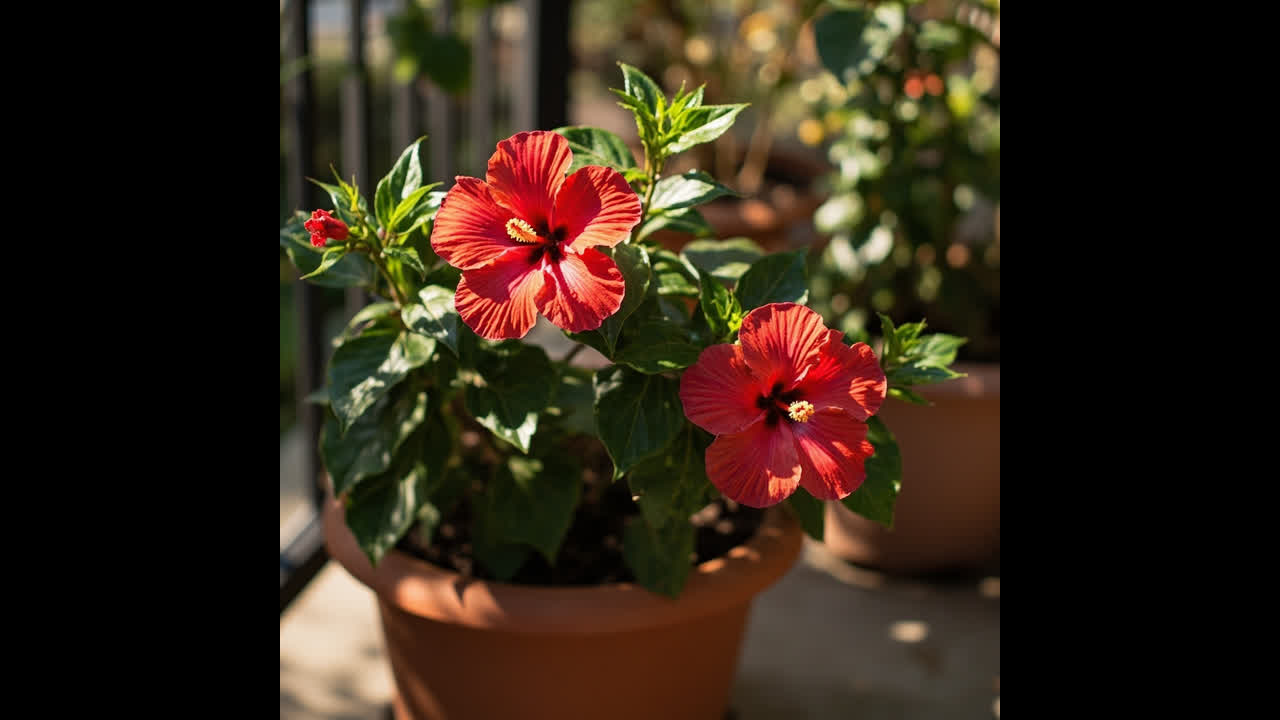
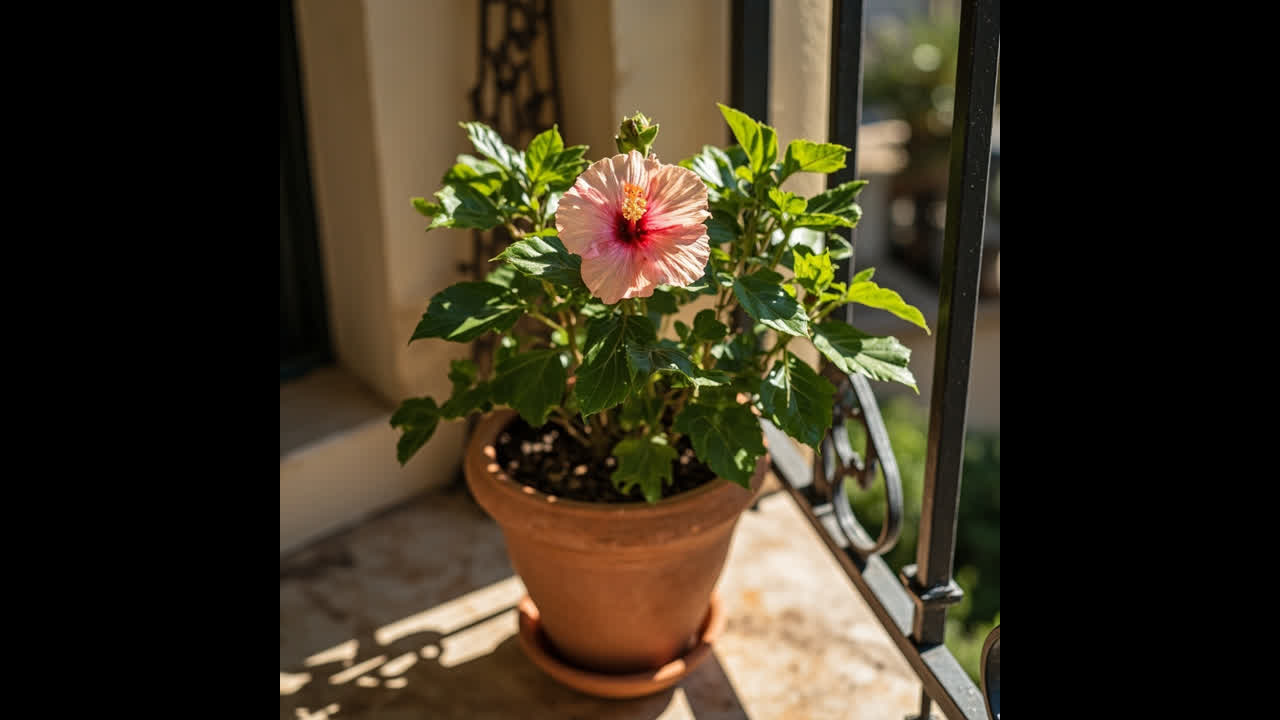
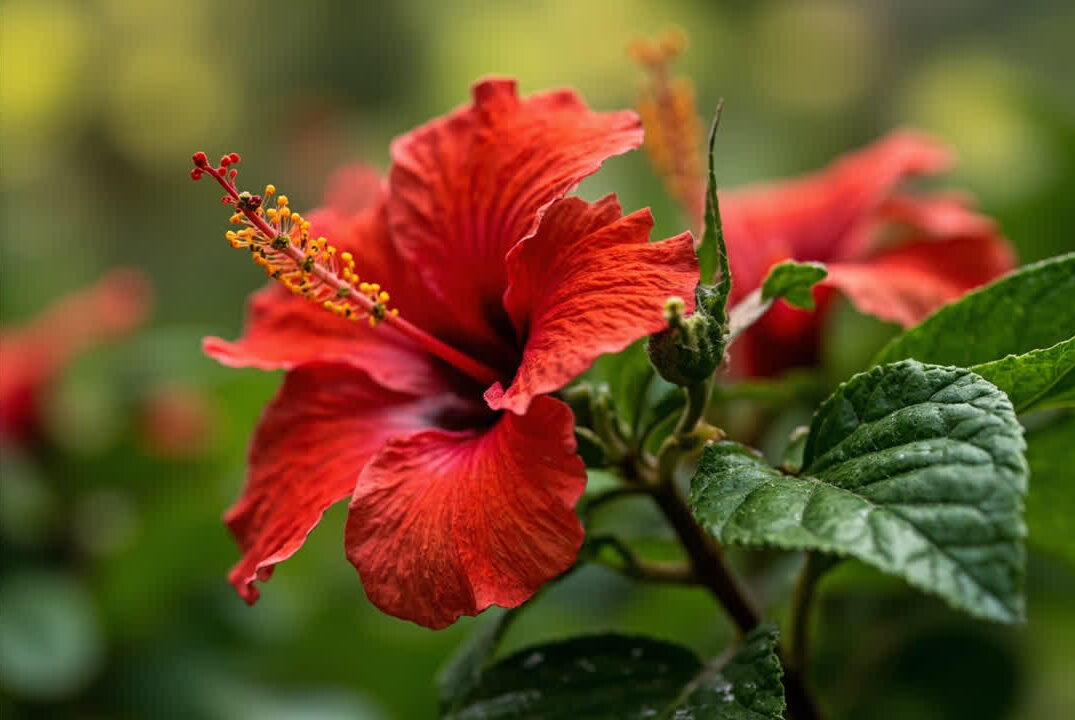
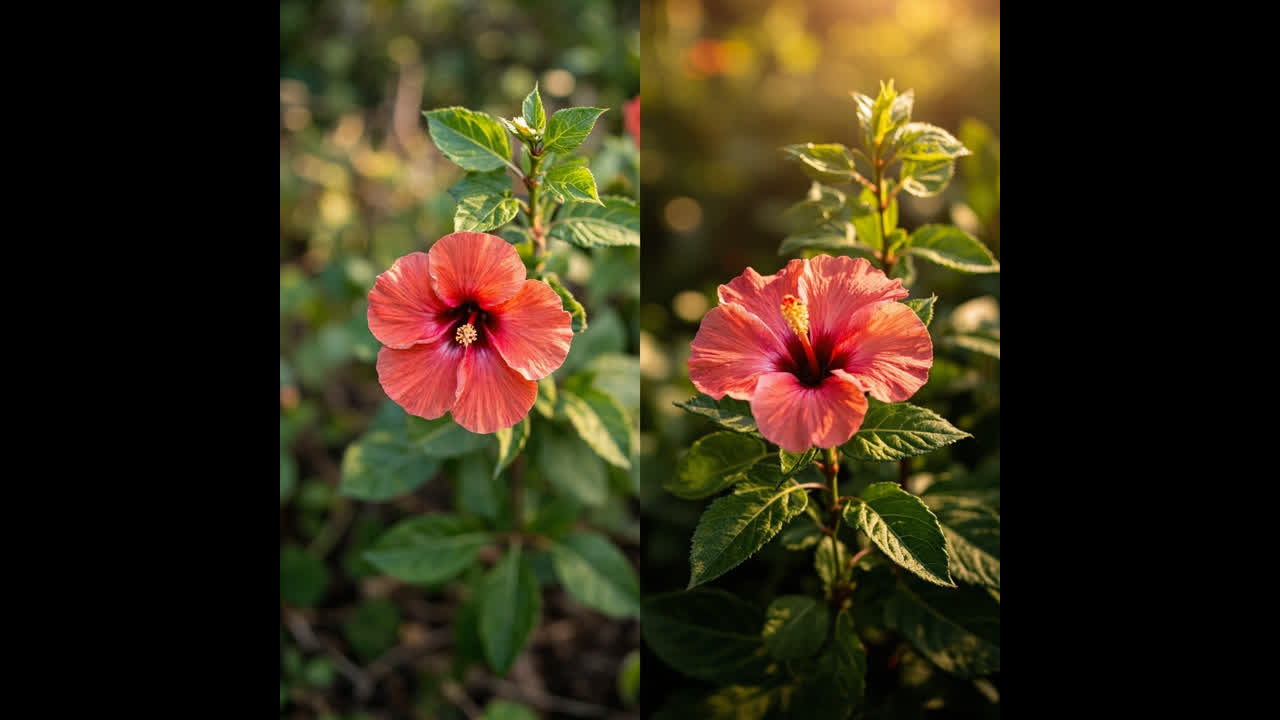
Your hibiscus has everything going for it — healthy green leaves, good light, regular water — and yet: no flowers. Not one bud. You are not alone in this.
A hibiscus that looks healthy but refuses to bloom is one of the most common frustrations among gardeners who grow this plant.
The good news is that a non-blooming hibiscus is almost always fixable. The bad news is that the symptoms of one cause look a lot like the symptoms of another, so identifying the real reason matters.
Here is a breakdown of the six most common causes of hibiscus non-blooming, and how to figure out which one is affecting your plant.
Cause 1: Not Enough Light
Hibiscus needs at minimum six hours of direct sunlight per day to set flower buds. This is not negotiable. If your plant is in a location that receives less than this — a room with a north-facing window, a balcony partially shaded by a building, a spot that gets only morning shade — the plant may look healthy but it simply will not bloom.
Symptoms of insufficient light: long spacing between leaf nodes (the plant is stretching toward available light), pale or yellowish leaves, and a general leggy appearance. The plant grows but produces no flower buds.
The fix is straightforward: move the plant to your brightest available spot. A south-facing window outdoors or close to floor-to-ceiling glass is ideal. If you are growing indoors and do not have a sufficiently bright window, consider supplementing with a grow light — 6–8 hours of artificial light can substitute for natural sunlight enough to trigger blooming in some varieties.
Cause 2: Too Much Nitrogen, Too Little Phosphorus
If you have been fertilizing your hibiscus consistently but it is all foliage and no flowers, the fertilizer blend may be the problem. High-nitrogen fertilizers push leaf growth at the expense of blooms. This is especially common with general-purpose lawn-and-garden fertilizers, which are often formulated for lush green grass, not flowering plants.
Look at your fertilizer label. If the first number (N – nitrogen) is significantly higher than the second (P – phosphorus), you are likely over-feeding your hibiscus with nitrogen. The plant puts all its energy into growing leaves, not into producing flower buds.
The fix: switch to a bloom-boosted fertilizer with a higher middle number — something like 10-30-20 or similar. Use this every two to four weeks during the growing season. Within four to six weeks, you should start seeing flower buds appear at the tips of branches.
Cause 3: Phosphorus Lock
This one is less obvious and often goes undiagnosed. Even if your fertilizer has adequate phosphorus, your hibiscus may not be able to access it if the soil pH is too high (above 7.0). When soil is alkaline, phosphorus becomes chemically locked in the soil and unavailable to plant roots.
The result looks similar to phosphorus deficiency: poor or no flowering despite healthy foliage. The plant may also show signs of chlorosis — yellowing leaves with green veins — which is another sign of nutrient lock.
Test your soil pH if you can. For hibiscus, the ideal range is 6.0–7.0. If it is above 7.0, you need to lower it. Options include:
- Using an acidic fertilizer formulated for acid-loving plants
- Adding elemental sulfur to the soil (follow product directions based on current pH and pot size)
- Working compost into the soil, which gradually acidifies the root zone
Once the pH is corrected, phosphorus becomes available again and blooming should resume within four to eight weeks.
Cause 4: The Plant Is Too Young
If your hibiscus is less than one to two years old and was grown from a cutting, it may simply not be mature enough to bloom yet. Hibiscus plants — especially those propagated from cuttings — often spend their first one to two years establishing a strong root system before they divert energy to reproduction.
This is not a problem you can fix. You can, however, recognize it: if your hibiscus is young, growing well, looks healthy, and has never bloomed, patience is the answer. Keep providing good care — proper light, water, and fertilizing — and blooming will likely begin as the plant matures.
To speed up the maturity process: ensure the plant has optimal conditions (lots of light, proper watering, appropriate fertilizing). Stressed plants divert energy to survival, not reproduction. A well-cared-for hibiscus matures faster than a neglected one.
Cause 5: Temperature Stress
Hibiscus is tropical and reacts badly to cold. When exposed to temperatures below 50°F (10°C), the plant drops existing buds and refuses to set new ones. A single cold night — a draft through a patio door, an unexpected cold snap in autumn — can wipe out a season’s worth of buds.
Indoor hibiscus that are kept in rooms that are too warm at night and too cool during the day (or vice versa) will also struggle to bloom. Hibiscus needs relatively stable warm temperatures — 65–85°F (18–29°C) during the day, with night temperatures not dropping below 60°F (15°C).
Signs that temperature is the issue: bud drop (buds form but then fall off before opening), leaf drop during cool spells, or no bud formation at all during a period when the plant should be blooming.
If growing hibiscus indoors, keep it away from air conditioning vents, cold windows, and drafty doorways. If growing outdoors in a marginal climate (zone 8 or below), be prepared to bring the plant inside when temperatures drop into the 40s Fahrenheit at night.
Cause 6: Root Bound
A hibiscus that has been in the same pot for several years and has not been repotted may have filled the pot with roots — a condition called being root bound. When this happens, the plant directs most of its energy toward survival: finding enough water and nutrients from an exhausted soil volume. Blooming becomes a secondary priority.
Signs that your hibiscus is root bound:
- Water runs straight through the pot when you water — not absorbed
- The plant wilts quickly after watering (roots cannot absorb water fast enough)
- Roots are visible at the soil surface or poking out of drainage holes
- Growth has slowed noticeably over the past season
- The plant looks disproportionate to the pot size
The fix is to repot in spring into a pot one size up (5–8 cm larger in diameter). Use fresh, well-draining potting mix, trim any circling or compressed roots, and water thoroughly after repotting. Do not fertilize for four weeks after repotting to avoid burning damaged roots.
Do not repot while the plant is actively blooming — the stress can cause bud drop. Repot in early spring before new growth accelerates.
How the Bloom Cycle Works
Understanding this helps you see why the causes above all interfere with blooming. Hibiscus flowers form on new growth — specifically on branches that have reached a certain level of maturity. Each time you prune a branch, new branches grow from below the cut, and those branches eventually mature and produce buds.
This means: pruning your hibiscus properly is not just about shaping — it is about stimulating the new growth that produces flowers. If you never prune, the plant has fewer places where new branches can emerge, and therefore fewer sites for flower buds.
Regular pruning in late winter/early spring, combined with good light, proper fertilizing, and correct pH, is the most reliable formula for a hibiscus that blooms consistently.
Diagnosis: Finding the Actual Cause
With six potential causes, how do you narrow it down? Work through these questions in order:
- Is the plant getting at least 6 hours of direct sun? If no → Light is the cause. Fix the light first.
- What fertilizer are you using? Check the N-P-K ratio. If N is much higher than P → Switch to a bloom formula.
- Is the soil alkaline? Have you been using compost or soil that might be high in pH? If you suspect → Test pH and lower it.
- Is the plant more than two years old and grown from a cutting? If it is very young → Patience.
- Has the plant been exposed to cold temperatures or significant temperature swings? If yes → Temperature stress.
- Is the plant wilting quickly after watering, with fast-draining soil? Are roots visible at the surface? If yes → Root bound.
More than one cause can apply at the same time — a root-bound hibiscus that is also in low light will not bloom until both issues are resolved. Address all the causes that apply, in the order above, and give each fix at least four to six weeks to take effect before concluding it did not work.
For the fertilizing specifics that support blooming, see our guide to hibiscus fertilizer requirements. For container growing and how pot size affects blooming, see growing hibiscus in containers.
Turn That PDF Into a Spreadsheet in Minutes
You've seen how to do it manually — now let the tool handle the heavy lifting. Upload your bank statement and get Excel, CSV, or QBO in a few clicks.
Try It Free